NICET Fire Alarm Certification Requirements Step by Step
Technicians who ask about NICET Fire Alarm certification usually want one thing: clarity. They want to know what the tests cover, what proof they need, and how to plan their path without wasting months chasing paperwork. So, this guide breaks down NICET Fire Alarm certification requirements step by step, with plain language and practical tips. And yes, it will stay calm and organized, because even fire alarms deserve a soothing narrator.
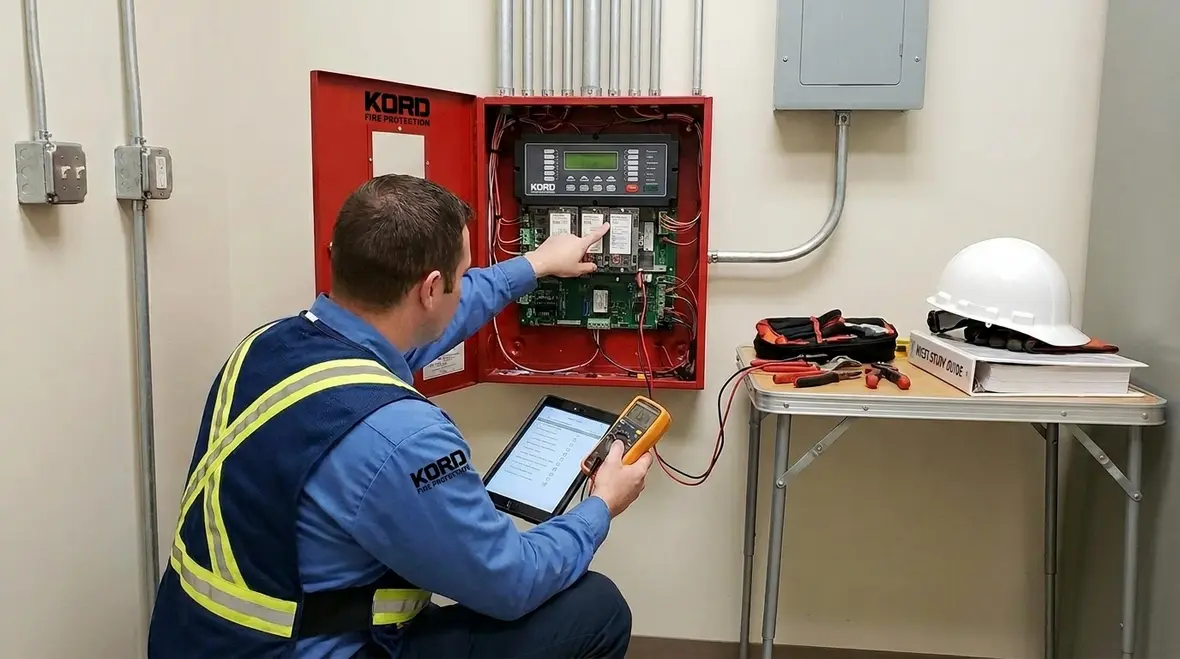
Also, Kord Fire Protection technicians frequently explain these steps to new hires and busy field crews. That means the details below match what technicians actually run into on real jobs, not what a random website guesses at between coffee refills.
What NICET Fire Alarm certification requires in plain terms
NICET Fire Alarm certification ties to verified experience and exam performance. In general, a technician proves knowledge of fire alarm systems, codes, and practical installation or service skills. Then, they show that they can apply that knowledge while working with devices, panels, circuits, and supervising functions.
Typically, the process follows three lanes: choosing the right level, logging qualifying experience, and passing the required exam. However, technicians should not assume that “working on alarms” automatically equals qualifying experience. Instead, they must track tasks that match the program focus. Kord Fire Protection technicians often say this part is where people trip up, like stepping on a phone charger in the dark.
The three pieces most candidates need to organize first
- The certification level that actually matches current duties
- A work history log that explains tasks clearly and consistently
- A study routine built around system behavior, codes, and scenario thinking
If those three items are in order, the process feels much less mysterious. If they are not, things get messy fast. The good news is that messy does not mean impossible. It usually just means someone needs a more organized checklist and fewer hopeful guesses.
How technicians choose the correct NICET level
Technicians should start by matching their current job duties to the level they plan to pursue. Lower levels emphasize core understanding. Higher levels demand deeper judgment, including more complex system layouts, test methods, and troubleshooting logic.
To choose well, they should consider what they truly do day to day. For example, some technicians handle mainly routine inspections and device replacement. Others design layouts, configure panels, program notification appliance circuits, and perform tests that verify compliance. These differences matter.
Additionally, many technicians benefit from mapping their experience to common job categories such as design support, installation, programming, commissioning, inspection, and maintenance. Then, they compare those categories to the level expectations. Kord Fire Protection technicians often guide people to pick the lowest level that still reflects their real work. That avoids frustration and helps them build momentum.
A simple way to compare your duties
Write down the tasks you perform every week, not the tasks you touched once six months ago because someone disappeared at lunch. Include whether you install, inspect, test, troubleshoot, program, assist with layouts, or verify final operation. That list gives a more honest starting point than a job title ever will. If the list leans heavily toward foundational work, start there. If it shows broader responsibility and stronger judgment, then a higher level may fit better.
Experience documentation and verification steps
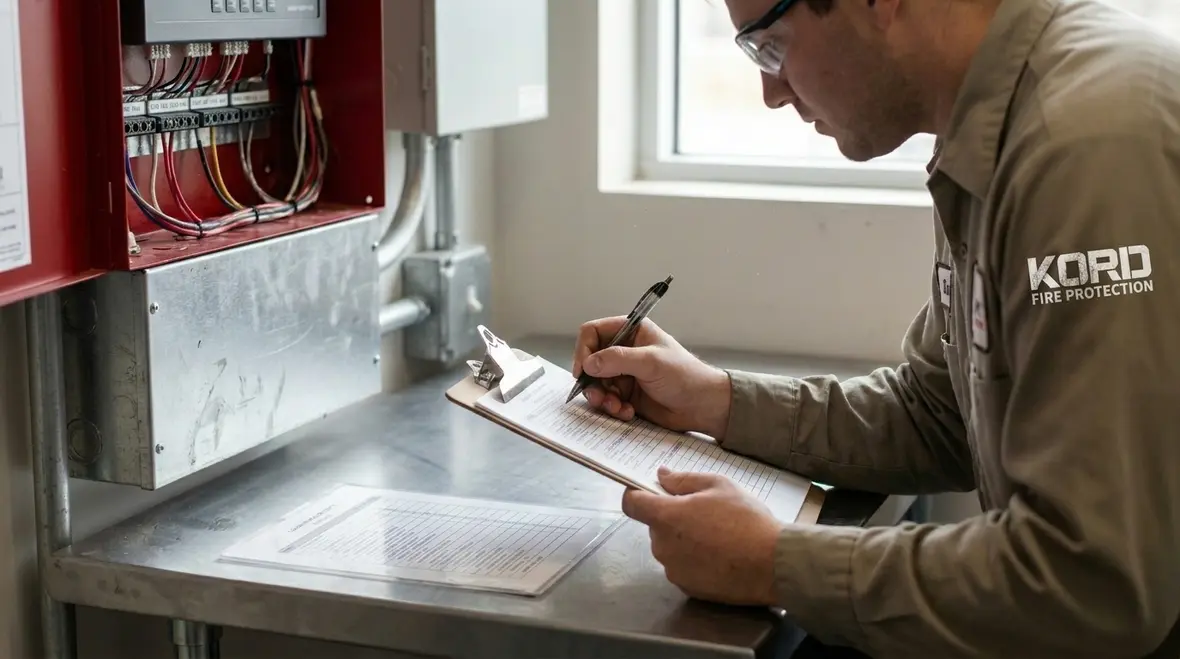
Once a technician selects a level, the next job is documentation. NICET typically expects candidates to submit details that confirm the work they performed, including the nature of tasks and the timeframe. In many cases, a supervisor or responsible party verifies the experience.
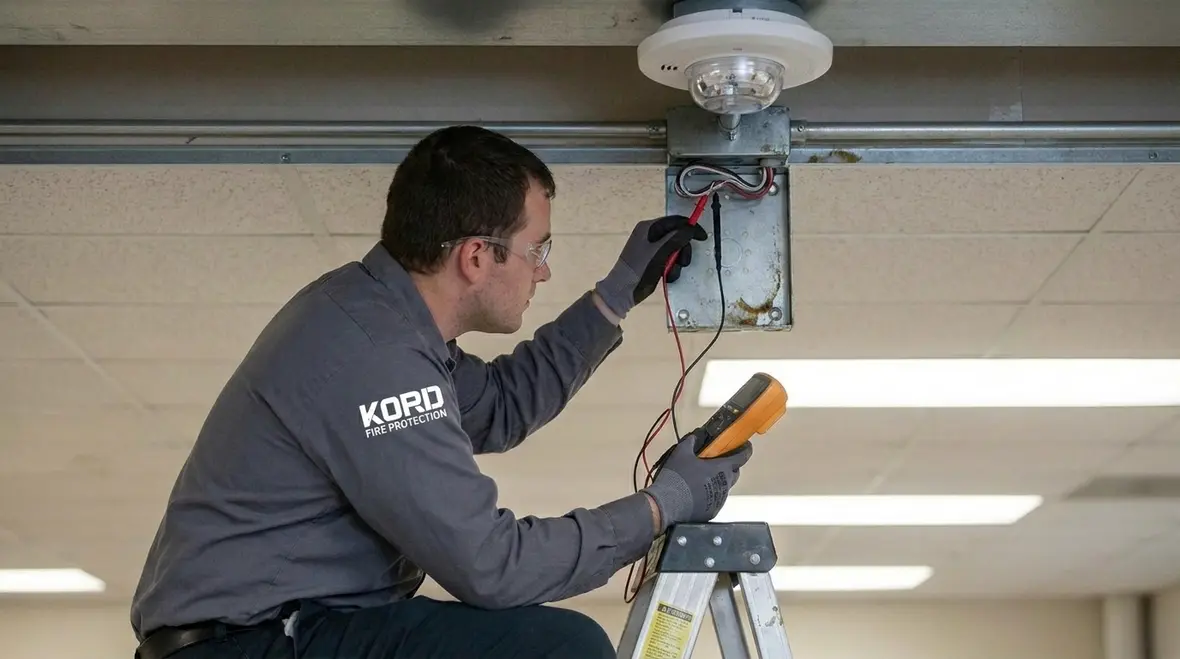
Technicians should prepare for this phase by keeping a simple log. A good log includes dates, site type, system components worked on, and what the technician actually did. Over time, that log becomes the evidence that reduces back and forth. And if a technician does not keep records, the certification process can feel like trying to remember a song lyric from 2004 without the internet.
Furthermore, verification matters. A supervisor statement should reflect consistent responsibilities. If a technician changes roles often, they may need to split experience by task type or time period. Kord Fire Protection technicians often remind people that honesty and clarity beat polishing a blurry job description.
What a useful experience log should include
- Date range for each project or assignment
- Building type or occupancy
- System type, panel type, and field devices involved
- Specific duties performed by the technician
- Name of the supervisor or verifier who can confirm the work
That kind of log saves time later because it gives the application clear language. It also makes it easier to explain how your work progressed from helping with tasks to owning them. Field crews are busy, supervisors are busier, and nobody wants to rebuild two years of memory from a half-charged phone and a vague calendar invite.
Exam structure: what the test tends to measure
NICET Fire Alarm testing usually measures code-based understanding and the ability to apply that knowledge to real system scenarios. As a result, technicians should expect questions that connect alarm principles to practical decisions.
Common topics include device types and functions, initiating device circuits, notification appliance circuit behavior, power and voltage concepts, supervision concepts, and system testing steps. Also, technicians should be ready for scenario questions that ask what comes next during installation, commissioning, or troubleshooting.
Moreover, the exam often rewards calm, methodical thinking. If someone rushes, they may miss small but critical details such as compatibility, circuit limitations, or required verification steps. Kord Fire Protection technicians recommend a simple routine: review the standards, study the topic outlines, then practice with scenario style questions until the “why” clicks, not just the “what.”
How to think through scenario questions
Start with the signal path. Ask what device changed state, what the control unit should do, what appliances or relays should respond, and what supervision or trouble conditions could appear. This habit trains the brain to see the system as cause and effect. Once that clicks, the exam feels less like a trap and more like a conversation about system behavior with slightly less coffee.
Study plan that fits real field schedules
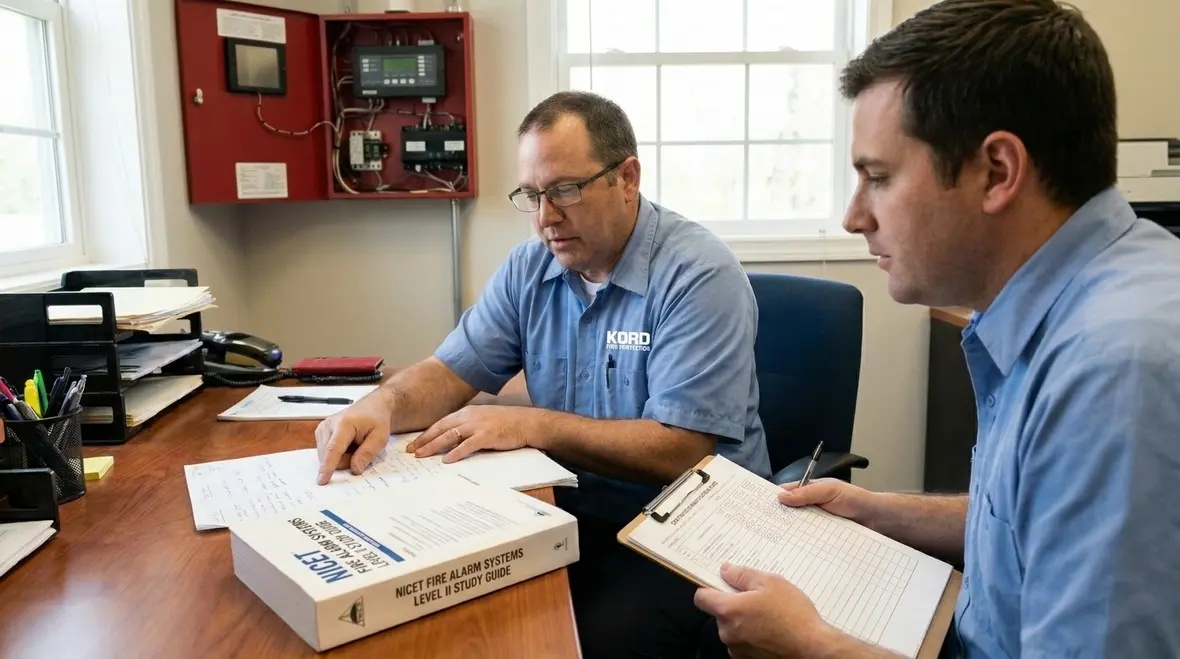
Most technicians cannot study for hours every day. So they need a plan that works between service calls, inspections, and jobsite surprises. First, they should set short study blocks, such as 20 to 30 minutes, then review the hardest areas more often.
Then, they should break study into three layers. Layer one covers the basics of alarm components and supervision. Layer two connects those basics to code concepts and system design logic. Layer three builds decision skills using practice questions and review notes.
Next, they should use jobsite context. If a technician has recently worked on a panel, they should review the circuits and functions involved. If they have tested a system, they should recall what verification steps happened and why. This approach makes the material stick.
Finally, they should remember that confidence matters. The exam will not reward panic. It will reward organization, careful reading, and solid understanding. And yes, that means the most successful candidates usually ignore the urge to “just wing it.” Even superheroes double check their gear.
A weekly routine that actually works
- Two short sessions for core concepts and terminology
- Two short sessions for code reading and note review
- One longer session for practice questions and error review
- A quick recap after relevant field work to tie theory to reality
That schedule is realistic enough to survive a busy week. More importantly, it helps candidates build consistency. A little focused review repeated often usually beats one heroic cram session followed by regret and vending machine dinner.
Common mistakes technicians make during the process
Even smart, hardworking technicians run into predictable issues. One frequent mistake involves choosing an exam level that does not align with verified experience. Another mistake involves incomplete documentation that forces delays. And a third common issue happens during study, when candidates focus on memorizing without practicing scenario thinking.
Technicians should also watch for a mismatch between what they think they did and what they can prove they did. If a job duty involved supporting, assisting, or observing, the candidate should clarify those details in a way that fits the requirements. Kord Fire Protection technicians often say that unclear experience descriptions create uncertainty, and uncertainty makes the certification timeline longer.
Additionally, candidates sometimes underestimate the importance of standards reading. They skim, they highlight, and then they hope for the best. Instead, they should read with purpose and connect each concept to system behavior. When technicians can explain the “cause and effect” of an alarm circuit, they tend to do better.
The delays that are easiest to prevent
- Waiting too long to gather supervisor verification
- Using vague task descriptions that say very little
- Choosing a level based on pride instead of proof
- Studying terms without learning how systems behave in the field
How Kord Fire Protection technicians guide candidates step by step
Kord Fire Protection technicians approach certification like they approach system work: organized, documented, and focused on safe outcomes. They usually start by confirming the technician’s real duties and then matching those duties to the right certification path. After that, they help the technician build a clean record of experience tasks and verification details.
Next, they support practical exam prep. They encourage candidates to study in layers and to connect theory to jobsite tasks. Then, they run a simple readiness check: if the candidate can walk through system behavior and testing logic, they are more likely to handle the exam questions.
Finally, they emphasize consistency. Certification success does not come from one lucky test run. It comes from steady progress, correct documentation, and focused practice that turns knowledge into action.
For technicians who want more real-world fire alarm context while building their knowledge base, Kord Fire Protection also covers related topics like what fire alarm monitoring is and how it works and fire alarm system reliability and battery health. Those articles help connect certification study to the systems technicians deal with in the field every day.

FAQ
Conclusion and call to action
Technicians can earn their certification with less stress when they plan the right level, track experience clearly, and study with real scenarios in mind. Kord Fire Protection technicians often see the same pattern: candidates who document well and practice steadily move faster and feel more confident on test day. If this process sounds like it needs a roadmap, it probably does.
Take the next step by exploring Kord Fire Protection’s Fire Alarm Services to connect certification goals with real field support, inspections, maintenance, monitoring, and system readiness. For teams that want one partner for broader compliance and support, their full fire protection services page is also a smart place to start.

Join Our Newsletter!
Get the latest fire safety tips delivered straight to your inbox From our Newsletter.