Fire Extinguisher Location Planning for Commercial Compliance
Smart fire extinguisher location planning starts before the first extinguisher ever rolls onto a job site. In the real world, a safety plan fails when placement feels like guesswork or “we’ll put it over there somewhere.” Instead, commercial safety compliance demands a steady process: assessing hazards, mapping travel paths, and mounting units where people can reach them fast and use them without panic. Then the team can document it, inspect it, and keep it aligned with the latest rules.
In this guide, a team from Kord Fire Protection technicians explains how strategic planning works in practice. They break it down in plain terms, because fire safety should never feel like a mystery box. And yes, even when someone says, “We’ll figure it out later,” that is the most expensive joke a building can tell.
1) Why strategic placement matters for commercial compliance
Fire extinguisher placement controls how quickly staff can respond during small fires. If an extinguisher sits behind a locked door, too far from the likely fire point, or hidden in a spot nobody can see in a rush, the building loses time. And time is the one thing a fire never pays back.
Also, compliance is not only about having extinguishers. Inspectors and safety audits look for proper distribution, proper mounting height, and clear access. Therefore, the placement plan must match building layout, room use, and hazard level.
Kord Fire Protection technicians typically begin with site details such as occupancy type, floor plan flow, and common ignition sources. Then they connect those details to extinguisher types and spacing needs, so the system feels intentional, not improvised. For teams reviewing overall life safety coverage, full fire protection services can help tie extinguisher planning into the rest of the building’s compliance strategy.
2) How Kord Fire Protection technicians map hazards and risk zones
Fire risk is not evenly spread like ketchup on fries. In most commercial buildings, hazards cluster around cooking areas, electrical closets, loading docks, mechanical rooms, and storage spaces. Consequently, extinguisher placement must mirror those clusters.
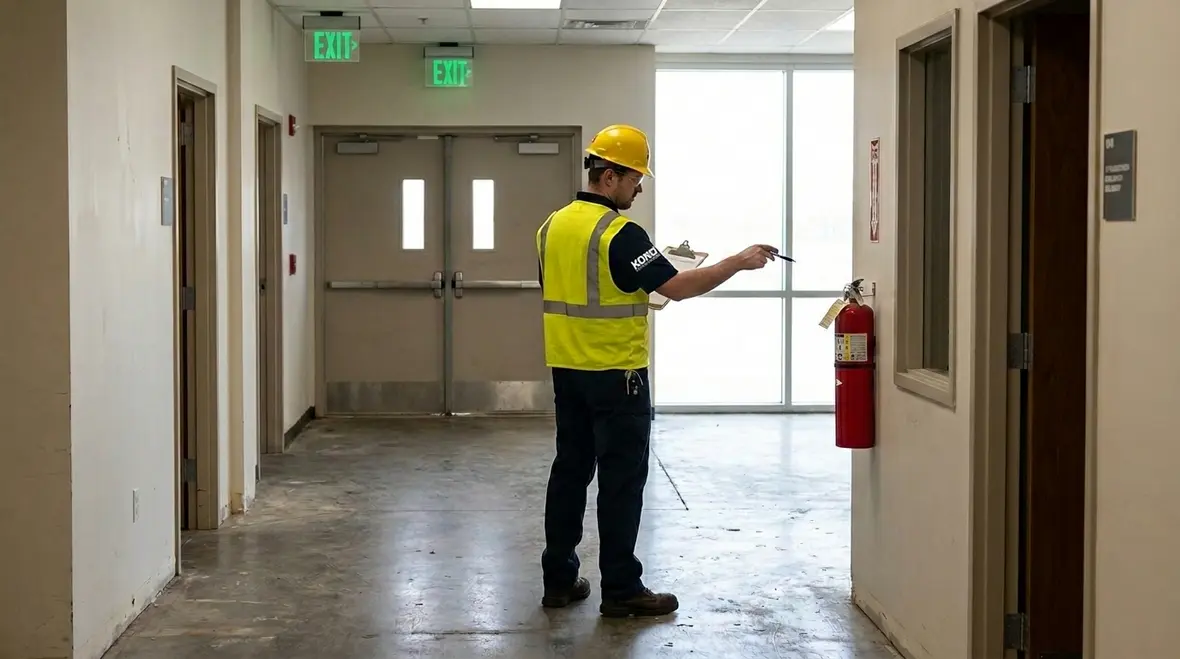
Kord Fire Protection technicians usually follow a simple chain. First, they identify likely fire classes based on what burns in that space. Next, they mark where a fire might start and where people naturally walk. Then, they choose locations that support quick access from normal routes, not just from ideal theory.
Hazards first, convenience second
They also account for how people behave. During emergencies, staff move faster, visibility drops, and calm goes on vacation. So, they plan placements that reduce “where is it?” moments. If an extinguisher sits where staff rarely look, the building may as well store it in the break room under a mountain of forgot-to-label boxes.
This risk-mapping approach also helps teams avoid under-protecting high-use work zones while overloading low-risk corners. A smart plan spreads coverage with purpose. That same mindset shows up in Kord Fire Protection’s guidance on common fire extinguisher failures and prevention, where small oversights can quietly turn into very expensive problems.
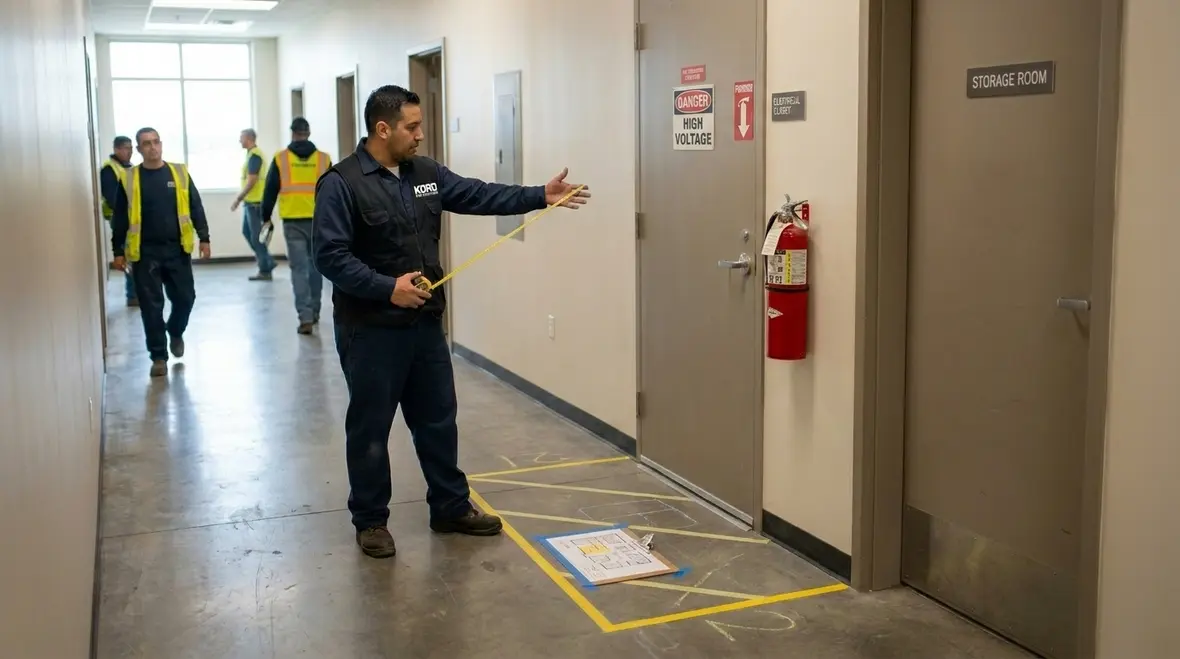
3) Fire extinguisher location planning: travel paths, visibility, and mounting
Correct planning depends on more than putting equipment near walls. It relies on practical reach from exits and along travel paths. Therefore, technicians evaluate common egress routes and how far staff must walk to reach an extinguisher.
Next comes visibility. Extinguishers should stand out, not hide behind signage clutter or stacked pallets. As a result, many plans place units on clear corridor walls near entry points to rooms, and near likely ignition sources. Kord Fire Protection technicians also consider line of sight from entrances and doorways.
Consistency beats improvisation
Mounting height matters too. If the unit is too high, staff struggle under stress. If it is too low, it can get damaged or blocked. Kord’s approach keeps mounting consistent so the same search pattern works on every floor, every time. And consistency is not boring. It is how you prevent “I swear I saw it last week” during an emergency.
That is also why signage, cabinet visibility, and clean wall space matter more than many building teams expect. The right location is not just technically compliant. It is obvious, intuitive, and usable when someone has about two seconds of patience left.
4) Selecting the right extinguisher for the space, not just the shelf
Different fires need different responses. So, strategic planning pairs extinguisher type with the hazard. For example, an area with flammable liquids needs coverage that fits that risk profile, while electrical areas often require an agent suited for energized equipment scenarios.
Kord Fire Protection technicians explain that selecting the right extinguisher begins with understanding what is stored or used. Then they match that to the building’s fire safety goals and the staff’s ability to use the equipment properly. This helps prevent the classic mistake of placing the “wrong tool in the right place.” It is like bringing a wrench to a knife fight. It sounds confident until it does not work.
In addition, they consider coverage strategy. If a space contains multiple hazards, the plan may require more than one extinguisher type. However, they also avoid overloading the room with redundant units. Overcrowding can block access and reduce clarity. Good planning balances protection with usability. Businesses needing inspection, mounting, service, or replacement support can also review fire extinguisher service and certification for a broader compliance picture.
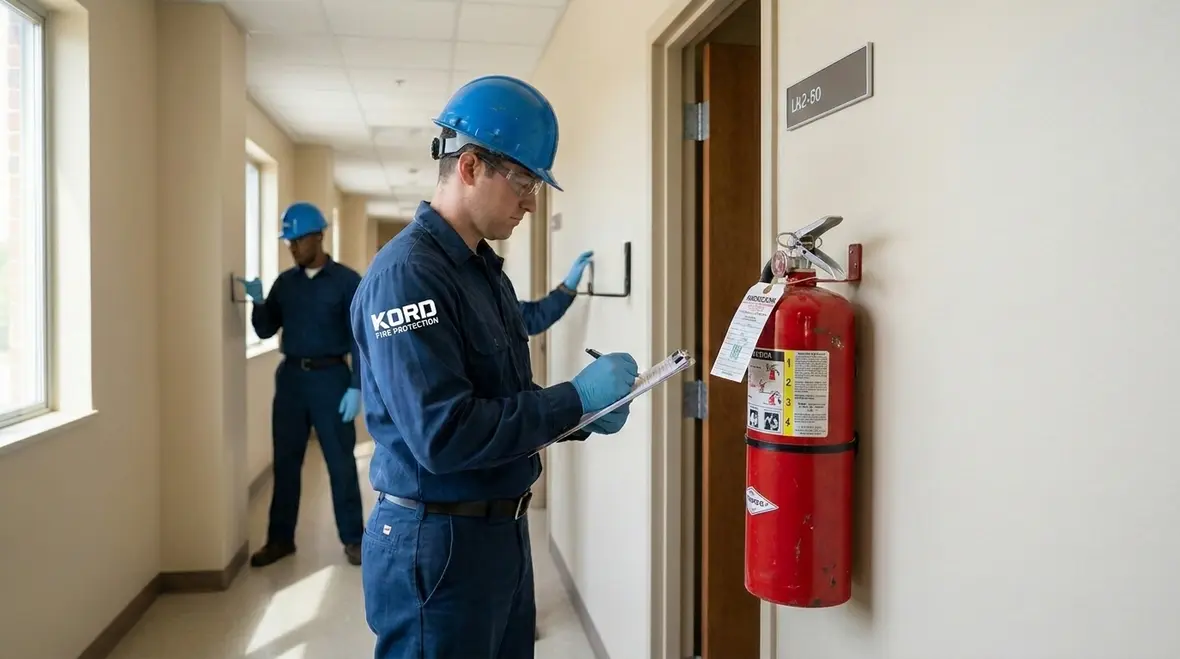
5) Building layout, doors, and obstructions that break good plans
Even the best design can fail when the building changes. Hallways get filled with temporary storage. Doors get propped open. Construction projects shift pathways. Therefore, placement must consider present conditions and likely future changes.
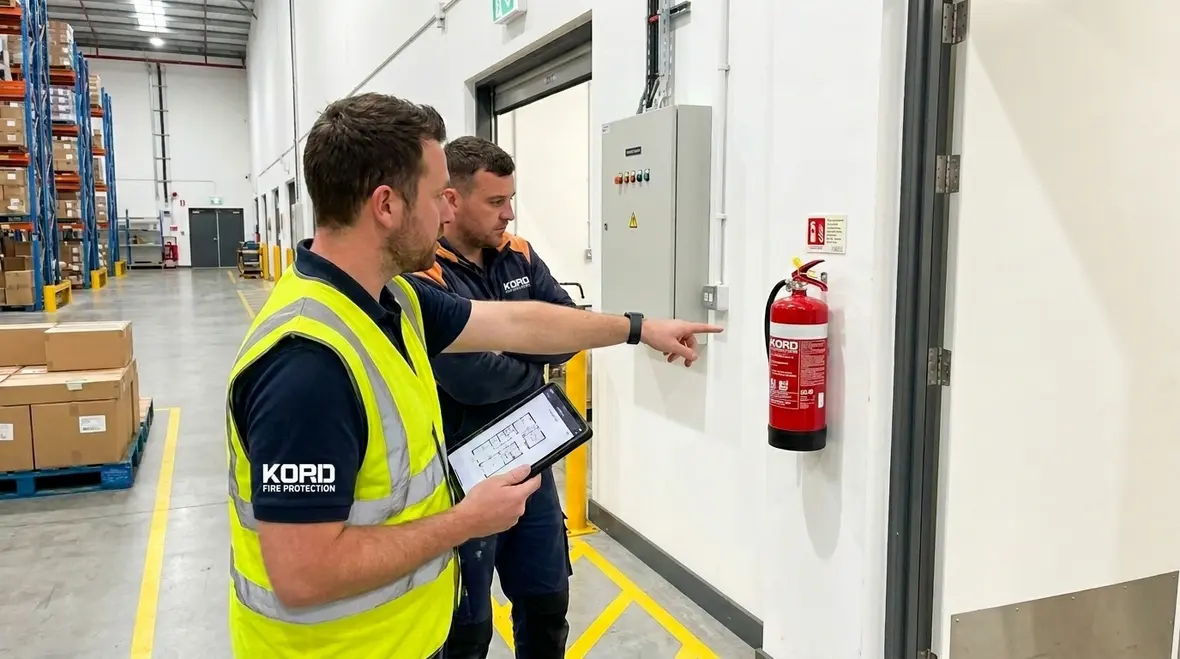
Kord Fire Protection technicians often run a placement walk through with a key question in mind: will staff reach the unit in real time? Then they test the path using normal traffic flow. If a unit sits beyond a narrow turn where carts block the view, the plan needs correction.
They also look at how doors behave. A doorway can create a “shadow zone” where a staff member cannot see an extinguisher until the last second. Similarly, placed units near high traffic areas might get bumped or partially concealed. So the plan adjusts the location or adds clear markings and protective placement.
Review after every meaningful layout change
To keep compliance strong, they encourage periodic review. When tenant layouts change, hazards change too. And if the hazards change, the extinguisher coverage should change. It is a simple rule, but one that saves a lot of panic, backtracking, and awkward explanations during inspections.
6) Documentation and inspection readiness for audits
Strategic planning includes proof, not just intent. Compliance programs expect documentation that shows placement reasoning, equipment types, and inspection schedules. This is where many organizations stumble, because they buy equipment and then treat paperwork like it grows back after pruning.
Kord Fire Protection technicians help teams prepare inspection-ready records. They track extinguisher IDs, service dates, and mounting locations. This reduces downtime during audits, because the building does not scramble at the last minute.
Also, clear signage and consistent placement supports faster inspections. Inspectors often move efficiently when units are easy to find and properly mounted. Therefore, the plan should include clear, unobstructed access and visible labeling.
One more practical point: staff training matters. Placement helps, but people still need to know what to do. When the plan works and training supports it, the building’s response becomes calm, not chaotic. If your facility also needs coordinated detection support, Kord Fire Protection offers fire alarm service systems that pair well with a stronger extinguisher readiness plan.
7) FAQ about planning extinguisher coverage
Placement priority
Hazards first, then routes, then mounting clarity.
Common failure
Equipment that hides behind storage or door shadows.
Strategic next steps for commercial sites
A solid protection plan does not happen by accident. It starts with a walk through, hazard mapping, and deliberate fire extinguisher location planning that considers travel paths, visibility, and real building behavior. Then Kord Fire Protection technicians document the setup so audits feel like a check, not a scramble. If a team wants to upgrade coverage or fix gaps, they should schedule a placement review. Act now, and the next emergency response can be steady instead of stressful.
Need a compliance-focused upgrade?
Schedule service with Kord Fire Protection for expert placement reviews, inspections, and code-ready support through fire extinguisher service.

Join Our Newsletter!
Get the latest fire safety tips delivered straight to your inbox From our Newsletter.