Fire Alarm Relay Integration for Smarter Commercial Safety
In the world of commercial life safety, fire alarm relay integration is the kind of upgrade that quietly makes everything work smarter. Instead of relying on simple, on or off signals, smart relay systems translate alarm events into cleaner actions across a building. As a result, monitoring becomes more accurate, response becomes faster, and technicians stop chasing confusing “phantom faults” like they are stuck in a never ending office sitcom. And yes, Kord Fire Protection technicians explain it the way it should be explained: clearly, practically, and without hiding behind buzzwords.
This article walks through how smart relay integration improves commercial fire alarm system efficiency, from better workflows to smarter coordination with panels, controls, and building automation. It also connects closely with broader strategies like fire alarm integration for smarter building safety, where coordinated systems become the backbone of reliable protection.
What smart relay integration changes for a commercial system
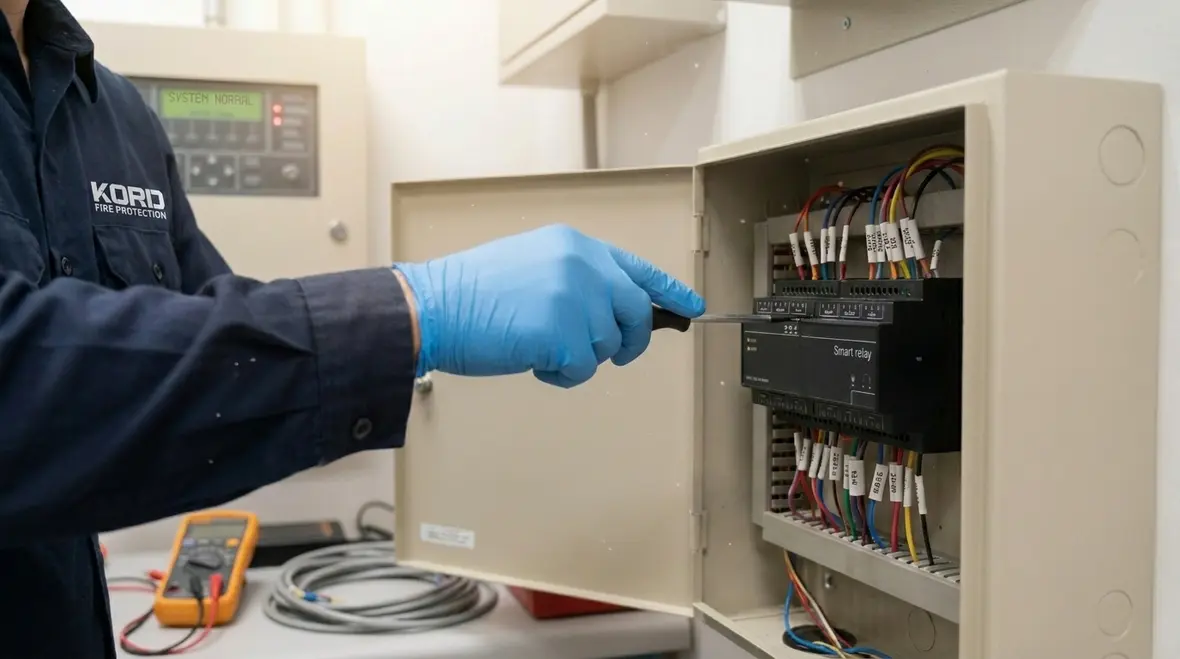
Commercial fire alarm systems do not fail because people are careless. They fail because buildings are complex, and signals travel through multiple layers of equipment. Smart relays help by acting as a bridge between alarm panel outputs and real world building control. Therefore, the system sends the right trigger to the right device at the right time.
In practice, the fire alarm relay integration approach improves efficiency in three main ways. First, it reduces ambiguity in event reporting. Second, it helps building teams coordinate evacuation, HVAC shutdown, and door control. Third, it enables more meaningful diagnostics so technicians spend less time guessing.
Kord Fire Protection technicians often say, “A system should tell you what happened, not make you do detective work.” That is exactly where relay logic and event mapping earn their keep. It turns scattered signals into a structured story that both humans and systems can follow without confusion.
How relays improve event routing and reduce false confusion
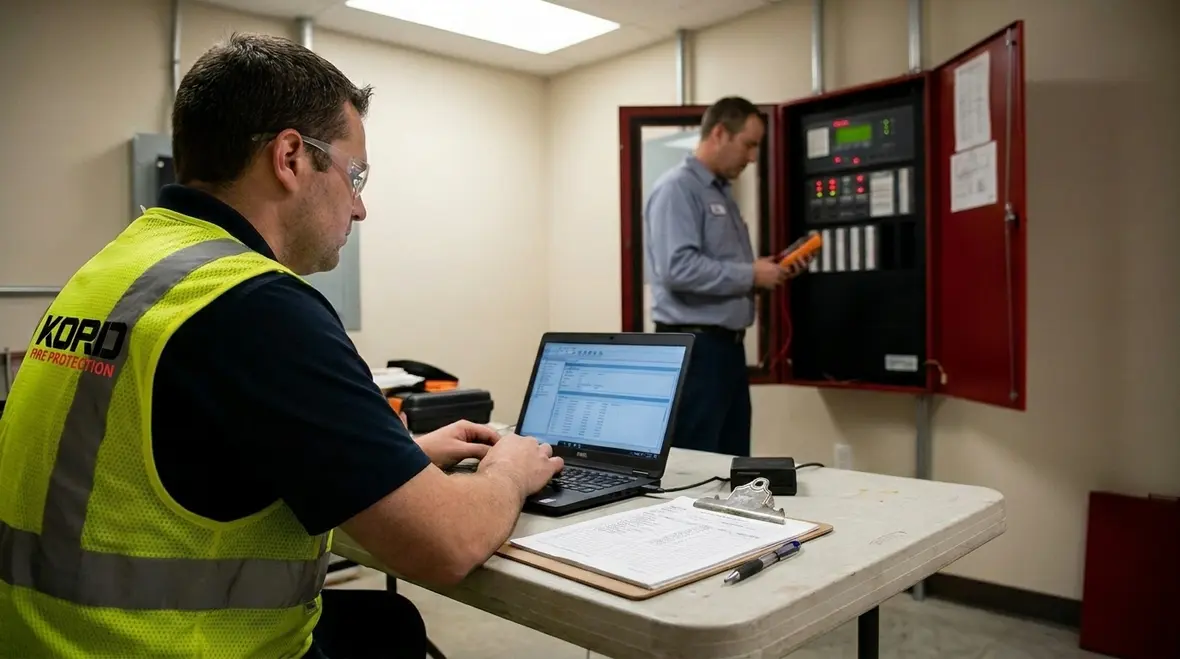
When an alarm event hits a panel, outputs must reach multiple locations. If relay logic is basic, the same output can trigger multiple functions without enough detail for smooth operations. However, smart relay systems route events more precisely. As a result, staff receive clearer alerts and control sequences stay aligned.
For example, a trouble condition should not behave like a fire alarm. Yet in some setups, outputs get treated like they are the same. With smarter relay mapping, the system can separate supervisory states from alarm states and ensure each one triggers the right response.
Additionally, relay integration can help with zone level awareness. Instead of one broad “something happened” message, the system can support better categorization. Therefore, technicians can isolate issues faster, and owners can make decisions sooner without unnecessary panic or confusion.
Where efficiency shows up during commissioning and service
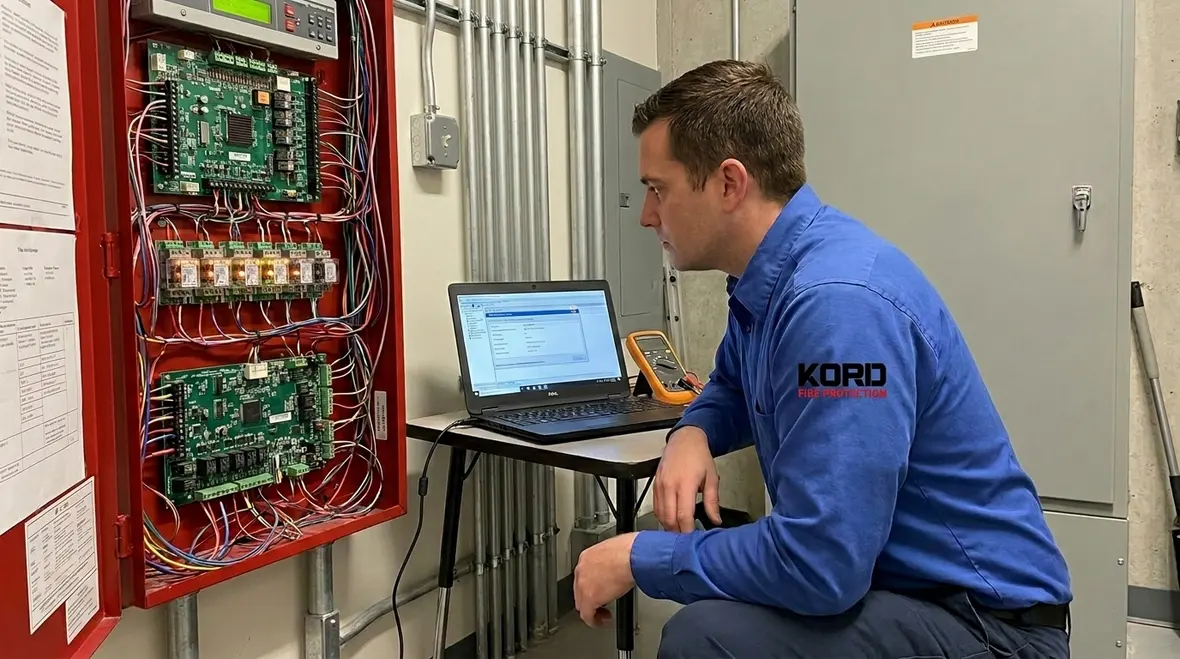
Commissioning should be a smooth process, not a long series of “try it again” moments. Smart relay integration improves efficiency during both installation and service because it supports organized testing. It allows technicians to verify each control path and confirm the relay behavior matches the design.
Kord Fire Protection technicians typically focus on test documentation, labeling, and repeatable sequences. Because the relay logic is structured, service teams can run consistent checks year after year. This reduces time spent troubleshooting and improves the accuracy of maintenance records.
Also, updates become less risky. When the building changes, smart relays can often adapt without forcing full redesigns of every output circuit. So, efficiency keeps paying off long after the first walk through, especially in buildings that evolve over time.
Smart relays support smoother coordination with building controls
Commercial buildings use many control systems: access control, elevator recall, smoke management features, and sometimes tenant automation platforms. Fire alarm panels often work alongside these, but without smart relay logic, coordination can get messy.
With smart relay integration, the system can control sequences more consistently. For instance, alarm activation can trigger door release, fan shutdown, or elevator recall in the right order. In addition, the logic can help prevent unnecessary cycles that create delays during an emergency.
In the real world, this means less “everyone rush, nobody knows why” energy. And honestly, that is the difference between a calm procedure and a scene from an action movie where the hero hits the wrong button and the building goes full chaos.
Reliability and diagnostics improve with better relay mapping
Efficiency is not just speed. It is also reliability. Smart relays support better diagnostics by providing clearer status signals, including what the relay is doing and how it responds to specific panel conditions.
As a result, technicians can detect patterns earlier. They can spot miswiring, incompatible device behavior, and relay chatter that can occur when circuits are marginal. Then they can fix issues before they turn into expensive downtime.
When Kord Fire Protection technicians explain this, they emphasize one thing: diagnostics should reduce surprises. Smart relay systems help by making event outcomes more traceable. Therefore, the service process becomes more predictable, which owners appreciate when schedules get tight.
Security, compliance, and smoother operational control
Commercial fire alarm systems must meet code requirements and operate safely under stress. Smart relay integration contributes by strengthening how control outputs behave, especially when multiple building systems connect to the fire alarm panel.
For compliance, relay mapping can support designed sequences and help ensure outputs match intended behavior. For security, structured control logic can reduce the chance that unauthorized or unintended signals cause abnormal actions.
Furthermore, operational control improves. Building staff can understand what actions will happen for each event class. That clarity reduces training burden and prevents “tribal knowledge” from replacing documented procedure.
In short, the system performs like a professional team instead of a group chat where everyone argues about what the alarm really meant.
- Owners gain: faster troubleshooting, clearer reporting, and better coordination during emergencies.
- Owners gain: fewer downtime surprises during inspections and service visits.
- Owners gain: improved confidence that building controls respond as designed.
- Kord Fire Protection technicians gain: easier testing workflows and more reliable documentation.
- Kord Fire Protection technicians gain: clearer fault isolation and quicker verification of relay logic.
- Kord Fire Protection technicians gain: smoother changes when building systems evolve.
FAQ about fire alarm relay integration
Request a professional review from Kord Fire Protection
If a commercial building feels like it “sort of” responds correctly during alarms, it is time to tighten the system. Kord Fire Protection can review relay mapping, event routing, and control sequences to improve efficiency and reduce confusion. Then technicians can document testing so future service stays fast and predictable.
Take the next step by exploring professional solutions like integrated fire alarm systems and scheduling a service review. Contact Kord Fire Protection today to ensure your system performs with the calm confidence your building deserves.

Join Our Newsletter!
Get the latest fire safety tips delivered straight to your inbox From our Newsletter.