Fire System Recharging After Discharge Is Critical
Why System Recharging Is Crucial After Any Fire Suppression Discharge
Imagine getting through a roaring kitchen fire in your restaurant with minimal damage thanks to a solid fire suppression system. Crisis averted, right? Well, not entirely. You don’t just pat yourself on the back, restock the napkins, and carry on like this isn’t the third act of a superhero movie. The final step—and it’s a big one—is fire system recharging. Without it, your system is as useful as a paper umbrella in a thunderstorm.
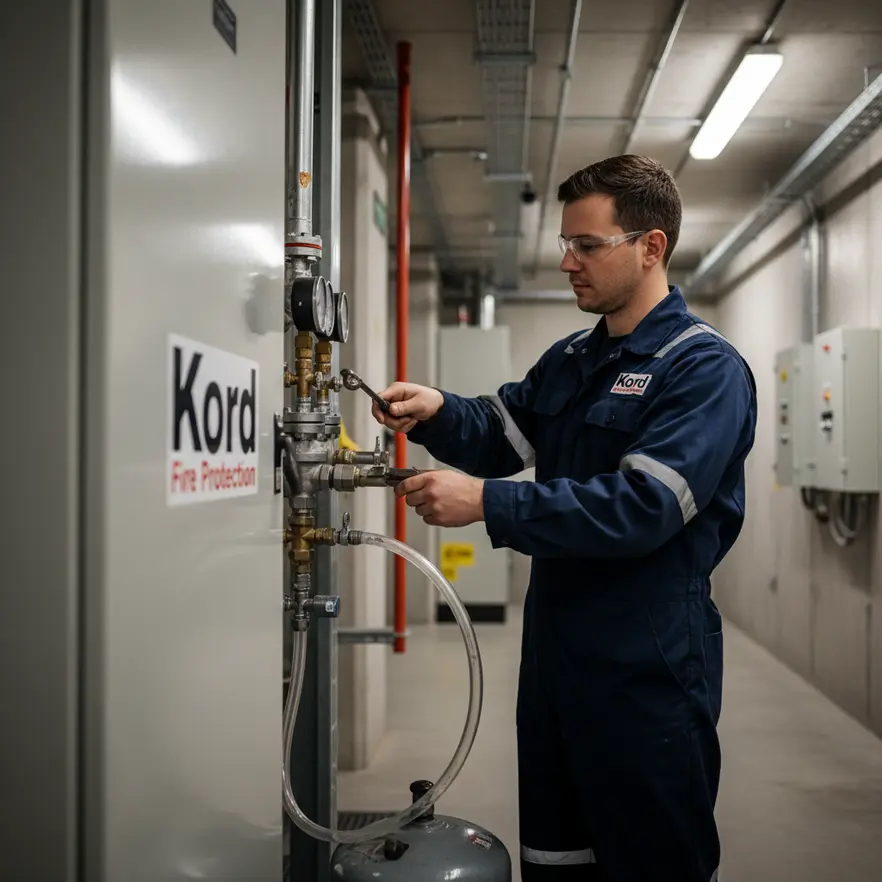
This is where the wise, quietly confident crew from Kord Fire Protection steps in. Their technicians aren’t just experts—they’re like the Gandalf of fire safety. With calm authority and absolutely no wizard robes (though we’re not opposed), they guide you through why hitting the reset button on your suppression system is not just important—it’s critical.
When the Smoke Clears: Why Fire System Recharging Isn’t Optional
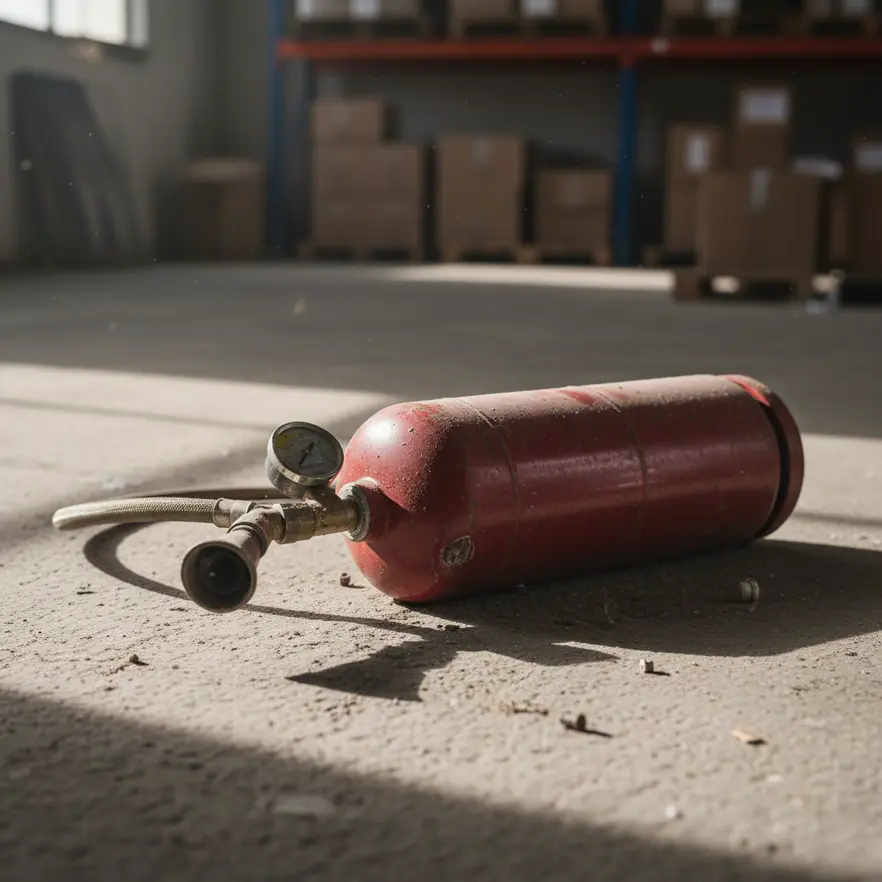
Picture this: your suppression system kicked in during a small grease fire. Great. But after it does its job spraying agent or releasing gas, whether it’s CO₂, FM-200, or a wet chemical, the system is empty—or worse, partially depleted. That means if another fire starts tomorrow or even in the next hour, the response system isn’t exactly battle-ready.
This is not a “wait till the next oil change” kind of situation. If you’re running uncharged or under-maintained, you’re not just rolling the dice—you’re throwing them off a cliff. A recharged fire system means your building, business, and people are protected again. Full stop.
The Dirty Secret Behind Unrecharged Systems
Let’s not beat around the bush: a discharged fire suppression system is essentially useless until it’s recharged. It’s like having a dead phone in an emergency—nice paperweight, lacks function. You might be shocked at the number of properties that move forward with operations after a discharge, unaware they’re running with a lifeless defense system. The city inspector won’t be impressed, and neither will your insurance.
In some places, leaving a system unrecharged could even violate fire codes. So now it’s not just unsafe—it’s illegal. Hard pass, right?

How Kord Fire Protection’s Technicians Break It Down with Zen-like Precision
Kord’s technicians don’t throw around technical jargon like a malfunctioning Siri. When they talk about fire system recharging, they do it with clarity and assurance. Here’s a fun observation: they’ve got a knack for explaining highly technical matters in a way that sounds almost philosophical. Like Yoda, but with a tool belt.
They guide each customer through:
- System Inspection – Checking all components for heat damage or wear
- Agent Refill – Recharging the suppression system with the correct extinguishing agent
- Reset and Test – Ensuring sensors, valve actuators, and gas cylinders are fully functional
By the end of it, you don’t just know what’s being done—you understand why. And that’s a serious shift from the usual technician talk where the explanation makes you question your IQ.
Common Misconceptions About Fire Suppression Discharges
Ah, myths. They’re not just reserved for Bigfoot and the Bermuda Triangle. When it comes to fire safety, misconceptions abound. One popular one is: “The system discharged—so I’m good until my next annual service.”
False. Absolutely, fundamentally, dangerously false.
Real-world translation: “I used the parachute once, so I’ll just pack it away and not check it again until next year.” Unless you’re jumping out of a plane made entirely of poor decisions, you wouldn’t do that. The same logic applies here.
Even partial discharges can compromise system performance. Sensors need recalibrating. Pressure levels must be restored. You’re not just topping off fluids like in a lawn mower—you’re rebalancing a high-stakes, life-saving apparatus.
Dual Column Test: How Long Does Recharging Take vs. What’s at Stake If You Don’t
Time & Process of Fire System Recharging
- Inspection: 30–60 minutes
- Agent Refill: 1–2 hours
- Reset System: 1 hour
- Functionality Test: 30 minutes
Risks of Not Recharging Immediately
- Vulnerability to future fires
- Compliance violations
- Insurance claim issues
- Potential shutdowns during inspections
Post-Discharge Checklist: What Gets Recharged, Replaced, and Reviewed?
After a discharge, a lot happens behind the scenes. Kord technicians roll in like a tactical team from Mission: Impossible, except their goal is to save lives, not chase plot holes.
This checklist shines a light on what parts need attention:
- Discharge Nozzles – Checked for clogs or heat warping
- Detection Tubing or Sensors – Recalibrated and tested for responsiveness
- Agent Cylinders – Weighed, inspected, and refilled
- Manual Pull Stations – Reset and tested
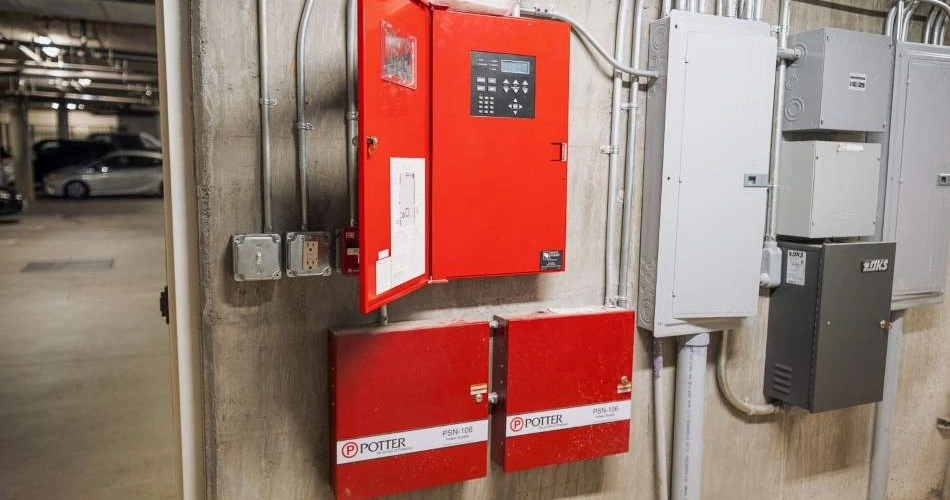
- Control Panels – Reevaluated for signs of software hang-ups
It’s not just a refill. It’s an audit of everything that stood between the fire and a five-alarm disaster. If you’re going to trust this system with your life and property, you better trust that every screw, seal, and sensor is 100% ready.
Why This Matters More for Commercial Kitchens, Server Rooms, & Labs
Some places absolutely cannot afford an uncharged system. Commercial kitchens, for instance, are prone to flare-ups more often than certain celebrity feuds on Twitter (oh, sorry—X, #StillNotOverIt).
Server rooms, data centers, and medical labs are no different. These environments require specialized fire suppression agents that won’t ruin sensitive equipment like water would. A single discharge—intentional or accidental—demands immediate recharging because downtime isn’t just inconvenient, it can cost thousands in damages or production loss.
And let’s face it: “Oops, the server room burned down but at least the burgers didn’t get cold” isn’t going to look good on a report.
Response Time Matters More Than You Think
In the moments after a system discharge, the clock starts ticking. Waiting weeks to service it is like hitting mute during a horror movie and expecting the villain to stop chasing people because it’s quieter.
Kord Fire Protection prides itself on timely, professional responses, helping clients get back to 100% safety coverage with minimal disruption. Not only will they recharge your system; they’ll document the service thoroughly, often required for compliance reports and future inspections.
Frequently Asked Questions (For When You Don’t Want to Admit You’re Googling “fire system go boom what now”)
How soon after discharge should I recharge the system?
As soon as possible—ideally within 24–48 hours. The faster it’s recharged, the safer your property becomes.
Is recharging required by law?
In many areas, yes. Local fire codes often require immediate servicing after a discharge to retain compliance certifications.
Does the entire system need replacement?
Not usually. Most systems are fully restorable with component checks, refills, and testing. Replacements are only done if parts are damaged.
How does a technician know how much agent to recharge?
Technicians calculate volumes based on system specs and cylinder size. They also weigh and inspect canisters post-discharge.
Can half-discharged systems still offer protection?
No. Even partial discharges reduce effectiveness significantly. The system must be fully recharged to meet its design capabilities.
Conclusion: Hit Reset, Not Regret
Fire suppression systems are silent guardians. But just like your favorite action hero, they need to recover after the fight. Fire system recharging ensures your defense stays strong—because the danger doesn’t wait for you to restock. Don’t gamble with half-measures. Call Kord Fire Protection and let their technicians make safety look easy, serious, and yes—even a bit stylish.
Still running on an empty system? Let Kord Fire Protection recharge your protection and your peace of mind. Schedule your fire system recharge today and feel the security of full coverage tomorrow.
Know Your Weapon Before You Fight the Flame
Kord Fire Protection is your go-to when it comes to all things fire protection. For over 20 years, we’ve been serving Southern California with the quality service and equipment to keep your home or business safe at all times. Our competitive prices reflect our unwavering commitment to protecting what matters most in the event of a fire emergency. Give us a call, send an email, or use that form!

Join Our Newsletter!
Get the latest fire safety tips delivered straight to your inbox From our Newsletter.