Coastal Humidity and Fire Alarm Corrosion in Santa Monica
Fire alarm corrosion issues for Santa Monica aren’t just a theoretical nuisance scaring up headlines or buried in technical manuals. No, they’re as real as the salt in the ocean breeze drifting through the coastal homes and businesses of Santa Monica every day. If you’ve ever taken a deep breath near the pier, it’s not just calming — it’s corrosive. Our friends at Kord Fire Protection have been out there in the field, boots on the ground, shaking their heads as they point to rusted control panels, blinking LED indicators that blink no more, and system beeps that sound more like distress calls from a spaceship disaster movie. Houston, we have a problem… and it’s moisture.
Let’s walk through this coastal conundrum calmly, with a voice as deep as the Pacific and a sense of humor as dry as the alarms should be.

Coastal Air: Nature’s Acid Wash For Your Fire Systems
Living by the ocean is the dream. Beachfront views, salty breezes, and unfortunately, early retirement for your building’s electronic components. That seaside charm comes with an uninvited guest: corrosive coastal humidity.
Fire alarm control panels, smoke detectors, and wiring terminals might look robust, but they’re not invincible. When that salty moisture seeps in, it doesn’t knock politely. It corrodes copper, weakens solder joints, and degrades circuit boards faster than you can say “fire code violation.” And don’t assume it’s just the big red box on the wall — this stuff gets into everything.
If you’re imagining your alarms melting like the Wicked Witch of the West at the hint of humidity, it’s not far off — only replace the witch with sensitive circuitry and the bucket of water with an ocean breeze.
Kord Technicians Explain the Sneaky Effects of Salt Air
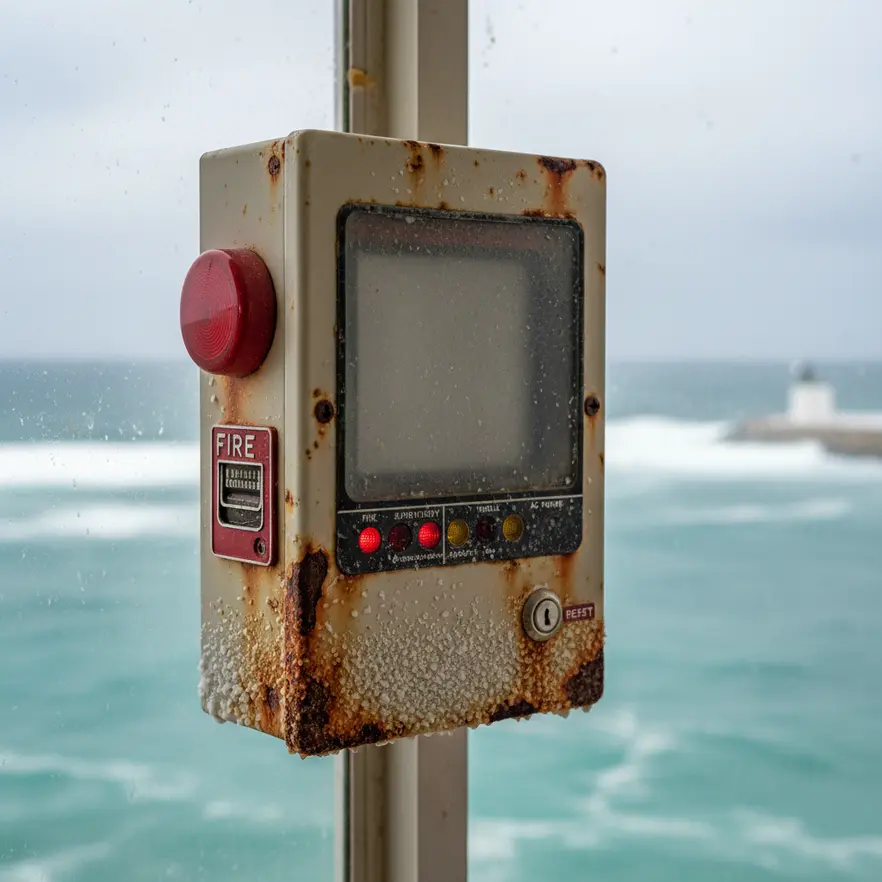
At a recent service job, Kord Fire Protection technicians pulled open a metal alarm panel in downtown Santa Monica. The outside looked fine. Inside? It resembled a crime scene. Greenish corrosion bloomed across connectors. Rust crept along the housing. The tech leaned in and muttered, “That’s what I call digital decay.”
These seasoned pros explain that salt particles embed themselves into nooks and crannies. When combined with moisture — which is practically free-range in coastal zones — it creates an electrolytic reaction that eats electronic components like Pac-Man on a power pellet.
- System failures increase by up to 37% in coastal zones, according to field data.
- Humidity and salt cause micro shorts inside the circuitry, making detection unreliable.
- You won’t always see it — many corrosion points are microscopic but devastatingly effective.
No one hears about humidity heroes in Marvel movies, but if there were a superhero preventing silent alarm failures? Yeah, it’d be a Kord Fire tech wearing a rust-resistant utility belt.
Detecting the Invisible: Early Signs You Might Miss
Coastal corrosion is tricky. Like a spy thriller villain, it works undercover — silently compromising your fire systems until one day, poof… no alert during an emergency.
Routine inspections might catch:
- Random system resets without obvious triggers
- Sluggish panel responses or delay in alarms
- Discoloration around metal and terminal connections
- An odor — yes, electronics gone bad sometimes smell like burning toast
Kord’s technicians often say, “If your alarm beeps like it’s telling ghost stories at 3 AM, it’s probably corrosion whispering sweet nothings to your motherboard.” Not exactly bedtime ASMR, but the analogy sticks.
What Causes Fire Alarm Corrosion on the Coast?
Now let’s break it down like a 90s boy band reunion tour: dramatic, slightly nostalgic, and surprisingly informative.
| Factor | Effect on Electronics |
| Salt-laden air | Accelerates oxidation and metal erosion |
| High humidity | Encourages moisture buildup on boards |
| Temperature swings between day/night | Causes internal condensation |
| Failed enclosures | Let salty air in without filtration |
Each factor might seem like a minor inconvenience alone. But together? They’re the boy band of electronic doom: synced, persistent, and catchy enough to bring down your safety system.
Why Santa Monica Is Uniquely Vulnerable
The geography of Santa Monica throws a little extra spice on this already sizzling issue. We’re talking year-long ocean breeze, sea mist mornings, and mild but consistent dampness. Combine that with buildings from various decades — some with outdated alarm enclosures — and you’ve got a soup that even Gordon Ramsay can’t fix.
Add in industrial pollutants and heavy foot traffic in the city’s heart, and your once pristine fire alarm setup becomes a perfect storm of corrosion exposure. Santa Monica’s charm is part of its challenge — beautiful to live in, but rough on electronics.
Safeguarding Fire Alarm Systems in Coastal Areas
Thankfully, it’s not all doom and digital rot. There are steps — real, actionable steps — to protect your fire systems if you live near the ocean. Here’s what Kord Fire Protection suggests:
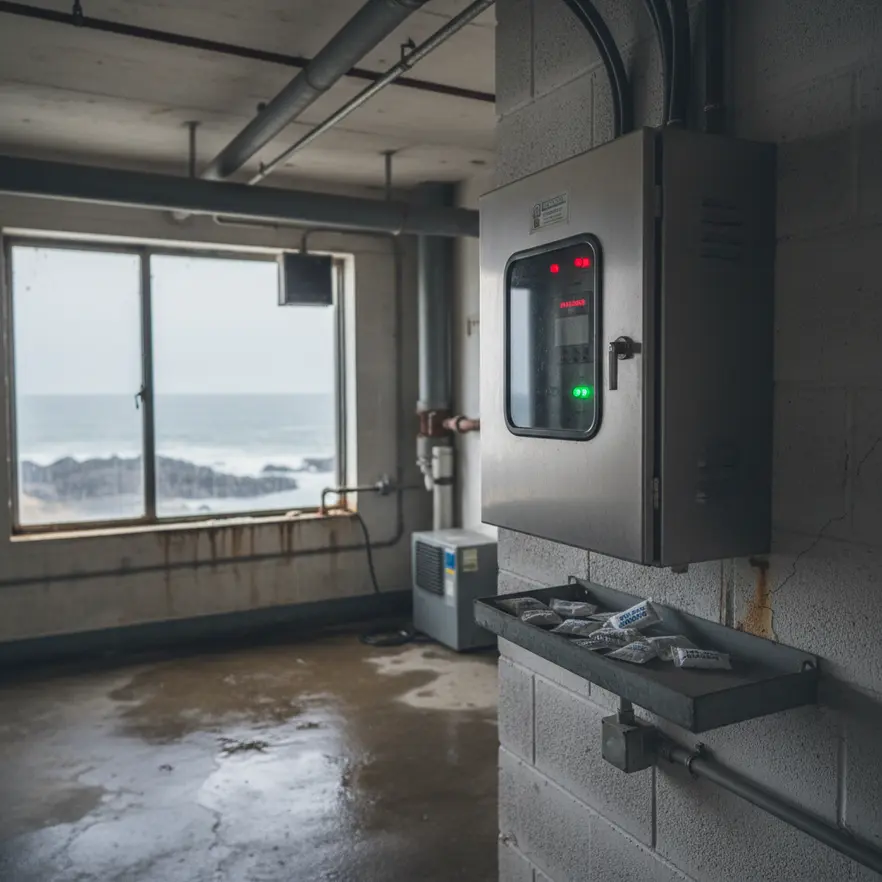
- Use corrosion-resistant enclosures: Materials like stainless steel, anodized aluminum, or NEMA-rated boxes shield panels from salty air.
- Install humidity control: Dehumidifiers and silica packets inside panels reduce internal moisture.
- Apply protective coatings: These are like the sunscreen for your circuit boards — they block moisture and extend lifespan.
- Schedule regular checks: Quarterly inspections, not annual. Don’t wait until the thing wheezes like Darth Vader to check on it.
It’s kind of like gardening. If you live in a dry desert, you tend to your cacti differently than folks in the tropics. Same principle here — coastal systems need special care to thrive.
What Business Owners Need to Know Today
If you own a building near the coast and your last fire alarm check was before your last dentist appointment… it’s time.
Corrosion doesn’t discriminate. It affects small cafés, high-rise condos, vintage beach bungalows — anyone within a few salty breaths of the Pacific. Regulations evolve too. If your system fails during an inspection or, worse, during a fire, not only do you face fines, but insurance battles and liability tremors follow closely behind.
A quick consult with Kord’s skilled team gives you a roadmap, not a lecture. They’ll walk you through what’s working, what’s not, and how to prevent the next fire drill from being the real deal.
Pop Culture Meets Practicality
This may sound silly, but your building’s fire alarm system is basically the Jarvis to your Iron Man suit. It’s smarter than it looks, constantly monitoring, and the moment it glitches — you’re vulnerable.
Would Tony Stark let salt mist mess up his tech? Not a chance. And neither should you.
Sure, it’s fun to picture your fire alarm with a sarcastic British AI voice, but in the real world, it just beeps. Or worse — doesn’t beep when it should. Let’s keep that science fiction, not reality.
FAQ: Short & Snappy Answers to Common Concerns
What causes fire alarm corrosion issues in Santa Monica?
It’s mainly salt-laden coastal air and persistent humidity, which damage electronics over time.
How often should coastal businesses service their fire alarms?
Quarterly inspections are recommended in high-humidity environments like Santa Monica.
Can I protect existing systems from corrosion?
Yes. Enclosure upgrades, protective coatings, and humidity controls help prevent damage.
How does corrosion affect alarm performance?
It can delay signals, cause system failures, or lead to false alarms.
Do all coastal cities face the same issues?
Levels vary, but cities closer to the ocean with frequent mist and sea air, like Santa Monica, face higher risk.
The Kord Fire Technicians Always Have the Last Word
Kord’s team doesn’t just fix alarms — they advise, educate, and empower property managers to protect their assets strategically. When you ask them what happens if you ignore corrosion signs, they’ll tell you with a dry chuckle: “Well, then your next barbecue might come with a fire marshal.”
Humor aside, the damage is serious. The fix is simple — proactive maintenance. And the peace of mind? Priceless.
Conclusion: Don’t Let Humidity Take Down Your Safety Net
It’s time to act, not react. If you’re along the Santa Monica coast, your fire alarm system is under constant attack from the elements. Let the experienced eyes and hands of Kord Fire Protection safeguard your system before corrosion compromises your safety — or your compliance.
Book a system health check today and stay protected long after the sea breeze fades.
Know Your Weapon Before You Fight the Flame
Kord Fire Protection is your go-to when it comes to all things fire protection. For over 20 years, we’ve been serving Southern California with the quality service and equipment to keep your home or business safe at all times. Our competitive prices reflect our unwavering commitment to protecting what matters most in the event of a fire emergency. Give us a call, send an email, or use that form!

Join Our Newsletter!
Get the latest fire safety tips delivered straight to your inbox From our Newsletter.