Sprinkler System Winterization Guide for Australia
Quick Answer: Sprinkler system winterization prevents freezing, expands, and burst pipe damage by draining lines, managing antifreeze where allowed, and maintaining controller settings. A solid Sprinkler System Winterization Guide should also include inspection logs, pressure checks, and post cold season verification. Kord Fire Protection can coordinate life safety readiness alongside the winter plan.
Winter always shows up like a surprise guest who “just wants to stay for a few nights.” Unfortunately, frozen sprinkler systems do not RSVP. They fracture, split, and turn routine cold weather into expensive downtime. This article delivers a practical Sprinkler System Winterization Guide early, then expands into the steps that help facilities across Australia protect their sprinkler integrity before temperatures drop. And yes, it is less dramatic than a Hollywood disaster movie, but the cost of getting it wrong is still very real. If your team also needs broader fire sprinkler system service support, it helps to connect winter preparation to ongoing system care instead of treating it like a once a year panic session. Kord Fire Protection can become a vital partner by aligning winter readiness with fire safety compliance, maintenance planning, and documentation that keeps operations steady.
Why winter pressure turns into a real hazard
In commercial settings, sprinkler pipework often sits in areas that swing in temperature, such as plant rooms, roof voids, loading bays, and external risers. When water freezes, it expands, which raises stress in pipe walls and fittings. Over time, that stress can crack components, loosen joints, and compromise flow paths. So even if sprinklers never operate during the cold snap, the system may already be damaged.
Meanwhile, many facilities run heating schedules inconsistently across multiple zones. As a result, a line that feels “fine” at 10 am may freeze at 3 am. Therefore, winterization cannot rely on quick checks. It needs a planned process that treats the sprinkler system like critical infrastructure.
Common cold weather trouble spots
- roof voids with little temperature control
- loading docks where doors open constantly
- external risers and exposed branch lines
- plant rooms with poor insulation
- warehouse corners that get less airflow monitoring but more drafts
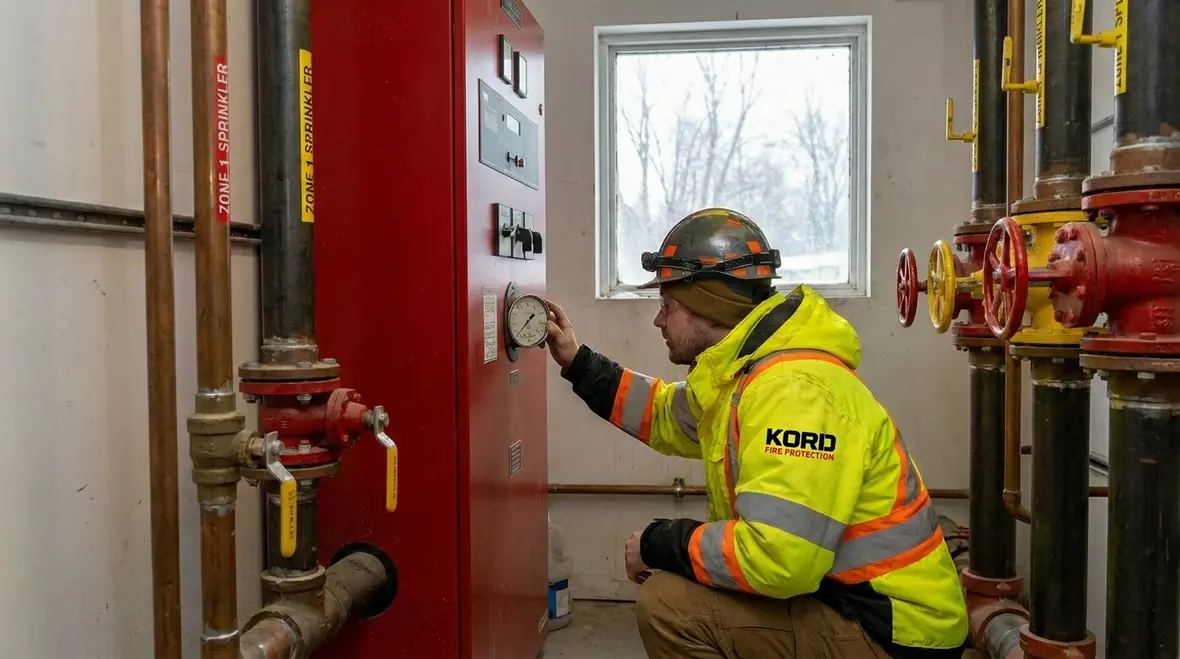
Sprinkler System Winterization Guide: the core steps
A proper Sprinkler System Winterization Guide starts with understanding the system type and its design basis. Then it follows a sequence that reduces the chance of trapped water and verifies the system is safe and reliable after the cold season. The main tasks include these actions:
- System assessment: confirm pipe layout, valve types, low point drains, and any antifreeze provisions already engineered into the design
- Freeze risk mapping: identify exposed sections, poorly insulated runs, areas with drafts, and zones influenced by dock doors and ventilation changes
- Controlled water removal: drain where required, open low points and vents as the design allows, and confirm trapped sections are addressed
- Antifreeze where permitted: if the system design allows antifreeze, verify correct concentration, compatibility, and distribution
- Valve and controller handling: maintain correct supervisory status, protect pump arrangements from freezing, and preserve system settings
- Documentation: record readings, actions taken, dates, and responsible technicians for audit readiness
In business terms, this makes the winter plan measurable. And that measurability matters when incidents, insurers, or auditors ask what changed and when.
Why the order matters
The sequence matters because winterization is not just “drain some water and call it a day.” If a team isolates the wrong section too early, skips a low point, or forgets to verify controller status, the system can end up in a strange half protected state that looks fine until it absolutely is not. That is the fire protection version of assembling furniture with confidence and one mysterious bolt left over.
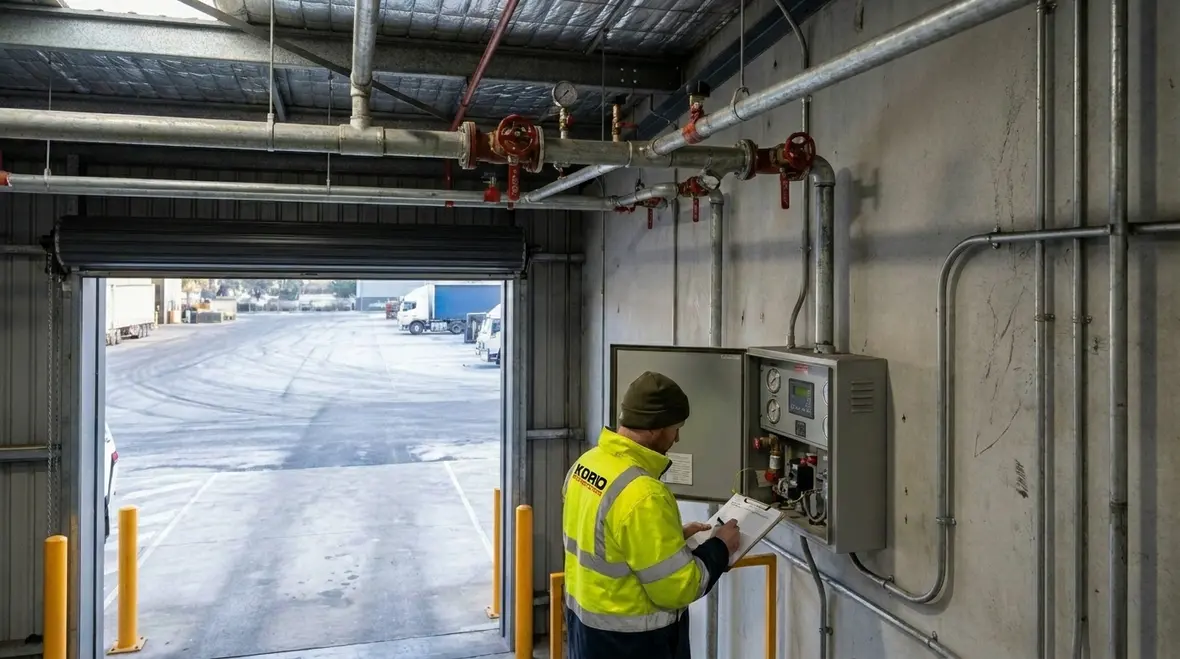
How facilities in Australia should plan for shutdown windows
Industrial and retail operations rarely stop just because the weather does. Therefore, winterization planning should connect to maintenance windows, staffing schedules, and operational risk. For example, a logistics facility may close during nights, which increases the time pipes spend at low temperatures. Then the system becomes more vulnerable.
In practice, facilities should:
- set a lead time that matches temperature forecasts, not vibes
- schedule work when water supply stability and isolations can be controlled
- coordinate with operations to reduce door open time in exposed zones
- plan for staff coverage so valves stay in the correct positions during the cold season
Additionally, large sites across Australia often have multiple buildings, and each building behaves differently. One warehouse bay may have strong airflow, while another stays stagnant. For that reason, Kord Fire Protection can help build consistent standards across your assets while still tailoring the approach to each site’s real conditions.
Practical planning notes for multi building sites
Multi building campuses benefit from mapping each structure separately instead of assuming the whole site behaves the same way. One area may need drainage support, another may need insulation improvements, and a third may need operational controls such as reduced door opening or adjusted heating schedules. Standardisation is helpful, but copy and paste planning is how little problems grow legs.
Drainage, isolation, and antifreeze: choosing the right approach
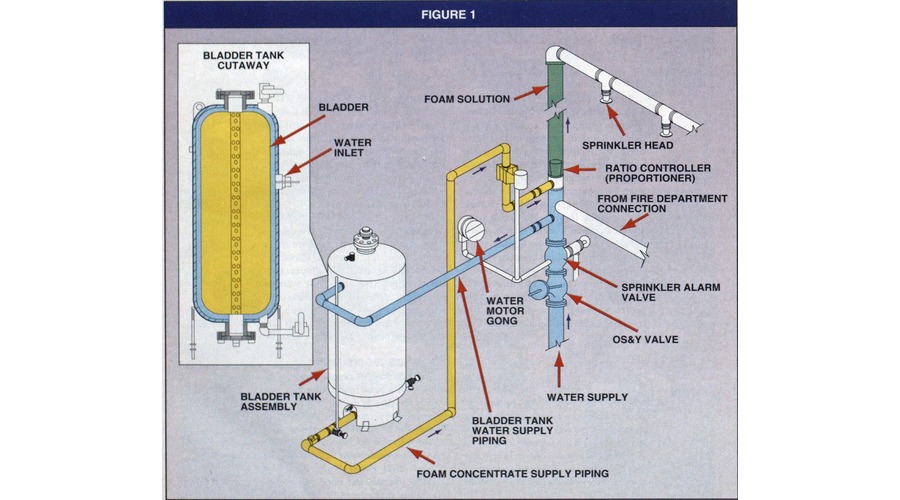
Winterization outcomes depend on the method used, and the method depends on system design. Some sprinkler systems use dry pipe arrangements, which reduce the chance of water freezing in the pipe during idle periods. Still, even dry systems can face freeze risk at control valves, detection areas, and any trapped water zones. In wet systems, the concern is more direct because water remains in the pipe until discharge.
Drainage works by removing water from vulnerable sections. Yet it must be done carefully, because improper draining can leave pockets of water. Therefore, technicians typically verify low points, vents, and any sections that can trap water due to elevation changes or pipe configuration.
Antifreeze, when allowed by the design and approvals, requires correct concentration and compatibility. If the facility uses antifreeze, it must also meet system material requirements and maintain integrity across the season. In other words, antifreeze is not a “spray and hope” solution. It is an engineered change that must be treated like any other life safety control.
Here is where partnership helps: Kord Fire Protection can align the winterization method with the system’s fire safety intent, ensuring the facility does not accidentally create a failure path. Because freezing is not the only risk. A misconfigured valve position can also delay water delivery when a real event happens. And nobody wants to learn that lesson on a Tuesday in front of the fire brigade.
Verification checks that prevent “it should be fine” outcomes
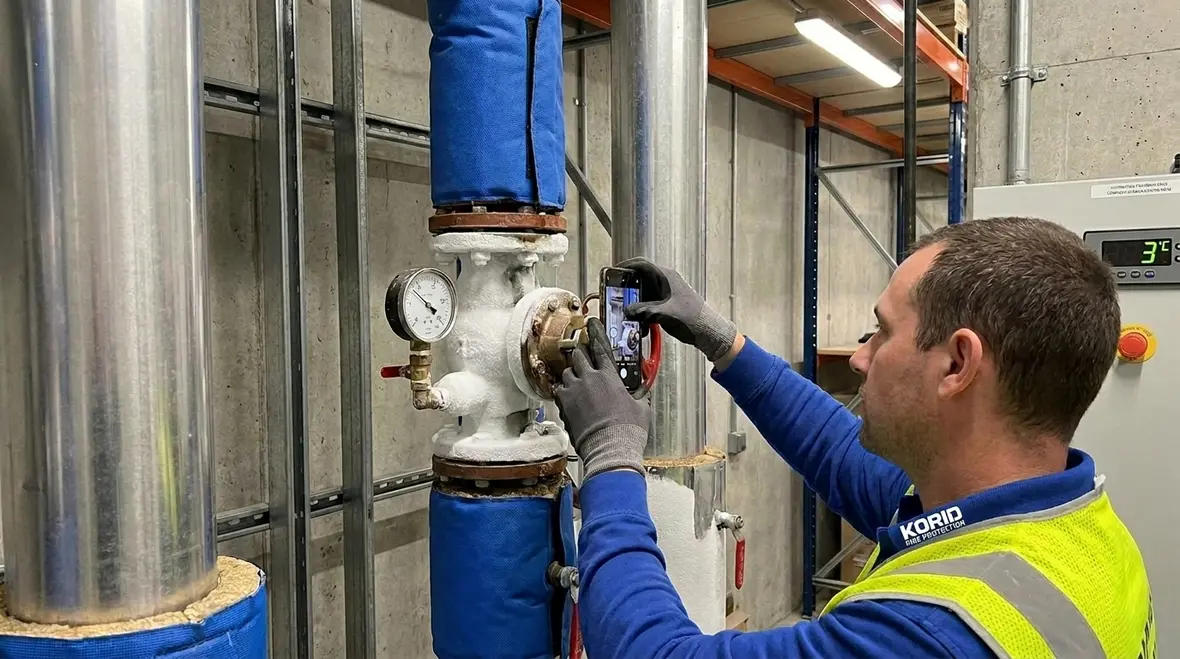
After winterization steps are completed, a facility should verify performance readiness. Verification does not mean a single glance. It means structured checks that confirm system status and reduce uncertainty.
A thorough verification routine usually includes these items:
- pressure and flow status review: check the system’s readiness against expected conditions
- valve position confirmation: confirm supervisory and control valve states match the winter plan
- drain operation confirmation: ensure low points actually drained and vents are set correctly
- freeze point coverage: confirm identified exposed sections received the intended protection method
- pump and controller safeguarding: protect water supply interfaces and ensure controllers remain in correct modes
- record keeping: log all actions, readings, and observations
Then, when warm weather returns, the facility should reintroduce normal operating conditions through a controlled restart. Without that, a system may remain partially isolated or not restored to its correct state. Transitioning back matters as much as the initial winterization because spring is also when people stop paying attention. That is when mistakes sneak in like a vending machine that jams at exactly the wrong time.
Documentation that saves future headaches
Logs should capture drain points opened, readings observed, valve states, dates, technicians involved, and follow up actions required. That record is useful for audit readiness, yes, but it is also useful for the poor soul who has to figure out what happened three months later when everyone else says, “I thought someone handled it.”
Where Kord Fire Protection fits as a vital partner
Kord Fire Protection can support winterization work not just as an add on, but as a structured partner that protects life safety performance and compliance. While winterization focuses on freezing prevention, fire systems still need to meet operational requirements throughout the year. So Kord Fire Protection helps facilities connect winter readiness with maintenance planning, documentation, and system integrity checks.
For industrial, retail, and facilities across Australia, this partnership also helps reduce the “handover gap” between trades and departments. Then the sprinkler system remains consistent across sites, and the facility team avoids scrambling when cold weather arrives early. In short, the goal is simple: prevent pipe bursts, prevent system downtime, and maintain confidence that the fire protection system will perform when it must.
If your site also needs a broader reliability mindset for life safety infrastructure, Kord Fire Protection’s article on fire alarm battery backup systems and power reliability tips is a useful companion read. It pairs nicely with winter planning because systems rarely fail one problem at a time. They prefer teamwork.
FAQ
Conclusion and call to action
Winterization is not a “nice to have.” It is a risk control that reduces pipe bursts, operational downtime, and costly repairs. A strong Sprinkler System Winterization Guide helps facilities plan, drain or protect correctly, verify readiness, and document every step.
For sites across Australia, Kord Fire Protection can support the winter plan as a vital partner, keeping life safety performance aligned with your real operating conditions. Schedule your winterization assessment now.

Join Our Newsletter!
Get the latest fire safety tips delivered straight to your inbox From our Newsletter.