
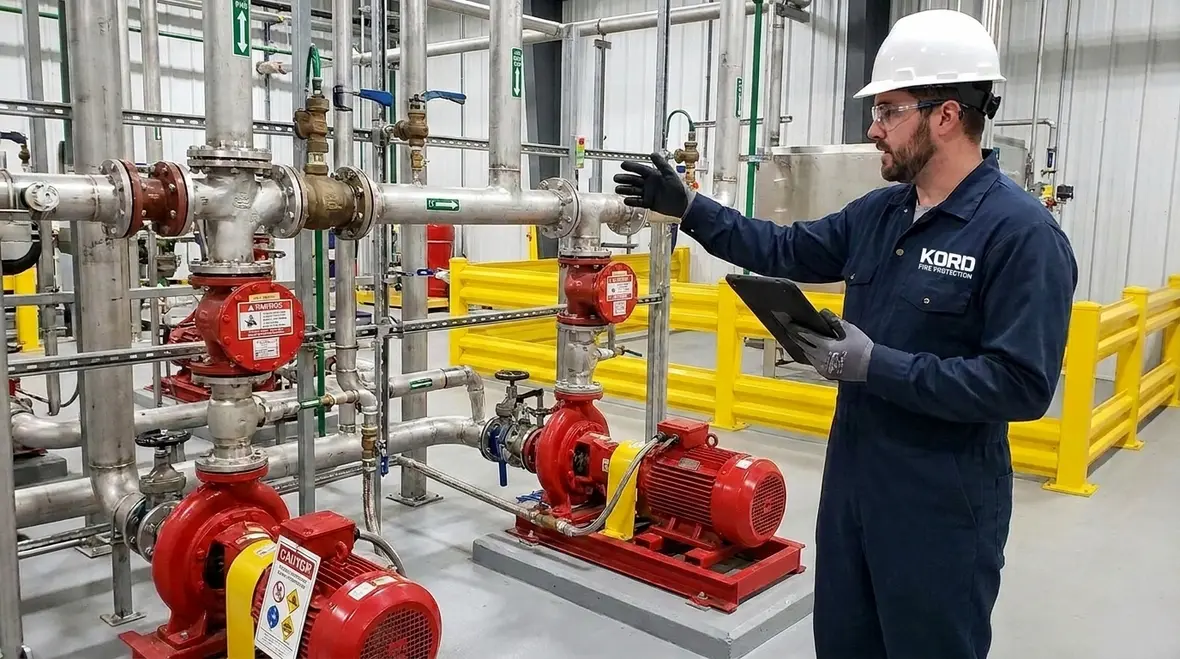
NFPA 45 Section 9.5: Equipment Requirements for Ignitible Liquid Service
Quick Answer: NFPA 45 Section 9.5 sets enforceable equipment criteria for systems handling ignitible liquids, focusing on preventing ignition, controlling leakage, and maintaining safe operating conditions. Compliance depends on correct equipment selection, installation practices, inspection readiness, and ongoing maintenance.
Understanding NFPA 45 Section 9.5 in plain operational terms
NFPA 45 Section 9.5 establishes the equipment requirements for ignitible liquid service within facilities that process, handle, or store ignitible liquids. In day to day operations, these requirements function as a risk control framework: equipment must be suitable for the properties of the liquid, installed to minimize ignition sources, and maintained so that failures do not convert a routine release into an ignition event.
Facilities often ask how these NFPA 45 ignitible liquid equipment requirements apply when equipment ages, when processes change, or when contractors swap components. The practical answer is that Section 9.5 does not only govern initial installation. It also influences how facilities verify condition, continuity, and safe performance over time, including documentation and inspection readiness.
What Section 9.5 expects from ignitible liquid equipment
While exact wording must be confirmed against the published NFPA 45 text for the facility’s adopted edition, Section 9.5 generally focuses on equipment integrity and ignition control. For commercial, industrial, and retail occupancies, the compliance pattern typically involves four operational pillars.
1) Equipment suitability for service conditions
Ignitible liquids can create hazards through vapor generation, contact with hot surfaces, static discharge, or ignition of leaked or trapped product. Equipment selected for ignitible liquid service must address the expected temperature range, pressure and flow conditions, and compatibility needs. Material selection, ratings, and design controls support safe operation throughout normal and abnormal conditions.
2) Controls that reduce ignition potential
Section 9.5 requirements commonly translate into controlling ignition sources around transferring, storing, and circulating liquids. This includes limiting hot work and managing electrical classification, grounding and bonding where static may accumulate, and ensuring components do not create ignition triggers during routine use.
3) Leak prevention and containment
Equipment must be installed and maintained so that leakage does not become a repeating ignition scenario. Failures often occur at seals, gaskets, couplings, hoses, fittings, valves, pumps, and flexible connections. Facilities must manage deterioration, vibration related wear, and maintenance practices that inadvertently introduce ignition risk.
4) Maintenance readiness and inspection access
Many compliance failures come from the inability to demonstrate condition and performance during inspections. Section 9.5 drives the need for documented inspection and repair practices, with adequate access to components that inspectors or fire protection teams must verify.
For facilities building a stronger inspection and maintenance workflow, review fire protection services in Southern California for support with inspections, repairs, installations, and emergency response.
Common equipment categories affected by NFPA 45 ignitible liquid equipment requirements
Commercial facilities typically encounter Section 9.5 expectations across several equipment groups. The same operational theme applies regardless of the asset type: equipment must remain safe, suitable, and leak resistant for ignitible liquid service.
Transfer and dispensing systems
- Hoses, couplings, and nozzles: often fail due to wear, cracking, improper storage, or damaged coupling interfaces.
- Dispensing valves and metering devices: commonly develop seal leaks at stem packings and body joints.
- Connection practices: improper coupling and missing bonding can increase ignition likelihood during transfer.
Pumps, compressors, and circulation equipment
- Mechanical seals: a frequent leak point that can also create vapor accumulation near ignition sources.
- Bearings and couplings: wear increases friction and heat, especially when maintenance is deferred.
- Motor and control interfaces: incorrect or degraded components can undermine electrical safety.
Storage containers and associated piping
- Tank and vessel fittings: manways, vents, and connections can degrade and create uncontrolled vapor escape.
- Piping joints: flange gaskets and threaded fittings often show seepage that becomes a persistent ignition pathway.
- Vent and pressure relief arrangements: malfunctioning devices can elevate release risk during process upsets.
Electrical and instrumentation tied to ignitible liquid equipment
Equipment that interacts with ignitible liquid systems often involves electrical components and control systems. If equipment ratings or installation practices are inconsistent with the hazardous conditions, compliance gaps can appear during third party reviews.
Where compliance breaks down in the field
Even well designed facilities experience drift over time. Section 9.5 enforcement tends to concentrate on observable conditions and the facility’s ability to prove safe maintenance performance. The most common failure patterns include the following.
Deferred maintenance at leak points
Seals, gaskets, hose assemblies, and flexible connections show degradation without visible catastrophic failure until product migrates into surrounding areas. NFPA 45 ignitible liquid equipment requirements are difficult to meet when inspections become reactive rather than planned.
Unauthorized component substitutions
Contractor swaps can introduce incompatible materials, incorrect ratings, or components that do not match the original hazardous location intent. Substitution errors can be subtle, such as altered venting, mismatched materials, or changed hose specifications.
Inadequate grounding and bonding practices
Static discharge and poor bonding continuity can raise ignition probability during transfers. Facilities often discover grounding issues during pre operational testing after maintenance, or during survey reviews triggered by incidents or near misses.
Loss of inspection access
Equipment that becomes obscured by racks, insulation, or storage configurations reduces the ability to verify condition. Inspectors typically focus on what can be visually confirmed and what documentation shows.
Inspection, testing, and documentation: making Section 9.5 defensible
Operational compliance depends on how equipment is verified, not only how it is installed. A defensible program aligns maintenance tasks, inspection frequencies, and corrective actions to the risk profile of the ignitible liquid system.
Practical inspection focus areas
- Leak checks: confirm seals, flanges, valves, and hose assemblies remain dry and vapor tight.
- Mechanical integrity: verify support, alignment, and vibration related wear that can create overheating and failure.
- Electrical safety alignment: confirm that equipment and controls remain in their intended condition for the hazardous environment.
- Vent and relief verification: ensure vents and pressure relief paths remain unobstructed and functional.
Maintenance program mechanics
A strong maintenance program includes a clear approval process for replacement parts, documented repair procedures, and verification steps after work. Facilities should also define what constitutes reportable defects, how quickly repairs occur, and how temporary controls are managed until corrective actions finish.
For additional compliance planning support, Kord Fire Protection can help establish inspection and maintenance alignment across hot work controls, hazard assessments, and life safety systems. If your facility needs structured guidance for high hazard operations, review Kord Fire Protection services for ongoing support.
Facilities that want stronger recordkeeping can also review fire safety system documentation for compliance and fire safety compliance management with automated documentation to tighten inspection readiness.
How Kord Fire Protection supports ongoing Section 9.5 readiness
Kord Fire Protection helps commercial facilities maintain NFPA aligned safeguards by coordinating inspections, documenting conditions, and supporting maintenance verification. This reduces the likelihood that ignitible liquid equipment problems remain hidden until a compliance event or incident forces urgent corrective action.
Frequently Asked Questions
Conclusion and next step
Facilities should treat NFPA 45 ignitible liquid equipment requirements as an ongoing performance standard, not a one time installation checklist. The fastest path to defensible compliance starts with a structured equipment inspection plan, part replacement controls, and documented maintenance verification. Contact Kord Fire Protection to assess current equipment condition, identify high risk failure points, and help build a repeatable inspection and maintenance workflow aligned to Section 9.5 expectations.

Join Our Newsletter!
Get the latest fire safety tips delivered straight to your inbox From our Newsletter.



