
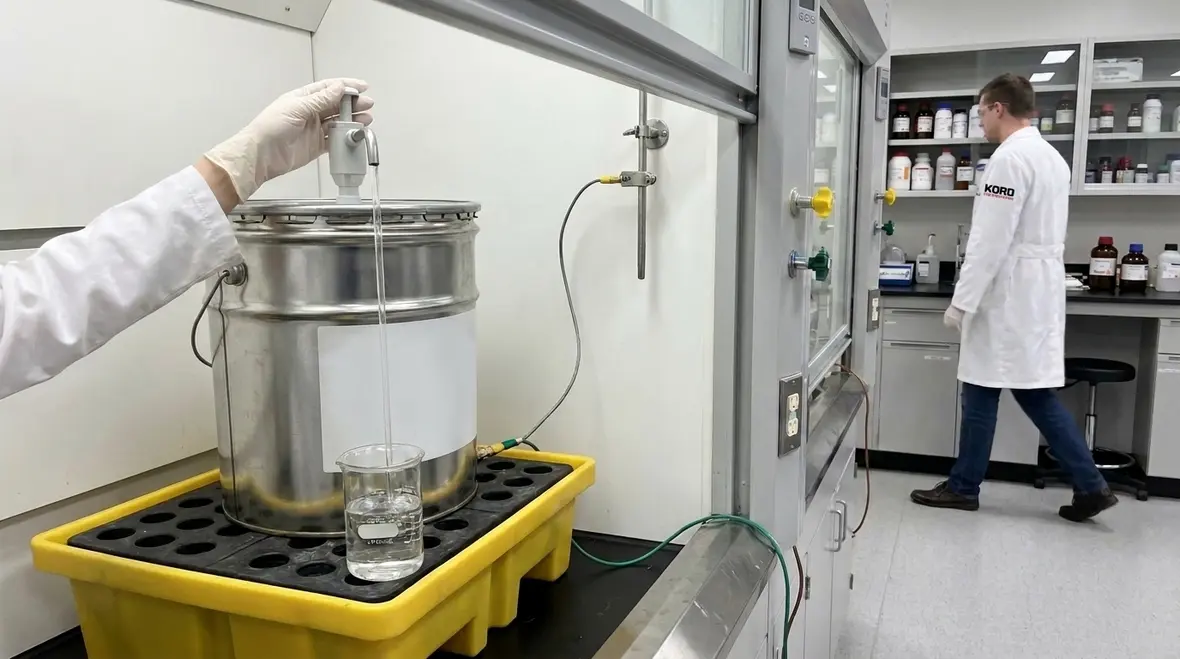
NFPA 45 Section 9.3: Liquid Dispensing Requirements for Labs
Quick Answer
NFPA 45 Section 9.3 sets expectations for how laboratories store, handle, and dispense liquids to reduce fire and exposure risk. For NFPA 45 laboratory liquid dispensing, compliance hinges on proper containers, dispensing control, grounding and bonding, and inspection ready documentation, plus routine maintenance of key equipment.
Facilities that want broader inspection and documentation support can also explore fire protection services in Southern California, especially when laboratory operations overlap with larger compliance schedules and system maintenance demands.
What NFPA 45 Section 9.3 is aiming to prevent
NFPA 45 Section 9.3 focuses on operational controls during liquid dispensing, where ignition sources, incompatible materials, and spill or release events tend to concentrate. In real facilities, the failure mode is rarely a missing “rule” on paper. It is usually a breakdown in everyday practices: improper transfer containers, degraded valves, blocked spill control, misrouted tubing, or staff bypassing procedures because the setup is inconvenient. A compliant approach treats liquid dispensing as an engineered process with ongoing verification, not a one-time installation.
NFPA 45 laboratory liquid dispensing: Core operational expectations
NFPA 45 laboratory liquid dispensing systems typically require controls that manage three risks at the same time: fire ignition potential, release control, and safe handling of hazardous liquids. Facilities should align laboratory procedures and equipment design so the dispensing pathway from storage to point of use remains predictable and inspectable.
1) Dispensing equipment must be suitable for the liquid
Facilities often underestimate material compatibility. Tubing, seals, hoses, gaskets, and metering components can soften, swell, or embrittle when exposed to specific chemicals or concentrations, leading to leaks or increased vapor escape. Commercial compliance programs should verify that the dispensing assembly uses chemical compatible components, and that maintenance procedures include replacement schedules based on observed condition, not “until it fails.”
2) Containers and transfer devices must be managed to prevent spills and runaway release
Dispensing operations frequently fail during bottle swaps, line reconnections, or end-of-use shutdown. A robust compliance plan limits uncontrolled flow by using correctly sized pumps or valves, proper backflow prevention, and secure connections. It also ensures spill control is part of the system, not an afterthought, by planning for secondary containment and rapid control of drips during disconnection.
3) Ignition risk controls for flammable liquids
When dispensing flammable liquids, the facility must reduce ignition risk through engineering and operational controls. That includes static electricity control strategies where applicable (grounding and bonding practices), avoidance of improper heating sources, and safe handling of vapors. In practice, ignition risk escalates when flexible lines degrade, grounding straps are missing, or maintenance teams do not test continuity after rework.
How to handle the “inspection ready” documentation and staff workflow
NFPA 45 laboratory liquid dispensing requirements assume that the facility can demonstrate consistent control. Compliance reviews usually uncover gaps in training logs, change management, and evidence of inspection. To reduce audit friction, commercial lab operators should maintain a single source of truth for each dispensing location, including equipment identifiers, last inspection dates, corrective actions, and operating procedure references.
Daily and periodic checks that prevent most defects
Many issues are detectable without advanced instruments. Effective programs include routine checks for:
- Leaking fittings, damaged tubing, and worn seals
- Proper labeling and identification of liquids and transfer media
- Secure connections and correct valve positions
- Evidence of bypassed interlocks or improvised adapters
- Spill control readiness, including secondary containment placement
After repairs or reconfiguration, facilities should require verification steps that match the risk level, such as leak verification and grounding checks where static control applies. These steps should be assigned to trained personnel with documented outcomes.
Change management for labs is where compliance often breaks
Lab workflows evolve: new chemicals, new concentrations, new containers, and different dispensing rates. A disciplined compliance program treats these changes as engineering modifications. It should confirm compatibility, update procedures, and ensure dispensing hardware still matches NFPA 45 laboratory liquid dispensing intent. Otherwise, the facility unintentionally creates a new hazard profile without updating documentation or inspection criteria.
Common failure points during dispensing operations
Even well designed systems degrade. The most common practical failure points include:
Degraded hoses, tubing, and seals
Chemical exposure can compromise elastomers and polymers. The risk is not only leakage. Small leaks often increase vapor exposure and can lead to localized ignition if ignition sources are present. Preventive replacement based on exposure history typically performs better than “visual only” inspections.
Improper reconnection and adapters
Improvised fittings cause poor sealing, wrong internal diameters, or dead ends where liquid can pool. These conditions increase the likelihood of drips during disconnect and can create unexpected vapor release. Facilities should standardize connector types and stock approved parts for rapid swap outs.
Static control gaps for flammable liquid transfers
If grounding and bonding methods are disrupted by maintenance, the dispensing process can shift from safe to risky. Inspectors frequently look for missing or damaged ground paths, poor contact, and unverified continuity after modifications.
Spill control not integrated into workflow
Spill trays, secondary containment, and clear access for emergency response must match the dispensing location. A spill control device that blocks disconnection or is routinely removed for convenience undermines the entire intent. Operational controls should preserve spill control placement during normal use.
Operational compliance support: what a commercial partner should do
Kord Fire Protection supports commercial, industrial, and retail facilities by helping teams maintain ongoing compliance readiness for laboratory and hazardous operations. For NFPA 45 laboratory liquid dispensing, a strong service partner can bring disciplined inspection planning, documentation support, and practical maintenance verification that reduces repeat findings.
To reinforce a broader compliance approach across facility life safety systems, Kord Fire Protection also supports code aligned readiness through systematic testing and recordkeeping. For more guidance on practical code-aligned fire safety planning, see Building Fire Safety Emergency Planning for Commercial Facilities and explore Kord Fire Protection’s blog for related commercial compliance topics.
Frequently Asked Questions
Take action now
Facilities should confirm that each dispensing location uses chemical compatible hardware, maintains spill control, and preserves ignition risk protections such as grounding and bonding where applicable. Then they should validate inspection routines and strengthen change management so new chemicals and setups do not drift out of compliance. Engage Kord Fire Protection to perform ongoing inspection planning, maintenance verification, and documentation support to keep NFPA 45 laboratory liquid dispensing practices audit ready.

Join Our Newsletter!
Get the latest fire safety tips delivered straight to your inbox From our Newsletter.



