
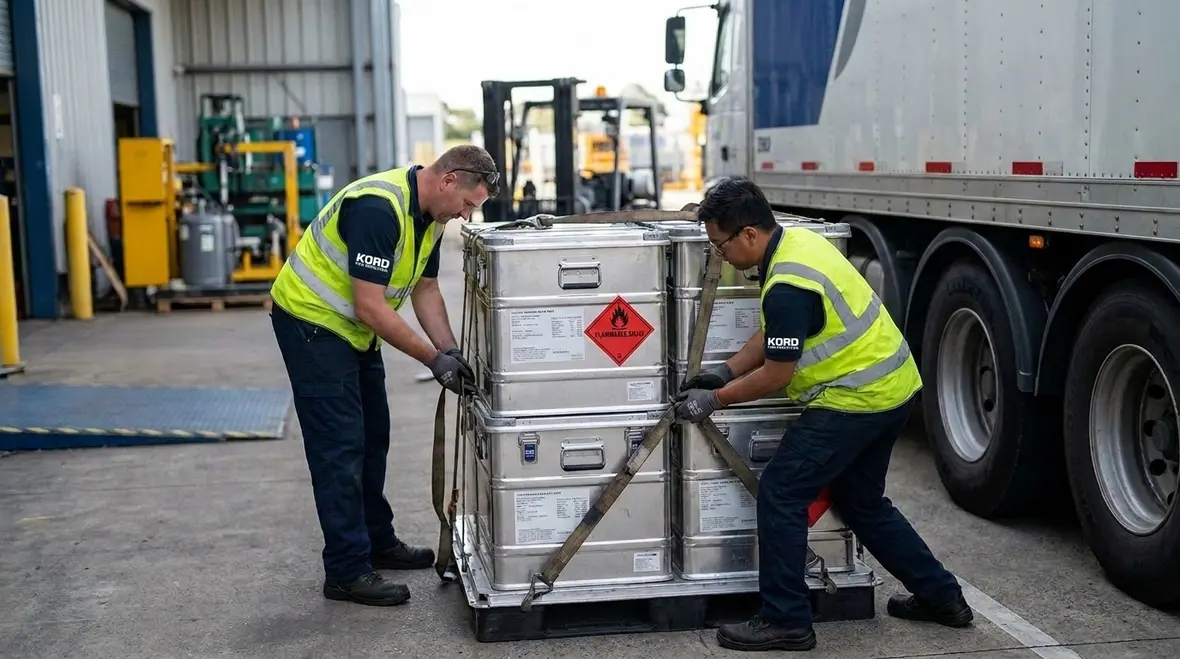
NFPA 40 Section 7.5: Transportation Requirements for Nitrate Film
Quick Answer: NFPA 40 Section 7.5 establishes how cellulose nitrate film must be transported to reduce ignition, contamination, and exposure risks. Compliance focuses on packaging, labeling, segregation, vehicle readiness, handling practices, and documentation so hazardous conditions do not escalate during transit.
If you’re reviewing related nitrate film compliance topics, it also helps to understand every NFPA code cited by the Nitrate Film standard, since Section 7.5 rarely operates in a vacuum and tends to make more sense when you see the broader compliance web around it. ([kordfire.com](https://kordfire.com/nfpa-40-section-2-2-every-nfpa-code-cited-by-the-nitrate-film-standard/?utm_source=openai))
What NFPA 40 Section 7.5 Requires During Transit
NFPA 40 transportation requirements cellulose nitrate film apply specifically to how film is moved after storage and before delivery. Section 7.5 addresses the operational controls that prevent a small fire scenario from becoming a major emergency during loading, transit, and unloading. Many commercial and retail facilities discover gaps only after an incident review, which is why transportation compliance needs the same discipline used for fixed fire protection systems and storage rooms.
In practice, “transport” is not limited to the drive. NFPA 40 expectations typically extend to pre shipment staging, loading and unloading, secure vehicle or container condition, and the handling procedures used by receiving and shipping staff.
How Cellulose Nitrate Film Is Handled Before It Moves
Before transportation begins, the facility must confirm the film is correctly prepared for movement. Common compliance failures occur when teams treat nitrate film like general merchandise, skip verification steps, or allow mismatched packaging. For facilities managing film inventories in commercial, industrial, or retail environments, the operational checklist should be more strict than routine warehouse practices.
Pre shipment control points that prevent downstream issues
Condition verification: Confirm the film is fit for transport and not showing signs of deterioration that would increase fire risk or complicate emergency response.
Packaging readiness: Ensure containers protect against damage that can expose film, contaminate adjacent materials, or compromise closures.
Labeling and identification: Verify that shipments are identifiable to support correct handling and appropriate response if a defect or incident occurs.
Segregation planning: Separate nitrate film from incompatible materials during staging and in transfer areas.
These controls directly support NFPA 40 transportation requirements cellulose nitrate film because transportation safety begins at the point of departure, not at the carrier handoff.
Vehicle, Loading, and Transit Controls That Drive Compliance
During transportation, Section 7.5 centers on preventing ignition sources, limiting escalation potential, and maintaining control of the shipment. Facilities should treat vehicle selection and readiness as part of the hazard management plan, not as an administrative task.
Vehicle and container integrity checks
Vehicle condition: Confirm the transport unit is in sound mechanical condition and suitable for the load type, including protection against conditions that can create ignition sources.
Secure placement: Load placement must prevent shifting, impact damage, and container compromise during normal transit and handling.
Protection against environmental stress: Manage exposure risks that can affect storage integrity, including moisture intrusion and temperature related deterioration factors.
Emergency readiness: Ensure the shipping crew and receiving crew understand what to do if an abnormal condition appears.
Loading and unloading procedures that commonly fail
The highest risk moments often occur at loading docks and receiving bays. Typical failure points include rushed staging, incomplete segregation, inadequate supervision, and confusion over what staff are authorized to do during a transfer.
Commercial facilities should incorporate a documented process for loading and unloading that includes responsible personnel roles, stop work criteria, and a verification step before departure and before the load is accepted at the destination.
Inspection, Documentation, and Training Requirements in Real Facilities
NFPA 40 transportation requirements cellulose nitrate film are sustained through inspection, traceability, and personnel competency. A transportation program that looks good on paper still fails if teams cannot demonstrate consistent implementation during audits.
What to document for audit readiness
Shipment records: Identify what was moved, when, where, and by whom.
Packaging and labeling checks: Maintain evidence that containers and identifiers meet the expected standard.
Training logs: Provide proof that staff assigned to transport operations know how to handle nitrate film safely.
Incident and deficiency history: Track corrective actions for deviations found during receiving inspections or post shipment reviews.
For many facilities, the hardest part is ensuring that receiving staff apply the same level of rigor as shipping staff. Kord Fire Protection helps commercial teams build defensible documentation practices that align with fire safety expectations and supports ongoing compliance reviews.
To strengthen your broader fire safety program, facilities can also align related hazards and controls through Kord Fire Protection’s guidance on commercial fire protection services. ([kordfire.com](https://kordfire.com/?utm_source=openai))
Common Compliance Gaps and How to Prevent Them
Even well managed organizations encounter recurring gaps in nitrate film transportation programs. These gaps typically fall into predictable categories that can be mitigated with a repeatable inspection and maintenance cadence.
Frequent gaps seen during compliance reviews
Inconsistent staging controls: Nitrate film handled near general inventory increases the chance of mixing and reduces emergency control.
Poor handoff between departments: Shipping staff may prepare shipments correctly, but receiving teams accept loads without verifying packaging and labeling.
Unverified packaging condition: Containers damaged during internal movement or staging compromise transport safety.
Training drift: When staffing changes or contractors rotate, procedural knowledge often weakens without formal refreshers.
Missing operational checklists: Teams rely on memory instead of a structured, job specific checklist.
Operational defenses that work
Facilities should implement role based checklists for staging, loading, and receiving; assign responsibility for verification steps; and require corrective actions with documented closure. Kord Fire Protection supports these efforts by providing practical, field oriented fire safety service that helps keep transportation related controls aligned with your overall risk management plan.
How Kord Fire Protection Supports Ongoing NFPA 40 Compliance
Transportation compliance for cellulose nitrate film is only one layer. Commercial and industrial facilities must also maintain the fixed and operational fire safety systems that protect employees, customers, and the building. Kord Fire Protection helps organizations reduce compliance gaps by applying a service approach built around inspection, testing, documentation, and maintenance. ([kordfire.com](https://kordfire.com/?utm_source=openai))
Common engagement areas include program reviews, readiness checks, and coordination of fire safety expectations across shipping, receiving, and facilities management so the entire workflow stays consistent.
Frequently Asked Questions
Conclusion and Call to Action
NFPA 40 Section 7.5 compliance succeeds when procedures, packaging verification, segregation controls, and crew training operate as one system. Facilities should not wait for an incident or an audit to discover workflow gaps. Kord Fire Protection can help commercial teams review transportation related fire safety readiness, strengthen documentation, and maintain an effective ongoing compliance program. Contact Kord Fire Protection to schedule a compliance focused assessment and practical improvement plan.

Join Our Newsletter!
Get the latest fire safety tips delivered straight to your inbox From our Newsletter.



