
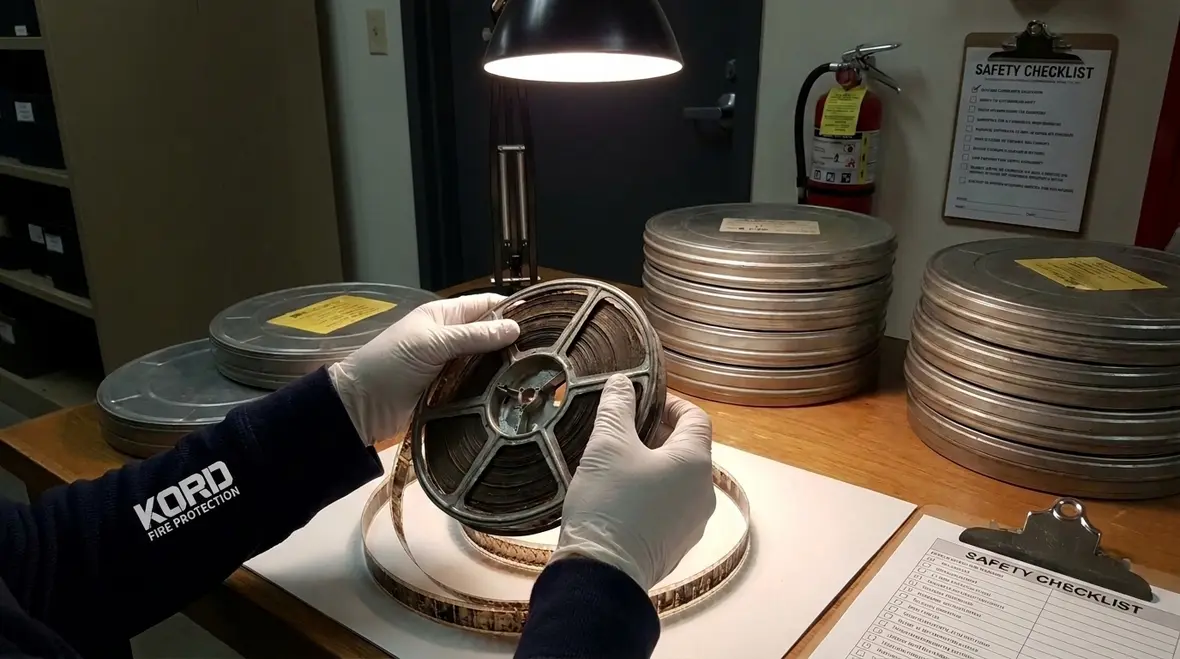
NFPA 40 Section 7.1: General Conditions for Handling Nitrate Film
Quick Answer: NFPA 40 Section 7.1 sets the baseline operational and environmental requirements for handling nitrate film, emphasizing controlled storage, safe transfer practices, and conditions that limit heat, contamination, and ignition risk. Facilities must align procedures, inspection routines, and documentation to the section’s general requirements.
Facilities managing specialty hazards often benefit from broader fire suppression system services that support inspection readiness, maintenance continuity, and a more disciplined response environment before small workflow issues become big compliance headaches.
Why NFPA 40 general conditions handling nitrate film matters
Commercial and industrial facilities that manage nitrate film often underestimate how quickly “general conditions” translate into real-world risk. NFPA 40 general conditions handling nitrate film requirements drive practical decisions such as how film is staged, how areas are ventilated, how ignition sources are controlled, and how staff handle damaged or deteriorating stock. In many sites, the biggest compliance failures occur during non-routine tasks like receiving, short-term holding, wet film recovery, and reboxing. These are exactly the moments when procedures, housekeeping, and inspection rigor determine whether safe conditions persist.
What NFPA 40 Section 7.1 generally requires
NFPA 40 Section 7.1 establishes general conditions intended to reduce the likelihood of ignition, limit fire growth, and protect people and property during handling operations. While Section numbering and details can vary by edition, the operational intent remains consistent across NFPA guidance: facilities must control the handling environment, prevent conditions that accelerate deterioration, and ensure that procedures are followed and verified.
In practice, compliance programs built for NFPA 40 general conditions handling nitrate film typically include the following operational controls:
- Environmental control: Maintain handling and storage areas under conditions that reduce deterioration and lower fire risk. This includes controlling heat exposure and supporting ventilation and moisture management where required.
- Ignition source prevention: Control or remove ignition sources in handling areas and ensure hot work and electrical work follow proper permitting and isolation practices.
- Handling discipline: Require trained staff to follow approved methods for removing, transferring, and returning film to containment or storage systems.
- Condition monitoring: Implement routines to identify films showing damage, leakage, or active deterioration indicators before they are handled broadly.
- Housekeeping and separation: Keep handling areas free of combustible debris and manage storage layouts so that film remains segregated as required by facility planning and risk assessment.
Handling workflow controls that make Section 7.1 achievable
Facilities often write procedures but fail on the workflow steps that staff actually execute. A robust NFPA 40 program for nitrate film handling aligns the “paper plan” with the physical workflow. The most effective compliance systems create clear cues, inspectable steps, and fail-safe practices.
1) Receiving, staging, and short-term holding
Short-term holding is where many incidents begin. Section 7.1 general conditions handling nitrate film is typically supported by controls such as:
- Receiving only in designated zones with controlled access.
- Using approved transfer containers and labels so film does not sit unattended.
- Limiting the duration film remains outside containment during reboxing or cataloging.
- Documenting where film is stored during each stage of processing.
2) Transfer and internal movement
Movement from storage to screening, inspection, or duplication should be method-driven. High-compliance sites standardize:
- Routes that avoid unnecessary traffic and reduce exposure to ignition sources.
- Operator training that addresses film fragility, static discharge considerations, and safe container handling.
- Return procedures that prevent “left behind” film that later requires unscheduled retrieval.
3) Damaged film and deteriorating stock
Nitrate film can deteriorate in ways that increase hazard. Facilities should have a controlled response plan that allows staff to segregate and handle damaged film without spreading contamination or elevating ignition risk. A strong program includes clear decision triggers, escalation paths, and storage or treatment steps aligned with internal hazardous materials controls and NFPA 40 intent.
Common compliance gaps and failure points
Commercial facilities often implement nitrate film controls only for normal operations, then experience drift during audits. The following gaps frequently undermine NFPA 40 general conditions handling nitrate film compliance:
- Uncontrolled storage during downtime: Film left in workrooms, corridors, or temporary bins longer than the documented allowance.
- Inconsistent housekeeping: Combustible debris accumulation or poor waste segregation in handling areas.
- Hot work and electrical work not integrated into the nitrate film plan: Permitting exists, but isolation and communication to the nitrate workflow fails.
- Staff not refreshed on deterioration indicators: Operators can miss early signs of damage, leading to broader handling than allowed.
- Inspection coverage gaps: Required checks occur on schedule for storage rooms but not during handling transitions or after process changes.
From a risk standpoint, these failure points share a pattern: they break the link between general conditions and real handling behavior. Preventing that drift is a core service need for ongoing compliance.
Inspection, documentation, and maintenance expectations
Section 7.1 general conditions handling nitrate film is best treated as an operational system, not a one-time compliance checklist. Effective programs include routine verification, corrective action tracking, and documentation that can support internal reviews and external inquiries.
What to inspect regularly
- Handling area condition: Cleanliness, separation practices, and control of combustibles.
- Container integrity and labeling: Evidence that film is stored and moved in approved, maintained containers.
- Access control: Whether only authorized personnel enter handling zones.
- Operational readiness: Confirmation that procedures are readily available and staff can follow them without improvisation.
- Alterations and process changes: Updates after workflow modifications, facility renovations, or staffing changes.
Maintenance alignment
Maintenance matters because many general condition controls depend on equipment performance and environmental systems. Commercial facilities should ensure that supporting life safety and fire protection systems remain in serviceable condition and that maintenance records show continuity. For nitrate film programs, maintenance also includes periodic validation of area controls that support safe handling conditions.
For related fire protection planning and system reliability, facilities often reference Kord Fire Protection resources such as this fire protection services guide to maintain readiness and support ongoing compliance through inspections, testing, and documented maintenance.
How Kord Fire Protection supports ongoing Section 7.1 compliance
NFPA 40 compliance succeeds when it becomes repeatable, verifiable, and supported by disciplined maintenance. Kord Fire Protection helps commercial, industrial, and retail facilities reduce compliance drift by supporting inspection planning, coordination of corrective actions, and documentation practices that align with real handling workflows.
Typical support areas include:
- Routine inspection readiness: Align testing schedules with facility workflows so nitrate film handling does not proceed under degraded conditions.
- Corrective action tracking: Identify recurring gaps that surface during audits, then verify closure with evidence.
- Operational support: Assist facilities in maintaining a consistent approach to fire safety controls that support nitrate film handling environments.
When facilities treat NFPA 40 general conditions handling nitrate film as a living program, they protect people and assets and reduce the risk of operational surprises.
Frequently Asked Questions
Call to action
Facilities handling nitrate film should evaluate whether their Section 7.1 procedures match real workflow, including receiving, staging, internal movement, and damaged film response. Engage Kord Fire Protection to strengthen inspection readiness, verify maintenance continuity, and help keep documentation aligned with NFPA 40 expectations. Start with a compliance gap review so your nitrate film handling remains controlled, repeatable, and audit ready.

Join Our Newsletter!
Get the latest fire safety tips delivered straight to your inbox From our Newsletter.



