
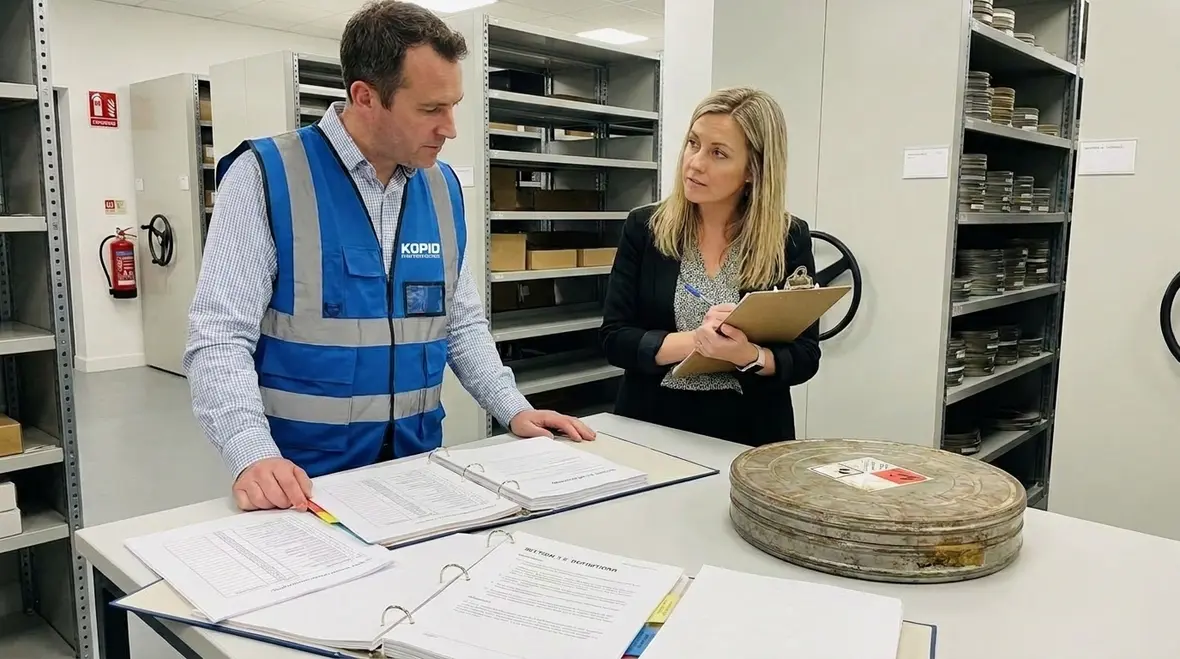
NFPA 40 Section 3.2: Official NFPA Terms Used in the Nitrate Film Code
Quick Answer: NFPA 40 Section 3.2 defines key terms used throughout the Nitrate Film Code. A NFPA 40 official definitions cross reference helps facilities interpret requirements consistently, avoid inspection failures caused by misunderstanding terminology, and standardize training, labeling, and maintenance procedures.
Facilities building out stronger recordkeeping and inspection workflows may also benefit from a broader fire protection system documentation checklist, especially when terminology has to stay consistent across logs, SOPs, and corrective action records.
Why Section 3.2 matters for real-world compliance
Commercial, industrial, and retail operations that handle nitrate film, or support film storage and processing environments, rely on accurate interpretation of NFPA 40 language. Section 3.2, Official NFPA Terms Used in the Nitrate Film Code, establishes the meanings of terms that appear across the code text.
When facility teams do not align their operating documents, training records, and inspection checklists to these definitions, the organization risks inconsistent implementation. That inconsistency commonly shows up during authority having jurisdiction (AHJ) reviews, insurance loss-control audits, internal safety audits, and sprinkler or detection maintenance verifications.
For teams searching for a NFPA 40 official definitions cross reference, the goal is not to memorize definitions. The goal is to operationalize them so every relevant procedure, log entry, and work order uses the same terminology the code uses.
What Section 3.2 covers in the code framework
NFPA 40 Section 3.2 consolidates official NFPA terms used throughout the Nitrate Film Code. These terms function as shared language between the code, designers, installers, inspectors, and facility operators.
How definitions affect engineering and operations
- Procedures: Defined terms guide how staff conduct inspections, handling, storage practices, and emergency actions.
- Maintenance scope: Defined terms determine which components must be checked, tested, cleaned, or documented.
- Inspection acceptance criteria: Definitions help inspectors judge whether conditions match the code intent.
- Documentation quality: Correct terminology reduces ambiguity in logs and management of change (MOC) workflows.
In facility programs, terminology drift is a common hidden failure point. A facility may use an internal label that sounds similar to a code term but does not match the official definition. During plan review or inspection, that mismatch can trigger rework, delayed approvals, or corrective actions that require new training and revised procedures.
How to build an NFPA 40 official definitions cross reference for your site
A practical cross reference links each Section 3.2 term to the facility location where the term drives action. This approach improves audit readiness and makes compliance repeatable, not dependent on individual staff knowledge.
Step 1: Create a single “source of truth” definitions index
- Index each Section 3.2 term in an internal register.
- Capture where the term appears in NFPA 40 requirements in your applicable edition.
- Assign an owner: operations, safety, or facilities.
Step 2: Tie definitions to procedures, not just PDFs
- Map each defined term to SOP steps and checklists.
- Update training materials so staff use the same language as the code.
- Ensure forms, inspection logs, and work orders include the defined terms as labels or fields.
Step 3: Verify with inspection and maintenance records
Facilities should validate that field documentation aligns with the definitions. Kord Fire Protection often supports commercial sites by reviewing inspection records, maintenance intervals, and test documentation to ensure the program language matches the code language. This reduces “paper compliance” gaps that emerge during AHJ walkthroughs.
Where facilities typically fail during AHJ and insurance reviews
Even when a facility has the right systems installed, misinterpretation of code terminology can derail compliance. The failure points below commonly trace back to Section 3.2 term usage and its impact on subsequent requirements.
1) Incomplete staff training on defined terminology
Training often focuses on equipment names, but not on the defined terms that describe operating conditions and inspection triggers. When staff cannot connect a defined term to an action, they document incorrectly or miss required steps.
2) Inspection checklists that use internal terms only
Internal checklists may use names that do not match the defined terminology in NFPA 40. Inspectors may interpret the checklist differently than operations intends, leading to findings and corrective action requests.
3) Maintenance logs that do not support defined “as required” conditions
Defined terms can determine what is considered a complete inspection, a documented test, or an acceptable condition. If logs do not reflect the definition intent, a maintenance history can become hard to defend.
4) Outdated procedures after changes in staffing or facility layout
Facilities frequently update equipment, racks, storage practices, or staffing assignments. Without MOC discipline, the written procedures may remain aligned to old terminology usage, producing compliance drift.
What a compliant maintenance and inspection program should look like
A strong program operationalizes the Section 3.2 definitions across inspections, tests, and maintenance. That means consistent labeling, consistent recordkeeping, and consistent corrective action thresholds.
Commercial facility standards to adopt
- Written SOPs tied to defined terms: Each SOP step references the code term it implements.
- Inspection frequency and documentation: Schedules match the code driven needs and are documented immediately after completion.
- Corrective action workflow: Deviations trigger investigations that record what term was misapplied and how future prevention will work.
- Equipment and access controls: Defined storage, handling, and environment terms guide access permissions and housekeeping standards.
How Kord Fire Protection supports ongoing compliance
Kord Fire Protection helps commercial and industrial facilities maintain defensible fire protection compliance by supporting inspection readiness, maintenance verification, and documentation alignment. For teams implementing an NFPA 40 official definitions cross reference, Kord can assist by reviewing current records, identifying terminology inconsistencies, and coordinating practical corrective actions that stand up to AHJ and insurance scrutiny.
If you are tightening procedures across inspections, testing, and preventive maintenance, Kord Fire Protection’s fire sprinkler inspection and maintenance services fit naturally into a broader compliance program built to stay inspection-ready.
Frequently Asked Questions
Next step: confirm your terminology and documentation alignment
If your nitrate film program is due for an inspection cycle, a compliance refresh, or an internal audit, Kord Fire Protection can help you validate that your procedures and records align with NFPA 40 Section 3.2 terminology. Request a compliance support review to identify definition driven gaps early and close corrective actions efficiently before your next AHJ or insurance assessment.

Join Our Newsletter!
Get the latest fire safety tips delivered straight to your inbox From our Newsletter.



