
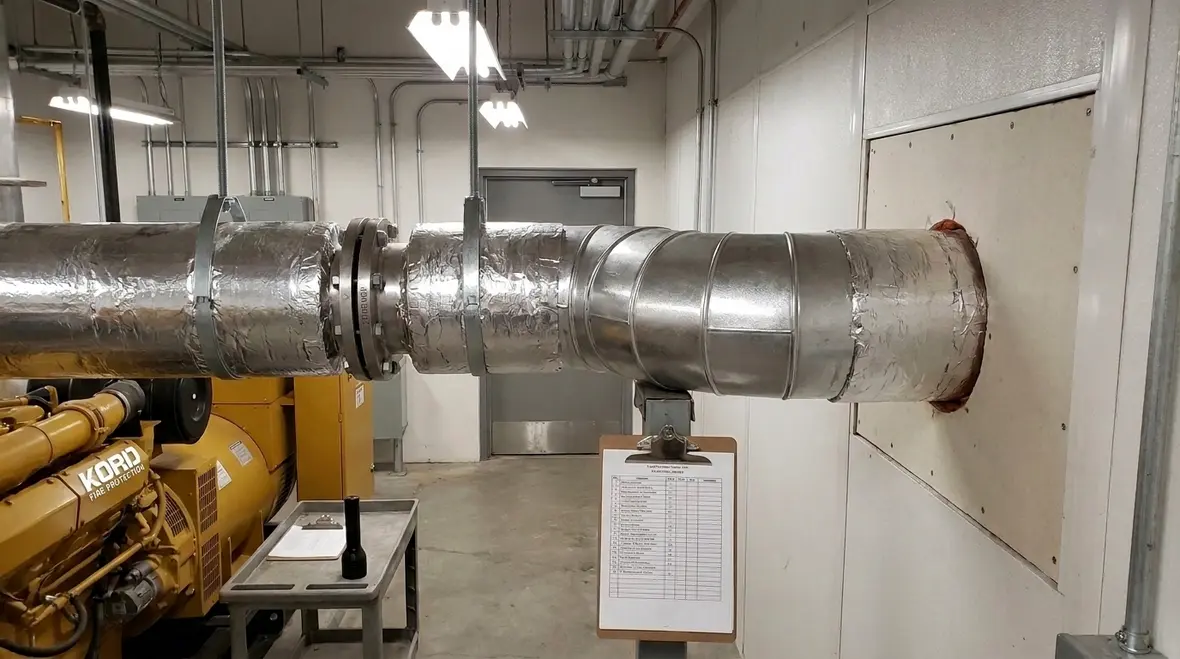
NFPA 37 Section 8.2: Installing Engine Exhaust Systems to Code
Quick Answer: NFPA 37 Section 8.2 sets prescriptive requirements for installing engine exhaust systems so hot gases, combustion byproducts, and potential fire sources remain safely contained. Compliance focuses on system construction, routing, clearances, supports, and termination, plus verification through inspection and ongoing maintenance.
Engine exhaust work affects both life safety and property protection in commercial facilities. NFPA 37 engine exhaust system installation requirements govern how exhaust piping is sized, supported, routed, cooled, and terminated to reduce fire risk from heat transfer, soot accumulation, and mechanical damage. For sites such as industrial production floors, loading and warehousing areas, retail back-of-house spaces, and fleet maintenance bays, these controls also support code readiness during AHJ plan review and routine inspection.
If your facility team is also tightening up broader pump readiness and documentation, Kord Fire Protection’s fire pump testing requirements guide is a helpful companion resource for planning inspections, maintenance, and compliance workflows.
What NFPA 37 Section 8.2 Covers for Exhaust System Installations
NFPA 37 Section 8.2 focuses on ensuring the installed exhaust system performs safely under normal operation and foreseeable abnormal conditions. It addresses the physical configuration of the exhaust train, including how components connect to the engine, how the system runs through the facility, and how it discharges to the outdoors.
In practical terms, the code emphasis tends to fall on four compliance outcomes:
- Heat management: preventing excessive radiant heat exposure to combustibles.
- Gas tightness and integrity: controlling leaks that can discharge hot products into occupied or combustible spaces.
- Mechanical stability: ensuring the system remains supported despite vibration, thermal cycling, and impact risks.
- Safe termination: directing exhaust where it will not create ignition hazards or backflow issues.
Because exhaust systems operate at high temperatures and experience frequent thermal expansion and contraction, Section 8.2 requirements often intersect with facility fire safety policies, hot work controls, and preventive maintenance programs.
Design and Routing: How Installations Meet Clearance and Heat Transfer Expectations
Exhaust routing determines the majority of installation risk. The most common commercial compliance challenges occur when exhaust piping runs through or near combustible building elements, storage racks, electrical rooms, or concealed spaces where heat build up and leakage can go unnoticed.
Keep exhaust away from combustibles and ignition sources
NFPA 37 engine exhaust system installation requirements typically drive installers to maintain safe clearances and use appropriate materials or shielding when the exhaust system must pass near combustible construction or equipment. Compliance also requires careful coordination with sprinkler coverage and other life safety features.
Control radiant heat and convective exposure in occupied areas
Radiant heat can ignite materials even when the pipe surface is not in direct contact with combustibles. In commercial and industrial spaces, hazards also include cardboard packaging, palletized goods, insulation, and dust laden surfaces. Installers should verify that protective measures are installed consistently along the entire run, not only at penetrations.
Avoid concealed failure modes
Routing that places exhaust components in shafts, underfloor chases, or behind removable panels can delay detection of leaks, corrosion, and joint deterioration. Section 8.2 style compliance favors configurations that can be inspected and maintained without disrupting major building systems.
Connections, Supports, and Expansion: Common Points of Failure During Installation
Commercial exhaust installations frequently fail inspections because of workmanship and long term durability issues rather than basic routing. Vibration from engines, thermal cycling, and accidental contact from forklifts or maintenance activities can degrade exhaust integrity over time.
Install joints and connections for gas tightness
Technicians and contractors should ensure that joints are properly assembled, aligned, and secured. Poor alignment stresses mating surfaces and gaskets, which can lead to premature failure and detectable soot staining during routine observations.
Use correct supports and alignment to handle thermal movement
Supports must manage weight while allowing safe movement from expansion and contraction. Rigid mounting where movement is expected can cause cracking, loosening, or separation at connections. Conversely, excessive flexibility can allow vibration-driven fatigue at elbows and transition points.
Account for vibration and structural interfaces
Facilities with heavy equipment, frequent floor traffic, or frequent operational cycling require robust attachment planning. Contractors should coordinate the exhaust support layout with building structure and confirm that hangers, clamps, and brackets remain secure through thermal cycles and operational vibration.
Penetrations and Termination: Where Code Compliance Often Becomes Operational Risk
Penetrations and termination represent high scrutiny areas during plan review and inspection because they can discharge heat and byproducts into locations where ignition risks increase. These areas also tend to accumulate soot and corrosion, which can impair performance.
Penetrations through walls, floors, and roofs
Installing exhaust systems to code requires attention to how the system passes through barriers. Fire stopping approaches must prevent hot gas migration and maintain the integrity of the building compartment. Smoke leakage from exhaust spaces can also undermine detection and response strategies.
Termination must prevent hazardous reentry and unsafe discharge
Safe termination helps prevent exhaust from impinging on building openings, walkways, or ventilation intakes. Terminations should also minimize the likelihood of water intrusion and ensure stable flow performance. For commercial sites, termination placement can affect tenant comfort and can create secondary hazards if exhaust is directed at loading docks or areas where combustible materials are handled.
Maintain clearances around discharge points
After installation, facility operations can change the risk profile. Storage practices, seasonal cover usage, and construction modifications may reduce clearance over time. NFPA 37 engine exhaust system installation requirements work best when the termination area is protected through operating procedures and inspection routines.
Inspection, Testing, and Ongoing Maintenance After Installation
Even a well installed system can drift out of compliance if maintenance does not detect degradation early. Commercial operations should treat exhaust systems as an inspected life safety and equipment reliability component, not only as a mechanical accessory.
What maintenance teams should check routinely
- Joint leakage indicators: soot marks, discoloration, and unusual exhaust odors.
- Corrosion and thinning: especially at elbows, hangers, and transition zones.
- Support integrity: loose clamps, cracked brackets, and misaligned piping.
- Clearances and shielding: changes in stored materials or newly introduced combustibles.
- Termination condition: obstructions, damage, and proper discharge location.
Common failure patterns that trigger corrective actions
Field observations often show repeated issues at gasketed joints, high vibration locations, and transitions between rigid and flexible segments. Another frequent driver is “as installed” documentation that does not match the “as found” condition after facility modifications.
Why a documented compliance program matters
Kord Fire Protection supports commercial facilities by helping maintain code readiness through inspection support, maintenance guidance, and service verification strategies. This approach helps reduce downtime during inspections and strengthens risk management for industrial, commercial, and retail environments.
For related guidance and service collaboration, explore Kord Fire Protection’s resources here: Kord Fire Protection.
Planning and Compliance Workflow: Getting Exhaust Installations Approved and Verified
To avoid rework, facilities should align installation design, contractor delivery, and verification activities. This reduces the likelihood of failing an AHJ review or discovering deficiencies after the system is already integrated into the building.
Step-by-step approach used on commercial projects
- Preinstallation review: confirm routing, supports, and termination location against applicable requirements and site constraints.
- Coordinate with building systems: confirm interfaces with fire dampers, sprinklers, barriers, and access panels.
- Document the install: capture component listings, joint locations, support method, and penetration details.
- Inspection readiness: verify accessible areas for visual checks and ensure shielding does not interfere with maintenance access.
- Closeout and maintenance handoff: provide facility teams with a maintenance checklist aligned to observed installation features.
How commercial facilities reduce future drift
Facilities often change rapidly. Warehouse layouts change, storage practices evolve, and tenant buildouts create new penetrations. A workable compliance plan includes periodic walkdowns, updated training for maintenance and operations staff, and targeted corrective maintenance when conditions shift.
Teams looking to improve long term verification habits may also want to review Kord Fire Protection’s article on fire pump testing procedures and acceptance criteria, which pairs well with this compliance focused planning approach.
Frequently Asked Questions
Conclusion and Call to Action
NFPA 37 Section 8.2 requirements directly affect how safely commercial engines discharge high temperature exhaust into and through a building. Facilities can reduce rework and inspection risk by planning routing, supports, penetrations, and termination carefully, then validating the system through ongoing inspection and maintenance. Kord Fire Protection can help commercial sites maintain long term code readiness with practical compliance support. Contact Kord Fire Protection today to review your engine exhaust system installation and maintenance program.

Join Our Newsletter!
Get the latest fire safety tips delivered straight to your inbox From our Newsletter.



