
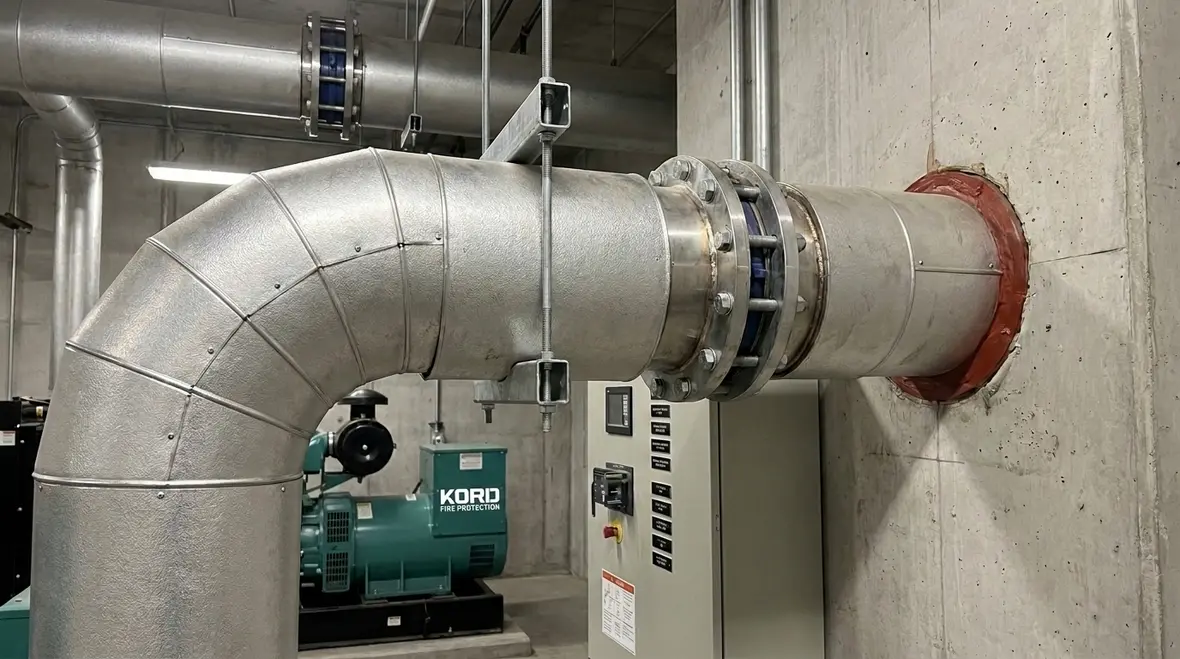
NFPA 37 Section 8.1: Design and Construction of Engine Exhaust Systems
Quick Answer
NFPA 37 Section 8.1 sets performance and installation requirements for engine exhaust systems to reduce fire risk from hot surfaces, sparks, corrosion, and improper routing. Facilities must align system design, materials, clearances, supports, and inspections with the standard’s intent and local AHJ expectations.
For a related code topic that often affects the same engine driven equipment setup, see NFPA 37 Section 4.2 on structural support and anchoring of engines.
Why NFPA 37 engine exhaust system design construction matters in commercial facilities
Commercial, industrial, and retail properties commonly use internal combustion engines for standby power, material handling, backup ventilation, and process equipment. When exhaust systems fail, they often fail the way fire investigators expect: hot components contact combustibles, sparks escape into concealed spaces, corrosion creates new leak paths, or damaged supports allow shifting and clearance loss. NFPA 37 engine exhaust system design construction addresses these hazards by requiring proper routing, secure supports, appropriate materials, and controlled exhaust discharge conditions.
In practice, compliance gaps frequently appear during renovations, tenant build outs, and equipment swaps where new engines are installed without verifying exhaust path changes, clearances, and maintenance access. Kord Fire Protection supports facilities through plan review support, inspection preparation, and ongoing maintenance coordination to keep exhaust hazards under control.
What Section 8.1 requires: the design and installation intent
NFPA 37 Section 8.1 focuses on how engine exhaust systems are designed and constructed to prevent ignition of nearby combustibles and to maintain safe operating conditions throughout the system’s lifecycle. The intent is not only to manage heat and sparks during normal operation, but also to limit the consequences of common failure conditions such as exhaust leaks, component deformation, and deterioration over time.
While facilities often concentrate on “where the exhaust exits,” Section 8.1 compliance typically depends on the whole system assembly. That includes the exhaust piping and muffling components, mounting and support provisions, joints and connections, sealing practices, and the discharge location relative to openings, roof edges, walls, and combustible storage or building features.
Design controls that reduce ignition risk
Routing, discharge location, and exposure to combustibles
Exhaust discharge paths must prevent hot gases and any particulate matter from impinging on combustible building materials or accumulating in pockets where heat can build up. In commercial facilities, this becomes a coordination issue between fire protection, mechanical contractors, roofing installers, and building maintenance teams. Roof penetrations, eave clearances, near-door discharge, and proximity to rooftop HVAC intakes require deliberate layout and field verification.
Materials, corrosion resistance, and thermal performance
Engine exhaust operates in harsh thermal and chemical conditions. Over time, corrosion can thin piping, degrade gaskets, and create unexpected exhaust leakage. A compliant design uses materials appropriate for the exhaust temperature and byproducts, and construction methods that resist deterioration long enough to remain safe between maintenance cycles. Maintenance programs should account for soot accumulation, condensate effects, and vibration-driven wear at joints.
Supports, hangers, and clearance management
Supports and hangers must keep the exhaust system stable under thermal expansion, engine vibration, and building movement. Clearance loss is a common real world failure point, especially where systems pass through walls, slabs, or ceilings. Facilities should verify that insulation blankets, fire stopping interfaces, and protective shields remain intact after mechanical rework and after any roof maintenance.
Construction and components: where inspections typically find problems
Fire inspectors and insurance surveyors typically focus on evidence that the installation matches the engineered design and remains “as built” after commissioning. The most frequent problem categories include:
- Exhaust leakage at joints and connections: soot staining, loose clamps, missing seals, and degraded gaskets often indicate loss of containment.
- Improper penetration protection: missing or damaged fire stop materials, wrong sleeve selection, or unsafe gaps around penetrations.
- Insufficient clearance to combustibles: exhaust piping too close to stored materials, stacked merchandise shelving, cable trays, or ceiling spaces.
- Blocked or ineffective discharge geometry: discharge placed where it can be redirected by structural features or where debris accumulation increases risk.
- Worn hangers and support hardware: corrosion, deformation, and loose fasteners that allow sagging and shifting.
For facilities with industrial loading docks, seasonal inventory changes, or frequent tenant upgrades, these failure points show up more often because equipment placement and maintenance access evolve over time.
Operational checks and maintenance expectations
NFPA compliance does not end at installation. Exhaust systems experience operational cycles that can loosen fasteners, alter exhaust flow, and stress joints. Effective maintenance ties design requirements to inspection routines.
Recommended inspection focus areas
- Visual integrity: look for soot trails, cracks, missing insulation, and signs of hot gas impingement.
- Support condition: verify hangers are secure, corrosion is not undermining structural stability, and system alignment remains correct.
- Penetration and fire stopping: confirm integrity of sleeves, fire stop systems, and seals after any maintenance that touches the building envelope.
- Discharge area hazards: remove debris and confirm exhaust discharge does not endanger nearby combustibles or create persistent hot spots.
Common maintenance failure modes
Facilities often perform maintenance on engines and mufflers while postponing exhaust system verification. That approach creates hidden risk because exhaust temperature, particulate characteristics, and vibration patterns change after service. Also, after roof work or siding replacements, the exhaust path clearance can shift due to new finishes or modified access hardware. Kord Fire Protection helps commercial property teams keep exhaust-related hazards inside documented inspection and maintenance processes.
If your facility also uses suppression or detection upgrades, Kord Fire Protection can support broader life safety compliance planning. For more information, see the fire protection services guide by Kord experts.
Compliance in the field: managing AHJ expectations and documentation
Section 8.1 compliance is easiest when it is supported by field-ready documentation. Facilities should maintain installation records that show the exhaust layout, clearance verification, support methods, penetration protection details, and commissioning notes. Where the building undergoes renovations, documentation becomes the tool that prevents repeated “informal” changes from undermining safety.
Common compliance challenges include new mechanical equipment with different exhaust temperatures, replacement of mufflers with components that do not match the original design intent, and routing changes that appear minor but reduce clearance. The most effective approach uses a change management workflow: evaluate the exhaust path impact before equipment replacement and confirm clearances during commissioning.
Frequently Asked Questions
Next step for your facility
Review your engine exhaust system design and current installation condition against NFPA 37 Section 8.1 expectations, with a focus on routing, clearances, penetration protection, and support integrity. Then schedule an inspection and maintenance check tied to your facility’s operating cycles and renovation history. Contact Kord Fire Protection services to plan ongoing compliance, testing support, and corrective actions that keep exhaust-related fire risk controlled.

Join Our Newsletter!
Get the latest fire safety tips delivered straight to your inbox From our Newsletter.



