NFPA 37 Section 6.7: Vent Piping for Liquid Fuel Tanks
Quick Answer: NFPA 37 Section 6.7 sets the rules for vent piping that controls tank pressure and prevents unsafe vapor release. Proper sizing, routing, corrosion protection, and vent termination design directly impact compliance, tank operability, and fire and life safety performance.
For broader fuel system context, see tank vent piping requirements, which pairs naturally with this section when teams are reviewing vent design, field conditions, and inspection readiness.
What does NFPA 37 Section 6.7 require for liquid fuel tank vent piping?
NFPA 37 fuel tank vent piping requirements focus on maintaining safe pressure conditions inside liquid fuel tanks while allowing normal tank breathing. Section 6.7 addresses how vent piping connects to tank vents, how the system is routed and supported, and what design features help limit ignition hazards and liquid carryover during operation.
For commercial, industrial, and retail facilities, these requirements matter operationally. A vent system that is incorrectly installed, damaged, or obstructed can shift tank breathing behavior, increase emissions, and complicate compliance documentation during inspections and maintenance audits.
NFPA 37 fuel tank vent piping requirements in practice: the compliance checkpoints
Facilities typically discover vent piping compliance issues during close visual inspection, functional testing, and maintenance walkdowns. The most common failure points align with what Section 6.7 intends to prevent: unsafe pressure and unsafe vapor or flame passage pathways.
1) Vent routing, support, and mechanical integrity
NFPA 37 Section 6.7 expects vent piping to remain intact and properly supported so it does not collapse, sag, or deform. In real installations, mechanical stress from thermal expansion, impacts from yard traffic, or vibration from nearby equipment can fatigue piping supports and joints.
- Check pipe hangers and supports for corrosion, missing fasteners, and misalignment that can trap condensate.
- Verify that piping routing avoids low points that encourage liquid accumulation or ice formation in cold climates.
- Confirm that penetrations through walls, curbs, and protective housings maintain sealing and fire integrity where required by the broader installation context.
2) Sizing and “breathing” performance under normal conditions
Vent piping must support the tank’s ability to relieve pressure and admit air during fill and draw operations. If piping is undersized or contains restrictions, the tank may experience abnormal pressure swings. Those swings increase risk of relief device cycling, emissions issues, and operational downtime.
Compliance teams often validate this by reviewing as-built drawings and equipment data, then correlating with observed system behavior during routine operating cycles and documented maintenance history.
3) Condensate management and liquid carryover prevention
Vapor vents can entrain liquid droplets, especially under certain flow conditions or if the vent termination design is not aligned with the system’s operating envelope. Liquid carryover can compromise vent termination performance and increase fire exposure risk.
- Inspect for evidence of wet venting, residue around vent terminations, or recurring emissions staining.
- Confirm drain or separation provisions exist where the installation design calls for them and that they remain functional.
- Evaluate vent piping slope and terminations for their ability to prevent unwanted liquid migration.
4) Corrosion protection and material suitability
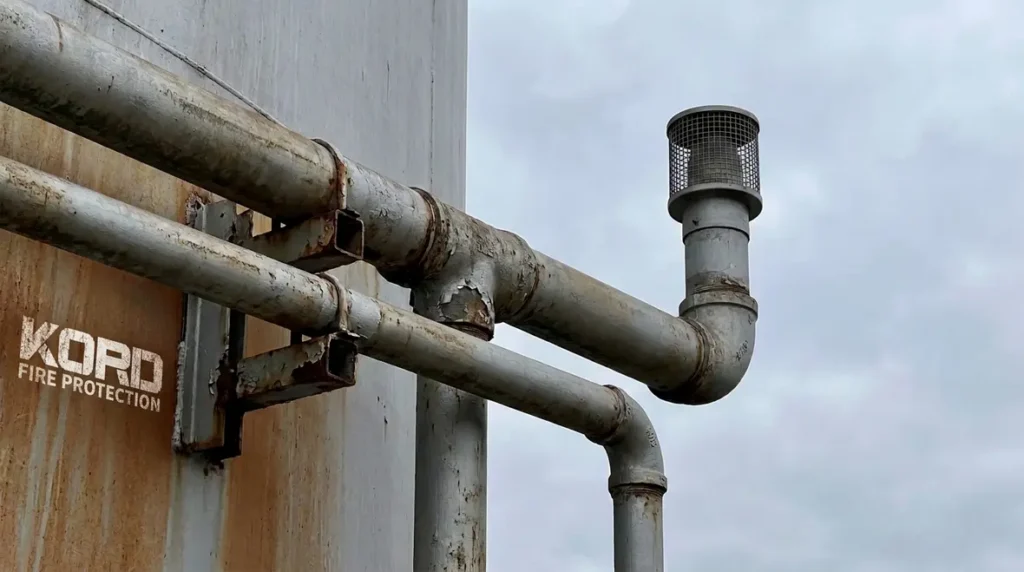
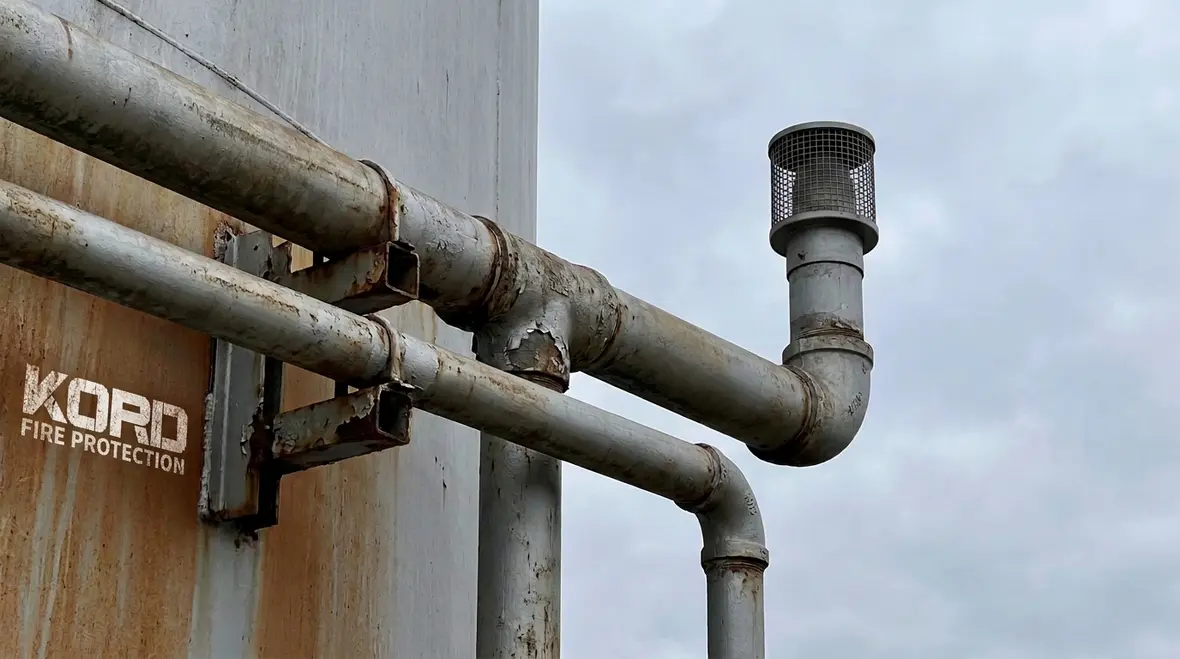
Vent systems frequently run through outdoor environments where moisture, fuel vapor byproducts, and atmospheric corrosion attack piping and fittings. Section 6.7 compliance depends on material suitability and protective measures that match the local exposure conditions.
- Look for blistering, coating failure, pitting, and joint corrosion at elbows and transitions.
- Verify that field repairs preserve intended corrosion protection, including coating continuity and joint sealing practices.
- Ensure that any replacement components match the original design intent, not just physical fit.
How vent piping systems fail during inspections and operations
Even well designed vent systems degrade over time. The operational profile at commercial and retail sites can accelerate failure through frequent refueling events, weather exposure, and maintenance-driven modifications.
Obstructions and restriction sources
Common obstructions include insect screens, debris buildup, ice, paint overspray, or “temporary” caps left in place. Restrictions can lead to venting malfunction, relief device activation anomalies, and uneven tank breathing.
Improper modifications and non conforming fittings
Facilities often add labels, reroute lines, or replace sections with components that do not meet the original vent design intent. Non conforming fittings can introduce turbulence, increase back pressure, or create additional low points for condensate.
Support deterioration and stress at joints
When supports fail, joints experience higher stress. Over time, seals can loosen, and micro leaks can develop. Those leaks may not always appear as visible vapor release, but they can be detected through smell observations, evidence at fittings, or compliance monitoring trends.
Commissioning, inspection, and maintenance: what good looks like
Successful compliance programs treat vent piping as a living system that must remain operable between major service intervals. Kord Fire Protection supports facilities with practical review and documentation workflows that align with how inspectors evaluate real installations.
Step by step inspection approach for NFPA 37 vent piping
- Document review: As built drawings, tank vent device submittals, and prior inspection records.
- Visual verification: Routing, termination appearance, support condition, and evidence of liquid carryover or corrosion.
- Restriction check: Confirm termination is unobstructed and ventilation pathways remain open.
- Condition assessment: Identify cracked fittings, degraded couplings, coating loss, and loose joint hardware.
- Maintenance history validation: Evaluate how repairs were performed and whether replacement parts match the original requirements.
Maintenance practices that prevent repeat failures
- Remove obstructions immediately and confirm the termination design remains correct after cleaning.
- Use controlled, documented repair procedures that preserve alignment, slope, and corrosion protection.
- Train maintenance personnel to recognize vent piping damage indicators, especially at elbows and transitions.
For additional guidance on inspection and testing programs that integrate with fire and life safety compliance, facilities often benefit from coordinated review strategies. Kord Fire Protection offers commercial focused support for recurring compliance needs. See more resources through Kord Fire Protection services.
Featured compliance questions: vent piping placement, termination, and fuel operations
Commercial facility owners and operations teams usually ask how vent piping interacts with day to day fuel movement. The intent of Section 6.7 is to keep tank breathing safe while limiting hazardous outcomes during normal operation and upset conditions.
Why vent termination details matter at retail and industrial sites
Termination locations influence whether vapors disperse safely and whether the system remains resistant to obstruction. Termination design also affects how condensate and contaminants behave at the outlet. Poor termination execution often leads to recurring maintenance calls and inspection findings.
How fuel handling changes the ventilation demand
During deliveries and product changes, the tank experiences different temperature and pressure cycles. Vent piping must remain capable of responding without undue back pressure. A vent system that passes visual inspection but restricts flow under operating conditions can still fail functional expectations during audits.
Frequently Asked Questions
Conclusion and call to action
NFPA 37 Section 6.7 vent piping compliance relies on more than a quick visual check. Facilities should prioritize mechanical integrity, obstruction prevention, corrosion control, and documented maintenance that preserves the original vent design intent. Kord Fire Protection can help commercial sites build a defensible inspection and maintenance program, identify failure points early, and support ongoing compliance with targeted field evaluations. Schedule a vent piping compliance review today.

Join Our Newsletter!
Get the latest fire safety tips delivered straight to your inbox From our Newsletter.