
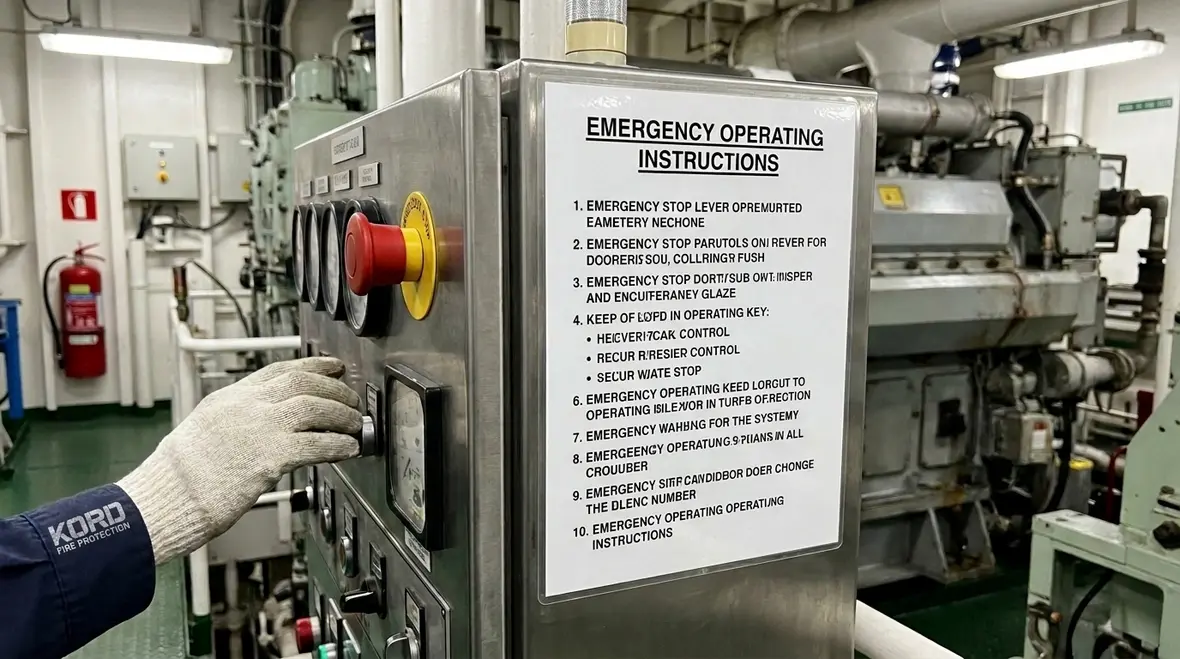
NFPA 37 Section 10.2: Emergency Instructions for Engine Operations
Quick Answer: NFPA 37 Section 10.2 requires clear, accessible emergency instructions for engine operations so operators can respond quickly and safely during abnormal or emergency conditions. Facilities must ensure instructions are communicated, maintained, and usable during real-world events, including inspections and ongoing readiness.
For facilities tightening documentation and operational readiness across related engine systems, it also helps to review NFPA 37 liquid fuel transfer to engines requirements so emergency instruction planning stays connected to fuel handling realities.
What NFPA 37 Section 10.2 requires for emergency engine operations
NFPA 37 Section 10.2 establishes requirements for emergency instructions that support safe engine operation during abnormal conditions. In practical terms, NFPA 37 emergency instructions requirements engines focus on operator actions that reduce risk to personnel, protect property, and support safe shutdown or control of engine systems when emergency conditions arise. These instructions must be positioned and managed so they remain accurate, legible, and available when needed.
Commercial facilities often struggle with Section 10.2 because engine configurations change over time, controls get updated, and training relies on outdated wording. A robust compliance program treats emergency instruction documentation as a living asset, aligned with the current equipment, piping, fuel arrangement, controls, and installed protective systems.
Where the emergency instructions must be usable during incidents
Section 10.2 centers on operational usability. Emergency instructions should be located where engine operators can rapidly find them during an event. For many facilities, this includes near the engine control station, the local start stop interface, or another approved location that matches the facility’s operating procedures.
Common compliance challenges include:
- Instructions stored “somewhere safe” but not where operators work. Paper behind a door or at a remote office fails the intent of immediate usability.
- Multiple engine rooms or split control locations. If controls are separate from the engine, instructions must remain accessible at the point of action.
- Version control failures. After a control system change, the printed instructions do not match the new sequence, setpoints, or shutdown method.
To address these gaps, Kord Fire Protection supports facilities with compliance review and documentation management that aligns emergency instruction content with installed hardware, operator workflow, and inspection realities.
What the emergency instructions should cover for engine response
Although facilities must follow the specific text and intent of NFPA 37 Section 10.2, emergency engine instruction content generally needs to drive clear operator actions. The goal is to prevent delay, reduce incorrect operations, and support a safe transition to controlled conditions.
Operational actions that emergency instructions should clarify
- Recognizing abnormal and emergency conditions. Instructions should reference observable triggers operators can identify quickly.
- Immediate response steps. The instructions should reflect the facility’s defined emergency sequence for engine operation, including any required notifications.
- Controlled shutdown or safe control changes. Instructions must match the actual shutdown methods and controller logic installed on site.
- System stabilization priorities. Instructions should guide operators toward conditions that limit escalation, such as preventing further hazards and maintaining safe status.
- Coordination with facility response. Where applicable, instructions should align with facility emergency plans and local response procedures.
Alignment with installed equipment and control logic
Engine emergency instructions frequently fail during real incidents because they are written generically. NFPA 37 emergency instructions requirements engines should reflect how the engine system actually responds in your facility, including control panel interfaces, alarms, shutdown interlocks, and any emergency stopping method. When facilities update controllers, replace controllers, rewire control circuits, or modify fuel supply components, the emergency instruction language must be reviewed and revised accordingly.
Inspection, maintenance, and update practices that keep compliance defensible
Section 10.2 compliance depends on evidence that the instructions are current and usable. A defensible program treats emergency instructions as part of the active safety documentation system, not a one-time document download.
Practical maintenance workflow for commercial facilities
- Annual and change-triggered review. Review the instructions at least annually and whenever the engine equipment, controls, fuel system, or protective features change.
- Legibility and placement checks. Verify printed materials are legible, protected from damage, and located at the points of use.
- Training alignment. Confirm operator training uses the same emergency instruction wording and references the same locations.
- Incident and near miss feedback. If near misses occur, revise instructions and procedures to remove ambiguity and improve clarity.
How Kord Fire Protection supports readiness
Kord Fire Protection helps commercial, industrial, and retail facilities sustain compliance by coordinating documentation reviews, equipment condition checks, and ongoing maintenance expectations. This approach reduces the most common failure points: mismatched wording, missing placement, and outdated procedures after equipment changes.
If you are also managing inspection documentation across multiple code areas, consider reviewing engine support and anchoring requirements to align your broader fire and life safety compliance program.
Common failure points seen during audits and operational reviews
Facilities typically do not fail because they lack emergency instructions. They fail because the instructions do not match actual operations during the first critical minutes. The following failure points appear frequently in commercial compliance reviews:
- Outdated procedures after service work. Technicians may update controller settings or sequences, but the posted instructions stay unchanged.
- Incomplete emergency steps. Instructions describe general intent without specifying operator actions and decision points.
- Ambiguous shutdown references. The wording does not clearly point operators to the correct shutdown method for that engine configuration.
- Inconsistent training. Operators rely on memory rather than the posted instructions, especially for infrequent events.
- Wrong location or inaccessible packaging. Instructions are present but not retrievable during an incident due to placement or physical barriers.
Operational readiness improves when facilities treat NFPA 37 emergency instructions requirements engines as a part of everyday equipment management, including change control and training refresh cycles.
Integrating Section 10.2 instructions into broader emergency planning
Emergency instructions for engine operations support the facility’s larger emergency response structure. For best results, Section 10.2 content should align with:
- Facility emergency plans so operator actions match the overall incident command approach.
- Alarm and notification procedures so operators know who to contact and when.
- Fire protection system readiness so emergency actions consider the availability and role of installed suppression or detection systems.
- Equipment-specific hazards related to fuel handling, exhaust pathways, and engine room conditions.
In practice, this integration reduces confusion during high stress moments and improves consistency among operators, maintenance staff, and emergency responders.
Frequently Asked Questions
Call to action
Review your current engine emergency instructions for placement, legibility, and equipment alignment to NFPA 37 Section 10.2 intent. If your facility has undergone controller updates, service work, or configuration changes, verify that printed and training materials match the installed system. Kord Fire Protection can help you strengthen compliance through documentation review, readiness checks, and ongoing support. Contact Kord Fire Protection today to schedule a compliance and maintenance readiness assessment.

Join Our Newsletter!
Get the latest fire safety tips delivered straight to your inbox From our Newsletter.



