NFPA 36 Section 6.6: Dryer Shutdown Requirements
Quick Answer
NFPA 36 Section 6.6 establishes specific shutdown controls and operational safeguards for dryers to reduce fire and explosion risk. Facility owners must ensure dryers stop safely under abnormal conditions, maintain required interlocks, and document testing and maintenance to sustain compliance.
Facilities tightening inspection workflows often benefit from connecting shutdown verification to broader full lifecycle fire protection servicing, so testing, repairs, and documentation stay coordinated from one maintenance cycle to the next.
What NFPA 36 dryer shutdown requirements demand in real facilities
In commercial and industrial processing plants, NFPA 36 dryer shutdown requirements drive more than a simple “stop button.” Section 6.6 focuses on shutting down dryers in a controlled, reliable manner when conditions indicate unsafe operation. These requirements directly affect how facilities design control circuits, verify interlocks, maintain ignition and airflow integrity, and train operators. In practice, the biggest compliance gaps come from deferred testing, poorly documented maintenance, and components that fail in the field but never get function checked under the conditions intended by the code.
Why dryers need shutdown controls under NFPA 36
Dryers in food processing, grain handling, and similar operations can present high consequence ignition scenarios. Dust, heat, friction points, and combustion systems can create rapid fire growth if a dryer continues operating after abnormal conditions begin. NFPA 36 addresses this by requiring shutdown behavior that is timely, dependable, and consistent with the dryer’s operating hazards.
Facility compliance efforts often fail when the shutdown logic exists on paper but not in operation. Common examples include shutdown circuits bypassed during troubleshooting, sensors that drift out of calibration, fan proving switches that do not reflect actual airflow, or actuators that lose torque due to wear. A code-compliant shutdown strategy must remain functional through maintenance cycles and equipment aging.
Key shutdown mechanisms covered by Section 6.6
Section 6.6 dryer shutdown provisions typically focus on ensuring the dryer enters a safe state when a hazard is detected, including loss of proper process conditions or indicators of unsafe combustion or airflow. In most facility implementations, shutdown performance depends on three practical elements: detection, control logic, and verified actuator response.
1) Detection and protective inputs
Dryer shutdown is triggered by protective inputs that reflect safe operating conditions. These may include conditions related to airflow, combustion status, burner operation, temperature indicators, and other system signals used to determine whether continued operation would increase risk. The facility must ensure these devices are properly installed, maintained, and capable of producing the required shutdown signal under real-world conditions.
Maintenance teams often see failure modes here first. Dust accumulation can affect sensor performance. Actuated linkages can stick. Electrical connections can corrode in high humidity or particulate environments. Even when the control panel indicates “normal,” the underlying sensor may no longer measure within expected tolerances.
2) Control logic that prevents unsafe operation
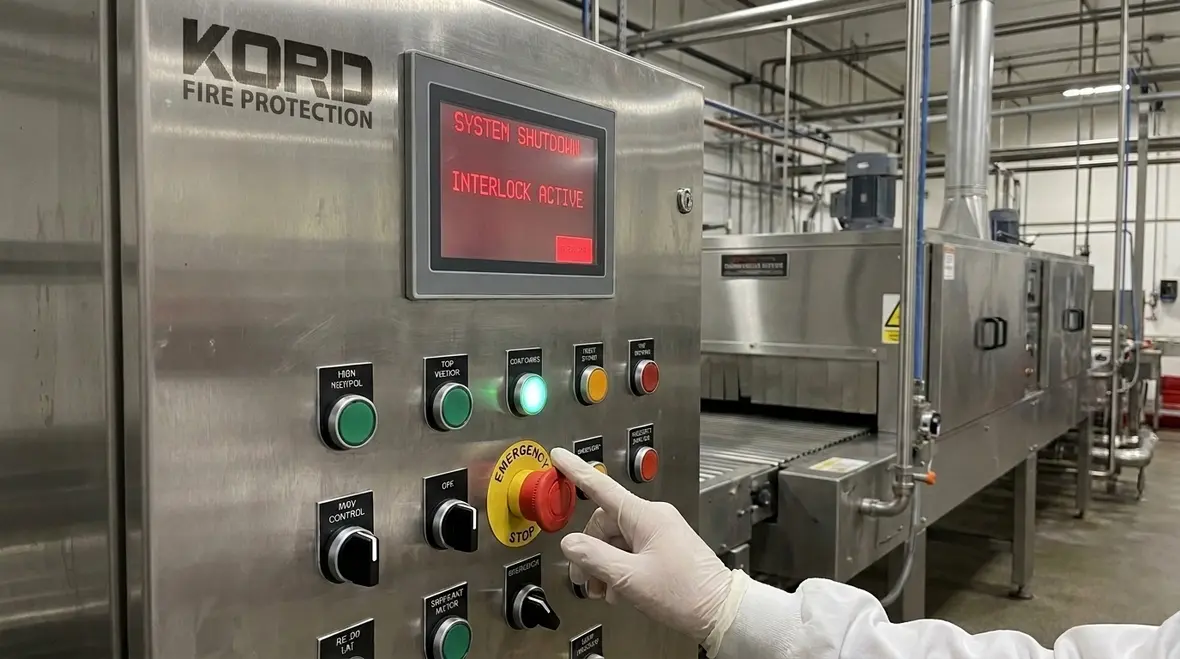
Shutdown control logic must move the dryer to a safe condition. That typically includes shutting down fuel or ignition sources as applicable and stopping dryer operation in a way that does not create secondary hazards. Facilities must avoid partial shutdown arrangements that leave hot components running while airflow or exhaust conditions remain compromised.
In practice, control cabinet modifications create risk. A logic change for convenience, an undocumented wiring alteration, or a temporary bypass that becomes permanent can directly undermine NFPA 36 dryer shutdown requirements. Kord Fire Protection commonly helps clients validate that the installed logic still matches the intended safety design after maintenance and upgrades.
3) Actuator response and fail-safe behavior
Shutdown relies on actuators that execute the protective decision. Fans, dampers, fuel valves, and burner control components must transition quickly and reliably. If an actuator fails to move, or moves inconsistently, the dryer may remain in a hazardous operating state even when detection works correctly.
Auditable maintenance includes verifying mechanical movement, electrical integrity, and timing behavior. Inspection records should document what was tested, the result, and any corrective action taken.
Where compliance usually breaks: inspection, maintenance, and testing
Commercial facilities typically operate multiple dryers across shifts, which complicates shutdown verification. NFPA 36 dryer shutdown requirements are best maintained through an operating discipline supported by testing and maintenance documentation.
Interlocks that are not function tested
Many facilities install interlocks but do not routinely verify the full shutdown sequence under controlled test conditions. A compliance program must test the protective inputs and confirm the dryer enters the required safe state. Visual inspection alone does not validate actuation timing, valve movement, or the correct sequence of operations.
Bypasses that persist after troubleshooting
Operational staff sometimes bypass a component to restore production and then forget to remove the bypass. This practice can directly violate the intent of NFPA 36 dryer shutdown requirements by disabling protection. A strong maintenance procedure includes lockout and clear restoration steps, with supervisory review for any temporary overrides.
Sensor drift, airflow variability, and housekeeping impacts
Dryers experience airflow changes due to filter loading, duct condition, and process variability. Sensors can drift, and combustion air paths can become restricted by dust. These factors can create false negatives or false positives for shutdown triggers.
Housekeeping plays a direct role. Accumulated dust affects heat transfer and can contribute to ignition risk, while also degrading sensor and mechanical components. Facilities should coordinate fire protection, mechanical maintenance, and operations teams so housekeeping and testing happen on a consistent schedule.
Operational procedures that keep shutdown controls dependable
Shutdown performance depends on how operators interact with the system. A compliance ready program includes written procedures, training, and a practical restoration process after any shutdown event.
Operator response after a shutdown event
When the dryer shuts down due to a protective signal, operators should follow a defined sequence that prevents immediate restart without corrective evaluation. Restarting without confirming the underlying cause can create repeat hazardous conditions and defeats the safety purpose of the controls.
A compliant response procedure typically requires identifying which protective input initiated shutdown, inspecting associated components, clearing fault conditions, and confirming that the dryer resumes in normal operating parameters only after corrective action is complete.
Documented evidence for audits and insurance reviews
Many facilities fail during audits due to missing evidence. Effective documentation includes test dates, inspection results, component condition, corrective actions, and verification that the dryer shutdown sequence meets the safety design. Kord Fire Protection supports commercial clients with ongoing verification and maintenance planning, helping ensure records match what the system actually does on the floor.
If you are building or updating your compliance program, Kord Fire Protection can help structure a practical testing and documentation workflow. Learn more here: Kord Fire Protection services.
Practical checklist aligned to NFPA 36 shutdown readiness
The following checklist supports implementation of NFPA 36 dryer shutdown requirements. Facilities should tailor it to the specific dryer design, control architecture, and protective devices installed.
- Verify shutdown sequence: confirm the dryer transitions to the required safe state when protective inputs actuate.
- Test protective devices: confirm sensors and switches trigger at the correct thresholds and remain stable.
- Confirm actuation: validate valves, dampers, fans, and burner controls respond reliably and within expected timing.
- Inspect control cabinet integrity: look for corrosion, loose terminations, damaged wiring, and unauthorized modifications.
- Check interlocks and bypasses: ensure no temporary bypass remains active and that interlocks cannot be unintentionally defeated.
- Coordinate housekeeping: remove dust and debris that can affect airflow, sensors, and ignition risk.
- Maintain records: document tests, inspection findings, repairs, and verification of restoration after shutdown events.
For facilities that also manage broader fire and process safety equipment, aligning shutdown verification with your overall inspection plan reduces duplication and prevents gaps across departments.
Frequently Asked Questions
Next step to protect operations and stay compliant
NFPA 36 dryer shutdown requirements rely on reliable detection, correct control logic, and verified actuation, supported by routine testing and documentation. Kord Fire Protection helps commercial facilities validate shutdown performance, maintain inspection readiness, and close common gaps created by deferred function checks. Contact Kord Fire Protection to review your dryer shutdown controls, testing records, and maintenance procedures, and build a compliance plan that performs when it matters.

Join Our Newsletter!
Get the latest fire safety tips delivered straight to your inbox From our Newsletter.