NFPA 36 Section 4.2: Noncombustible Materials in the Plant
Quick Answer: NFPA 36 Section 4.2 sets noncombustible material requirements to limit fire growth in processing plants. It directs designers and operators to control material combustibility, review how finishes and assemblies are constructed, and maintain compliant conditions through inspections, repairs, and housekeeping.
For facilities building a stronger inspection rhythm, Kord Fire Protection also offers fire protection services in Southern California that support testing, repairs, deficiency correction, and documentation across water-based systems and broader compliance programs.
What NFPA 36 Section 4.2 actually requires (and why it matters)
NFPA 36 Section 4.2 focuses on reducing the likelihood of fire ignition and limiting fire spread by requiring noncombustible materials in plant areas where fire performance directly affects life safety, property protection, and operational continuity. In practice, the NFPA 36 noncombustible material requirements influence everything from structural elements and interior finishes to certain equipment enclosures, cable pathways, and the way facilities handle maintenance and replacement materials.
Fire risk in commercial and industrial processing environments often increases after construction due to component swaps, renovations, damage repairs, and poor material controls during maintenance. Section 4.2 is designed to prevent the plant from drifting away from the intended fire-resistance and combustibility profile over time.
How “noncombustible” is enforced in real plant conditions
Noncombustibility is not only about the primary material. Inspectors and fire protection professionals look at how materials are installed and what they become when exposed to heat and flame. The enforcement effort typically includes three layers: material classification, assembly behavior, and field verification.
1) Material classification and documentation
Compliance requires that specified materials meet the applicable combustibility criteria. Common documentation includes product listings, certificates, and technical data that tie the item to its intended use. For facilities with frequent upgrades, the most common gap is missing documentation for “like-for-like” replacements.
Commercial, industrial, and retail operations that maintain packaging, conveyor systems, storage rooms, or processing lines often struggle when contractors install finishes that match visually but do not match fire performance requirements.
2) Assembly compliance, not just individual parts
Noncombustible requirements may apply to assemblies or spaces. For example, wall and ceiling systems, protective enclosures, and fire-rated partitions depend on both components and installation details. Gaps, penetrations, and improper sealing can reduce performance even when individual items appear compliant.
3) Field verification during inspections and walkdowns
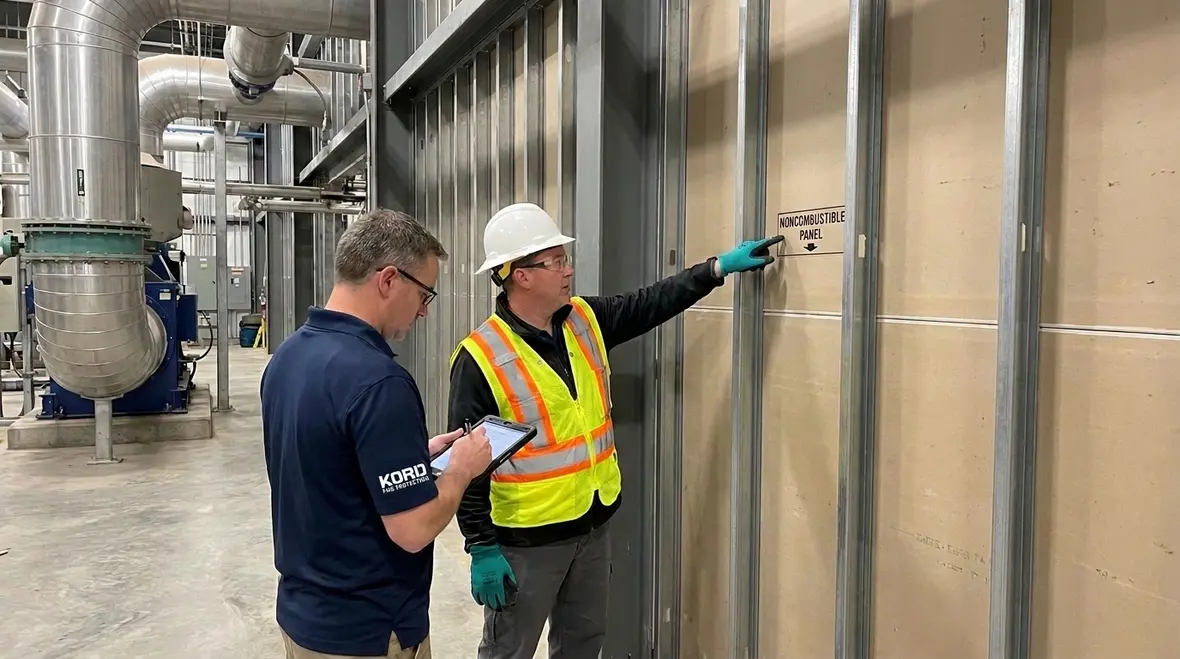
Ongoing inspection should confirm that installed materials match the approved design intent. Field verification commonly includes checking surface finishes, structural coatings, paneling, suspended ceiling conditions, and transition areas where different materials meet.
Where noncombustible requirements commonly break down
Operational wear and maintenance practices can convert compliant spaces into high-heat release zones. The following failure points show up consistently during compliance reviews and fire safety audits.
Repairs after damage or leaks
Water intrusion, chemical exposure, and impacts can damage finishes and wall systems. Facilities sometimes patch with whatever material is available quickly. That shortcut creates an inspection finding because the repair material may not meet noncombustible performance expectations.
Renovations and tenant work
Multi-tenant commercial properties and retrofitted industrial buildings often see scope creep. New soffits, access panels, retail-like finishes, or decorative coverings can appear “lightweight” and “temporary,” but they can materially change fire behavior.
Penetrations and cable pathway modifications
Even when cable types and conduits are controlled, the surrounding wall or floor penetrations may be altered. Improper sealing around penetrations can allow heat and smoke movement that undermines the protective intent of noncombustible installation.
During plant changes, facilities should treat penetration sealing and pathway modifications as fire-resistance work, not routine maintenance.
Improper closure of openings and damaged fire stops
Fire stopping and protective closures degrade over time. Missing seals, pulled caulk, loose sleeves, and unsealed gaps are frequent contributors to noncompliance risk. This is especially relevant in areas with frequent equipment access.
Operational procedures that support ongoing compliance
NFPA 36 Section 4.2 compliance becomes durable only when the facility controls materials, installation quality, and maintenance practices. Strong programs treat noncombustible requirements as a managed lifecycle.
Develop a material control and approval process
Assign responsibility for approving replacement materials, including finishes, panels, insulation, and access covers. Require that vendors provide documentation that matches the original noncombustible intent. For contractors, include fire performance requirements in work orders and scope drawings.
Include fire behavior checkpoints in maintenance routines
- Verify that repairs use approved products and match prior combustibility classifications.
- Confirm fire stop systems remain intact after access and rework.
- Inspect closures around openings, ducts, and cable penetrations.
- Monitor storage practices to prevent combustible staging from encroaching into restricted areas.
Train maintenance staff on “like for like” limits
Maintenance teams often interpret “like for like” as cosmetic similarity. Training should clarify that acceptable replacement means matching the approved fire performance category and installation method, not just the same color or thickness.
Inspection and documentation: what to expect during compliance reviews
Fire safety professionals typically evaluate noncombustible compliance through a combination of walkthrough observations, document review, and focused spot checks. Facilities can reduce last-minute findings by preparing in advance.
Pre-inspection readiness checklist
- Maintain product submittals and certificates for noncombustible finishes and building elements.
- Track change orders that affect wall, ceiling, enclosure, or protective closure systems.
- Maintain a log of penetrations and fire stop inspections, including photos when feasible.
- Keep a current one-line or layout reference for areas affected by plant modifications.
Spot checks that inspectors prioritize
- Transitions between walls, ceilings, and floors where nonapproved materials have been introduced.
- Areas around access doors, removable panels, and service enclosures.
- Damaged or replaced finishes that lack documentation.
- Fire stop integrity after maintenance activity.
For facilities looking to strengthen inspection consistency, a structured testing and maintenance program helps ensure that corrections do not regress after the inspection cycle. Kord Fire Protection also shares practical guidance on proactive maintenance for fire pump system reliability for teams trying to tighten documentation and repeatability before deficiencies snowball.
How Kord Fire Protection supports NFPA 36 Section 4.2 compliance
Kord Fire Protection helps commercial and industrial facilities maintain alignment with NFPA 36 requirements through practical, field-ready support. The emphasis stays on operational continuity: identifying where noncombustible intent can be compromised, verifying corrective actions, and helping maintain documentation and maintenance discipline over time.
If you want a partner that understands plant realities, Kord Fire Protection can support ongoing compliance efforts, inspection readiness, and corrective maintenance planning. For related service information, review Kord Fire Protection services.
Frequently Asked Questions
Next step: confirm your plant’s noncombustible control program
If your facility has ongoing renovations, frequent maintenance access, or contractor-driven repairs, now is the time to tighten material control and verification. Kord Fire Protection can help you identify where noncombustible intent is drifting, prioritize corrective actions, and support inspection readiness through repeatable compliance practices. Contact Kord Fire Protection to schedule a targeted compliance assessment and maintenance planning support.

Join Our Newsletter!
Get the latest fire safety tips delivered straight to your inbox From our Newsletter.