
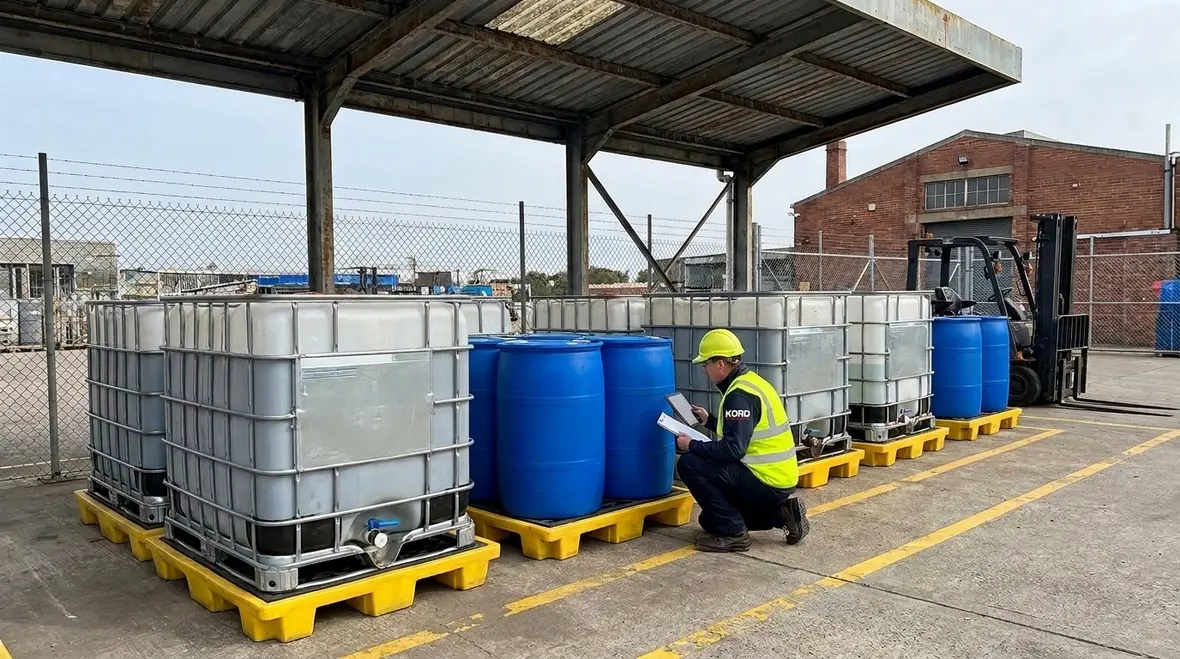
NFPA 35 Section 7.4 Outdoor Storage Requirements: What Commercial Facilities Must Get Right
Quick Answer
NFPA 35 Section 7.4 sets performance based and procedural requirements for safely storing chemicals and related materials outdoors. For a plant, compliance hinges on container condition, spill control, distance and exposure management, weather protection, and documented inspection and maintenance routines.
Facilities tightening documentation and inspection discipline across related life safety systems can also review NFPA 25 fire pump testing requirements to strengthen maintenance records and audit readiness across the site.
Why NFPA 35 outdoor storage requirements plant compliance fails in real operations
Commercial facilities commonly treat outdoor staging as “temporary,” even when inventory turns daily and storage areas become permanent by habit. NFPA 35 outdoor storage requirements plant compliance typically breaks down in five places: container deterioration from UV and thermal cycling, missing secondary containment, inadequate segregation of incompatible materials, unmanaged ignition sources, and weak inspection records that do not reflect the actual condition of the site.
Section 7.4 addresses these failure points through enforceable expectations that align with fire prevention principles. The goal is not only to prevent an event, but to maintain control of fire growth, limit spill spread, and enable reliable response by keeping outdoor storage areas in a known, inspectable condition.
What Section 7.4 covers for outdoor storage, in practical terms
NFPA 35 is process focused, so outdoor storage requirements connect directly to fire and explosion hazards posed by the stored materials. In Section 7.4, facility expectations generally include: safe placement of containers, protection from weather and damage, appropriate spill control, and controls that reduce exposure to ignition sources and external fires. For plants, compliance also depends on how the outdoor area functions day to day, including receiving, transfer, and any seasonal changes in operations.
From an inspection perspective, evaluators typically look for evidence that the outdoor storage configuration matches the hazard and storage method. That means written procedures, labeling and condition of containers, and site housekeeping that demonstrates prevention of accumulation, uncontrolled drainage pathways, and damaged or leaking packaging.
How to design and manage outdoor storage areas to meet the intent of Section 7.4
1) Container condition, compatibility, and secure placement
Outdoor storage requires containers to remain fit for service. That includes closures that seal properly, no corrosion or bulging, intact labels, and secure positioning to prevent tipping. Plants frequently miss compatibility controls because materials arrive from multiple vendors and staging changes during production. A compliance approach that works pairs a chemical inventory plan with clear segregation rules, verified at the point of storage.
Practical indicators that reduce risk during walkthroughs include:
- Routine checks for UV degradation, embrittlement, and cap or valve damage.
- Validated segregation distances or barrier methods for incompatible chemicals.
- Use of restraints or stands to prevent tipping and valve impact.
- Correct container orientation and protected relief devices when applicable.
2) Spill control and drainage pathways
Outdoor areas must manage releases so spills do not migrate into adjacent grades, storm drains, or soil that can extend hazard exposure. Section 7.4 expectations commonly translate into secondary containment and controlled drainage. The failure mode is not always a leak; it can be rainwater or washdown moving a small release into a larger hazard footprint.
Plants should verify that secondary containment capacity fits the maximum credible release scenario for the storage layout. In addition, facility teams should confirm that containment surfaces remain clean, free of incompatible residues, and functional during wet seasons.
3) Weather protection without creating new ignition or exposure risks
Weather protection is necessary, but it must not undermine hazard control. Covers and enclosures must allow for safe inspection access, prevent pooling, and avoid creating concealed ignition pathways. During winter, ice and thaw can compromise containment and routing, while high heat can accelerate container aging. A compliance aligned program anticipates these conditions with seasonal inspection checklists.
4) Ignition source control in the outdoor environment
Outdoor storage areas are still part of an operating facility. Section 7.4 compliance requires managing ignition sources adjacent to storage. That includes vehicle movements, hot work controls, refueling zones, electrical equipment selection, and temporary activities like maintenance or contractor work.
In practice, plants reduce risk by establishing clear boundaries, enforcing hot work permits, and keeping ignition sources away from ventilated, vapor susceptible, or spill prone locations. When ignition controls rely on “good habits,” audits usually find gaps; controls must be procedure driven and verified.
Operational procedures and inspection standards that keep you audit ready
For commercial and industrial facilities, written procedures are only effective if they reflect the actual outdoor storage configuration. A strong compliance program couples inspection frequency with defined acceptance criteria. Inspectors should document container condition, secondary containment integrity, labeling readability, segregation compliance, and evidence of leakage or residue.
Teams that want cleaner documentation practices may also find useful parallels in this inspection and documentation guide, especially where maintenance records need to reflect real field conditions instead of wishful thinking.
Inspection points auditors commonly focus on
- Secondary containment condition: cracks, deformities, blocked drains, and residue accumulation.
- Container integrity: corrosion, blistering, degraded hoses or fittings, and closure performance.
- Housekeeping: debris, absorbent misuse, and unmanaged waste materials that can extend a fire.
- Segregation: correct layout after re-staging, deliveries, or production changes.
- Access and egress: unobstructed pathways and clear sightlines for emergency response.
Maintenance that prevents “silent failures”
Common failure points include cracked berms, damaged containment liners, clogged drainage channels, and damaged labeling from environmental exposure. Routine maintenance should include verification of containment components and prompt replacement of damaged protective elements. Plants also benefit from calibrating or validating related systems, such as spill response equipment readiness and visual detection measures where used.
For ongoing compliance, Kord Fire Protection supports commercial facilities with inspection guidance, documentation alignment, and practical maintenance recommendations. This partnership helps facilities keep outdoor storage areas aligned with Section 7.4 expectations throughout changing production schedules and seasonal conditions.
Common compliance gaps seen during field review
Even well run facilities can stumble when outdoor storage evolves faster than documentation. The most frequent gaps include:
- Inadequate control of temporary storage: containers placed outdoors “until tomorrow” that become long term without an updated hazard assessment.
- Secondary containment that is present but not functional: containment fails due to blockage, improper capacity, or degradation.
- Label loss and unclear identity: unreadable markings after exposure to sun and rain create segregation risk.
- Compatibility drift: changes in product formulations or vendor substitutions without segregation review.
- Inspection records that do not match conditions: paperwork completed without verifying containment, corrosion, or leakage indicators.
When facilities correct these issues, they typically see improved audit outcomes because the program becomes evidence based. Kord Fire Protection helps ensure documentation, field practice, and maintenance activities remain aligned to reduce compliance friction over time.
Implementation checklist for the NFPA 35 outdoor storage requirements plant standard
The following checklist supports a defensible compliance posture for outdoor storage under Section 7.4. It is designed for plant teams that want repeatable controls rather than ad hoc fixes.
| Control Area | What to Verify | Evidence to Maintain |
|---|---|---|
| Container integrity | No leaks, degraded caps, corrosion, damaged fittings, readable labels | Inspection logs, photos where used, repair and replacement records |
| Segregation and placement | Correct storage layout for compatible groupings, stable positioning | Hazard mapping, inventory updates, re staging procedure records |
| Secondary containment | Capacity adequacy, intact berms, clean surfaces, unblocked drainage controls | Containment inspection sheets, maintenance tickets, corrective action reports |
| Weather protection | No pooling, safe cover access, seasonal integrity verification | Seasonal checklists, cover and enclosure maintenance records |
| Ignition source control | Hot work permits, traffic routing, prohibited equipment controls | Hot work procedures, contractor control records, site boundaries documentation |
| Spill response readiness | Appropriate absorbents, kits staged, access routes clear | Training records, kit checks, drill or response documentation where applicable |
For facilities managing broader fire protection requirements alongside NFPA 35, internal standards often benefit from coordinated documentation and consistent inspection schedules. For related fire safety service support, see Kord Fire Protection for commercial compliance assistance.
Frequently Asked Questions
Conclusion and next step
NFPA 35 Section 7.4 compliance for outdoor storage depends on more than a site walk. It requires a repeatable system for container condition, segregation, spill control, ignition source management, and documented maintenance. Kord Fire Protection helps commercial facilities build audit ready evidence and keep outdoor storage controls reliable through changing conditions. Contact Kord Fire Protection to review your outdoor storage practices and align your inspection and maintenance program to Section 7.4 expectations.

Join Our Newsletter!
Get the latest fire safety tips delivered straight to your inbox From our Newsletter.



