
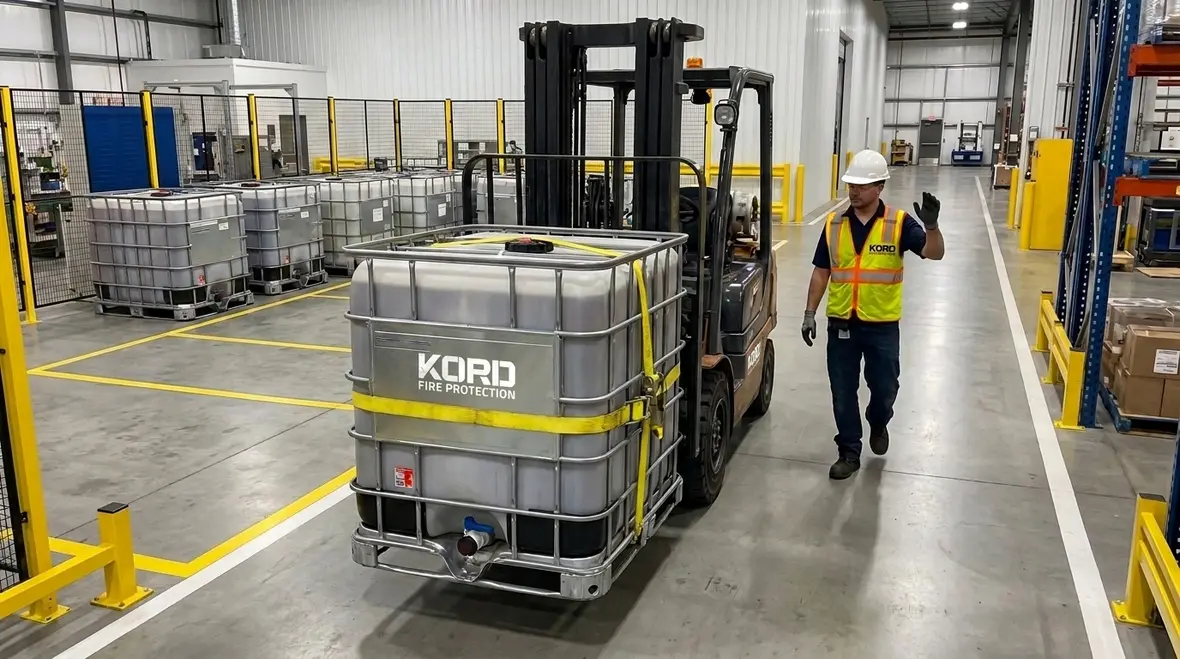
NFPA 35 Section 7.5: In-Plant Transportation and Storage of Portable Shipping Tanks
Quick Answer: NFPA 35 Section 7.5 sets expectations for safely moving and storing portable shipping tanks within a plant. Compliance focuses on securing tanks during transport, preventing damage, maintaining safe separation and storage conditions, and ensuring tanks remain suitable for continued hazardous service.
Facilities tightening hazardous materials controls should also review NFPA 30 Section 9.4 general rules for storing flammable liquids since many of the same day to day failure points show up in handling routes, staging practices, and inspection discipline.
What NFPA 35 Section 7.5 requires for in-plant tank safety
NFPA 35 portable shipping tank in-plant requirements address the reality that many incidents do not happen during offsite shipment. They happen inside the facility when tanks move between staging, receiving, maintenance, filling, and storage areas. Section 7.5 focuses on preventing releases caused by mechanical impact, improper support or tie down, unsafe handling practices, and storage conditions that degrade tank integrity or operating controls. Facilities also need a process for inspections and readiness checks so portable tanks remain in safe condition after each move and during idle periods.
Operational controls: transportation from point A to point B
In-plant transportation needs controls that match the tank’s hazard profile and physical configuration. A compliant program typically includes three elements: defined routes and staging areas, a handling method that prevents falls or tipping, and procedures that keep fittings, valves, and connections protected.
1) Plan the route and staging locations
Facilities should define designated tank handling pathways that minimize crossings of pedestrian traffic, reduce exposure to forklift impact zones, and avoid passing near ignition sources or operations that could increase risk. Staging areas must support safe positioning, including stable ground conditions and clear access for inspection.
2) Secure the tank against movement, tip, and impact
Portable shipping tanks move in real world conditions. Controls should require tank securing measures compatible with tank design and weight distribution. Common failure points include undersecured carts or pallets, damaged protective skirts or frames, and loose restraints that allow shifting during turns. Transportation methods should also avoid striking valve protection components or other protrusions that can create a leak path.
3) Protect valves, manways, and pressure relief features
During movement, the risk focuses on components that can be damaged by collision or misalignment. Procedures should require that valve guards remain in place where provided, caps and protective covers are installed as required, and connections are checked after movement to confirm no loosening, distortion, or gasket damage occurred.
4) Match equipment to tank configuration
Using the wrong lift point, lifting angle, or securing method can introduce stress concentrations or deform base components. Commercial facilities should enforce equipment checks for forklifts, dollies, carts, and lifting attachments, including rated capacity verification, condition of forks or clamps, and compatibility with the tank’s base design.
Storage requirements: keeping tanks safe when idle
Storage is not simply “park the tank.” The goal is to maintain safe tank condition, prevent damage, and ensure the storage area does not create additional hazards. Under NFPA 35 Section 7.5, storage practices typically include maintaining proper positioning, preventing unauthorized access, controlling exposure to weather and mechanical hazards, and ensuring tanks remain suitable for continued service.
Stabilize, separate, and prevent damage
Storage areas should provide stable support and separation appropriate for the tank’s hazard and operating characteristics. Damage prevention matters because even minor dents or misalignment can affect seals, gauges, relief devices, and connection integrity. Facilities should also prevent stored tanks from becoming projectiles in vehicle impacts by using protected storage zones, physical barriers, or traffic management where necessary.
Control environment and corrosion risks
Portable shipping tanks often spend time in outdoor or semi sheltered zones. Facilities need a corrosion and weather exposure approach that accounts for coatings, venting effects, and accumulation of debris around connections. A practical maintenance program checks for surface deterioration, ice or water ingress risks, and condition of protective hardware before a tank returns to service.
Maintain clearance for inspection and emergency response
Storage layouts must allow staff to inspect tanks without obstruction and permit emergency responders to access tanks and shutoff features. Blocked access pathways and clutter around valve protection are common commercial compliance gaps, especially in high turnover retail and light industrial environments where staging habits evolve quickly.
Keep inspection readiness consistent
Compliance depends on continuity between transportation and storage. Tanks should enter storage only after basic checks confirm they remain in safe condition. That includes verification of protective covers, external condition, and readiness of associated connection components. Kord Fire Protection supports facilities by developing practical inspection and documentation workflows so teams can prove tank readiness consistently during audits.
Common compliance failures during in-plant handling
Many operational failures trace back to predictable patterns. Identifying these issues early prevents both noncompliance findings and costly incident investigations.
1) Damage to protective components during handling
Valve guards, caps, and covers frequently get removed for convenience and then not reinstalled. Other failures include dents to base frames or cart surfaces that reduce stability. Over time, these conditions can lead to leaks during later filling or transfer operations.
2) Inconsistent securing and support
When facilities allow multiple handling methods across shifts, compliance drifts. Teams may use different carts, different tie down techniques, or inconsistent positioning practices. Section 7.5 safety expectations align best with controlled procedures, defined equipment, and training that matches actual workflows.
3) Storage zones without real barriers or access control
Unauthorized vehicle movement, poor segregation from pedestrians, and clutter near stored tanks can create direct mechanical hazards. These issues appear most often where storage areas double as general staging zones.
4) “Paper only” inspections
Inspections that do not detect damage to fittings, seals, or protective hardware become ineffective. Facilities should ensure inspection checklists address what crews can actually observe after each move.
How Kord Fire Protection helps facilities stay audit ready
Commercial facilities often need more than an initial code interpretation. They need an ongoing program that ties operational practices to inspection evidence, corrective actions, and training reinforcement. Kord Fire Protection works with industrial and commercial clients to build practical compliance support for hazardous materials operations, including documentation discipline, inspection scheduling, and gap resolution that reduces repeat findings.
To strengthen your overall safety approach around hazardous environments, Kord Fire Protection also maintains helpful technical resources. For more context on fire protection program alignment, see the Kord Fire Protection website and the guide on fire safety system documentation for compliance.
What strong documentation looks like
- Defined responsibility for tank handling, storage, and post transfer checks
- Inspection records that show what crews verified after transportation and during storage
- Corrective action tracking for damaged protective components, fittings, and base supports
- Training records tied to actual handling equipment and storage layouts
Frequently Asked Questions
Next step: tighten your in-plant tank program now
Facilities should review tank handling routes, securing methods, storage zoning, and post transport inspection checklists against NFPA 35 Section 7.5 expectations. Then they should standardize procedures across shifts and verify that documentation matches observed field practices. Schedule a compliance support review with Kord Fire Protection to identify practical gaps, strengthen audit readiness, and keep portable shipping tank operations safer day after day.

Join Our Newsletter!
Get the latest fire safety tips delivered straight to your inbox From our Newsletter.



