
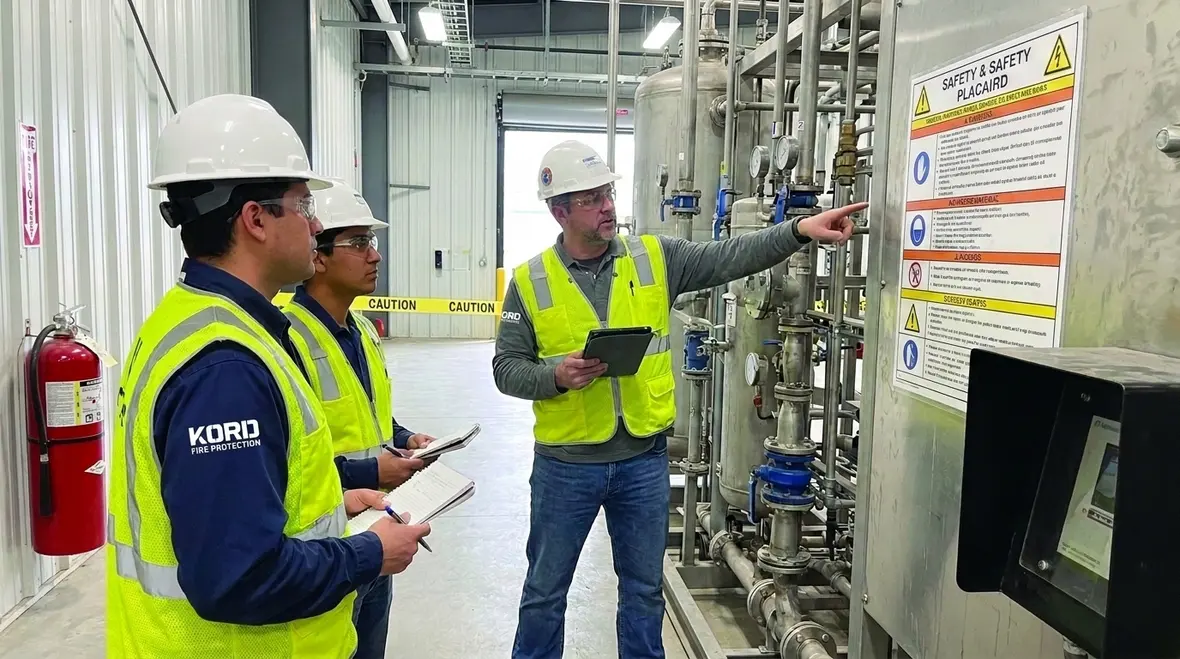
NFPA 35 Section 12.1 Basic Training Requirements (Plant) Explained
Quick Answer: NFPA 35 Section 12.1 requires employers to provide structured, documented training so workers understand safe handling, operating procedures, emergency actions, and maintenance-related expectations for processes involving hazardous chemicals and equipment. Training supports safer operation and ongoing compliance at the plant level.
Why NFPA 35 training matters in real plants
Many commercial and industrial facilities adopt training programs that look “compliant on paper” but fail during walkdowns, incident investigations, or during equipment commissioning. NFPA 35 basic training requirements plant implementation succeeds when it connects training topics to daily job tasks, site procedures, and the actual hazards controlled by the process safety program.
For teams managing oxidizers, flammable materials, chemical processes, and related ventilation and control systems, Section 12.1 training becomes a practical safeguard. It ensures workers understand what to do before starting equipment, what to monitor during operations, and how to respond if abnormal conditions develop. This is especially critical where equipment mechanisms, piping systems, controls, and relief or protective functions can change risk if used incorrectly.
In the context of NFPA 35 basic training requirements plant compliance, the goal is consistent competency, not one time orientation.
What Section 12.1 generally requires: training that supports safe performance
NFPA 35 Section 12.1 focuses on foundational training expectations for employees exposed to hazards associated with the processes and equipment covered by the standard. While facility specifics vary, effective programs typically ensure personnel can demonstrate safe knowledge aligned with their roles and responsibilities.
Training must match job function and access level
Facilities typically distinguish training for operations staff, maintenance technicians, contractors, supervisors, and emergency responders. Each group needs content aligned to how they interact with the process and safety systems. For example:
- Operators need start up, normal shutdown, process monitoring, and abnormal condition response training.
- Maintenance staff need safe lockout and isolation expectations, inspection and preventive maintenance tasks, and understanding of protective features.
- Supervisors need oversight responsibilities, management of change awareness, and incident learning requirements.
- Contractors need site-specific hazard communication and emergency procedures before work begins.
Training must cover procedures tied to facility safeguards
A frequent compliance weakness involves training that lists “general safety” topics but does not teach the procedures that protect against specific failure modes. For example, training should reflect:
- How to verify ventilation and control devices are operating within expected conditions
- How to follow safe work practices for piping, valves, fittings, and connections
- How to recognize signs of abnormal operation such as unexpected pressure trends or compromised containment
- How to execute safe response actions that align with facility emergency procedures
How facilities should structure the training program for plant compliance
A strong training program uses a traceable structure. NFPA 35 basic training requirements plant programs are most defensible when they link documented training to written procedures, competency verification, and recurring refreshers.
1) Identify affected personnel and task exposure
Start with a roster of employees and contractors who work in covered areas or handle process related equipment. Then map training content to tasks, such as:
- Process start up, shutdown, and operating checks
- Inspections and condition monitoring activities
- Maintenance steps involving isolation, verification, and restoration
- Response actions for alarms, abnormal readings, or equipment malfunctions
2) Use documented training materials and controlled procedures
Training content should reflect the facility’s current operating and maintenance procedures. When procedures change, training must change too. Common failure points include outdated slide decks, revision mismatches, and informal “on the job” coaching without documented competency.
3) Verify competency, not just attendance
Attendance alone does not ensure competency. Facilities often improve audit readiness by adding methodical verification such as:
- Written or practical assessments aligned to job duties
- Supervised demonstrations of safe actions in normal and abnormal scenarios
- Sign off by qualified personnel based on observed performance
4) Establish refresher timing and triggers
Refresher training should occur at defined intervals and whenever triggers occur, such as new equipment, process changes, recurring nonconformance, or after an incident. This approach helps facilities manage risk as operations evolve.
Common training gaps that cause audit findings
Even well intentioned programs often fail during inspections. The following are common, preventable issues seen in commercial and industrial environments.
Generic emergency training without scenario alignment
Emergency training becomes weak when it does not reflect the site’s actual hazards, alarms, and response actions. Teams should understand what to do when specific abnormal conditions are detected and how to follow the facility’s emergency plan.
Maintenance training that ignores protective equipment behavior
Maintenance staff may understand how to service equipment but not how safeguards operate during failure conditions. If training does not explain why a protective function exists and how to maintain it, performance declines over time.
No documented linkage between training and the current procedures
When operating procedures, interlocks, and setpoints change through management of change, training materials frequently lag behind. The result can be inconsistent actions between shifts or between employees with different training histories.
Contractor training treated as a one time orientation
Contractors often work intermittently and may not receive job specific updates. Facilities should ensure contractors understand relevant site hazards, permit requirements, and emergency response routes before starting work.
How ongoing maintenance and fire protection services support Section 12.1
NFPA 35 training works best when it stays connected to the physical reality of the plant. That connection depends on inspections, testing, and maintenance that confirm safety systems operate as intended. Kord Fire Protection supports compliance by providing commercial fire protection expertise that helps facilities maintain the performance and reliability of critical life safety and protection elements.
In practice, training and maintenance reinforce each other:
- Training ensures workers know what equipment should do and how to respond when it behaves differently.
- Maintenance ensures equipment continues to perform within expected parameters so training is accurate and actionable.
- Inspection findings highlight where refresher training or procedure updates may be necessary.
For a broader view of how commercial facilities manage prevention and preparedness, see ITM fire protection inspection testing maintenance. This service approach helps align operational readiness with documented compliance.
Implementation checklist for the NFPA 35 basic training requirements plant program
The checklist below helps facilities operationalize Section 12.1 training requirements in commercial, industrial, and retail settings where covered processes and equipment create measurable hazards.
| Checklist item | What to document | Why it matters during audits |
|---|---|---|
| Personnel identification | Role list, area access list, contractor categories | Shows correct scope of training coverage |
| Training content by role | Curriculum outline matched to procedures | Demonstrates training aligns with actual hazards |
| Competency verification | Assessments, sign offs, practical demonstrations | Confirms capability, not only attendance |
| Records and document control | Training logs, versioned materials, procedure revision history | Reduces mismatch risk between training and current operations |
| Refresher and trigger events | Training frequency policy, event based retraining triggers | Shows continuous competency maintenance |
| Emergency response preparedness | Scenario based training records and drills | Supports effective response aligned to facility plan |
| Maintenance alignment | Maintenance task training and inspection results linkage | Reduces safeguard drift and performance gaps |
Frequently Asked Questions
Conclusion: make training verifiable and plant-ready
NFPA 35 Section 12.1 basic training requirements plant compliance depends on role specific content, documented competency verification, controlled training materials, and refreshers tied to real triggers. Facilities reduce audit risk by linking training to current procedures and maintaining protective systems through consistent inspection and testing. Kord Fire Protection helps commercial sites sustain readiness with practical fire protection services and compliance support. Contact Kord Fire Protection to assess your training alignment, maintenance readiness, and inspection schedule.

Join Our Newsletter!
Get the latest fire safety tips delivered straight to your inbox From our Newsletter.



