
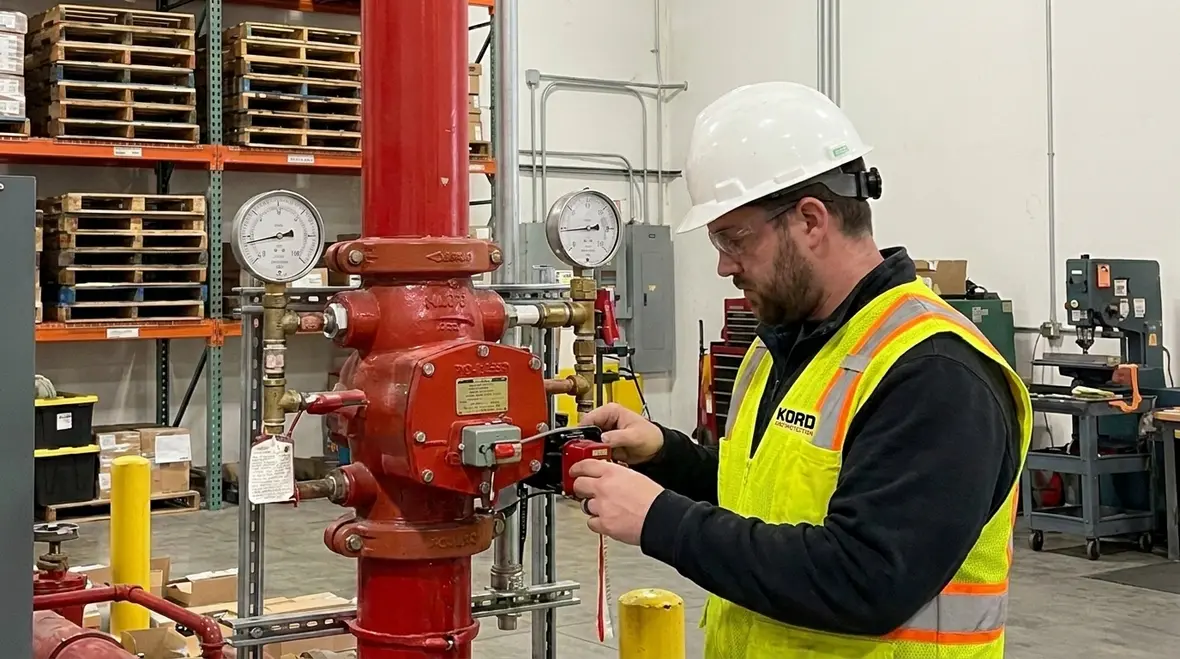
NFPA 34 Section 9.9: Water-Based Fire Protection System Requirements
Quick Answer
NFPA 34 Section 9.9 defines how water-based fire protection systems must be designed, installed, inspected, tested, and maintained to remain reliable in commercial and industrial fire scenarios. Compliance hinges on correct system layout, water supply reliability, supervision, and documented maintenance and test records.
Facilities working through inspection planning or system upkeep can also review Kord Fire Protection’s fire sprinkler system service to better understand how code-compliant servicing, maintenance, and repair fit into long-term readiness.
What does NFPA 34 Section 9.9 require for water-based systems?
NFPA 34 water-based fire protection system requirements focus on ensuring water-based equipment performs when needed, without degradation from poor installation, inadequate maintenance, or unreliable water supplies. In practice, Section 9.9 establishes expectations for system components such as sprinklers, standpipes, hoses, valves, supervisory signaling, and inspection and testing frequencies. Facilities that manufacture, store, or handle combustibles use these requirements to reduce reliance on any single failure-prone element and to verify the system stays operational over time.
For operational teams, the “real work” of NFPA compliance happens after installation: recurring inspections, functional tests, and corrective actions based on findings. Kord Fire Protection supports facilities by coordinating compliance plans, supervising acceptance and periodic testing, and validating that documentation matches what inspectors expect to see in audits.
System scope and the common design intent behind Section 9.9
Section 9.9 addresses water-based fire protection systems intended to protect properties and life safety hazards associated with processes and storage common to commercial, industrial, and retail occupancies where hazardous conditions exist. The design intent centers on dependable water delivery, correct hydraulics, proper component selection, and the prevention of system impairments such as obstructions, closed valves, or air or water problems in piping.
Key operational themes inspectors look for
- Reliable water delivery: Water supply capacity, pressure, and availability under expected conditions.
- Proper system configuration: Correct pipe sizing, routing, and component placement that supports design discharge or coverage expectations.
- Controlled impairment prevention: Supervision of valves and alerts for abnormal conditions.
- Documented maintenance and testing: Records that show the system continues to meet required performance over time.
Commercial facility standards frequently intersect with NFPA 25, NFPA 72, and local fire codes. Section 9.9 does not operate in isolation. Teams that treat it as a one-time “installation checklist” often struggle during reinspection when test logs, valve supervision status, and corrective action documentation do not align.
Water supply, valves, and supervision: where compliance often breaks down
The most frequent compliance risks in water-based systems are not missing components. They are incomplete verification and uncontrolled changes after installation. Section 9.9 expectations place heavy emphasis on ensuring the system can deliver water effectively and that impairments are identified and corrected without delay.
Water supply reliability
Water-based systems depend on predictable supply conditions. Facilities often face issues such as fluctuating municipal pressure, partial dry pipe performance changes due to maintenance shortcuts, or undersized or obstructed supply lines. In industrial and retail environments, changes in building layout, remodels, or temporary storage arrangements can also affect access to drains, gauges, and supervised control valves.
Valves and supervisory signaling
Supervised valves must remain in their normal positions unless an authorized and documented impairment exists. Common failure points include:
- Valves painted shut or blocked during routine maintenance and not returned to the correct supervised position.
- Supervisory switches not functional, bypassed, or not connected as required.
- Unauthorized valve closures that do not generate the expected alarm or supervisory signal.
Kord Fire Protection helps facilities reduce these risks by verifying valve supervision operation, confirming correct restoration after impairment, and maintaining a corrective action workflow tied to test results. For more on service capability, see Kord Fire Protection services.
Inspection and testing mechanics: what “operationally ready” means
Compliance under NFPA 34 water-based fire protection system requirements depends on inspection and testing activities that validate the system’s condition and performance. The objective is straightforward: ensure devices, piping, and controls respond as intended, and detect impairments early, before they become emergencies.
Performance verification activities
Operational readiness typically includes periodic checks such as:
- Visual condition verification: Ensuring hangers, pipe supports, and sprinkler areas remain unobstructed and properly maintained.
- Valve position and identification checks: Confirming labels, lock or supervisory status, and access for emergency operation.
- Water flow and alarm functions: Verifying that alarms and supervisory notifications respond correctly to system conditions.
- Drain and test connections functionality: Confirming that tests can be performed safely without creating new hazards or leaving lines in an impaired state.
Dry pipe systems and air management concerns
Where dry pipe systems apply, air pressure control and proper actuation verification matter. Failures often stem from neglected air maintenance, nonstandard compression conditions, or inconsistent testing outcomes caused by inadequate drain discipline. Commercial facilities with frequent tenant turnover also see higher risk due to changes in electrical supervision, control panel access, and adjusted maintenance routines.
Maintenance program planning: documented evidence that stands up in audits
NFPA 34 Section 9.9 expectations translate into a maintenance program that is repeatable, traceable, and focused on early impairment detection. Facilities that succeed build a compliance system around evidence: test results, corrected impairments, updated drawings, and clearly maintained valve inspection status.
What a strong maintenance program includes
- Defined inspection responsibilities: Who checks valve access, hazards around sprinkler piping, and quick impairment recognition.
- Scheduled functional testing: A calendar that matches required intervals and operational seasons where water supply or freezing conditions matter.
- Corrective action tracking: A documented loop that closes findings before the next inspection cycle.
- Record management: Uploading and retaining test reports, including alarm and flow verification records.
Kord Fire Protection supports this process by coordinating inspection and testing scopes, aligning service documentation with inspection expectations, and helping facilities avoid common “paper compliance” failures where records do not match field conditions. For additional guidance, facilities can review Kord Fire Protection resources for practical compliance support.
Frequently asked: how to prepare during remodeling, tenant changes, or impairments
Most real-world compliance issues happen during building changes. Remodeling can redirect pipe routing, introduce obstruction hazards, or alter access to valves and detectors. Tenant changes can also drive frequent minor modifications that unintentionally affect water-based system operation.
Remodel and tenant move preparation checklist
- Confirm whether any sprinkler heads, piping sections, or control valves are impacted.
- Protect valves and supervisory devices from temporary coverings, paint, or bypass activity.
- Verify system impairment authorization, time windows, and restoration requirements.
- Ensure “as-built” documentation updates align with actual installed conditions.
When impairments occur, the facility must treat them as a controlled operational event, not a routine convenience. Kord Fire Protection can help manage impairment sequencing and post-impairment verification to reduce the chance of leaving the system in a degraded state.
Frequently Asked Questions
Conclusion and call to action
NFPA 34 Section 9.9 compliance depends on more than installation. It requires controlled supervision, dependable water supply performance, disciplined inspection and testing, and documented corrective action. If your facility is preparing for inspection, undergoing remodeling, or needs a tighter maintenance and recordkeeping approach, contact Kord Fire Protection to plan a compliance-focused service schedule and verify system readiness.

Join Our Newsletter!
Get the latest fire safety tips delivered straight to your inbox From our Newsletter.



