
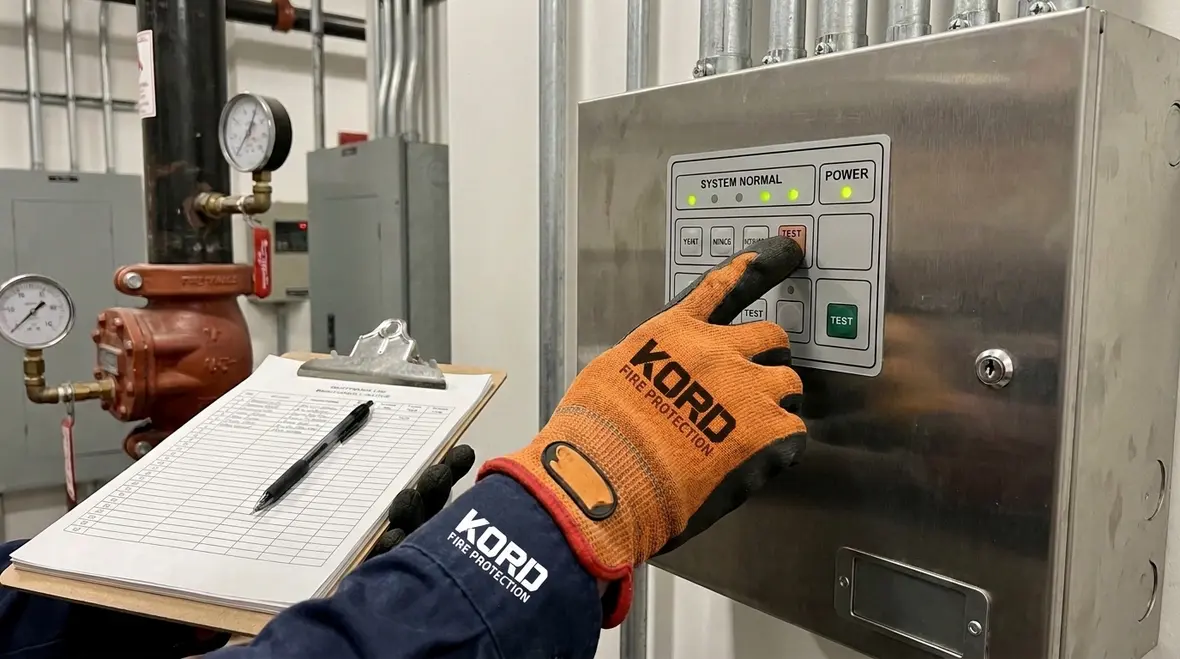
NFPA 34 Section 9.7: Requirements That Apply to All Fire Protection Systems
Quick Answer
NFPA 34 Section 9.7 establishes cross cutting requirements that govern the performance, reliability, supervision, inspection, testing, and maintenance of all fire protection systems in industrial and hazardous facilities. For compliance teams, the goal is consistent readiness, documented service, and prompt correction of deficiencies.
If your site also needs a practical look at fire alarm inspection and system testing, that guide fits naturally alongside Section 9.7 because documentation gaps and missed verification steps tend to travel in packs.
Why NFPA 34 Section 9.7 matters in real commercial facilities
Fire protection systems rarely fail because the design was wrong on paper. Failures more often occur because systems drift out of tolerance, maintenance is delayed, supervisory functions are not monitored, or testing is not performed with the correct frequency and acceptance criteria. NFPA 34 all fire protection system general requirements address those operational gaps by setting expectations that apply across foam, water-based, detection, alarms, extinguishment, and related system components.
For commercial, industrial, and retail facilities with process equipment, storage areas, or high hazard occupancies, Section 9.7 becomes a practical compliance roadmap. It helps ensure the systems that protect people and assets remain capable when conditions change, including after repairs, alterations, seasonal shutdowns, and contractor transitions.
What Section 9.7 expects across every system type
Section 9.7 requirements that apply to all systems typically focus on four operational themes: continued readiness, proper supervision and monitoring, inspection and testing to verify performance, and maintenance that corrects deficiencies before they become reliability issues. Even when a facility has dedicated section specific requirements for a specific system, Section 9.7 provides the baseline controls.
1) System readiness and operational capability
NFPA 34 all fire protection system general requirements aim to keep equipment in a condition where it can respond as intended. That means components remain operable, protected from damage and impairment, and not taken out of service without compensating controls. In practice, readiness is compromised by blocked access, missing components, mispositioned valves, disconnected supervisory devices, or damaged detection equipment.
Common compliance challenge: Facilities with frequent work orders, temporary contractors, or warehouse reconfiguration often disrupt routing of detection and alarm devices. Section 9.7 pushes organizations to treat these events as reliability risks, not housekeeping tasks.
2) Supervision, monitoring, and control
Fire protection systems generally rely on supervisory functions that detect abnormal conditions such as loss of pressure, valve position changes, power failures, or tamper states. Section 9.7 emphasizes that supervision must be maintained and that supervisory signals must be acted upon.
Operational failure mode: A supervisory trouble condition is logged but not tracked to resolution. Over time, the system spends significant periods not fully capable, even if the control panel indicates “trouble” rather than “alarm.”
3) Inspection and testing as a verified performance requirement
Section 9.7 establishes the expectation that inspections and tests verify system performance and that the facility can demonstrate compliance. Testing confirms that components operate within acceptance limits and that interconnections between detection, control, alarm, and suppression functions work as designed.
Commercial facilities commonly struggle with test execution quality. Examples include incomplete pretest checks, inaccurate documentation, poor coordination with operations teams, or repeating tests without identifying root causes for prior failures.
4) Maintenance that corrects deficiencies promptly
Maintenance is not just preventative. Section 9.7 expectation is that deficiencies are corrected. That includes replacing worn components, restoring devices to their approved configuration, and reestablishing full system capability after repairs.
Common compliance challenge: Work orders close the loop on the visible issue, but fail to address associated causes. For example, a recurring supervisory valve issue may be driven by recurring debris accumulation, misalignment, or inadequate environmental protection.
Inspection and testing: how compliance is verified on site
NFPA 34 all fire protection system general requirements are supported by documentation, test records, and evidence that the system was capable at the time of inspection and testing. The practical compliance question becomes: can the facility show a defensible history of inspection and testing, and can it prove that deficiencies were corrected?
What inspectors and insurers typically look for
- Accurate as-built information that matches current equipment locations, setpoints, and arrangement.
- Recorded inspection results that reflect required intervals and include measurable outcomes where applicable.
- Test procedures aligned to system type so that verification steps cover detection, actuation, and alarm or notification sequences.
- Corrective action documentation showing what failed, why it failed, and what was done to prevent recurrence.
- Consistency across contractors so that changes in service providers do not create documentation gaps.
Where failures most often originate
In operational audits, the highest risk areas often include:
- Initiating devices impacted by contamination, mechanical damage, or mounting changes.
- Supervisory circuits affected by wiring modifications or terminal looseness after maintenance.
- Valves and operators that drift out of approved position due to minor process activity or vibration.
- Notification and control interfaces that do not operate as intended because of configuration drift.
- Alarm signaling that is not confirmed end to end, creating a gap between control room status and field performance.
By aligning field verification with documentation expectations, facilities reduce the chance of repeat findings during Authority Having Jurisdiction reviews.
Maintenance that actually sustains reliability
Section 9.7 performance expectations push beyond basic “check and clean” routines. Reliable maintenance accounts for the real operating environment: temperature swings, dust load, corrosive atmospheres, vibration, seasonal staffing changes, and evolving process layouts.
Maintenance planning for commercial and industrial environments
A practical maintenance program typically includes:
- Defined service intervals that match required inspection and testing schedules, not just internal work order cycles.
- Device specific care such as cleaning methods, replacement criteria, lubrication controls where allowed, and approved parts usage.
- End to end function verification where feasible, so the system’s protective intent is proven.
- Change management to ensure renovations, rack moves, or new process equipment do not impair detection coverage or cause supervisory impairment.
How Kord Fire Protection supports NFPA 34 readiness
Kord Fire Protection helps facilities sustain compliance by performing routine inspection and testing, troubleshooting reliability issues, and maintaining clear documentation for audits. That support is especially valuable for commercial, industrial, and retail operators that need repeatable service execution across multiple buildings or changing site conditions.
For a broader overview of service capabilities, see Kord Fire Protection.
Document control and deficiency correction: the compliance multiplier
Even a well functioning system can fail compliance if documentation and deficiency correction are not managed. NFPA 34 all fire protection system general requirements assume the facility can demonstrate that systems were inspected, tested, and maintained per the governing standards.
Document control that reduces audit time
- Maintain current installation and sequence information so that testing is performed against the correct configuration.
- Track revisions and repairs with clear dates and descriptions.
- Store test records in a way that is retrievable during inspections and incident reviews.
Deficiencies: correct fast, and confirm the fix
Deficiency correction must include confirmation testing when needed. A supervisory trouble may clear after a reset, but the underlying cause may remain. Facilities should treat each deficiency as an opportunity to improve reliability by addressing root causes, documenting corrective action, and confirming restored system capability through appropriate verification.
Frequently Asked Questions
Conclusion and Call to Action
NFPA 34 Section 9.7 sets the baseline for reliable, supervised, and verified fire protection system performance across your entire facility. If you want a defensible compliance posture, focus on documented inspections and testing, rapid deficiency correction, and maintenance practices that reflect real site conditions. Contact Kord Fire Protection to schedule an audit of inspection and testing records and to build a service plan that sustains NFPA 34 compliance year-round.

Join Our Newsletter!
Get the latest fire safety tips delivered straight to your inbox From our Newsletter.



