
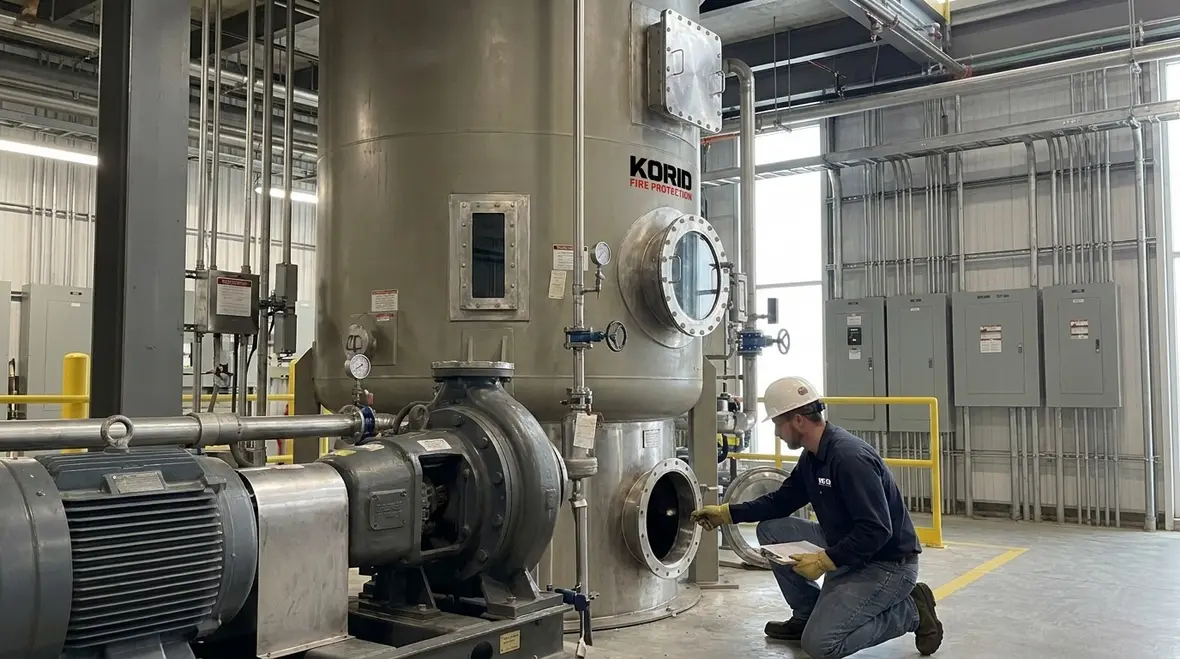
NFPA 34 Section 5.2: General Design and Construction Requirements for Fire Safety in Industrial Equipment
Quick Answer: NFPA 34 Section 5.2 sets the baseline rules for how fire protection, operating systems, and general equipment must be designed and built so they reliably control fire risk. It addresses materials, installation, integrity, accessibility, and performance over the equipment lifecycle.
If you are reviewing equipment readiness across a facility, it also helps to look at broader fire protection services in Southern California so inspection planning, repairs, and compliance support are aligned from the start.
Why NFPA 34 Section 5.2 matters to commercial owners and facility teams
Facilities that handle combustible materials, operate process equipment, or store hazardous products often rely on systems and components whose performance must hold up under real-world conditions: vibration, thermal cycling, corrosion, load changes, and routine maintenance. NFPA 34 general equipment design construction requirements establish a consistent framework so those components function as intended, not only at commissioning but throughout continued operation.
Commercial owners and facility managers typically see Section 5.2 come into play during plan review, field installation, and ongoing inspections. Compliance gaps often surface as incomplete installation details, undocumented modifications, degraded components, blocked access for inspection and testing, or materials that do not match the approved construction basis.
What Section 5.2 typically requires for general equipment design and construction
Section 5.2 is designed to prevent “it worked during startup” scenarios. It focuses on the equipment itself and the construction features that affect fire performance and maintainability. In practice, NFPA 34 general equipment design construction requirements are applied through several recurring themes:
1) Construction integrity that supports reliable fire performance
Equipment and assemblies must be constructed to maintain performance under expected conditions. This includes mechanical integrity of casings and supports, secure routing of components, and protection of critical parts from damage that could impair operation. Common field issues include loose fittings, improperly torqued connections, damaged insulation, or wiring run without mechanical protection.
2) Suitable materials and compatible assemblies
Materials must be appropriate for the environment where the equipment will operate. Chemical exposure, moisture, dust, and temperature extremes can accelerate corrosion or embrittlement. When the construction materials and protective finishes are not matched to the environment, inspection teams frequently find early deterioration and loss of functional capability.
3) Installation quality and workmanship requirements
Even when approved components are selected, poor installation undermines compliance. Section 5.2 expectations commonly translate into requirements for secure fastening, correct alignment, proper sealing where needed, and clear compliance documentation. In commercial and industrial settings, maintenance teams also need installation details that remain available for future troubleshooting and replacement.
How design choices affect inspection, testing, and long term maintenance
NFPA 34 compliance does not end when installation is complete. Equipment must remain inspectable and serviceable so that testing can be performed and defects can be discovered early. Facility staff often underestimate the maintenance burden created by inaccessible assemblies, tightly enclosed components, or routing that blocks visual inspection.
Access and maintainability: the practical compliance challenge
Commercial, industrial, and retail facilities frequently operate with constrained floor space and active production schedules. This can lead to shortcuts during construction that reduce access to valves, covers, gauges, indicators, and control components. When access is limited, routine inspection and testing degrade, and failures are discovered later, increasing repair scope and downtime.
Documentation that supports ongoing compliance
Section 5.2 expectations typically require that construction and installation details are traceable. During audits, teams often need to demonstrate what was installed, when it was installed, and how it was configured. A common failure point is the lack of “as built” documentation after field changes, including substitutions of components that were not reapproved or that did not meet the original performance intent.
Failure points that show up during maintenance cycles
During annual or semiannual maintenance, inspectors commonly encounter:
- Corrosion or coating breakdown that compromises equipment housings or connections.
- Mechanical wear or vibration loosening at brackets, supports, and fasteners.
- Compromised insulation or heat transfer materials that alter thermal behavior.
- Contaminant buildup that interferes with moving parts or sensors.
- Damaged cable jackets, poor strain relief, or wiring not routed to avoid abrasion.
These issues are often preventable through design that supports inspection points, durable material selection, and disciplined maintenance practices.
Installation details that often determine compliance success
Facility teams usually focus on high-level plan approval. However, day-to-day compliance depends on the installation details that affect reliable operation. In many commercial projects, field conditions require coordination among electrical, mechanical, and fire protection trades to maintain the construction intent.
Coordinate routing, supports, and protection for critical components
Fire relevant equipment depends on components that must remain intact and function correctly. Routing must avoid exposure to physical damage, excessive heat, or chemical contamination. Supports must prevent movement that could strain connections. Protective measures must not obstruct access for inspection.
Ensure compatibility between equipment interfaces
Interfaces between equipment sections, control components, and connected assemblies must be constructed to maintain performance. Misalignment, incompatible fittings, improper adapters, or missing gaskets can create gaps that lead to leakage, misoperation, or degraded response time.
Plan for inspection points at the time of construction
NFPA 34 general equipment design construction requirements support a lifecycle view. Equipment should include practical inspection points and cover provisions so that personnel can verify condition and readiness without dismantling unnecessary sections. When equipment lacks inspection points, maintenance becomes guesswork and compliance becomes harder to defend.
Common compliance gaps in commercial facilities and how to close them
Commercial facility standards and asset management practices create unique pressure points. Typical compliance gaps cluster around change management, accessibility, and evidence of continued maintenance. The following gaps frequently appear during internal reviews and third party audits:
1) Untracked substitutions and field modifications
When a component is replaced due to availability or cost, the facility may lose the construction basis that supported approval. Without documented equivalency, the “as installed” condition can drift from the approved design intent.
2) Access barriers created by layout changes
As buildings evolve, storage racks, furnishings, or temporary partitions may block access to equipment. Over time, inspection windows disappear, and maintenance personnel postpone corrective actions because work becomes too disruptive.
3) Deferred maintenance that masks developing failures
Skipped or delayed maintenance cycles can allow degradation to progress from minor defects to functional impairment. This increases outage risk and reduces the ability to demonstrate reliable performance during scheduled testing.
To address these challenges, Kord Fire Protection supports commercial teams with compliance focused testing, inspection preparation, and ongoing maintenance support. For additional background on documentation and compliance planning, see full lifecycle fire protection servicing or review fire protection services in Southern California.
Frequently Asked Questions
Conclusion and call to action
NFPA 34 Section 5.2 focuses on the design and construction details that keep fire relevant equipment dependable over time. Facility teams should verify installation quality, protect critical components, preserve access for inspection, and maintain as built documentation through maintenance cycles. If your commercial assets require inspection readiness, testing support, or maintenance planning, contact Kord Fire Protection to build a compliance approach that withstands audits and real operating conditions.

Join Our Newsletter!
Get the latest fire safety tips delivered straight to your inbox From our Newsletter.



