
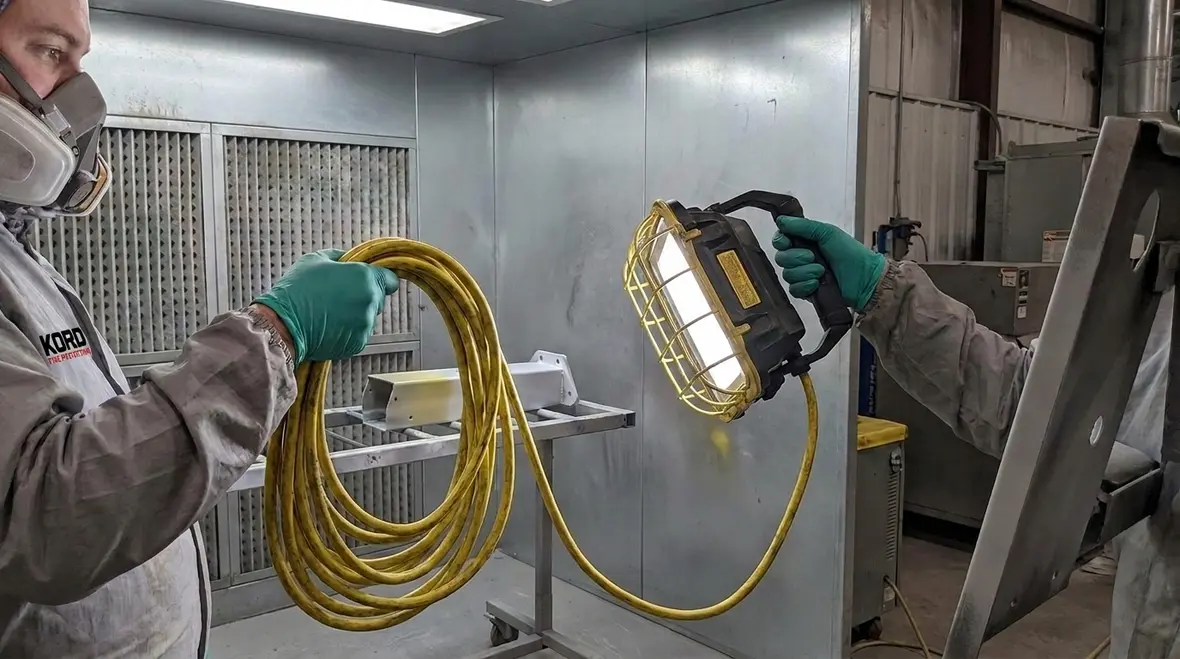
NFPA 33 Section 6.9: Portable Electric Luminaires in Spray Areas
Quick Answer: NFPA 33 Section 6.9 requires portable electric luminaires used in spray areas to be suitable for the hazardous environment, properly constructed, and maintained to prevent ignition. Facilities must control equipment selection, inspection frequency, and replacement practices to sustain compliance throughout operations.
What NFPA 33 portable electric luminaire spray area rules require
NFPA 33 portable electric luminaire spray area rules focus on reducing ignition risk when spraying flammable or combustible materials. In practice, the rules do not treat “portable” luminaires as casual plug in devices. They require luminaires and power connections that can function safely in spray area conditions, including abnormal use scenarios such as impact, contamination, and cable damage.
Because spray booths and open spray operations change exposure levels based on workload, ventilation, and material properties, compliance depends on more than initial procurement. Commercial facilities typically fail inspection when portable lighting is swapped informally, cords are damaged, or maintenance lags behind operational wear.
Where Section 6.9 applies in real facilities
NFPA 33 addresses spray areas where flammable vapors, mists, or residues may be present. Portable luminaires become an ignition management concern when they are used within these areas or in locations where they can reasonably be exposed to spray deposits.
Common high risk use patterns
- Temporary lighting during changeovers, tack free inspections, or rework inside spray areas.
- Maintenance activities where workers carry lights across classification boundaries without control.
- After spray events when residues remain on surfaces and become stirred by air movement.
- Use of “jobsite” type lights not rated for spray area conditions.
Facilities should treat lighting as part of the overall spray fire protection program. A formal process should define where portable luminaires can be used, who can approve new equipment, and how workers receive and return compliant units.
How compliant portable luminaires are built to reduce ignition sources
Section 6.9 centers on luminaire suitability for the spray environment. In practical terms, compliant portable luminaires use design controls that limit ignition sources such as arcs, sparks, hot surfaces, and mechanical damage that can create electrical faults.
Key design features compliance teams look for
- Appropriate hazardous location suitability: luminaires should meet the applicable requirements for the spray environment. Facilities should verify ratings on the device and in documentation, not just on a box label.
- Secure electrical connection system: cord entry points and strain relief protect internal terminations from pulling and flexing.
- Physical impact protection: shatter resistant covers and guards reduce the likelihood of internal failure when a light is dropped or struck.
- Ingress protection for residues and overspray: housings help prevent deposits from compromising insulation or heat dissipation.
- Controlled surface temperatures: design limits hot spots that can ignite vapors or residues.
Operationally, design intent fails when lamps are replaced with incorrect bulbs, when covers are removed, or when damaged enclosures remain in service. Commercial programs should lock down replacement parts and require documented maintenance.
Inspection and maintenance procedures that prevent common failures
Even when luminaires meet Section 6.9 requirements, compliance can deteriorate due to routine wear. Commercial facilities should implement an inspection regime that covers electrical integrity, enclosure condition, and cord management.
Routine checks that typically catch noncompliance early
- Cord and plug condition: look for cuts, exposed conductors, crushed sections, and loose blades.
- Strain relief and cord entry: confirm seals are intact and that the cord cannot be pulled free at the inlet.
- Enclosure integrity: verify covers and lens protection remain installed and uncracked.
- Switch and housing performance: ensure switches operate correctly and do not chatter, spark, or bind.
- Fasteners and guards: check missing screws, guard deformation, or latch failures.
Maintenance practices that preserve ratings
- Use manufacturer approved replacement parts only. Do not substitute generic components that change electrical or thermal behavior.
- Track luminaire IDs on a tag system so maintenance history remains traceable during audits.
- Remove from service immediately if damage is found. Repackaging a damaged luminaire for “temporary” use commonly leads to repeat findings.
Facilities also benefit from controlled distribution. A dedicated luminaire cabinet with sign out procedures reduces unauthorized use of nonrated tools. Kord Fire Protection supports this operational discipline by assisting with documentation review, inspection readiness, and ongoing compliance support aligned to commercial spray environments.
For related fire protection documentation practices and site support, Kord Fire Protection can help align your program with broader life safety and fire risk controls. See fire protection services in Southern California for guidance on inspection support and maintenance coordination.
Training and control of portable lighting in spray operations
Portable lighting often becomes noncompliant because it sits outside formal “equipment management.” A strong program assigns clear ownership and limits who may bring lights into spray areas.
Operational controls that reduce risk
- Written equipment list: identify approved luminaire models and reject all others in spray areas.
- Work permit or task based authorization: require sign out for temporary lights tied to a specific task.
- Boundary awareness: train workers that “near” a spray area can still expose equipment to vapors or residues.
- Return to service rules: require inspection sign off after any drop, cord repair, or cover replacement.
Commercial and industrial facilities should incorporate these controls into onboarding and recurring safety meetings. Retail paint and finishing operations often underestimate the frequency of rework lighting and last minute troubleshooting, which increases the likelihood of unauthorized devices being used.
Compliance documentation, audits, and inspection readiness
NFPA 33 compliance relies on both the equipment and the evidence that the facility manages it. Inspectors typically evaluate whether the facility can demonstrate that luminaires used in spray areas are compliant and maintained.
What your file should include
- Manufacturer luminaire specifications and ratings showing suitability for the spray environment.
- Inspection and maintenance logs linked to luminaire identifiers.
- Damaged equipment disposition records including removal from service.
- Training records for workers who sign out or operate portable luminaires.
- Procedures describing where portable luminaires may be used and how they are controlled.
To strengthen inspection readiness, facilities should periodically verify that the actual equipment in circulation matches the approved list. Kord Fire Protection helps commercial facilities close this gap by supporting structured documentation practices and field-ready compliance alignment.
If your team is tightening inspection workflows across connected systems, the Kord Fire article on coordinating emergency lighting and fire safety controls adds useful context for keeping documentation, maintenance, and field conditions working together.
Frequently Asked Questions
Next steps
Review every portable luminaire used in or near spray areas against NFPA 33 Section 6.9 requirements, then tighten your inspection, sign out, and maintenance controls. Kord Fire Protection can help you build an audit ready approach with documentation support and practical compliance coordination for commercial spray environments. Contact Kord Fire Protection to assess your current lighting controls and maintenance program.

Join Our Newsletter!
Get the latest fire safety tips delivered straight to your inbox From our Newsletter.



