
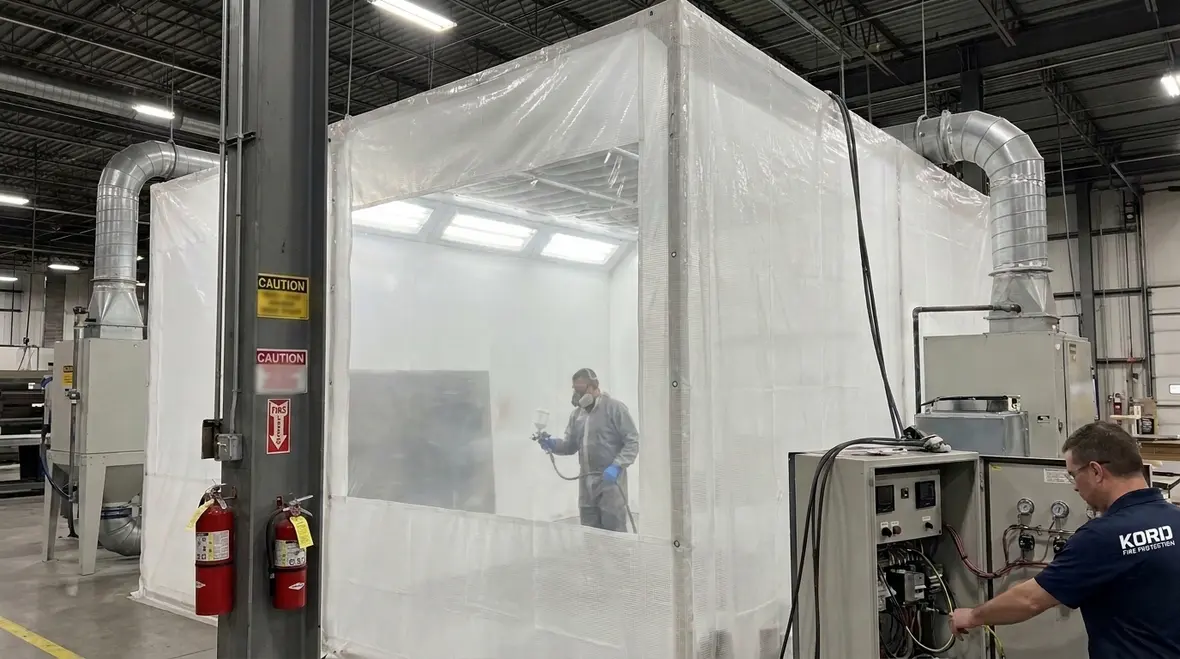
NFPA 33 Section 18.4: Fire Protection in Membrane Spray Enclosures
Quick Answer: NFPA 33 Section 18.4 sets performance based fire protection expectations for membrane spray enclosures. It focuses on controlling ignition sources, maintaining containment effectiveness, and ensuring fire protection systems remain functional through routine inspection, testing, and maintenance. Proper design, installation, and upkeep drive compliance and safety.
Facilities working through broader spray operation compliance issues may also benefit from reviewing NFPA 33 equivalency for spray operations, especially when documented risk controls and field verification need to line up with real world operating conditions.
Why NFPA 33 membrane enclosure fire protection is different
Membrane spray enclosures manage overspray and contain hazardous atmospheres, but they introduce unique fire risks. Unlike rigid booth construction, membrane systems can be more vulnerable to damage from heat, electrical faults, and impact. NFPA 33 membrane enclosure fire protection must therefore address both the fire scenario inside the enclosure and the way the enclosure interacts with ventilation, lighting, electrical equipment, and suppression components.
In practice, facilities often encounter compliance gaps when engineering intent is not carried through to installation quality, operational procedures, and maintenance practices. These gaps show up as degraded membranes, improperly sealed penetrations, failed detection or shutdown sequences, or fire protection components that have not been tested to confirm correct operation under real operating conditions.
What Section 18.4 expects in the field
Section 18.4 emphasizes fire protection provisions for membrane spray enclosures based on ignition hazard control and reliable system performance. The goal is to reduce the likelihood of ignition, limit fire growth where a fire occurs, and ensure occupants and operations can respond safely.
1) Fire hazard evaluation remains a first step
Facilities must evaluate the material hazards typical to their coating operations. That includes solvent and coating chemistry, spray rates, and the likelihood of flammable vapor accumulation within the enclosure and nearby exhaust ducting. Even when a system appears compliant on paper, a mismatch between coating practices and the design basis can invalidate the hazard controls expected by Section 18.4.
2) Ignition source control must be demonstrable
Commercial sites frequently include multiple potential ignition sources: electrical motors in exhaust systems, lighting, portable tools, heaters, static discharge, and wiring routed near flexible membranes. Section 18.4 compliance depends on ensuring equipment selection, installation methods, and operating practices align with the intended hazard level. It also depends on documenting that ignition sources remain controlled over time through inspections and repair procedures.
3) System reliability under maintenance realities
Membrane enclosures are regularly accessed for cleaning, filter changes, and material changeovers. Section 18.4 effectively expects the fire protection approach to survive these operational realities. That means the protection components must be accessible for inspection, able to tolerate cleaning procedures, and supported by a maintenance plan that confirms functional readiness, not just visual condition.
Common compliance challenges in membrane spray enclosures
NFPA 33 membrane enclosure fire protection often fails during routine operations because system performance degrades silently. The following issues show up frequently in commercial, industrial, and retail manufacturing support areas, paint lines, and finishing rooms.
Damaged membranes and degraded seals
Membranes can tear, delaminate, or develop weak points near airflow inlets, edges, and cable pass throughs. Even small openings can change airflow patterns and allow flammable vapors to spread beyond the intended enclosure boundary. Compliance risk increases when repairs are completed with non compatible materials or without restoring proper sealing and alignment.
Unverified shutdown or control sequences
Many systems rely on detection and interlocked control actions such as stopping spray, closing dampers, stopping fans as appropriate, and triggering alarms. The challenge is that seasonal changes, filter loading, or modifications to electrical panels can alter behavior. Without formal functional testing, the facility may believe the system will act correctly when conditions reach alarm thresholds.
Detection and suppression components out of calibration or out of service
Detection devices can drift from expected response times due to contamination, overspray buildup, or physical misalignment. Where suppression components exist, clogged nozzles, damaged piping, or blocked routes can prevent effective delivery. Facilities sometimes replace components quickly after damage without confirming correct placement, temperature ratings, or compatibility with local environmental conditions.
Electrical installation problems near membranes
Flexibility and movement are normal for membrane enclosures, but they can expose wiring to abrasion, strain, and thermal effects. Problems include missing protective conduit, loose fittings, unsealed penetrations, and components installed with the wrong hazard classification. These issues can create ignition sources and can also interfere with the fire protection system’s ability to remain functional.
Operational procedures and maintenance practices that keep Section 18.4 compliant
Compliance depends on more than installation. It depends on disciplined operational procedures and preventive maintenance that verifies system performance over the facility lifecycle.
Establish a membrane inspection and repair program
- Define inspection intervals based on coating schedule, overspray loading, and physical traffic near the enclosure.
- Require documentation of membrane condition, seal integrity, and the condition of penetrations.
- Control repairs using approved materials and methods that restore airflow patterns and separation boundaries.
Confirm functional testing after any change
Functional testing should follow any change that could affect performance, including filter replacement methods, membrane replacement, electrical panel modifications, or exhaust changes. Testing should verify the detection pathway and confirm control outputs, alarms, and any shutdown actions occur as designed. Where applicable, test results must align with the operating mode used during coating activities.
Maintain electrical safety and ignition control checks
- Verify equipment ratings and secure bonding and grounding where required by the design.
- Inspect wiring routing, strain relief, and protective coverings for abrasion near moving membrane sections.
- Confirm that any temporary operational changes revert to the approved configuration.
Keep cleaning procedures from defeating fire protection
Over time, overspray deposits and cleaning chemicals can affect detection sensitivity and airflow characteristics. Facilities should standardize cleaning methods, protect detection components from direct mechanical damage, and ensure cleaning does not block detection paths, vents, or suppression discharge routes. Kord Fire Protection typically supports these programs through scheduled inspections, documentation, and system performance verification aligned with commercial facility maintenance expectations.
For broader fire system maintenance guidance that many facilities apply alongside NFPA 33 requirements, see fire protection services in Southern California for service capabilities and compliance support.
Inspection and testing: what auditors typically look for
Auditors and fire safety managers usually focus on evidence that the fire protection approach remains reliable. That evidence includes records of inspections, test results, corrective actions, and proof that the enclosure operates within its intended design basis.
Documented records that connect operations to compliance
- Membrane inspection logs, including repair dates and materials used.
- Detection and control system test records, including outcomes and any adjustments.
- Maintenance history for suppression or other protective components, including component part numbers and replacement rationale.
- Verification that coating products and processes match the hazard assumptions used for the enclosure fire protection design.
Common failure points found during field reviews
- Unsealed penetrations around cable routes or sensor housings.
- Detection heads positioned where overspray buildup blocks sensing capability.
- Control interlocks that do not match current operational practice due to recent equipment changes.
- Inadequate calibration or overdue inspection intervals.
These points align directly with the intent behind NFPA 33 Section 18.4 by ensuring the enclosure and its fire protection controls still perform during real operation, not only during initial acceptance.
Frequently Asked Questions
Take action now
If your facility uses membrane spray enclosures, confirm that your NFPA 33 membrane enclosure fire protection approach includes documented inspections, functional testing, and controlled membrane repair practices. Engage Kord Fire Protection to review your current setup, verify system performance, and strengthen maintenance records so compliance stays consistent through daily operations and future changes.

Join Our Newsletter!
Get the latest fire safety tips delivered straight to your inbox From our Newsletter.



