
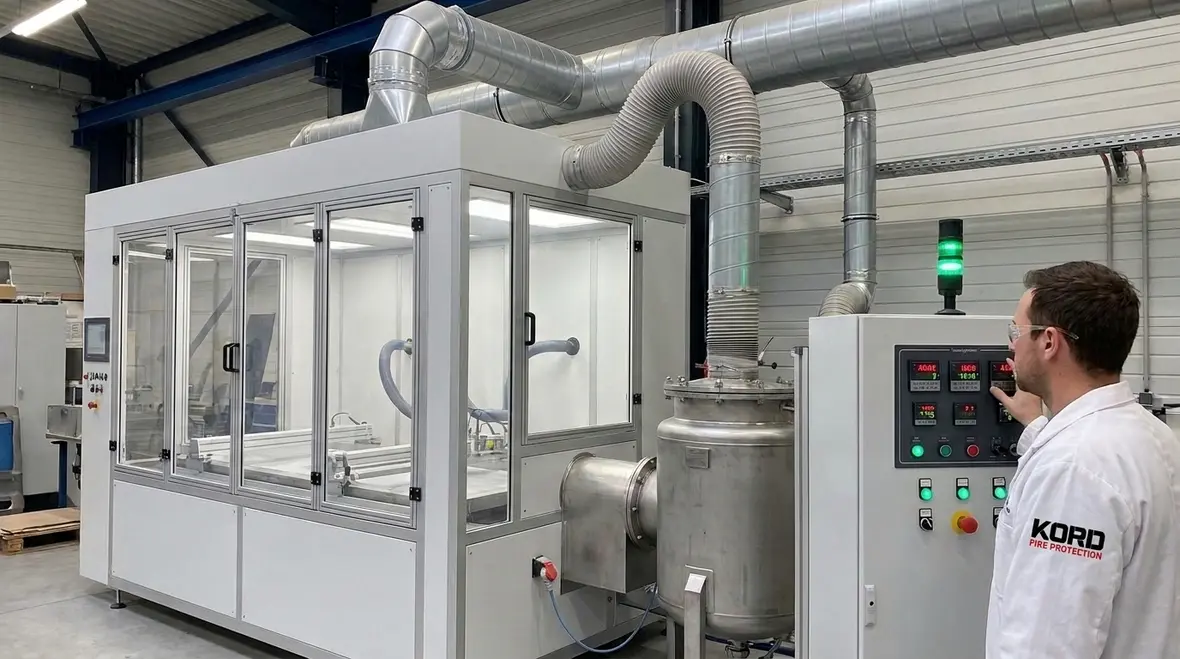
NFPA 33 Section 15.16 Fluid Bed Coating Requirements: Compliance and Fire Safety Controls
Quick Answer
NFPA 33 Section 15.16 governs fire and explosion hazards during fluid bed coating operations, focusing on equipment integrity, ignition source control, ventilation, and safe material handling. Organizations must verify that systems operate as designed, document inspections, and maintain controls that prevent hazardous releases.
What does NFPA 33 Section 15.16 require for fluid bed coating?
NFPA 33 fluid bed coating requirements address the ignition hazards associated with suspended or fluidized powders and coating atmospheres. In practical terms, facilities must ensure that the fluid bed system, air handling, exhaust, ducting, and controls limit the presence of flammable mixtures, prevent ignition from reaching combustible dust or coating vapor, and maintain safe operating conditions throughout production and shutdown.
For compliance teams in commercial, industrial, and retail facilities, the most common failure point is not one single item. It is the mismatch between how the coating line is configured in day to day operation and how it must be maintained and verified under NFPA 33 fluid bed coating requirements.
Where Section 15.16 applies in a real coating operation
Section 15.16 centers on fluid bed coating systems where powders and coating liquids or vapors create conditions that can ignite if an effective ignition source, oxygen, and fuel are present. Typical systems include:
- Fluid bed vessels with air distribution plates and controlled fluidizing air
- Ductwork and exhaust systems that manage coating vapors and overspray or particulate
- Air pollution control devices and filters designed to handle dust loading and safe airflow
- Supplemental heating or process heaters when used to dry or cure coatings
- Valves, dampers, interlocks, and instrumentation that prove safe operating states
Because fluid bed lines often operate in production cycles, controls must remain reliable during startup, steady production, cleaning, and changeovers. NFPA 33 fluid bed coating requirements therefore require that safeguards are not only present, but operationally verified.
Ignition source control and operational safeguards
Fluid bed systems reduce risk when they prevent ignition sources from contacting combustible material or flammable atmospheres. The primary compliance challenge is that ignition hazards can shift as equipment ages, seals degrade, filters load, or maintenance schedules slip.
Common ignition source pathways
- Hot surfaces from heaters, blower motors, bearings, or damaged insulation contacting dust laden airflow
- Electrical equipment with failed enclosures, improper wiring, or components not rated for the environment
- Static discharge from inadequate grounding, improper bonding, or changes to hoses and fittings
- Mechanical failure such as seized bearings that increase temperatures and friction
- Backflow of flame or hot gases through ducting when containment or isolation is not effective
Operational controls that must perform every cycle
Under NFPA 33 fluid bed coating requirements, facilities typically need proven interlocks and safe sequence controls that address startup and shutdown conditions, including:
- Interlocks that confirm airflow is established before coating material is introduced
- Controls that maintain ventilation during coating and drying steps
- Shutdown sequences that remove fuel or coating input before stopping airflow
- Procedures for abnormal conditions such as airflow loss, heater faults, or unexpected pressure drops
In practice, the strongest defense comes from commissioning plus periodic verification. A system can pass an initial acceptance test and still fail later due to duct leaks, sensor drift, and filter loading that changes airflow patterns.
Ventilation, exhaust, and dust handling: how compliance is tested
For fluid bed coating systems, ventilation and exhaust are central because they control concentration of coating vapor and particulate. Inspectors and internal safety teams should treat airflow and exhaust performance as a measured system feature, not a fixed installation detail.
Key performance indicators facilities should manage
- Airflow rates that match the operating range specified by equipment design
- Pressure differentials across filters or collectors to detect loading and loss of air handling performance
- Duct integrity including seams, gaskets, and joints that prevent leaks and uncontrolled emissions
- Exhaust discharge behavior including visible emissions control and proper routing away from ignition risk areas
- Collector management to prevent accumulation that can create secondary fire hazards
Maintenance is part of fire safety, not a separate activity
Typical commercial facility issues include missed filter change intervals, reused seals, or duct modifications that occur during upgrades and are not evaluated for fire and explosion implications. NFPA 33 fluid bed coating requirements depend on maintaining the original safety intent of the system, including airflow paths and containment integrity.
To support ongoing verification, Kord Fire Protection helps commercial sites establish practical inspection, testing, and maintenance programs aligned to operational realities, including documentation that supports audits and internal safety reviews.
For broader support beyond this specific coating issue, many facility teams also review fire protection services in Southern California early in planning so inspection, repairs, and documentation can stay coordinated across related systems.
Inspection and documentation: what auditors look for
Compliance is strongest when facilities can demonstrate that safe operation is maintained over time. NFPA 33 fluid bed coating requirements are difficult to defend without traceable records showing that checks occur at the right frequency and after relevant changes.
High value evidence for compliance teams
- Inspection and test records for interlocks, airflow proving devices, and heater controls
- Maintenance logs for filters, collectors, duct components, and grounding or bonding checks
- Documentation of abnormal event response, including corrective actions for airflow or control faults
- Configuration control records for any modifications to ducting, sensors, electrical equipment, or control logic
- Training records for operators regarding safe start, safe shutdown, and cleaning procedures
Common reasons fluid bed systems fail compliance reviews
- Systems operate with bypassed or defeated interlocks during troubleshooting
- Airflow sensors drift or become misaligned without recalibration schedules
- Collectors and filters are serviced inconsistently, leading to unexpected changes in performance
- Grounding and bonding are altered during equipment replacement without verification
- Cleaning practices redistribute combustible residues, increasing ignition risk
Facilities that standardize verification and maintenance typically reduce both fire risk and audit friction. For broader commercial fire prevention support, review fire protection services from Kord Fire Protection to align testing and documentation practices across your facilities.
Implementation checklist: operational steps to stay aligned
The following actions help facilities translate NFPA 33 fluid bed coating requirements into daily operations. They also reduce risk when production schedules change, during shift handoffs, and after maintenance events.
Line readiness before production
- Verify ventilation and airflow proving signals during startup sequencing
- Confirm heaters and electrical controls operate within design conditions
- Confirm sensors and alarms trigger as intended for low airflow or abnormal states
- Verify grounding and bonding continuity after any maintenance involving hoses, duct changes, or new components
During production
- Track pressure differential trends across filtration devices to detect early loading
- Maintain housekeeping discipline to prevent secondary combustible accumulations
- Ensure operator procedures include response steps for airflow or control faults
After production, cleaning, and changeovers
- Follow cleaning methods that do not create ignition risk, such as avoiding practices that aerosolize residues
- Inspect duct joints, seals, and collector conditions after service work
- Document corrective actions for any abnormal events and update maintenance tasks accordingly
When these steps run consistently, NFPA 33 fluid bed coating requirements become operationally measurable rather than purely theoretical.
Frequently Asked Questions
Conclusion and call to action
NFPA 33 fluid bed coating requirements demand reliable ignition source control, dependable ventilation, and evidence that safeguards perform throughout startup, production, shutdown, and maintenance. Kord Fire Protection supports commercial facilities with practical inspection, testing, and documentation strategies that align safety controls with real operating conditions. Contact Kord Fire Protection to review your fluid bed coating line safeguards, identify the highest risk gaps, and build a compliance-ready maintenance and verification plan.

Join Our Newsletter!
Get the latest fire safety tips delivered straight to your inbox From our Newsletter.



