
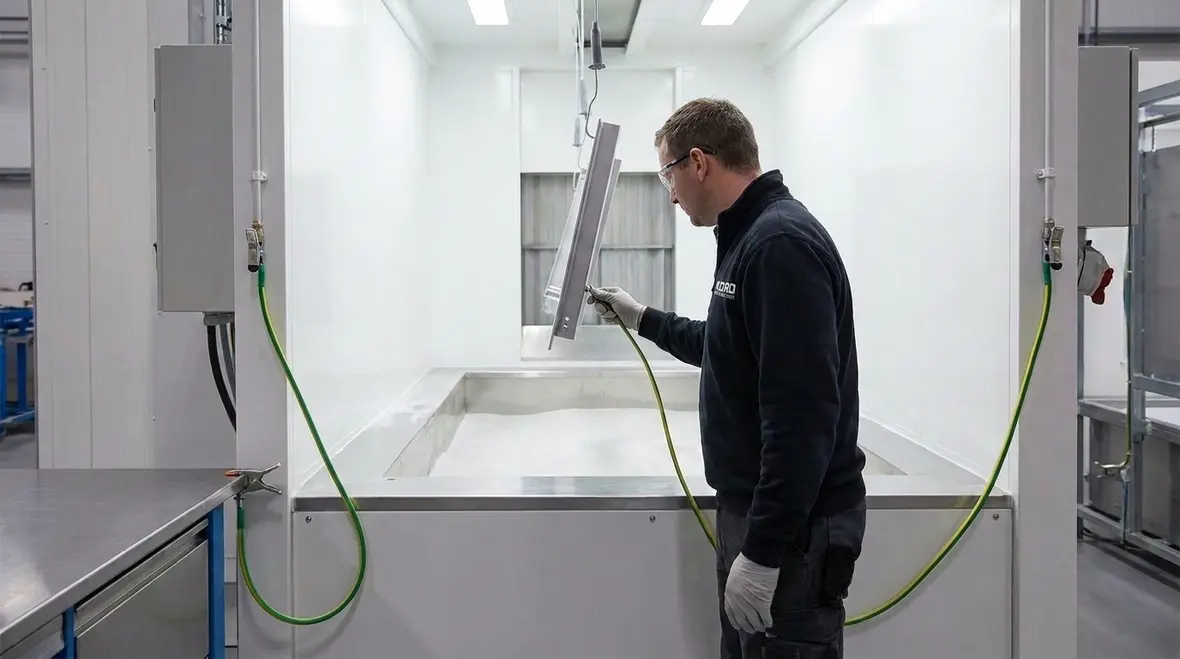
NFPA 33 Section 15.14: Electrostatic Fluid Bed Powder Coating Compliance Guide
Quick Answer: NFPA 33 Section 15.14 addresses fire and explosion hazards in electrostatic fluid bed powder coating operations. Compliance focuses on safe equipment design, grounding and bonding practices, control of ignition sources, and maintaining protective systems so powder, air, and surfaces remain within safe limits.
Facilities tightening up powder coating compliance often also need a broader service plan for inspections, troubleshooting, repairs, and documentation support. If that sounds familiar, review fire protection services in Southern California to see how Kord Fire helps commercial teams move from open issues to a practical next step.
What NFPA 33 Section 15.14 requires for electrostatic fluid bed systems
NFPA 33 electrostatic fluid bed powder coating operations combine fine powder, airflow, and electrostatic energy. Section 15.14 targets the ways ignition sources can form around powder clouds, fluidization zones, and charged surfaces. It also reflects how quickly conditions can change during startup, powder charging, recovery, and shutdown.
Commercial facilities tend to discover compliance gaps during operational changes, equipment upgrades, or after maintenance activities. A common pattern involves grounding verification, control interlocks, powder handling system integrity, and the readiness of suppression and detection arrangements that protect the coating booth, fluidization chamber, and powder recovery pathways.
How electrostatic fluid bed powder coating changes the fire risk profile
In a fluid bed, air flow fluidizes powder so it behaves like a fluid. Electrostatic charging can occur through equipment design, powder tribocharging effects, and charge control systems. When powder concentrations approach combustible limits, even a small ignition event can escalate rapidly. NFPA 33 expectations in Section 15.14 align with controlling those ignition pathways.
Key hazard mechanisms to manage
- Electrostatic ignition potential: Improper grounding, damaged cables, missing bonding straps, or incorrect resistance values can allow charge buildup and spark discharge.
- Powder cloud formation and transport: Leakage, poor sealing, or failed conveying and recovery components can spread powder to less protected areas.
- Hot surfaces and friction ignition: Worn bearings, misaligned blowers, restricted air passages, and damaged internal components can create localized overheating or sparks.
- Airflow interruption and process upset: If the fluidization conditions deviate, powder behavior changes and deposition or agglomeration may occur, increasing the likelihood of ignition during clearing or restart.
Compliance fundamentals: bonding, grounding, and electrostatic control
The most frequent compliance friction points in electrostatic fluid bed systems involve electrostatic control and integrity of conductive paths. NFPA 33 electrostatic fluid bed powder coating requirements do not treat grounding as a one time task. They require it to remain effective across equipment life, operating cycles, and maintenance activities.
Practical bonding and grounding checks that auditors expect
- Verified conductive continuity: Ensure all conductive parts that can become energized are bonded using approved connections and hardware.
- Condition of conductors and terminations: Inspect cable jackets, lugs, and terminal points for corrosion, looseness, and mechanical damage.
- Resistance and continuity performance: Maintain grounding and bonding values within manufacturer and code expectations, using properly calibrated test instruments.
- Isolation points controlled: Confirm that any insulating sections, couplings, or maintenance interfaces do not break the grounding strategy.
- Fluidization chamber and metallic enclosures: Confirm that the chamber structure, access doors, and panels remain electrically bonded after routine service.
Commercial facilities often replace components without maintaining continuity, such as when panels are reinstalled with different fasteners or when cable routing changes during electrical upgrades. Those changes can nullify electrostatic controls even when the system appears to function normally.
Operational controls and interlocks that protect against ignition
NFPA 33 Section 15.14 emphasizes the relationship between process controls and ignition risk. Equipment must prevent hazardous operation states, especially during startup, shutdown, and upset conditions where powder concentration and ignition sources can overlap.
What to verify during routine operations
- Startup sequence logic: Confirm the system only allows electrostatic operation when airflow and fluidization conditions meet required thresholds.
- Shutdown sequencing: Ensure power to electrostatic components terminates in a controlled manner and avoids clearing operations that could create a powder cloud.
- Interlocks and permissives: Validate that interlocks do not bypass during maintenance and that they respond correctly to sensor failures.
- Fault response: Confirm the system enters a safe condition when alarms occur, including disabling electrostatic charge generation.
- Access door and enclosure integrity: Verify that protective enclosures remain closed and latches operate correctly to prevent powder release.
In retail and light industrial settings, operational staff may adjust cycle parameters or perform quick resets after alarms. Those actions can inadvertently bypass intended safeguards. A compliance focused program pairs training with verification so operators do not treat safety interlocks as troubleshooting barriers.
Inspection, testing, and maintenance: where failures commonly occur
Section 15.14 compliance depends on the ongoing condition of equipment. NFPA 33 expectations are practical: if protective features degrade, ignition risk returns. The most common failure points occur in areas that experience vibration, wear, powder abrasion, or frequent service access.
Common inspection findings in electrostatic fluid bed systems
- Grounding deterioration: Corrosion under grounding straps, damaged wire insulation, or loosened terminations after service.
- Air handling degradation: Clogged filters, leaking duct sections, or mismatched fan speeds that alter fluidization behavior.
- Powder recovery pathway leaks: Worn seals, cracked hoses, or improper gasket replacement after maintenance.
- Electrostatic control component drift: Changes in settings, damaged power supplies, or sensor miscalibration that shifts charging behavior.
- Hot spot creation: Bearing wear, restricted airflow, or internal mechanical interference creating elevated temperatures.
Kord Fire Protection supports facilities with inspection planning, compliance documentation readiness, and ongoing testing and maintenance support for commercial coating and industrial fire risk programs. For additional service information, review Kord Fire Protection.
Maintenance practices that reduce compliance risk
- Use a documented lockout and safe shutdown procedure before grounding and panel work.
- Control replacement part selection so conductive bonding interfaces match original specifications.
- Verify electrostatic control performance after maintenance, not just after power restoration.
- Maintain a change log for process parameter adjustments, upgrades, and sensor replacements.
- Inspect for powder buildup around sensors and electrical enclosures, since powder can interfere with detection and heat dissipation.
Documentation and audit readiness for NFPA 33 Section 15.14
Commercial safety audits and insurance reviews typically focus on whether the facility can demonstrate that electrostatic fluid bed powder coating controls remain effective over time. A strong compliance package ties together design intent, inspection results, and maintenance records.
What to keep in your compliance file
- Grounding and bonding test reports: Include test method, date, instruments used, and pass fail results.
- Interlock and control verification records: Document functional tests for startup, shutdown, and fault states.
- Inspection checklists: Record findings for seals, recovery pathways, access panels, and airflow components.
- Maintenance work orders: Show corrective actions and part replacements, including verification steps.
- Training logs: Confirm operators and maintenance personnel understand safe operation and non bypass requirements.
Facilities that operate multiple booths or shift coverage benefit from standardized procedures and recurring verification schedules. That approach reduces the likelihood of drift across shifts or after contractor work.
Frequently Asked Questions
Next step: get your electrostatic controls validated
Ensure your NFPA 33 electrostatic fluid bed powder coating program stays compliant by verifying grounding and interlocks after maintenance, correcting powder pathway leaks, and maintaining complete inspection records. Kord Fire Protection can help commercial facilities build a practical compliance plan, support testing and documentation readiness, and reduce recurring inspection findings. Contact Kord Fire Protection to schedule an assessment and confirm your system’s fire safety safeguards remain effective.

Join Our Newsletter!
Get the latest fire safety tips delivered straight to your inbox From our Newsletter.



