
NFPA 32 Section 6.2 Drycleaning Equipment: Listing and Installation Rules
Quick Answer: NFPA 32 Section 6.2 requires that drycleaning equipment used in commercial facilities be properly listed and installed in accordance with NFPA 32 and the equipment’s listing conditions. Compliance hinges on selecting approved equipment, meeting installation requirements, and maintaining the system so it remains in a safe configuration.
Facilities working through inspection planning or maintenance alignment can also review fire protection services in Southern California for broader support with code-compliant inspections, repairs, and service scheduling.
Why Section 6.2 listing rules matter in the real world
Commercial drycleaning operations depend on reliable ventilation, safe solvent handling, ignition control, and correct system configuration. NFPA 32 drycleaning equipment listing requirements directly affect those safety functions by ensuring equipment has been evaluated for hazards, intended use, and installation constraints before it is placed into service. A facility can have the right equipment model, yet still fail compliance if the installation and commissioning conditions do not match the listing.
For facilities facing insurance audits, AHJ plan review, or ongoing inspection cycles, Section 6.2 serves as the baseline for what “acceptable equipment” means and how that equipment must be integrated into the facility. Kord Fire Protection supports ongoing compliance by assisting with documentation, inspection readiness, and maintenance verification tied to the safety intent of the standard.
What NFPA 32 Section 6.2 expects for listed equipment
Section 6.2 centers on a straightforward compliance concept: drycleaning equipment should be installed only when it is listed for the application and when installation follows the listing and NFPA 32 provisions. Listing addresses design hazards such as fire propagation potential, solvent vapor behavior, control system reliability, and safe operation under normal and abnormal conditions. Installation rules then ensure those hazard controls remain effective after the equipment is connected to the facility.
Listing is not just a label
In practice, compliance failures often show up during verification of the installed configuration, not the presence of a nameplate. Fire and life safety reviews typically look for consistency between what the equipment was evaluated as and what the site actually installed. Common issues include mismatched vapor control components, non approved connections, altered exhaust routing, or installation that bypasses required safeguards.
Field changes can break listing intent
Even when the equipment model is listed, field modifications may change thermal performance, ignition protection, ventilation performance, or control interlocks. Any change that affects solvent vapor containment, burner or heating controls, electrical classification assumptions, or exhaust flow characteristics can undermine the safety logic that the listing was based on. Facilities should treat equipment modifications as a compliance event, requiring technical review and updated documentation.
How listing conditions translate into installation compliance
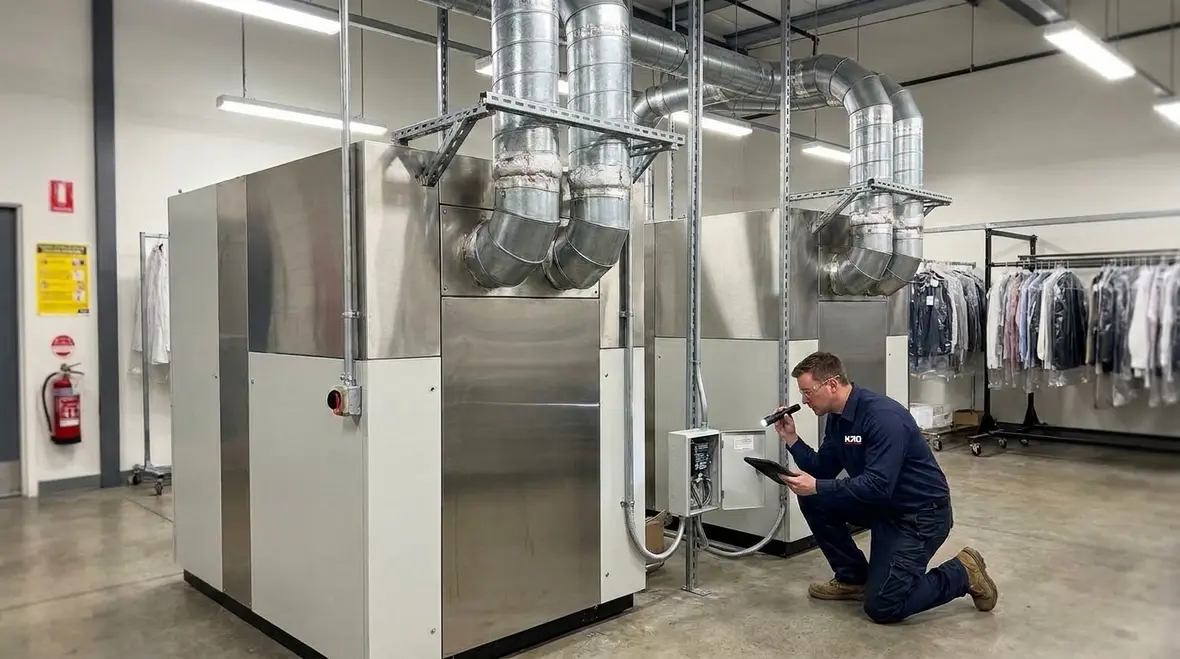
NFPA 32 Section 6.2 listing and installation rules require more than “proper placement.” The installation must preserve the safety features the listing assumes. That typically includes correct connection methods, required clearances, correct routing of exhaust and ducting, correct placement relative to combustible materials, and proper integration with controls and fire safety systems used by the equipment.
Ventilation and exhaust are recurring inspection pressure points
Drycleaning equipment relies on ventilation to manage solvent vapors and to support safe combustion and operational stability for equipment that heats or distills solvent. The most frequent field problems include undersized or obstructed ducting, incorrect termination locations, poor duct supports, and changes that alter flow rates. If the exhaust system underperforms, the facility can experience increased vapor accumulation or disturbed burner operation, which elevates fire risk and can trigger operational shutdowns.
Clearances and combustibles must remain within documented limits
Installation clearances protect ignition sources from combustible exposures and support required maintenance access for panels, filters, and inspection points. Facilities often install cabinets, shelving, or storage near equipment after the initial commissioning. That “later convenience” can create a clearance violation and may also obstruct inspection openings, delaying detection of developing hazards such as leaks, degraded hoses, or clogged strainers.
Electrical and control integration must match the listing and equipment documentation
Controls, interlocks, and safety shutoffs must operate as intended. A frequent failure pattern involves wiring changes, replacement of components with non equivalent parts, or updates to control boards without confirmation that the new components preserve safety functions. Compliance audits often focus on whether safety shutdown sequences, alarm behaviors, and restart conditions match the equipment’s design requirements.
What inspectors and AHJs typically verify during Section 6.2 checks
Fire and building officials usually follow a repeatable verification approach: confirm equipment identity, confirm that it is listed for the intended application, confirm installation matches the listing and NFPA 32 requirements, and confirm ongoing readiness through maintenance records and field observation.
Documentation to keep current
-
Equipment listing information, model and serial identifiers, and manufacturer installation documentation
-
Installation drawings or commissioning checklists that demonstrate ventilation and connection compliance
-
Maintenance logs showing inspection and replacement schedules for hoses, gaskets, filters, and safety related components
-
Evidence of corrective action for leaks, control faults, exhaust restrictions, or operational alarms
Field observations that commonly drive corrective actions
-
Visible solvent residue or signs of vapor leakage around connections, pump assemblies, or loading areas
-
Exhaust duct damage, improper supports, or evidence of condensation and blockage
-
Blocked access to inspection points, control panels, and safety shutdown controls
-
Unauthorized work practices such as substitute components or non approved routing methods
When those items appear, a rapid technical response reduces downtime and protects the facility’s compliance position. Kord Fire Protection provides commercial service support that helps maintain safe operating conditions through inspection readiness, documentation support, and ongoing maintenance verification tied to NFPA 32 intent. For more on service planning, see Kord Fire Protection services.
Common compliance failure modes and how facilities prevent them
Section 6.2 issues usually emerge from predictable operational changes and maintenance practices. Prevention works best when the facility treats listing and installation conditions as part of an ongoing management system, not a one time acceptance event.
1. Exhaust system changes after commissioning
Renovations, HVAC balancing, duct modifications, or facility reconfiguration can impact solvent vapor transport and exhaust performance. Prevention includes controlling duct changes, documenting any HVAC interactions, and verifying flow and operational behavior after work is performed.
2. Replacement components that do not preserve safety function
Substitutions may be cheaper or faster, but they can affect ignition resistance, interlock logic, sealing effectiveness, or vapor containment. Prevention includes requiring manufacturer approved parts or equivalent components confirmed for listing and performance, plus verifying safety behavior after replacements.
3. Deferred maintenance of leak points
Hoses, gaskets, pump seals, and fittings experience wear from solvent exposure and cycling. Deferred maintenance allows minor seepage to become operationally significant, creating a fire hazard and challenging safe ventilation. Prevention includes scheduled inspections, documenting findings, and tracking corrective actions to closure.
4. Incomplete or outdated records
Facilities sometimes rely on informal maintenance notes or incomplete logs. During inspections, missing documentation can convert a manageable safety issue into a compliance gap. Prevention includes maintaining a controlled record set tied to equipment identity and service history.
How to apply Section 6.2 in retail, industrial, and commercial spaces
Drycleaning equipment appears in varied environments, including stand alone industrial plants, mall or strip retail spaces, and multi tenant commercial buildings. Each setting changes the practical compliance challenge while still requiring adherence to listing and installation rules.
Retail and multi tenant constraints
Retail environments often experience higher foot traffic, tighter space for equipment placement, and frequent tenant improvements. Clearances and ventilation routing can be unintentionally disturbed by shelving, display construction, or tenant improvements. The facility should implement change control so any work near ducting, exhaust routing, or equipment access requires fire safety review and verification.
Industrial facilities and shared utilities
Industrial sites frequently share exhaust pathways, integrate multiple process lines, and perform frequent maintenance. That increases the risk of cross impacts such as blocked duct sections, condensation issues, and control system interference. A facility should confirm that the drycleaning exhaust and control integration remain stable after any process or utility work.
Commercial facility standards and ongoing service
In all environments, service schedules and maintenance practices influence whether the equipment remains in a compliant safe configuration. Kord Fire Protection supports commercial operators with practical program alignment that helps preserve compliance through maintenance verification and inspection support. For guidance on building a service framework, use Kord Fire Protection as a starting point for engagement.
Frequently Asked Questions
Next step: confirm listing, then confirm the installed reality
To protect life safety, avoid AHJ delays, and reduce the chance of repeat corrective actions, a facility should verify equipment listing documentation and confirm the installed configuration matches Section 6.2 intent. Kord Fire Protection can help you plan inspections, validate maintenance readiness, and support ongoing compliance through practical commercial fire safety service. Contact Kord Fire Protection to schedule a compliance focused review and maintenance alignment for your drycleaning equipment systems.

Join Our Newsletter!
Get the latest fire safety tips delivered straight to your inbox From our Newsletter.



