
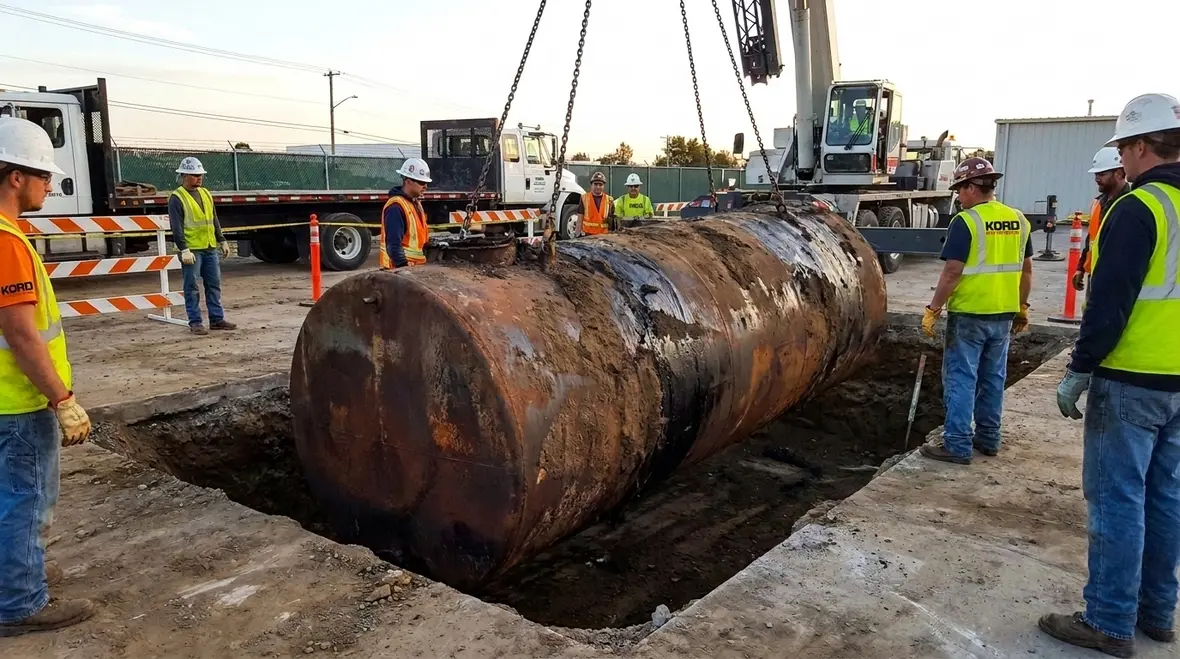
NFPA 31 Section 7.13: Abandoning and Removing Fuel Tanks From Service
Quick Answer: NFPA 31 Section 7.13 controls how facility owners abandon or remove fuel tanks to prevent fire, explosion, and environmental hazards. Compliance focuses on verifying tank isolation, inerting or cleaning where required, and documenting the removal process for ongoing inspection readiness.
If your team is managing this work alongside broader inspection and documentation needs, fire protection services in Southern California can help connect planning, verification, and closeout into one cleaner process.
Why NFPA 31 Section 7.13 matters in real facilities
In commercial, industrial, and retail settings, tank take out is rarely a simple “disconnect and walk away” task. NFPA 31 Section 7.13 addresses the life safety and ignition risk that remains after a tank stops serving heating or process equipment. Even when a tank appears empty, residual vapors, contaminated sludge, and failed closures can create fire and explosion hazards.
For facilities that manage multiple tenant spaces, changing heat demand, or phased plant upgrades, the compliance challenge is consistency. Contractors may perform local work while the site operations team still expects the tank area to remain safe, inspectable, and compliant with continuing fire protection responsibilities. This is where a documented, procedure driven approach for NFPA 31 tank abandonment removal from service becomes essential.
What “abandoning” vs “removing” means under NFPA 31
NFPA 31 Section 7.13 distinguishes between taking a tank out of service without immediate permanent removal and permanently removing the tank from the property or situation where it could be returned to service. Practically, this difference controls which safeguards must be applied, what verification is expected, and how the tank site is protected from future hazards.
Abandoning a tank: residual hazard control is still required
Abandonment typically involves rendering the tank unusable by eliminating the fuel supply pathway and addressing internal and external conditions that could support ignition. Facility teams should treat abandoned tanks as hazardous assets until the required isolation steps, filling and inerting or cleaning requirements, and verification evidence are complete.
Removing a tank: the job shifts to contamination and ignition prevention
Removal shifts the main risk to tank contents, the byproducts of cutting and handling, and ensuring that the work does not introduce ignition sources or release flammable vapors. It also requires attention to site restoration and continued monitoring where conditions indicate remaining vapor pathways or residual contamination.
Core compliance controls: the operational steps that prevent failures
Facilities commonly encounter failures at the interface between mechanical work and fire safety requirements. NFPA 31 Section 7.13 is best handled through a controlled process: plan, isolate, verify, execute, and document. The following controls reflect common compliance expectations for tank out of service work.
1) Pre work hazard assessment and coordination
Before any disconnection, the facility should confirm the tank status history, the fuel type, and prior operating conditions. Internal corrosion, sludge accumulation, and line residuals affect what cleaning or inerting steps must be performed. Coordination with plant operations also matters because hot work permits, confined space controls, and ignition source control must align with the tank area hazard profile.
2) Isolate the fuel system so it cannot be unintentionally reconnected
Abandonment or removal is not complete when the piping is “just capped.” NFPA 31 expectations center on ensuring the tank is effectively prevented from returning to service. That typically includes disabling or removing tank related components such as suction and fill piping, and applying physical separation and secure closures in a way that withstands ongoing site maintenance activity.
3) Handle residual fuel vapors and contents using appropriate methods
Even when a tank is drained, vapors and residues can remain. Common failure points include inadequate purging, incomplete removal of sludge, and insufficient verification that the tank interior is safe for the next step. Where procedures require inerting or cleaning, the site should use an approach that matches tank condition and fuel history, and it should retain testing results as objective evidence.
4) Confirm closure integrity and prevent ignition sources during cutting
When tanks are removed, cutting or disconnection introduces new ignition and vapor migration risks. A compliant workflow includes gas monitoring where appropriate, strict control of ignition sources, and adherence to hot work safety practices. Facilities should also account for vent paths and trapped compartments that can release vapors during mechanical disturbance.
5) Document the work so inspections and future repairs do not reopen hazards
Documentation is a compliance deliverable, not a convenience. The facility should retain records that support the status change, including isolation evidence, cleaning or inerting details, verification results, and contractor statements. This record helps the next inspection cycle and reduces the risk that future service calls inadvertently restore fuel access.
Inspection and maintenance implications after tank abandonment removal from service
Tank work does not end when the excavation or decommissioning ends. Ongoing inspection readiness depends on how the site verifies that the tank and its connections remain unusable and safe.
Update drawings, labeling, and service procedures
Facilities should revise site plans, fuel system schematics, and asset registers. Inaccurate documentation is a common root cause of noncompliant reactivation or unsafe maintenance decisions. Clear labeling helps maintenance crews recognize that the tank system no longer functions and prevents accidental connection during troubleshooting or upgrades.
Verify that abandoned or removed sites remain protected
The tank area must remain free from hazards that could create ignition pathways. That includes controlling residual lines, addressing venting conditions, and ensuring that the area restoration meets site safety expectations. Where a removed tank leaves infrastructure that could accumulate vapors, the site may need ongoing verification steps consistent with local fire safety management.
Align with commissioning of replacement equipment
If the fuel heating or process function is being replaced, tank decommissioning should align with commissioning of the new system to avoid a period where the facility operates with mismatched fuel infrastructure and fire safety controls. For guidance on installation practices and compliance planning, see NFPA 31 a practical guide to oil burning equipment installation.
Commercial compliance challenges that delay or compromise projects
Commercial facilities often face time pressure, limited access, and shared infrastructure with multiple stakeholders. These factors create predictable failure points during NFPA 31 tank abandonment removal from service projects.
Tenant and contractor turnover
Retail and mixed use sites frequently change contractors. Without a controlled handover package that includes the abandonment or removal verification evidence, the next party can treat the system as active. Kord Fire Protection can support documentation control and compliance verification to reduce rework.
Hidden piping runs and shared manifolds
Fuel piping may extend farther than expected. Lines can serve future zones or appear unused but still contain residual fuel. A thorough site trace prevents missed isolation points that undermine NFPA 31 decommissioning outcomes.
Hot work permitting and confined space limitations
Tank removal can require confined space procedures and strict hot work controls. Scheduling these tasks without a fire safety coordinated plan increases the risk of unsafe work practices and incomplete verification.
Inconsistent verification practices
Some projects perform work without objective testing records. Compliance requires repeatable evidence. Kord Fire Protection supports commercial clients by coordinating inspection and documentation needs so tank decommissioning aligns with ongoing fire safety obligations.
How Kord Fire Protection helps keep tank decommissioning compliant
Kord Fire Protection supports commercial facility teams with compliance minded planning, inspection readiness, and documentation control across oil heating and fuel system lifecycle changes. When sites plan an abandonment or removal scope, Kord Fire Protection can help ensure the fire safety and maintenance implications are addressed before work begins and validated after the system status changes.
This reduces the likelihood of recurring compliance issues such as incomplete isolation, unclear asset records, missing evidence for verification steps, and unsafe assumptions during future maintenance.
Frequently Asked Questions
Next step: make tank decommissioning inspection ready
Plan the abandonment or removal scope using a controlled, evidence based workflow. Engage Kord Fire Protection early to align fire safety controls, documentation, and inspection readiness with your operational constraints. For commercial sites managing active systems, phased upgrades, or multiple stakeholders, proactive coordination prevents rework and reduces compliance risk. Contact Kord Fire Protection to review your tank change plan and confirm verification expectations before work begins.

Join Our Newsletter!
Get the latest fire safety tips delivered straight to your inbox From our Newsletter.



