
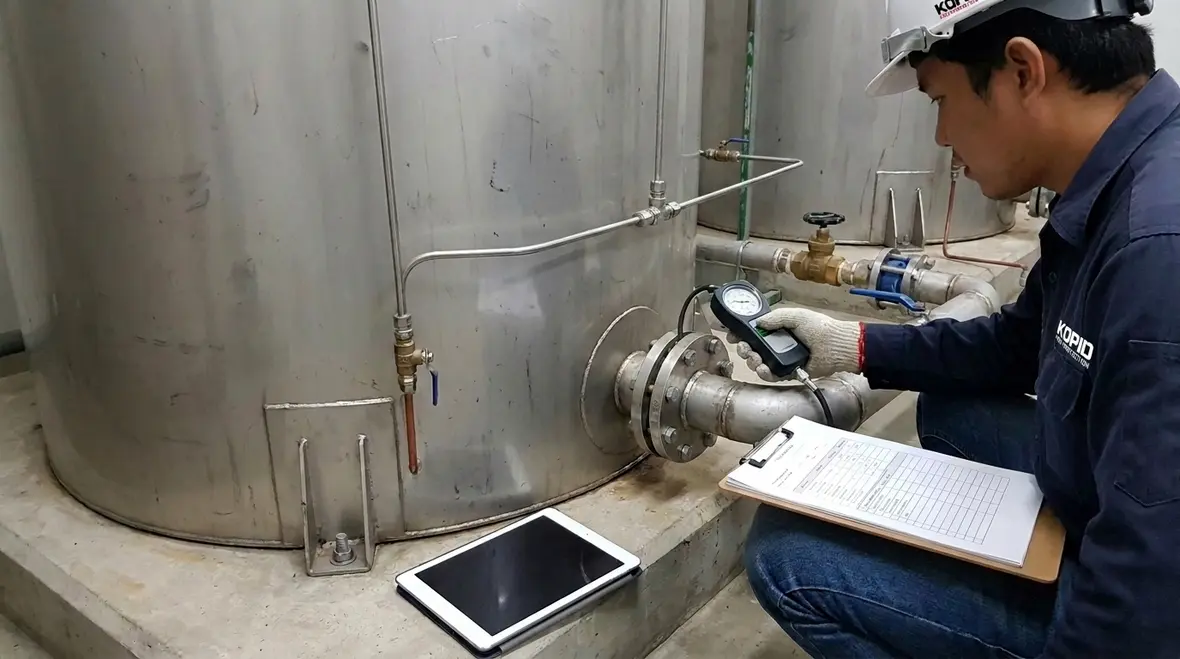
NFPA 31 Section 7.12: Tank Leakage Testing and Periodic Inspections
Quick Answer
NFPA 31 Section 7.12 sets practical requirements for verifying tank integrity and managing leakage risk through testing and periodic inspection. For commercial sites, effective compliance ties test methods, documentation, and defect remediation to real operational hazards, tank condition, and fuel handling practices.
For broader compliance support, many facility teams pair tank integrity work with a larger inspection and service strategy through fire protection services in Southern California, especially when multiple systems, access windows, and documentation demands all seem to show up on the same week.
What NFPA 31 Section 7.12 requires and why it matters
NFPA 31 Section 7.12 focuses on tank leakage testing and periodic inspection to prevent unnoticed product loss, reduce fire and environmental exposure, and maintain system reliability. Facilities that store or handle liquid fuel for heating and power need more than a one time “pass” result. The goal is repeatable assurance that tanks and associated components continue to perform as installed.
For compliance teams, the practical challenge is turning the standard into an inspection program that works between shutdowns. Many issues do not develop instantly. They show up as slow seepage, gasket degradation, corrosion creep, or mechanical damage that remains invisible until it reaches a threshold.
How NFPA 31 tank leakage testing periodic inspection is typically implemented
The NFPA 31 tank leakage testing periodic inspection program should be planned around tank type, installation configuration, and the facility’s operating cycle. In most commercial settings, the work is divided into three operational steps:
-
Define scope and trigger points: Identify which tanks, compartments, piping sections, valves, fittings, and monitoring devices fall under Section 7.12. Confirm test frequency and any conditions that require earlier action due to damage, repairs, or abnormal operation.
-
Execute leakage testing: Perform the prescribed leakage test method using equipment and procedures that provide repeatable results. Ensure isolation of connected systems so the test targets the tank boundaries and leak paths.
-
Document outcomes and corrective actions: Record results, measurement data, observed conditions, and remediation steps. Close the loop by verifying repairs and updating the maintenance record.
Common failure points that drive leakage testing results
Leakage issues often originate in components that experience frequent thermal cycling, vibration, or external corrosion. Typical failure points include:
-
Tank seams and weld joints: Micro corrosion under insulation or coating failure can progress unnoticed.
-
Gaskets, flanges, and threaded connections: Gasket compression set, seal material aging, and improper torque can allow seepage over time.
-
Overfill and vent arrangements: Malfunctioning vents, blocked vent lines, or improper vent routing can create conditions that force leakage at joints.
-
Level sensing and ancillary penetrations: Sensor housings and penetrations can leak through packing or degraded seals.
-
Coating holidays and external corrosion: Pinpoint coating damage can expand into a leak path after seasons of wet and freeze thaw exposure.
Periodic inspection: what inspectors look for during field verification
Periodic inspection requirements under NFPA 31 Section 7.12 should be executed as a structured walk down and condition assessment. The inspection does not replace leakage testing. It helps find early indicators that leakage testing would otherwise detect late. In commercial facilities, the most reliable approach is a repeatable checklist aligned to tank location and operating environment.
Operational and environmental checks that support compliance
A strong inspection program typically includes these verification categories:
-
Tank physical integrity: Check for visible corrosion, dents, deformation, coating failure, or abnormal staining around the tank and base.
-
Secondary containment and drainage: Confirm drains are clear, containment is not compromised, and evidence of product migration does not exist where it should not.
-
Condition of piping and valves: Inspect for wetness, corrosion, loose supports, damaged insulation, or signs of weeping at flanges and unions.
-
Foundation and support condition: Verify there is no shifting, settling, or contact damage that could stress the tank shell.
-
Evidence of abnormal system behavior: Note recurring overfill alarms, repeated vent issues, or frequent regulator irregularities that can contribute to leak path development.
Documentation and traceability that hold up during audits
During regulatory reviews, facilities succeed when inspection records show consistency. Documentation should clearly identify:
-
The date and location of the inspection and test.
-
The tank identification, capacity, and configuration.
-
Measured results, test method references, and acceptance criteria used by the procedure.
-
Photographic evidence where permitted, especially for defects and after repair confirmation.
-
Corrective actions, responsibility assignments, and verification steps taken after work completion.
Ensuring correct test execution: procedures, isolation, and equipment discipline
Compliance outcomes depend on how testing gets executed. Even a correct test method can fail to produce meaningful results if isolation and measurement discipline do not match the tank’s configuration. The following practices prevent false negatives and reduce repeat work.
Pre test controls that reduce risk and rework
-
Prepare the system for isolation: Confirm valves and connections are positioned to isolate the tank from piping influences. Where required, disconnect sections that could mask leakage.
-
Confirm conditions for stable results: Account for temperature, product characteristics, and expected stabilization time so readings reflect leakage potential rather than thermal fluctuation.
-
Verify measurement instrumentation: Use properly maintained and calibrated instruments and record calibration status when required by your quality process.
-
Control ignition sources and site hazards: Treat leakage testing as a fuel system activity. Maintain hot work controls, ventilation considerations, and safe access practices.
What happens if results indicate leakage or defects
When a leakage test or inspection identifies an issue, the facility should not rely on “minor” assumptions. The compliance approach is to:
-
Stop and contain: Prevent additional product migration and address safety concerns immediately.
-
Determine the leak path: Identify whether the issue originates at tank boundaries, penetrations, or connected components.
-
Repair to an appropriate standard: Use qualified methods and materials compatible with the tank construction and product.
-
Verify after repair: Repeat the leakage test or apply the defined verification procedure to confirm the system meets acceptance criteria.
Commercial compliance challenges and how Kord Fire Protection supports ongoing readiness
Commercial sites often face constraints that make NFPA 31 tank leakage testing periodic inspection harder than it sounds on paper. Limited access windows, tenant operations, busy loading areas, and overlapping maintenance scopes can delay corrective actions. Additionally, older installations may have undocumented modifications, nonstandard fittings, or insulation conditions that obscure early corrosion.
Kord Fire Protection supports facilities with field ready planning, disciplined documentation, and practical remediation coordination. That includes helping sites align tank inspection activities with the broader fuel oil burning equipment installation and safety expectations. For related installation context, facilities can review NFPA 31: A Practical Guide to Oil Burning Equipment Installation to better connect tank integrity work with the overall fuel system risk picture.
Teams that also manage suppression assets alongside fuel related hazards may find it useful to coordinate with commercial fire suppression systems and services so inspection planning, repairs, and documentation all move in step instead of playing tag across three vendors and two calendars.
Operational best practices for facility managers
-
Plan inspection intervals early: Set procurement lead times for parts and schedule tank access with maintenance calendars.
-
Integrate findings into a single maintenance log: Combine inspection, leakage testing, and repair verification into one auditable record.
-
Train staff to report early indicators: Require consistent reporting of odor complaints, wet spots, staining changes, and valve or vent abnormalities.
-
Address adjacent risks during tank work: Inspect piping supports, secondary containment conditions, and vent configurations while access is available.
Frequently Asked Questions
Call to action
Ensure your NFPA 31 tank leakage testing periodic inspection program stays audit ready and operationally practical. Contact Kord Fire Protection to schedule expert tank leakage testing, periodic inspection, and documented corrective action verification for commercial fuel systems. Early detection, disciplined testing, and closed loop remediation help reduce risk, downtime, and compliance uncertainty.

Join Our Newsletter!
Get the latest fire safety tips delivered straight to your inbox From our Newsletter.



