
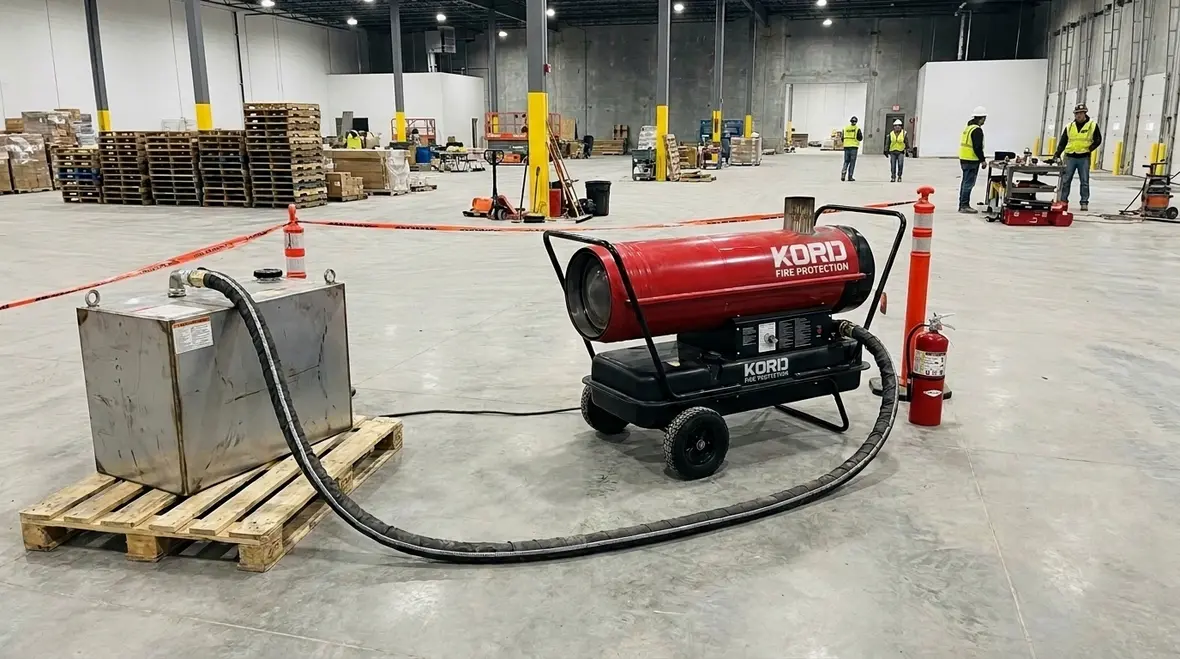
NFPA 31 Section 4.7: Temporary Heating With Oil Equipment
Quick Answer
NFPA 31 Section 4.7 controls how commercial sites manage temporary oil-fired heating. It focuses on safe installation, fuel supply control, operating safeguards, supervision, and removal. Facilities must prevent ignition sources, spills, and improper burner operation while maintaining inspection readiness throughout the heating period.
If your site is juggling temporary systems, staging changes, and inspection readiness at the same time, Kord Fire Protection’s commercial fire protection services can help support a more controlled compliance process.
What NFPA 31 Section 4.7 is trying to prevent
Temporary heating with oil equipment increases risk because conditions change quickly. Equipment gets staged, fuel lines may be rerouted, power connections can be improvised, and staffing or operating hours may differ from normal boiler operations. NFPA 31 temporary heating oil equipment rules aim to control those variables by requiring appropriate setup, supervision, and safe fuel handling so the burner system operates within its intended design parameters.
In commercial and industrial facilities, compliance failures typically involve one or more of the following: unsecured fuel supply and transfer points, inadequate protection of hoses and electrical connections, poor ventilation planning, missing operating instructions, and lack of documented inspection and shutdown checks. These are not theoretical issues. They are common operational gaps during seasonal commissioning, construction phases, and emergency recovery periods.
Where Section 4.7 applies in real facility operations
Section 4.7 applies when a facility uses temporary heating with oil equipment rather than a permanently installed system. That can include contractor staged heaters during fit out, temporary warming in warehouses and retail receiving areas, or short term heating during repairs when permanent plant is out of service.
Common scenarios that trigger temporary controls
- Temporary oil fired heaters used to maintain minimum temperatures for process stability or tenant fit out.
- Oil burner units staged in storage rooms, loading bays, and unoccupied zones with variable access control.
- Seasonal heating deployments where equipment remains onsite but use, attendance, and maintenance practices change.
Facilities should treat Section 4.7 as a lifecycle requirement, not a one time installation checkbox. The heater and its support systems remain active fire safety items while they are operating, and the control measures must remain in place during the entire temporary period.
Core requirements of NFPA 31 temporary heating oil equipment rules
NFPA 31 Section 4.7 centers on practical protections for ignition control, fuel containment, and safe burner operation. While the exact text and numbering can vary by edition, the operational intent stays consistent across compliant programs.
1) Correct installation and commissioning controls
Temporary oil heaters must be installed so they can operate safely and predictably. That means meeting manufacturer requirements for clearances, flue connections, and placement. A frequent compliance gap involves temporary location changes without re establishing clearances, ventilation, and exhaust routing.
When flue piping is involved, facilities should ensure the exhaust path does not create overheating hazards to combustibles, does not induce improper draft, and remains secure against movement. Where the heater relies on a specific combustion air supply condition, the surrounding space must provide that requirement continuously during operation.
2) Fuel supply and transfer safety
Temporary heating introduces higher risk at the fuel interface. NFPA 31 temporary heating oil equipment rules focus on preventing leaks, controlling sources of fuel, and maintaining safe arrangements for storage and delivery. Facilities should verify that hoses, fittings, valves, and connections are rated for the service and secured to prevent chafing, abrasion, and accidental disconnection.
A common failure point is fuel line routing through traffic areas where vibration, foot traffic, carts, or vehicle movement can damage the hose. Another frequent issue is inadequate spill response preparation. Even small drips can accumulate, and atomized or spilled oil can contribute to ignition under abnormal burner operation.
3) Electrical and ignition hazard management
Temporary heaters require careful handling of electrical supply. Facilities must prevent damage to cords and connections, eliminate strain and pinch points, and ensure the electrical setup does not conflict with the environment. Dusty, corrosive, or damp commercial spaces increase the chance of insulation degradation and ground fault conditions.
Operational controls should also address ignition safety. If a burner fails to start or cycles frequently, that indicates unstable combustion or supply problems. Facilities should avoid repeated restart attempts without investigation. NFPA 31 compliance programs treat those events as maintenance triggers, not normal nuisance behavior.
4) Combustion air and ventilation discipline
Oil burning equipment consumes oxygen and produces combustion products. Temporary placement often reduces the ability to maintain consistent ventilation conditions. Facilities must ensure adequate air supply and ensure exhaust does not backdraft into the occupied space.
For retail stores, warehouses, and industrial bays, the risk increases when doors open frequently or when HVAC systems run in modes that reduce supply air. Compliance requires verification that the heater operating environment continues to meet safe combustion conditions throughout business hours.
5) Supervision, operating instructions, and shutdown readiness
Temporary heating is frequently operated by staff who do not regularly manage boiler room systems. Section 4.7 intent supports practical supervision and clear operating instructions. That includes defining who can start and stop the heater, what checks to perform during initial run, and what to do if there is an abnormal condition.
A strong program includes documented start up and shutdown steps, abnormal response procedures, and a defined isolation method when the heater must be taken out of service. Where the temporary heating period ends, safe removal controls should follow so fuel and ignition hazards do not remain onsite unintentionally.
Inspection, testing, and maintenance expectations during temporary use
Compliance is only as strong as the ongoing inspection regime. NFPA 31 temporary heating oil equipment rules should be implemented through checklists and scheduled verification steps that match the facility’s operating realities.
What compliance teams should inspect during the temporary heating period
- Visual condition of oil hoses, fittings, valves, and drip protection at connection points.
- Integrity of flue connections, exhaust routing, and evidence of overheating or soot leakage.
- Combustion performance indicators, including ignition stability and normal burner cycle behavior.
- Ventilation and air supply conditions in the installed location during typical occupancy patterns.
- Operational housekeeping around the heater, including removal of combustibles and control of storage proximity.
Maintenance actions that prevent repeat failures
Facilities should plan maintenance around burner reliability and oil system cleanliness. Typical maintenance items include burner nozzle condition, filter condition, fuel strainer inspection, and checking the control settings and safety shutdown behavior. A burner that experiences repeated lockouts can indicate a fuel quality issue or airflow problem that requires correction before resuming normal operations.
Kord Fire Protection supports commercial facilities by aligning temporary heater controls with inspection requirements and by providing maintenance coordination so equipment does not drift out of safe operating condition during the temporary period.
Commercial compliance challenges and how to manage them
Temporary heating programs often run across multiple trades and schedules. That creates practical compliance risks in the field. The following operational challenges commonly break NFPA 31 temporary heating oil equipment rules in practice, even when the initial installation appeared correct.
Field change control problems
Contractor staging can lead to equipment relocation, fuel line rerouting, or modifications to exhaust routing. Each change can affect clearances, combustion air, and safe fuel handling. Facilities should require a change control workflow that re verifies Section 4.7 controls any time the heater position, fuel routing, or exhaust path changes.
Training and accountability gaps
Many temporary heaters are operated by rotating staff. Without defined accountability, operating instructions get bypassed. A compliance focused program assigns responsibility, trains on start up checks, and documents the authority to restart after lockouts or abnormal operation.
Documentation shortfalls
Commercial audits often find missing records, such as commissioning notes, inspection logs, and evidence of maintenance. Facilities should maintain a simple binder or digital file containing equipment identification, installation details, operating instructions, inspection results, and service records.
For additional context on oil burning equipment installation practices, facilities can use this practical guide: NFPA 31 practical guide to oil burning equipment installation.
Frequently Asked Questions
Conclusion and next step
Temporary oil heating can be compliant and safe when facilities treat Section 4.7 as an operating program, not a single installation event. Kord Fire Protection can support your facility with assessment, inspection documentation, and maintenance coordination so NFPA 31 temporary heating oil equipment rules stay met during every day of operation. Contact Kord Fire Protection to review your temporary heating plan and build a verification checklist for the site.

Join Our Newsletter!
Get the latest fire safety tips delivered straight to your inbox From our Newsletter.



