
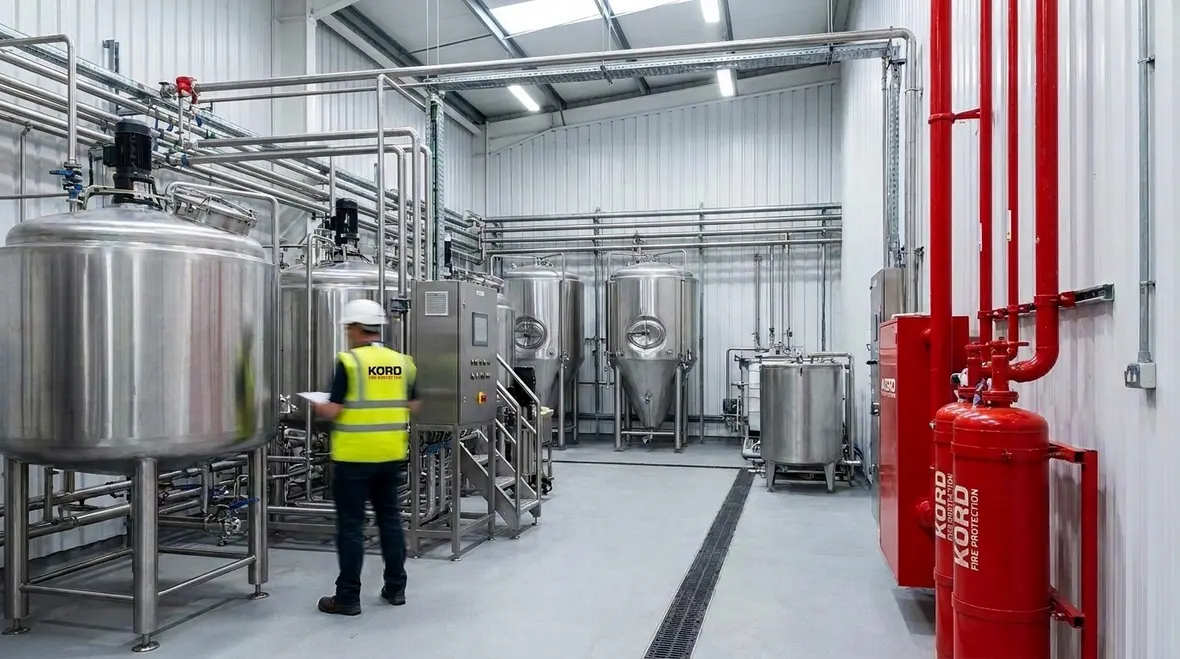
NFPA 30 Section 17.5: MAQs in Processing Facility Control Areas
Quick Answer
NFPA 30 Section 17.5 establishes how maximum allowable quantities (MAQs) should be applied and managed within processing facility control areas. Facilities must correctly define control areas, ensure MAQ limits align with the intended process, and maintain systems that prevent excess accumulation through inspection, testing, and documented procedures.
What NFPA 30 Section 17.5 MAQs processing facilities require in practice
In processing operations, NFPA 30 Section 17.5 MAQs processing facilities must treat MAQ limits as an engineered control, not a reporting formality. The standard connects the stored and processed amounts to the design intent of fire protection, separation, ventilation, detection, and safe operating procedures. In other words, compliance depends on operational reality: what the facility has on hand, where it is located, how it moves, and what safeguards exist to limit quantity and ignition risk.
Because MAQ determinations drive area classification and risk controls, many facilities fail compliance during changes to production rates, reworks, temporary storage practices, and equipment modifications that increase hold times or create unintended accumulation.
Primary compliance goal
The core objective is to prevent hazardous fuel loading within a defined control area from exceeding the maximum allowable quantity for the flammable liquid hazards addressed by the standard. This requires correct control area boundaries, accurate quantity accounting, and reliable prevention or reduction of excess accumulation.
Define the control area correctly before calculating MAQs
NFPA 30 Section 17.5 is applied at the control area level within processing facilities. Control areas need practical, inspectable boundaries that align with how flammable liquid is actually contained, piped, managed, and released under abnormal conditions. Facilities often treat control areas as lines on a drawing, but the standard mindset expects operational control and consistent hazard management in the real layout.
Near the start of this review, it is worth noting that ongoing fire suppression inspections, testing, installation, and maintenance can help facilities keep field conditions aligned with the control area strategy documented for flammable liquid hazards.
Common site mapping errors
Boundary mismatch: Control area limits drawn without accounting for spill paths, floor drains, trenches, and pipe racks that move liquid between spaces.
Assumed segregation: Relying on doors or “generally closed” practices instead of credible barriers, containment, or procedural controls that limit spread.
Temporary staging not captured: Ignoring drums, totes, intermediate bulk containers, and “break-in” inventory used during changeovers.
Operational verification matters
During compliance inspections, authorities and insurers typically look for consistency between documentation and the site walkdown. Kord Fire Protection supports commercial, industrial, and retail facility teams by validating how flammable liquid quantity is managed in the field, then aligning records and testing to the intended control area concept.
How MAQs influence processing decisions and accumulation control
MAQ limits shape what a processing facility can safely store, process, hold, and transfer within a control area. The facility must account for the maximum quantity that can reasonably be present during normal operation and likely abnormal conditions, depending on the hazard classification and the applicable basis in NFPA 30.
Where facilities get it wrong
Hold time changes: Process troubleshooting, planned production slowdowns, and batch stacking can extend residence time in vessels, sumps, and transfer piping beyond what was assumed when MAQs were first established.
Rework and returns: Off spec material returned to tanks or intermediate containers increases inventory more than expected, especially when operations run “continuous” while physically batching.
Transfer rates and “surge” conditions: Pumped transfers can create transient accumulation in receiving tanks, sumps, and low points.
Inventory counting gaps: Failing to include decanted product in hoses, residuals in strainers, and liquid trapped in system low points.
Controls that keep MAQs within limits
MAQ compliance depends on controls that prevent excess accumulation. Common control mechanisms include:
Capacity discipline: Tank sizing, maximum filling levels, and controlled transfer sequences supported by alarms and procedures.
Containment and drainage management: Properly designed diked areas, spill containment, and drainage routing to prevent flammable liquid migration outside the control area.
Administrative controls: Limits on staged quantities, maximum drum counts, and changeover protocols enforced by supervisors and supervisors in the field.
Engineering safeguards: Level instrumentation, high level shutdown logic, and interlocks that stop transfers before reaching unsafe quantity states.
For additional context on how NFPA 30 regulates flammable liquids across site activities, see how NFPA 30 regulates flammable liquids. It provides a broader framework for how storage, handling, and operational controls connect to fire safety requirements.
Inspection, testing, and maintenance that sustain MAQ compliance
NFPA 30 Section 17.5 MAQs processing facilities are only defensible when the related systems remain reliable. Many MAQ exceedances occur indirectly: a high level alarm drifts, containment sump pumps fail, detection becomes non functional, or a valve alignment changes after maintenance and never returns to the intended configuration.
Key assets to verify
Tank level instrumentation and alarms: High level alarms, level transmitters, and reset logic should be tested and documented using the facility’s established intervals.
Pumping and transfer control logic: Confirm interlocks, permissives, and shutdown sequences operate as designed during functional testing.
Containment integrity: Inspect dikes, drains, and sumps for corrosion, blockage, and correct routing. Verify that spill control features still function after housekeeping changes.
Detection and emergency response coordination: Ensure monitoring, alarms, and notification tie into the site’s emergency procedures and staff training.
Common failure points
“Last known good” documentation: Facilities that cannot show current test results for level sensing, shutdown logic, and alarms often face compliance challenges even when the hazard inventory has not changed.
Valve alignment drift: Seasonal maintenance, instrumentation work, and temporary bypasses can move the system toward a new accumulation pathway.
Housekeeping-driven migration: Accumulated residue or blocked drainage can convert a normal operating spill scenario into an unintended quantity increase.
Kord Fire Protection helps facilities maintain the evidence package needed for audits and insurer reviews by coordinating field verification, inspection support, and testing readiness for fire and flammable liquid protective systems.
Document control area MAQ calculations and change management
MAQ compliance depends on accurate calculations and controlled updates. Production facilities change continuously, and NFPA 30 compliance requires that MAQ evaluations reflect real operating conditions. The best practice is to treat MAQ determinations as living documentation tied to process control and mechanical integrity.
What strong documentation includes
Assumptions list: Tank volumes, maximum filling levels, normal and abnormal operating scenarios, and inclusion rules for system residuals.
Control area drawing set: Clearly labeled boundaries, equipment locations, spill pathways, and drainage routing.
Operational limits and procedures: Transfer sequence controls, inventory staging limits, and response steps when alarms activate.
Update triggers: MOC milestones such as new tanks, altered piping, equipment replacements, changes to production schedule, and modifications to filling routines.
Change management that prevents MAQ creep
Facilities reduce risk by requiring MAQ revalidation when changes alter how much liquid can reside within a control area. Examples include switching product types that have different hazard characteristics, adding a buffer tank, increasing line purge volumes, or modifying transfer pump duty cycles. Without formal review, MAQ limits can become outdated while operations quietly drift.
How Kord Fire Protection supports MAQ compliance readiness
MAQ compliance is not only a calculation exercise. It depends on system reliability, inspection readiness, and the ability to demonstrate that protective arrangements stay in service. Kord Fire Protection works with commercial, industrial, and retail sites to align field conditions with NFPA 30 expectations.
Service outcomes facilities typically need
Inspection and verification support: Ensuring quantity control related systems remain functional and maintain the designed intent for a control area.
Testing coordination: Reducing downtime and preventing missed evidence during audit cycles.
Maintenance alignment: Helping operations sustain alarm and safeguard performance through practical maintenance requirements and documentation discipline.
For facilities managing flammable liquid programs, this approach strengthens both compliance posture and day to day operational safety.
Frequently Asked Questions
Conclusion and call to action
NFPA 30 Section 17.5 MAQs processing facilities requires more than a one time quantity calculation. Facilities must confirm control area boundaries, validate maximum credible quantities under actual operating conditions, and sustain instrumented safeguards and containment features through inspection and testing. If your facility is preparing for an audit, insurer review, or a process change, contact Kord Fire Protection for compliance readiness support, field verification, and testing coordination that protects both your MAQ program and operational continuity.

Join Our Newsletter!
Get the latest fire safety tips delivered straight to your inbox From our Newsletter.



