
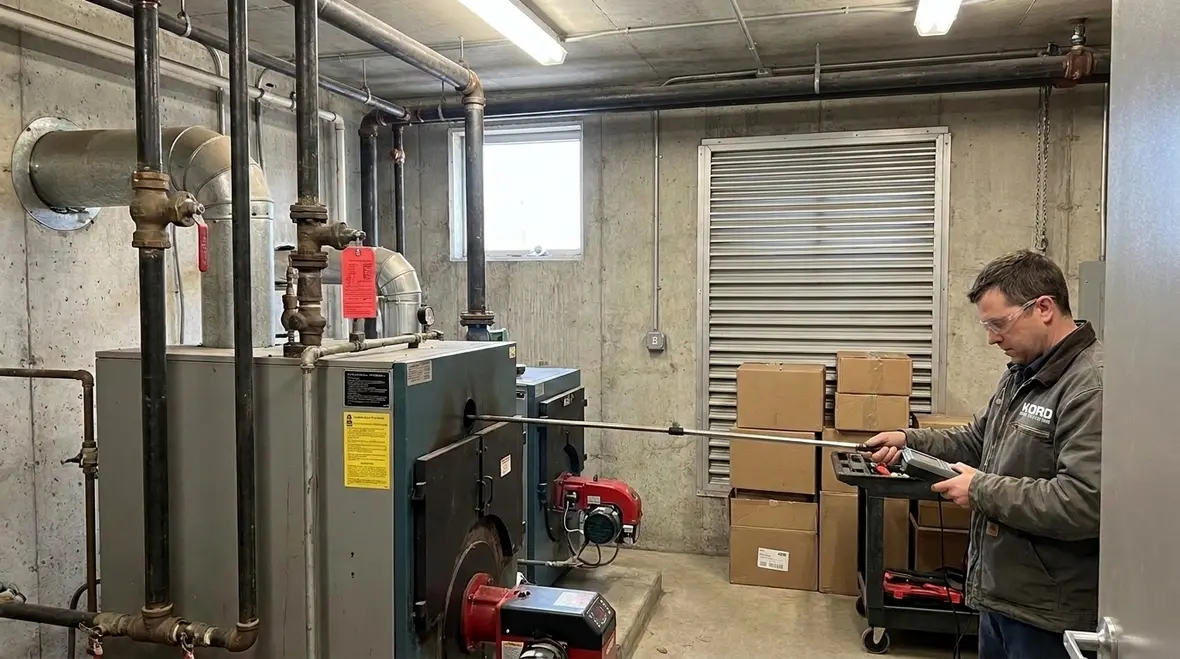
NFPA 31 Section 5.2: Basic Combustion Air Requirements Explained
Quick Answer: NFPA 31 Section 5.2 requires sufficient, properly distributed combustion air to support complete fuel burning and prevent dangerous products of incomplete combustion. Facilities must account for building tightness, venting configuration, and any air supply limitations, then verify performance through inspection and testing.
What NFPA 31 Section 5.2 is trying to prevent
NFPA 31 basic combustion air requirements focus on one practical outcome: stable, complete combustion. When combustion air is inadequate, oil-fired equipment can produce soot, raise flue gas temperatures, reduce efficiency, and increase the likelihood of unsafe conditions such as carbon monoxide formation. Commercial facilities also face an additional risk: combustion air shortfalls often develop after renovations, new seals, HVAC balancing, or installation changes that make a space more airtight.
Because the air supply system is rarely set and forget, Section 5.2 ties combustion air adequacy to both initial design and ongoing operational reality. The best compliance approach treats combustion air as part of the broader mechanical system, then verifies it through commissioning and routine service.
Where Section 5.2 applies in real equipment rooms
NFPA 31 Section 5.2 governs the provision of basic combustion air for oil burning equipment and installations that depend on that air for proper flame behavior. In commercial, industrial, and retail settings, combustion air provisions typically intersect with:
- Boiler rooms and packaged furnace enclosures
- Loading dock or service corridor installations where doors and make up air systems cycle
- Mechanical closets in retail and warehouse mezzanines
- Spaces with powered exhaust, lint control equipment, or grease duct systems that can depressurize the room
In practice, the room condition often changes. Nighttime HVAC setback, demand controlled ventilation, and building pressure management can swing from positive to negative and back again. NFPA 31 basic combustion air requirements address the need to maintain combustion air availability under these varying operating conditions.
How basic combustion air is provided and measured
Section 5.2 centers on supplying air in a way that supports complete combustion. Combustion air usually arrives through a combination of:
- Permanent openings to outside air
- Air openings that remain unobstructed during normal operations
- Design intent that accounts for the burner and appliance air demand
Common field configuration patterns
Most facilities fall into one of these operational patterns:
- Direct outside air openings: Intake grilles, louvers, or ducted openings arranged to avoid blockage and excessive restriction.
- Indirect air from connected spaces: Air routes that rely on pressure conditions and door positions between rooms. This can fail if doors remain closed longer than expected or if dampers are incorrectly set.
- Balanced or conditioned air supply: Make up air systems that maintain room pressure. Failures often stem from improper interlocks or timing mismatches with exhaust equipment.
What technicians verify during compliance checks
To demonstrate that NFPA 31 basic combustion air requirements are met, inspection and service typically confirm that:
- Openings are clear of obstructions, including storage materials, lint buildup, and damaged screens
- Louver blades and grilles remain positioned as installed, with no temporary modifications
- Dampers and air control devices operate correctly if present
- Room pressure effects do not starve combustion air during exhaust or HVAC cycling
- Combustion performance indicators do not show incomplete combustion symptoms
Why combustion air compliance fails after installation
Even when the design initially complied, combustion air problems frequently appear later due to routine facility changes. Commercial facilities should treat combustion air as an ongoing maintenance topic rather than a one time construction deliverable.
Top failure points seen in commercial audits
- Blockage or restriction: Stored pallets, trash bins, stored equipment, or mechanical room clutter partially covers air openings.
- Painting, sealing, or improvements: Contractors patch openings, add weatherproofing that reduces airflow, or seal cracks to reduce drafts, unintentionally tightening the space.
- HVAC pressure swings: New rooftop units, exhaust fans, or demand ventilation can create negative pressure during certain operating modes.
- Door and damper mismanagement: A service door left closed, a damper installed backwards, or a linkage disconnected changes airflow pathways.
- Burner adjustments drift: Excessive adjustments can amplify symptoms of air limitation. The root cause remains air, but combustion tuning can mask it briefly.
What ongoing maintenance looks like in practice
Facilities that pass repeated inspections usually implement a consistent maintenance routine. This includes verifying air openings, confirming damper positions and linkages, checking for debris or corrosion on louvers, and performing combustion testing under normal operating sequences. Kord Fire Protection often supports these needs with commercial fire protection services in Southern California designed to help facilities stay inspection-ready and catch deterioration before it becomes a safety issue.
For a broader installation perspective tied to oil burning equipment, refer to NFPA 31: A practical guide to oil burning equipment installation. It complements Section 5.2 by connecting safe combustion air with installation practices and serviceability.
What inspection and testing should confirm
NFPA 31 basic combustion air requirements do not live in isolation. Compliance should align combustion air availability with burner operation, venting, and controls. Effective testing typically includes:
- Verification of air pathways: Evidence that openings and routes remain unobstructed and sized and arranged as intended.
- Combustion performance checks: Measurements that indicate stable combustion and minimal signs of incomplete combustion.
- Operational scenario validation: Testing during typical facility operating modes that can impact room pressure, including exhaust equipment cycles.
- Documentation: Recording conditions found and adjustments made so future service can compare trends.
Why this matters to commercial facilities
Commercial and retail environments often experience frequent tenant improvements, seasonal HVAC changes, and maintenance activity in mechanical rooms. When combustion air adequacy gets verified and documented, it becomes easier to diagnose recurring issues and maintain audit readiness.
A practical compliance workflow for facility teams
To meet NFPA 31 basic combustion air requirements with a low operational risk profile, facilities can follow this workflow:
- Map the air supply: Identify every opening, air route, damper, louver, and connected space involved in delivering combustion air.
- Assess room pressure drivers: Review exhaust fans, make up air, demand ventilation, and any pressure control systems that can change operating conditions.
- Confirm physical integrity: Inspect screens, louvers, and grilles for blockage, corrosion, missing components, and installation drift.
- Validate with service testing: Perform combustion checks and confirm burner operation aligns with expected airflow behavior during normal facility cycles.
- Set maintenance triggers: Establish inspection frequency and include combustion air checks in routine service visits, not just annual intervals.
For ongoing compliance support, Kord Fire Protection offers commercial-focused testing and maintenance planning through its fire protection services in Southern California, helping operators reduce nuisance shutdowns and address combustion air issues before they escalate.
Frequently Asked Questions
Get combustion air compliance under control
Combustion air issues often appear months after installation when a facility gets tighter, exhaust cycles change, or openings get restricted. Kord Fire Protection can help your team verify air pathways, support inspection readiness, and perform combustion testing and maintenance that aligns with NFPA 31 basic combustion air requirements. Contact Kord Fire Protection to schedule an assessment and build a practical service plan for ongoing compliance.

Join Our Newsletter!
Get the latest fire safety tips delivered straight to your inbox From our Newsletter.



