
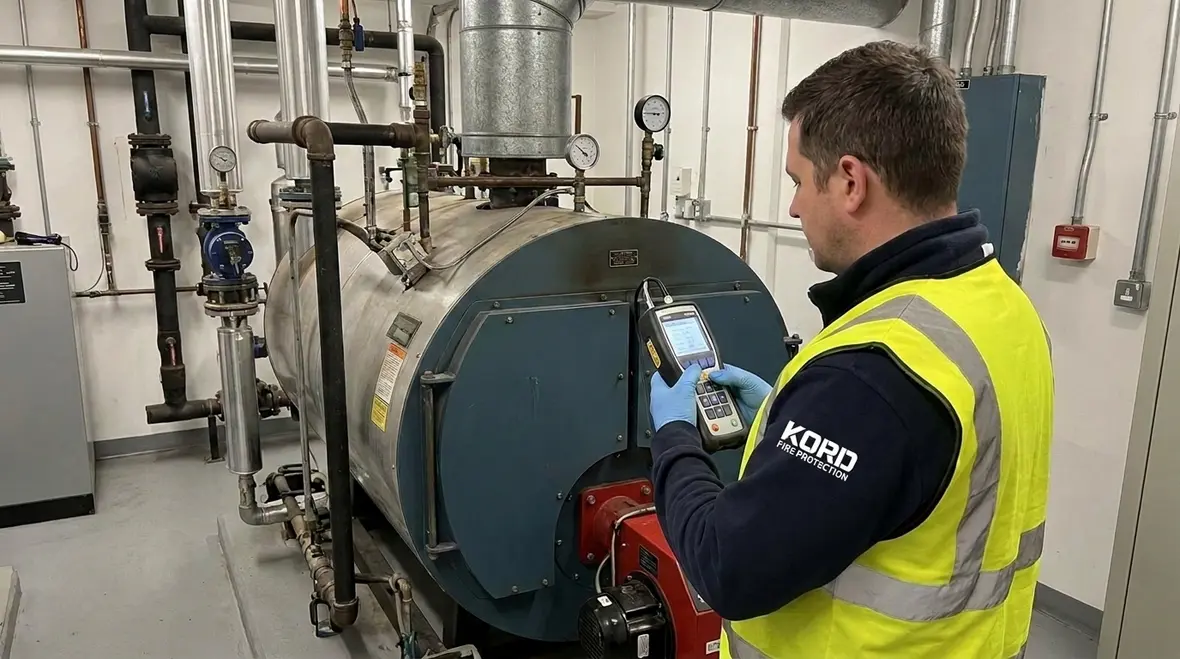
NFPA 31 Section 13.8: Performance Standards for Oil-Gas Appliances
Quick Answer: NFPA 31 Section 13.8 sets performance-based expectations for oil gas appliances, focusing on safe combustion, proper operation, and reliable shutoff. Compliance depends on correct installation, verified settings, and ongoing maintenance. Commercial facilities should plan for documented inspections and functional testing.
Facilities that need broader compliance support can also explore fire protection services in Southern California for practical inspection, repair, and maintenance coordination across commercial properties. ([kordfire.com](https://kordfire.com/fire-protection-services-southern-california/?utm_source=openai))
What does NFPA 31 Section 13.8 actually require?
NFPA 31 oil gas appliance performance standards in Section 13.8 establish measurable criteria that appliances must meet to operate safely and consistently. Rather than treating “pass or fail” as a paper exercise, the standard drives facilities toward verification of performance in the installed condition. For commercial, industrial, and retail occupancies, this creates a practical compliance pathway: confirm that the appliance functions as designed, combustion stays within acceptable limits, safety controls respond correctly, and the system performs under expected operating conditions.
In most buildings, the biggest compliance risk comes from drift over time. Burner components wear, controls develop calibration offsets, gas pressure varies, or venting conditions change due to modifications. Section 13.8 standards address this by emphasizing ongoing performance expectations, not just initial commissioning.
Key performance areas commercial facilities must verify
Fire safety and process safety teams typically encounter the same performance themes when applying NFPA 31 oil gas appliance performance standards. Facilities should expect verification in the following operational categories.
1) Burner ignition and established flame stability
Safe ignition is not only about lighting. Inspectors look for stable flame establishment without disruptive cycling that could indicate air, fuel, or control problems. Common failure points include misaligned burner components, degraded ignition electrodes, contaminated burner surfaces, and incorrect air to fuel ratios caused by blocked air inlets or partial obstructions.
- Functional test of ignition sequence and timing
- Assessment of flame response during run and transition states
- Verification that the appliance reaches stable operation without repeated lockouts
2) Combustion quality and proper air to fuel management
Performance standards generally align with the principle that combustion must be complete and controlled. In practical terms, facilities should verify combustion outcomes using appropriate test methods (for example, flue gas analysis where required by appliance design and inspection scope). Even small changes in manifold pressure, regulator performance, or vent draft can shift combustion results.
- Review of gas pressure stability and regulator condition
- Verification of burner adjustment settings against manufacturer requirements
- Corrective actions for air flow restrictions and fouled heat transfer surfaces
3) Safety shutoff and control system response
Where the appliance uses flame detection and safety interlocks, the control system must reliably move to a safe state when combustion is not proven. A common operational issue is false flame detection or reduced sensitivity due to sensor contamination or misalignment. These issues may not appear during a brief run but often surface under real operating conditions.
- Functional verification of flame supervision and safety lockout behavior
- Validation of reset procedures and lockout conditions
- Inspection of wiring integrity, connectors, and sensor mounting
4) Venting and vent draft consistency
Oil gas appliances rely on correct venting conditions to manage combustion products. Performance failures can occur due to vent obstructions, improper draft, shared vent configurations, or construction changes elsewhere in the facility. Commercial buildings also see frequent tenant improvements that unintentionally affect airflow and pressure relationships.
- Assessment of vent route condition and termination integrity
- Verification that no additions or modifications compromise draft
- Inspection for soot, corrosion, and leakage indicators
Compliance is not just installation. It is ongoing performance maintenance.
Commercial facilities often meet initial commissioning requirements but fall out of alignment due to maintenance gaps. NFPA 31 oil gas appliance performance standards reflect the operational reality that appliances degrade. A strong compliance program treats each appliance as a managed safety system, not an equipment item that only gets attention when it fails.
Common drift and why it matters
- Burner fouling: soot and deposits reduce heat transfer and can alter combustion behavior.
- Gas pressure variation: supply fluctuations can lead to off range operation and unsafe response behavior.
- Control sensitivity changes: flame sensors and switches can drift due to contamination and age.
- Air supply changes: blocked inlets, damaged fans, or incorrect dampers disrupt air to fuel balance.
Maintenance that supports Section 13.8 outcomes
To align with NFPA 31 oil gas appliance performance standards, maintenance should include documented inspections and functional verification steps that match the appliance design and risk profile. Kord Fire Protection supports commercial clients with field-ready service planning, evidence based reporting, and compliance oriented maintenance scheduling.
When facilities need to coordinate installation and ongoing checks, the installation approach matters. For practical guidance on safe setup and how to prevent avoidable commissioning and maintenance issues, facilities can use this reference: oil burning equipment installation. ([kordfire.com](https://kordfire.com/nfpa-31-a-practical-guide-to-oil-burning-equipment-installation/?utm_source=openai))
How inspections and functional testing typically get applied in the field
In commercial environments, inspection quality determines whether NFPA 31 oil gas appliance performance standards get met consistently. A robust program uses a combination of visual checks, component verification, and functional test evidence.
Stepwise inspection workflow
- Verify appliance configuration: confirm nameplate ratings, fuel type, vent arrangement, and control configuration match approved design.
- Examine critical components: burners, ignition system, flame detection, controls, gas train components, and venting surfaces.
- Check operating conditions: confirm gas supply stability, correct airflow paths, and absence of obstructions or abnormal airflow restrictions.
- Run functional verification tests: confirm ignition, stable flame behavior, and correct safety shutdown response when combustion is not proven.
- Document results: record readings, observed conditions, adjustments made, and follow up corrective actions.
What inspectors expect to see documented
Facilities should be prepared with traceable service records and performance evidence. A common compliance failure is having work performed but lacking sufficient detail to show that performance expectations were verified after adjustments or maintenance. Documentation typically includes the date, appliance identifier, technician observations, test results, and corrective actions.
Commercial facility challenges that trigger performance deviations
Section 13.8 performance expectations collide with real world building operations. The following issues frequently cause NFPA 31 oil gas appliance performance standards to drift out of compliance.
Tenant improvements and altered building airflow
Retail and light industrial sites often experience frequent remodeling. Changes in ceiling voids, make up air units, and exhaust systems can affect draft and combustion airflow. Even when the appliance remains untouched, the appliance can experience altered operating conditions that impact combustion and safety responses.
Gas supply changes
Regulators, pressure swings, upstream maintenance, or changes in supply contracts can shift manifold pressure. When gas pressure moves, air to fuel ratios change. This can create unstable flame behavior, increased soot formation, and delayed or improper control responses.
Deferred cleaning and component wear
Burners and heat exchangers accumulate deposits, and sensors collect residue. Deferred maintenance increases the chance of repeated lockouts and inconsistent flame sensing. Over time, the appliance may still “run,” but it may not perform within the safe operating envelope expected by NFPA 31 oil gas appliance performance standards.
Why partnering with Kord Fire Protection helps maintain Section 13.8 performance
Kord Fire Protection supports commercial clients with compliance oriented inspection planning, documented functional testing, and targeted maintenance that keeps appliances operating within expected performance parameters. This approach reduces the common gap between routine service and performance verification evidence.
For facilities managing multiple appliances across warehouses, shopping centers, and mixed use sites, Kord Fire Protection also helps standardize processes so that inspections consistently cover ignition, flame supervision, combustion quality indicators, and venting condition verification aligned with NFPA 31 oil gas appliance performance standards.
Frequently Asked Questions
Next step: schedule performance verification before compliance issues surface
Facilities that treat NFPA 31 oil gas appliance performance standards as an ongoing verification program reduce downtime, rework, and audit exposure. Kord Fire Protection can help establish a practical inspection and maintenance plan with documented functional testing and clear corrective action pathways. Contact Kord Fire Protection to review your appliances, identify performance risk drivers, and schedule verification before seasonal or operational changes impact combustion and safety performance.

Join Our Newsletter!
Get the latest fire safety tips delivered straight to your inbox From our Newsletter.



