
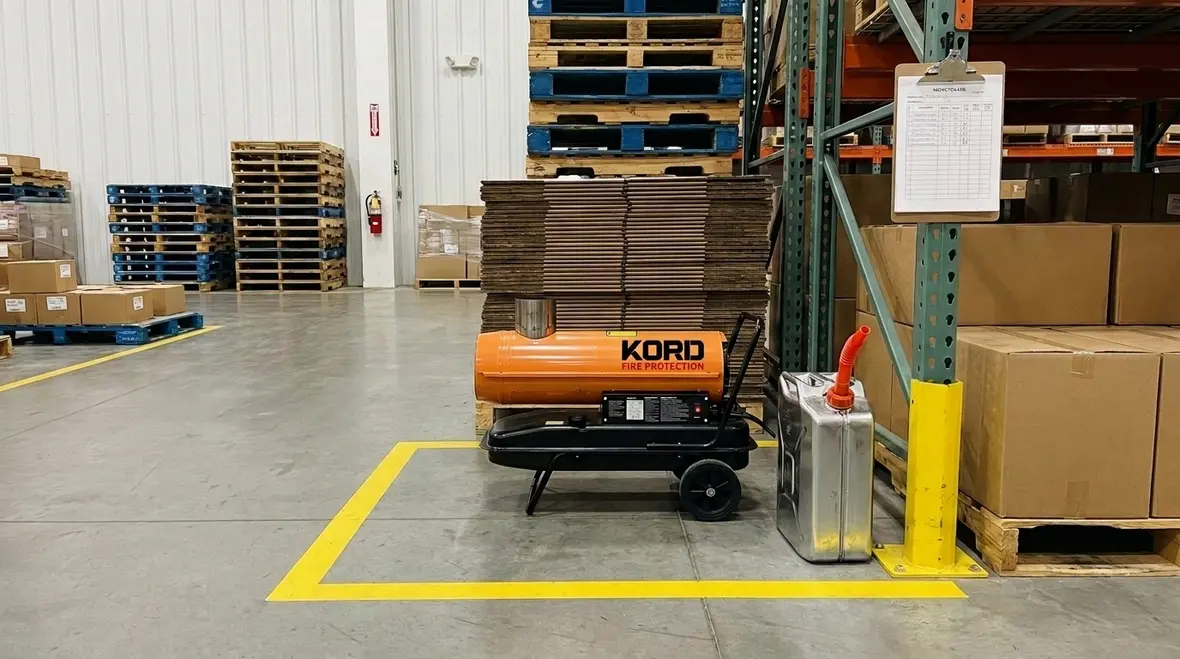
NFPA 31 Section 11.3: Portable Kerosene Heater Requirements
Quick Answer: NFPA 31 Section 11.3 sets detailed safety and installation expectations for portable kerosene heaters, including fuel handling, clearance and siting, ignition and combustion reliability, and inspection readiness. Facilities must verify compliance through documented inspection, maintenance, and operational controls.
If your team is tightening inspection readiness across the building, Kord Fire’s fire protection services in Southern California fit naturally into that bigger compliance picture, especially when portable heating risks overlap with broader life safety responsibilities.
What NFPA 31 Section 11.3 is really driving
NFPA 31 Section 11.3 focuses on controlling ignition hazards, abnormal combustion, and unsafe heater operation when kerosene heaters appear in spaces that are not permanently heated. In commercial, industrial, and retail environments, portable heaters often get moved, staged near combustibles, or used during equipment downtime. Those realities create the main compliance risk.
To meet NFPA 31 portable kerosene heater requirements, the facility must ensure heaters are correctly set up for the location, operated within their design limits, protected from damage and misuse, and kept in reliable condition through scheduled inspection and maintenance. Compliance succeeds or fails based on operational discipline, not only initial installation.
Which portable kerosene heaters fall under Section 11.3?
Section 11.3 applies to portable kerosene heaters intended for use with kerosene fuel in a manner that can be relocated for intermittent heating or emergency use. Facilities commonly encounter these heaters in warehouses, loading docks, retail back rooms, workshops, and areas under construction where permanent heating is unavailable.
From a compliance standpoint, the key issue is whether the heater is being operated as a portable kerosene heater for the conditions present. If a heater is used in a way that exposes fuel systems, combustion chambers, or burners to damage, or if it is used outside the manufacturer’s intended use, the practical compliance burden increases quickly.
Commercial teams typically need a controlled heater program that includes approved models, designated use locations, and a maintenance workflow tied to the heater’s hours of use and condition. Kord Fire Protection supports that workflow with inspections and maintenance coordination for oil burning equipment and related fire safety controls.
Core compliance requirements: siting, clearances, and safe placement
The most frequent field failures are placement failures. Portable heaters are moved, parked near storage, or placed in corners where air movement is poor. NFPA 31 Section 11.3 emphasizes safe siting so that normal operation does not expose combustibles to ignition sources or create overheating around the unit.
Operational siting challenges in real facilities
Combustible storage drift: Pallets, cardboard, packaging, and piled rags creep toward the heater over time. A location that met clearance at commissioning no longer meets it after several shifts.
Airflow disruption: Temporary plastic curtains, partial partitions, and blocked vents can cause poor combustion and increased soot formation.
Damage from traffic: Forklifts and pallet jacks can strike heaters, deforming housings or damaging fuel lines and controls.
How commercial facilities manage placement compliance
Facilities that achieve consistent results typically implement a “heater map” and controlled staging zones. The goal is to ensure each heater is used only in preapproved locations that maintain safe clearance from combustibles and support normal ventilation. Kord Fire Protection often helps commercial clients align heater placement procedures with broader fire safety requirements for oil burning and space heating operations.
For additional installation and oil burning equipment context, review NFPA 31: a practical guide to oil burning equipment installation.
Fuel handling, ignition reliability, and operational controls
Portable kerosene heaters bring a unique hazard profile because fuel handling can occur frequently and the heater may be started many times during the heating season or during intermittent needs. Section 11.3 addresses safe operation that reduces the likelihood of flare-ups, unsafe starts, and abnormal combustion.
Fuel and container management
Approved fuel source: Facilities must use kerosene appropriate for the heater and manage storage to prevent contamination and unsafe transfer.
Spill control: Any fuel spill increases fire risk and can also lead to odor complaints and hidden residues that affect combustion performance.
Refueling discipline: Refueling procedures should prevent hot restart scenarios and reduce the chance of introducing air or contaminants into the fuel path.
Ignition and combustion reliability
Commercial operations must verify that ignition systems function properly and that the heater maintains stable combustion. Common failure points include degraded burners, dirty fuel delivery components, worn seals, and blocked air inlets. When combustion becomes unstable, soot and smoke can increase, which changes the fire risk and the inspection outcomes.
Operational controls that prevent drift from compliance
Start and shutdown training: Staff should follow the heater sequence every time, using manufacturer procedures and internal checklists.
Prohibited modifications: Facilities should prohibit field modifications and ensure only approved parts are used.
Supervised use in high risk areas: Loading docks, near stored combustibles, and construction-adjacent zones require additional control and supervision.
Inspection and maintenance: what “ready for use” means
NFPA 31 portable kerosene heater requirements are not only about placement and initial setup. Ongoing inspection and maintenance determine whether the heater continues to operate safely. In commercial practice, inspections must catch deterioration that can develop while heaters sit in storage or while they operate under harsh conditions.
Inspection focus areas for portable kerosene heaters
Burner and combustion chamber condition: Look for soot buildup, damage, corrosion, and blocked passages.
Fuel delivery components: Verify hoses, connections, filters, and fittings for wear or leakage.
Safety controls and ignition components: Confirm proper operation and reliable ignition without hazardous behavior.
Ventilation and air intake paths: Ensure the heater is not being operated with restricted airflow.
Stability and physical integrity: Confirm the unit remains upright and protected from damage after movement.
Maintenance records and accountability
Commercial facilities typically fail audits when they cannot show a consistent maintenance history, even if the heaters appear to work. A defensible compliance program includes maintenance logs, inspection results, corrective actions, and an out of service process for units that fail performance or safety checks.
Kord Fire Protection supports commercial clients by coordinating inspections and maintenance verification for oil burning equipment and related fire safety requirements, helping clients meet both regulatory and internal assurance expectations.
Common compliance pitfalls and how to prevent them
Portable heaters create repeatable patterns of noncompliance. The best prevention strategy is to control the operational “system” around the heater, not just the heater itself.
Top pitfalls seen during commercial reviews
Heater used in unapproved locations: Clearances and airflow conditions change as spaces evolve, especially in active warehouses and retail stockrooms.
Insufficient inspection frequency: Heaters that are moved less predictably require inspection tied to use patterns, not only seasonal schedules.
Delayed corrective action: Small leaks or imperfect ignition can escalate into larger failures without visible warning signs.
Inconsistent operator procedures: Different staff members may use different startup sequences, refueling habits, and housekeeping practices.
Prevention that works
Use a controlled heater register: Track each unit, its approval status, and inspection dates.
Adopt standardized checklists: Tie start up, monitoring, and shutdown to written procedures.
Implement an out of service trigger: Remove from service quickly when abnormal combustion, odors, leakage, or damaged components occur.
Frequently Asked Questions
Conclusion and call to action
NFPA 31 portable kerosene heater requirements demand more than “it works.” Compliance requires controlled placement, disciplined fuel and operating procedures, and documented inspection and maintenance that catch damage and combustion deterioration early. Kord Fire Protection helps commercial facilities build a practical heater compliance program with inspections, corrective action tracking, and ongoing support for oil burning equipment readiness. Contact Kord Fire Protection to review your current portable heater setup and inspection workflow.

Join Our Newsletter!
Get the latest fire safety tips delivered straight to your inbox From our Newsletter.



