
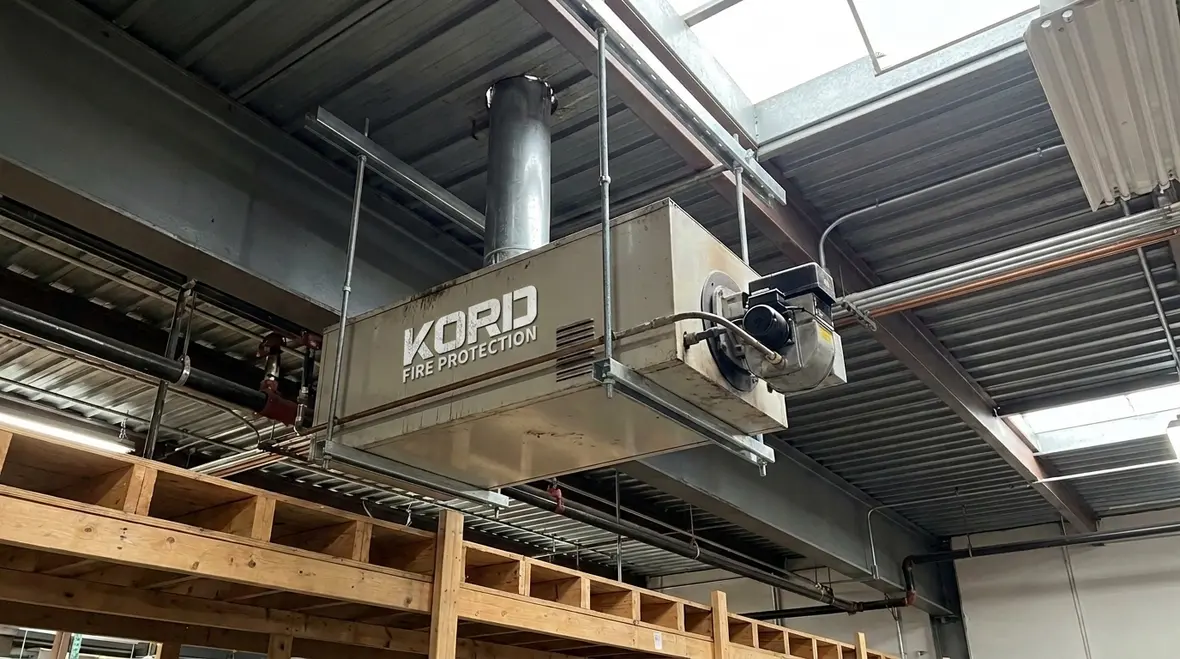
NFPA 31 Section 10.15: Suspended Unit Heater Installation Requirements
Quick Answer: NFPA 31 Section 10.15 sets installation and protection requirements for suspended unit heaters in oil burning systems. The standard focuses on safe clearance, secure mounting, proper venting, correct firing controls, and inspection friendly design to prevent fire, heat damage, and flue gas leakage.
If your facility is trying to stay ahead of inspection deadlines and deficiency cycles, Kord Fire’s fire protection services in Southern California fit naturally into this conversation because overhead heating equipment issues rarely stay isolated for long.
What does NFPA 31 Section 10.15 require for suspended heaters?
NFPA 31 governs the installation of oil burning equipment, and Section 10.15 addresses suspended unit heater installation requirements. In commercial, industrial, and retail facilities, these requirements help manage elevated heat sources, combustion air and venting integrity, and the risk of ignition to building materials above and around the heater assembly.
Because suspended heaters sit in hard to access locations, compliance success depends on more than “getting it mounted.” Facilities must maintain safe clearances, verify correct venting and draft conditions, confirm burner and control operation, and ensure the system remains serviceable during routine inspections and maintenance cycles.
How suspended unit heater mounting and support affects fire safety
NFPA 31’s suspended heater provisions start with the reality that the heater is supported overhead and exposed to vibration, thermal cycling, and service impacts. A compliant installation typically requires:
- Approved support and secure attachment: The heater must be rigidly supported and installed to prevent movement that can stress flue connections or dislodge components.
- Load and alignment stability: Misalignment can cause venting leakage, burner combustion instability, and uneven heat distribution.
- Protection of surrounding combustibles: The installation must prevent ignition of nearby materials through required clearances and by avoiding unintended contact with ductwork, piping, or ceiling assemblies.
In practice, the most common operational failure point in suspended installs involves differential movement. Building expansion, seismic bracing upgrades, equipment replacements, or even roof decking repairs can alter alignment. Fire and life safety risk increases when flue seals, joints, and draft inducing components experience stress. Kord Fire Protection supports commercial facilities by documenting inspection findings and verifying corrective actions that restore venting integrity and safe spacing.
Clearances and combustibles: the compliance details inspectors look for
Suspended unit heaters create concentrated heat near ceilings, beams, and structural steel. NFPA 31 requirements for suspended installation typically drive strict attention to clearance to combustibles. The compliance challenge is that buildings rarely match “clean room” conditions during real operations.
To meet safe clearance expectations, facilities should verify and maintain the following before commissioning and at each inspection interval:
- Manufacturer listed clearances: The unit heater and vent components must maintain required separation from combustibles.
- Ceiling and beam configuration changes: Adding insulation, installing storage racks, rerouting electrical conduit trays, or applying new ceiling finishes can reduce effective clearance.
- Accessory routing impacts: Gas piping, electrical whips, and condensate lines can shift into clearance zones after maintenance.
- Vent pipe materials and placement: Venting must be installed as required to avoid heat transfer to combustibles.
Commercial sites often discover clearance drift during seasonal operations. Examples include temporary holiday storage, marketing displays in retail environments, and maintenance staging above suspended heater lines. Kord Fire Protection helps facilities build inspection checklists that catch these practical clearance hazards before they escalate.
Venting, combustion air, and draft control in overhead installations
In oil burning systems, the venting and draft performance directly influence combustion efficiency and safety. Suspended heaters can magnify venting problems because any leakage or improper termination affects buoyancy and flue gas movement in confined overhead spaces.
Facilities typically must confirm that suspended unit heater installation includes compliant:
- Vent system integrity: Flue joints, seals, and supports must remain tight and properly aligned throughout installation and after maintenance.
- Proper vent termination: Termination location and arrangement must control spill risk and prevent flue gas recirculation.
- Combustion air supply: Air paths must remain unobstructed, including during renovation, filter changes, or HVAC balancing adjustments.
- Controls and safety shutdown behavior: Burner operation must safely respond to ignition, flame sensing, and draft or limit conditions as applicable.
A frequent failure pattern involves post-install modifications. Replacement of adjacent roof penetrations, adding rooftop screens, or changing air handling pressure balances can alter draft. Even when the heater seems to run “normally,” a slight drift can increase soot loading, reduce heat transfer efficiency, and elevate smoke or odor complaints. Those symptoms warrant inspection and verification, not delay.
For facilities seeking a broader compliance workflow for oil burning equipment, see this practical resource: NFPA 31 a practical guide to oil burning equipment installation.
Inspection readiness: making suspended heaters maintainable and testable
NFPA 31 compliance depends on the ability to inspect, service, and troubleshoot the system safely and consistently. Suspended unit heaters often limit access, which creates a risk if maintenance personnel defer inspection steps due to difficulty reaching components.
Commercial facilities should plan for inspection readiness by ensuring:
- Service access clearance: Personnel can safely reach burner compartments, controls, filters, and flue connections without compromising clearance rules.
- Documented inspection evidence: The site maintains records for combustion testing, venting checks, and operational safety verification.
- Routine cleaning compatibility: Soot and scale removal methods align with the installed orientation and duct routing.
- Safe work methods: Ladders, lifts, and fall prevention planning support compliant maintenance without damage to venting or wiring.
Kord Fire Protection supports ongoing commercial compliance by performing system checks that align operational performance with safety requirements. This approach reduces “checkbox compliance” and addresses root causes like vent leakage, burner maladjustment, or degraded seals that can develop in overhead installations.
Common noncompliance issues seen on suspended unit heater installations
Even experienced contractors can miss details in suspended heater configurations. The most frequent noncompliance and high risk issues include:
- Clearance encroachment: Ceiling finish upgrades, insulation additions, cable tray expansions, or storage placement reduces separation to combustibles.
- Improper vent joint sealing: Cracked seals, incorrect gaskets, or stressed connections can allow flue gas products to leak into the occupied space.
- Incorrect component replacement: Substituting burner parts, draft controls, or vent materials that are not compatible with the approved design.
- Combustion air obstruction: Blocked air intakes due to HVAC changes, construction dust buildup, or improperly placed filters.
- Ignored symptoms: Odors, recurring call backs, inconsistent heating output, or soot staining indicate that testing and inspection have not addressed the underlying issue.
Operationally, the safest strategy is to treat recurring heater issues as performance safety indicators. When a suspended heater’s combustion quality drifts, the system can shift from “working” to “unsafe” even if the thermostat demand remains stable.
Frequently Asked Questions
Call Kord Fire Protection for compliant suspended heater support
Commercial facilities should not treat NFPA 31 suspended unit heater installation requirements as one time paperwork. Kord Fire Protection helps you verify safe clearances, venting integrity, combustion performance, and inspection readiness through practical testing, documentation, and maintenance support. Contact Kord Fire Protection to schedule a compliance focused review and build a maintenance plan that reduces risk and shortens future inspection cycles.

Join Our Newsletter!
Get the latest fire safety tips delivered straight to your inbox From our Newsletter.



