
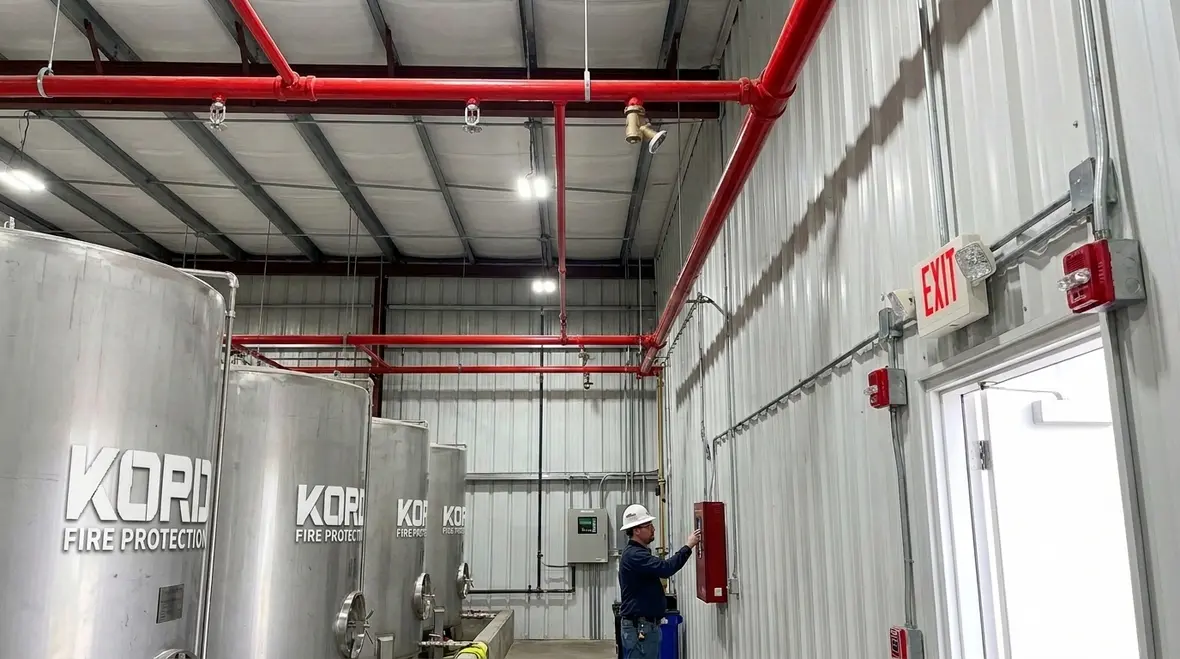
NFPA 30 Section 24.6: Fire Protection in Storage Tank Buildings
Quick Answer: NFPA 30 Section 24.6 tank building fire protection focuses on designing and maintaining fire protection provisions for storage tank buildings handling flammable and combustible liquids. Compliance hinges on protecting life safety and limiting fire spread through correct detection, suppression, and operational controls.
What NFPA 30 Section 24.6 tank building fire protection actually governs
NFPA 30 Section 24.6 tank building fire protection addresses fire protection arrangements for buildings that enclose or support liquid storage tanks. In practice, these provisions aim to prevent a small event from escalating into a building fire by combining building envelope considerations with reliable fire detection and suppression strategies. Facilities that handle flammable liquids in commercial, industrial, and retail supply chains often treat Section 24.6 as the “system integration” requirement because it connects fire protection performance to tank building operations.
Facilities that also need practical support with inspection, maintenance, and compliance planning can explore fire protection inspection and maintenance services from Kord Fire Protection. For operators who want the broader context of how NFPA 30 regulates flammable liquids, Kord Fire Protection provides a helpful starting point: how NFPA 30 regulates flammable liquids.
How tank building hazards shape the protection strategy
Tank building fire protection planning starts with the hazard profile. Fire protection in these facilities does not follow a one size fits all template because the enclosure changes how heat, vapours, and fuel availability behave during abnormal conditions such as leaks, seal failures, or overfill events.
Key hazard mechanisms that drive design choices
- Vapour release and vapour cloud formation: Flammable vapours can accumulate in pockets created by ventilation limitations, baffles, or structural obstructions. Protection must detect and respond quickly enough to prevent ignition development.
- Pool formation under or around tank openings: A small leak may create a localized fuel pool that spreads along floor surfaces and into sumps or cable/conduit penetrations.
- Heat exposure and fire growth within an enclosed volume: Confined spaces increase radiant heat impact on piping, instrumentation cabinets, and support structures, which can compromise passive protection elements.
- Ignition source density: Normal operations often include electrical panels, motors, pumps, and temporary maintenance activities that can introduce ignition sources if not controlled.
Common compliance challenge: “design intent drift”
Commercial facilities frequently experience drift between the original fire protection intent and day to day operations. Examples include modifications to ventilation dampers, added pipe runs that block discharge paths, or storage of packaging materials that changes how fire and smoke behave. NFPA 30 Section 24.6 tank building fire protection expectations typically require the protection concept to remain effective after reasonable facility changes, which is why change management and maintenance documentation matter.
Detection and alarm performance: what must work when it counts
Detection in a tank building must reliably identify abnormal conditions and provide an alarm response that supports occupant action, emergency control, and fire department intervention. In many systems, detection performance depends on correct placement, correct environmental ratings, and correct maintenance of detection sensitivity over time.
Operational procedures that prevent “silent failures”
- Maintain clear access to detectors and panels: Inspect for obstructions such as insulation overspray, stored items, or temporary containment barriers that can delay sensing.
- Verify alarm routing and control logic: Ensure signals go to the monitored fire alarm control panel and any required supervisory or shutdown actions occur as intended.
- Test under realistic conditions where allowed: Functional testing should reflect the operational environment, including humidity, dust, and temperature stratification typical of tank buildings.
Common failure points during inspections
Contractors often discover recurring issues during compliance checks: detectors installed too far from the intended hazard zone, wiring that does not match the as built drawings, or maintenance activities that replace devices with incompatible types. These problems can reduce sensitivity or delay response, undermining NFPA 30 Section 24.6 tank building fire protection outcomes even if the system is technically “in place.”
Suppression and impairment control: keeping extinguishing systems ready
Suppression systems and related water or agent delivery arrangements must remain available and effective. Tank building fire protection depends on more than having equipment. It depends on the equipment being correctly sized, unobstructed, and operational at the time of incident.
Mechanisms that influence suppression effectiveness
- Discharge distribution: Spray patterns, nozzle orientation, and coverage areas must align with the hazard geometry of tank openings, expected leak locations, and potential fuel surfaces.
- Supply reliability: Water supplies must meet required pressures and flows, while gaseous or foam systems must meet proper cylinder pressures and reliable agent release.
- Valves, interlocks, and alarms: Supervisory status and interlock logic prevent accidental isolation and ensure rapid activation where required.
Impairment control is where many facilities slip
Commercial and industrial sites often require maintenance windows that temporarily impair parts of the fire protection system. Compliance hinges on having a formal impairment procedure: documented tagging, escalation of risk controls, compensatory measures, and restoration verification. Without this, a tank building can meet the paper requirement but fail the real world requirement during an active maintenance period.
Building and operational controls that make the system usable
Even when detection and suppression systems comply, tank building fire protection relies on the environment supporting those systems. NFPA 30 Section 24.6 tank building fire protection expectations typically connect fire protection performance to building features and operational practices.
Controls that protect egress and reduce fire spread
- Clear egress routes: Maintain unobstructed pathways for occupants and responders.
- Maintain penetration seals and fire stops: Seal integrity affects fire and smoke migration through walls, floors, and cable trays.
- Manage ventilation and emergency shutdown impacts: Ensure ventilation arrangements do not prevent detection or create abnormal vapour accumulation during emergencies.
- Housekeeping and fuel management: Remove combustible storage, control spills, and keep sumps and drains functioning.
Inspection practices that withstand audit scrutiny
To reduce audit friction, facilities should verify that inspections cover both life safety and system readiness components: device condition, actuator operation where applicable, alarm panel history, acceptance of maintenance records, and confirmation that any impairment periods resulted in correct restoration. A common gap involves missing evidence that maintenance returned the system to a “ready for service” status, not merely “devices replaced.”
How Kord Fire Protection supports ongoing NFPA 30 compliance
NFPA 30 Section 24.6 tank building fire protection is not a one time installation checklist. Commercial facilities need ongoing verification that systems remain aligned with hazard conditions, as built drawings, and maintenance requirements. Kord Fire Protection supports operators with practical, compliance oriented services that cover testing, inspection, and maintenance readiness for fire detection and suppression arrangements tied to storage tank buildings.
For facility teams, the value is straightforward: reduced downtime, clearer evidence for audits, and faster fault resolution when a system shows deterioration. Kord Fire Protection works as a partner to translate code requirements into operational tasks, including documentation practices that help demonstrate system integrity throughout the year.
Frequently Asked Questions
Conclusion and next step
NFPA 30 Section 24.6 tank building fire protection succeeds only when detection, suppression, and operational controls stay effective over time. Facilities should review as built documentation against current conditions, tighten impairment and maintenance evidence, and confirm system readiness through scheduled testing. Kord Fire Protection can help verify performance, strengthen audit defensibility, and reduce risk in storage tank buildings. Contact Kord Fire Protection to discuss a compliance focused inspection and maintenance plan for your site.

Join Our Newsletter!
Get the latest fire safety tips delivered straight to your inbox From our Newsletter.



