
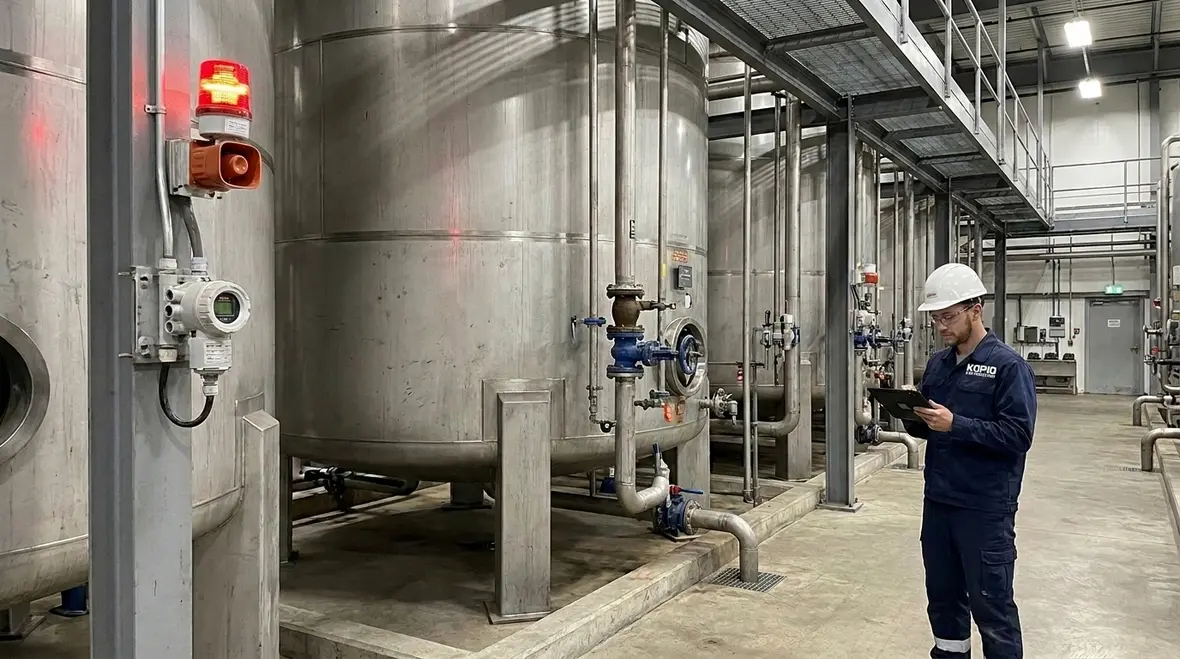
NFPA 30 Section 24.15: Detection and Alarm in Tank Buildings
Quick Answer
NFPA 30 Section 24.15 sets practical requirements for detecting flammable releases and initiating alarms in tank buildings. It drives system placement, initiating device selection, alarm notification performance, and inspection and maintenance to keep detection effective as conditions change.
What NFPA 30 Section 24.15 tank building detection alarm is designed to prevent
In tank buildings, the highest risk stems from vapor and mist generation during normal operations, abnormal releases, and maintenance activities. NFPA 30 Section 24.15 tank building detection alarm requirements aim to ensure early warning and reliable alarm transmission so personnel can act before ignition and escalation occur. The code focus is not only on having equipment installed. It also requires the detection and alarm system to remain dependable through correct placement, functional performance, and ongoing maintenance.
For commercial and industrial owners, this section typically intersects with facility operating procedures, hot work controls, ventilation assumptions, and contract service schedules. Retail and distribution sites with small tank rooms still face the same underlying challenge: detection must work in the real environment, not just in a test bay.
Where detection and alarm systems apply in tank buildings
NFPA 30 Section 24.15 addresses detection and alarm for hazardous conditions associated with tank building environments. In practice, compliance planning begins with defining the tank building boundaries and identifying where flammable vapors can accumulate or travel. That mapping determines device siting, alarm audibility, and notification pathways.
Near the start of planning, many facilities also coordinate detection strategy with broader commercial fire alarm services so inspections, testing, monitoring, and system upgrades all speak the same language.
Common facility workflow includes:
- Reviewing tank building layouts, pipe runs, vents, drains, and common release points.
- Confirming operating modes such as normal pumping, transfer, maintenance, and emergency shutdown.
- Assessing ventilation patterns that can transport vapors to corners, pits, or overhead zones.
- Identifying supervision requirements where loss of detection could delay evacuation or protective actions.
Owners often underestimate how frequently tank buildings change. Piping modifications, new valves, changed loading schedules, and replacement of HVAC components can shift vapor pathways and affect sensor performance. The best compliance strategy treats the detection system as a living safety asset that evolves with the facility.
Key technical elements behind the NFPA 30 detection and alarm requirements
NFPA 30 Section 24.15 tank building detection alarm compliance depends on three technical pillars: detection coverage, alarm effectiveness, and system reliability. Each pillar typically has inspection and maintenance consequences during commissioning and ongoing service.
1) Detecting the hazardous condition the building actually experiences
Detection must match the hazard mechanism. Gas detectors and related initiating devices are selected based on the expected flammable vapor characteristics, expected concentration ranges, response requirements, and environmental factors such as dust, temperature, humidity, and condensation potential.
In real tank building conditions, common failure points include:
- Contamination or sensor poisoning from process residues, cleaning agents, or aerosols.
- Moisture ingress causing drift, false readings, or loss of calibration.
- Incorrect siting that places devices where air currents prevent representative sampling.
- Blocked or obstructed sampling points where normal maintenance work temporarily changes airflow.
Effective compliance work verifies that installation location aligns with vapor transport and release scenarios, including during abnormal events that may not occur frequently.
2) Alarm initiation and notification performance
Once detection reaches an alarm threshold, the alarm system must initiate timely notification so personnel can respond. NFPA 30 Section 24.15 tank building detection alarm planning includes alarm outputs, control functions, and how alarms interface with facility operations.
Facilities often need to align alarm behavior with:
- Evacuation and muster procedures.
- Emergency shutdown and ventilation control strategies.
- Monitoring station response protocols and escalation criteria.
- Operational interlocks that prevent unsafe restart after alarms.
Notification design should account for ambient sound levels, protective equipment use, and audible and visual placement. A system can be technically installed and still fail practical notification if audibility does not cover all required work areas or if visual signaling placement misses blind spots.
3) Reliability through supervision, wiring integrity, and system health
Tank building alarm systems typically include supervision concepts that alert staff to system troubles. Reliability depends on wiring integrity, device health monitoring, power supply stability, and control panel performance.
Common operational issues include:
- Loose terminations or corrosion at field devices due to washdown, condensation, or chemical exposure.
- Panel configuration drift after equipment upgrades or contractor changes.
- Delayed discovery of sensor drift when testing schedules fail to match the hazard environment.
- Inadequate documentation that prevents technicians from verifying setpoints and configuration history.
Commissioning and verification should confirm that trouble signals and alarm signals behave as intended under both normal and fault conditions.
Inspection, testing, and maintenance challenges owners should plan for
Compliance is not a one time event. In tank buildings, detection and alarm systems must remain effective as sensors age and process conditions change. NFPA 30 Section 24.15 tank building detection alarm programs typically require scheduled testing, functional verification, and recordkeeping that supports audit readiness.
What good maintenance looks like in the field
Commercial best practice includes:
- Documented bump tests or functional tests for gas detection where applicable, performed at intervals aligned with manufacturer guidance and site risk.
- Calibration and verification using appropriate test gas, regulators, and procedures.
- Visual inspection of device housings, wiring, conduits, seals, and mounting integrity.
- Verification of alarm outputs, panel indicators, and any monitored points.
- Trend review for detector drift or repeated nuisance behavior.
How tank building operations create recurring compliance gaps
Several patterns repeatedly cause problems during audits and insurance reviews:
- Seasonal changes in humidity and temperature increase condensation and sensor drift.
- Process changes add vapor sources or alter venting, but the detection map remains unchanged.
- Maintenance crews temporarily modify ventilation or block access routes without confirming sensor impact.
- Testing records exist, but they do not show pass fail outcomes, setpoints, or trouble history clearly enough to demonstrate ongoing reliability.
Kord Fire Protection supports commercial facilities by managing testing plans that match operational realities and by keeping documentation aligned to what inspectors and auditors expect. This approach reduces disruption because crews follow a repeatable procedure and do not improvise during short outage windows.
How NFPA 30 connects to broader flammable liquid compliance
NFPA 30 Section 24.15 tank building detection alarm requirements sit within a larger system of flammable liquid safety controls, including design assumptions, installation practices, and operational safeguards. To understand how detection fits into the full regulatory framework for flammable liquids, facilities should review the role of NFPA 30 across hazards and controls.
For additional context on how NFPA 30 regulates flammable liquids, refer to: How NFPA 30 regulates flammable liquids. This helps owners connect detection and alarm choices to the broader hazard management strategy used across tank storage and processing operations.
Implementation checklist for facilities planning or upgrading systems
Owners and safety managers can reduce compliance risk by using a structured implementation approach. The checklist below supports both new installations and upgrades to existing tank building systems.
- Hazard mapping: Identify likely release and vapor accumulation points, including hidden or hard to access areas.
- Device selection: Select detection technology suitable for the expected flammable vapor conditions and environmental stresses.
- Siting verification: Confirm mounting height and location align with expected vapor transport under normal ventilation.
- Alarm outputs: Verify audible and visual notification coverage, control panel behavior, and any emergency interface.
- Testing plan: Establish initial verification and ongoing test intervals aligned with device requirements and site risk.
- Maintenance schedule: Assign responsibility for calibration, functional checks, inspection tasks, and recordkeeping.
- Change management: Update detection documentation when piping, ventilation, process flow, or building modifications occur.
Commercial operators benefit when the facility, contractors, and service provider follow the same documentation standards. Kord Fire Protection helps coordinate compliance activities so changes do not unintentionally invalidate earlier assumptions about coverage and performance.
Frequently Asked Questions
Conclusion and call to action
NFPA 30 Section 24.15 tank building detection alarm compliance depends on more than equipment selection. It requires correct coverage, dependable alarm notification, and a disciplined testing and maintenance program that reflects how your tank building operates day to day. Kord Fire Protection can help validate your system design assumptions, test performance, and keep records audit ready. Contact Kord Fire Protection to review your current detection and alarm arrangement and build a maintenance plan that holds up under real inspection conditions.

Join Our Newsletter!
Get the latest fire safety tips delivered straight to your inbox From our Newsletter.



