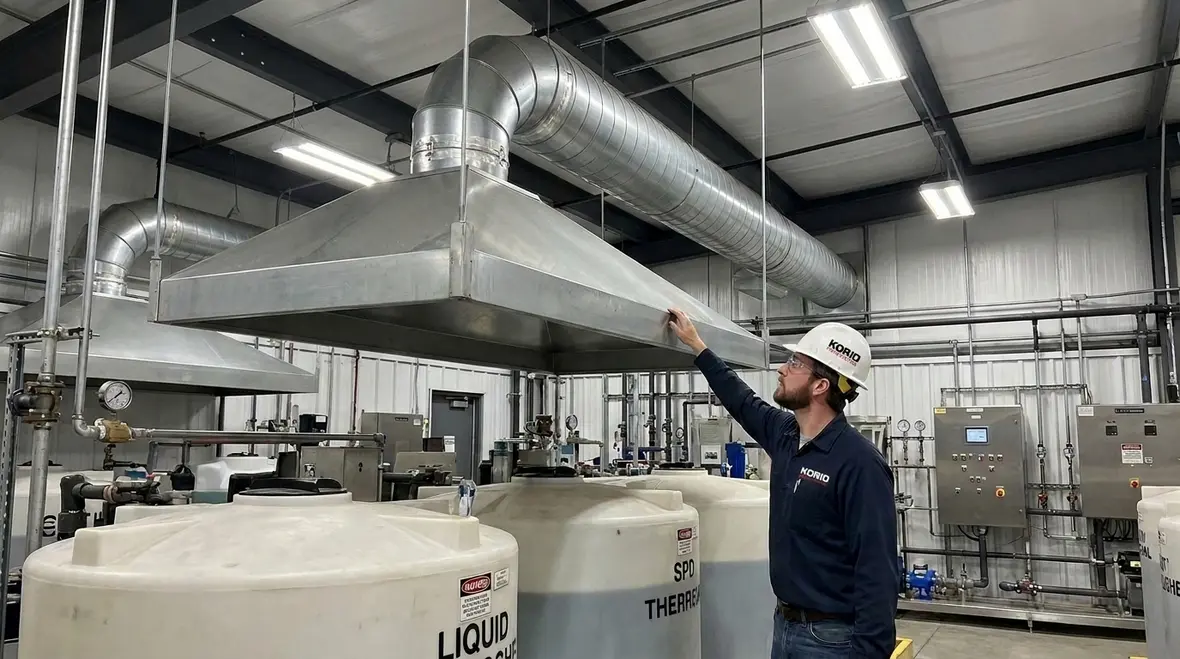
NFPA 30 Section 17.13 Ventilation in Liquid Processing Facilities: Compliance, Inspection, and Failure Prevention
Quick Answer
NFPA 30 Section 17.13 ventilation requirements help prevent flammable vapor accumulation in and around liquid processing operations. Facilities must provide adequate ventilation, confirm that it operates as intended, and maintain it to sustain safe vapor control during normal and abnormal conditions.
Facilities reviewing vapor control strategies often also benefit from Kord Fire Protection’s fire suppression system services, especially when ventilation performance, hazardous processes, and code-compliant protection need to work together in the same facility.
What does NFPA 30 Section 17.13 require in practice?
NFPA 30 Section 17.13 ventilation processing facilities focuses on controlling vapor concentrations so flammable atmospheres do not form in hazardous areas. In real operations, compliance is not only about installing vents or fans. It requires correct design, proper hazardous area classification interfaces, and verification that ventilation performance remains effective through routine maintenance and functional testing.
For broader context on how NFPA 30 regulates flammable liquids, review Kord Fire Protection’s technical overview: how NFPA 30 regulates flammable liquids.
Where ventilation systems fail most often
Most ventilation noncompliance events in liquid processing environments share predictable patterns. Understanding these failure points helps operators target inspections and maintenance in the highest risk locations.
1) Ventilation that is “installed” but not performing
Facilities commonly rely on nameplate performance or commissioning readings that are not repeated after modifications. Over time, duct leakage, fan wear, and damper mispositioning reduce airflow and fail to maintain the required vapor control.
2) Obstructions and maintenance drift
Dust, liquid residue, and storage practices can partially block inlets, outlets, and duct runs. Even a small restriction can cause uneven extraction and localized vapor pockets. Maintenance drift also occurs when contractors replace dampers or flexible connectors with non equivalent parts.
3) Incorrect operating sequences during process changes
Ventilation often ties into pumps, heaters, transfer lines, tank vents, and loading operations. If control logic does not match operating states, the system may run too late, too low, or not at all during the highest vapor generation period, such as filling or draining.
4) Fans and motors not suitable for the hazard environment
Ventilation fans must be compatible with the flammable vapor environment they serve. Incorrect motor rating, improper wiring practices, or damaged seals can undermine safe operation and create ignition pathways where ventilation effectiveness is already compromised.
Key compliance mechanisms: airflow, extraction points, and vapor control logic
NFPA 30 Section 17.13 ventilation processing facilities is fundamentally an engineering control requirement. The goal is vapor mitigation through ventilation effectiveness, not merely mechanical air movement. Operational success depends on three mechanisms working together.
Airflow adequacy and distribution
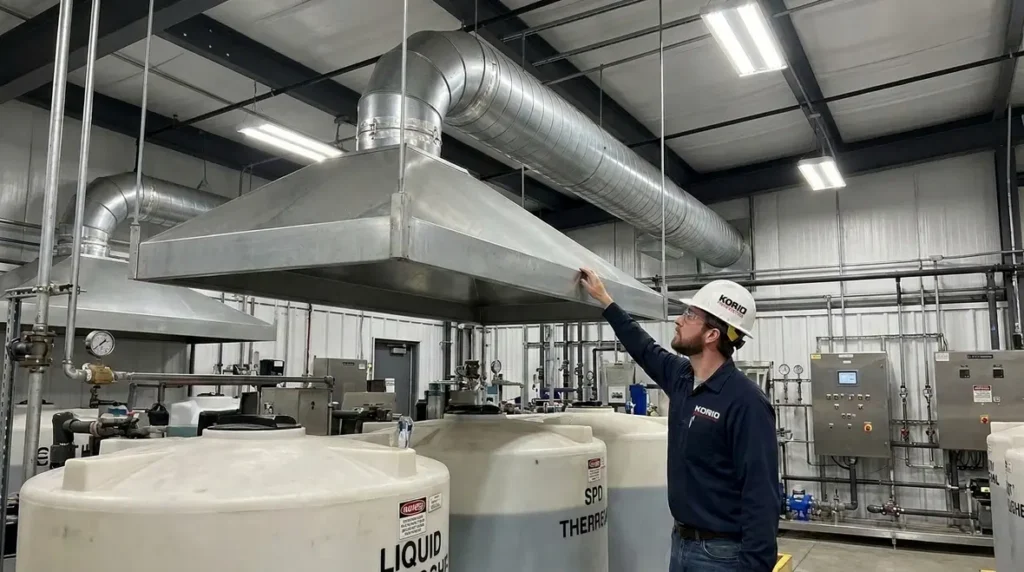
Ventilation must provide sufficient air movement to dilute and remove flammable vapors. Equally important, it must do so at the right locations. Extraction points must be positioned where vapors accumulate during normal operations, such as near tank openings, pump seals, splash zones, fill points, and areas with frequent minor releases.
Control of vapor sources during transfers
Many incidents occur during transfers because vapors release faster than the room response. Effective systems coordinate ventilation operation with transfer start and stop, purge durations, and transition periods. Facilities should ensure that ventilation continues long enough to clear residual vapors after operations end.
Ducting integrity and damper performance
Duct leakage can shift flow away from critical exhaust points. Dampers are often used to direct airflow or isolate zones. If dampers stick, fail to reset, or are not verified after shutdowns, the system may fail exactly when operations resume.
Inspection and testing: what to verify on site
Compliance depends on documented verification. A practical inspection program ties ventilation performance checks to operational risk, especially in commercial, industrial, and retail settings where work patterns change frequently and contractors may access equipment.
What to include in routine checks
- Operational verification: Confirm fans run when required by the process controls, and that alarms or interlocks respond correctly.
- Airflow and differential performance: Measure airflow or equivalent performance indicators where feasible, and trend results over time.
- Component condition: Inspect fan assemblies, duct joints, flexible connections, dampers, and grilles for wear, corrosion, cracking, and blockage.
- Electric and mechanical suitability: Check motor and electrical interfaces for damage and correct rated suitability for the vapor environment.
- Cleanliness and residue control: Remove deposits from ductwork, exhaust points, and surrounding areas that can reduce effective ventilation.
What often gets missed during compliance inspections
- Changes to production layout that alter airflow paths without updating ventilation assumptions.
- Non equivalent replacement parts for dampers, sensors, or duct sections.
- Damper calibration drift after outages or maintenance that resets control parameters.
- Shared ventilation serving multiple process areas without maintaining required zone performance.
Maintenance requirements that protect uptime and safety
Ventilation systems degrade quietly. A strong maintenance plan reduces both fire risk and operational downtime. Kord Fire Protection supports commercial compliance programs by helping facilities establish verification routines that align ventilation operation with changing process conditions.
Best practice maintenance planning
- Schedule performance checks: Repeat measurements on a defined frequency, and after any process or ductwork modification.
- Inspect high blockage locations: Focus on inlet and outlet points, duct elbows, transitions, and any area prone to residue accumulation.
- Use controlled replacement parts: Ensure dampers, actuators, and duct fittings match the original design intent and suitability for hazardous areas.
- Document and trend findings: Track airflow reductions, damper response delays, and fan performance changes to catch early deterioration.
Commercial facility considerations
In retail and commercial environments, ventilation equipment is often subject to frequent access, tenant fit outs, and contractor work. This increases the likelihood of unintended changes to duct routes, exhaust outlets, and control logic. A documented inspection and maintenance regime reduces variability and keeps the ventilation control strategy aligned with NFPA 30 expectations.
How Kord Fire Protection helps keep ventilation compliant
Kord Fire Protection provides ongoing service support for facilities managing flammable liquid hazards, helping ensure ventilation control systems remain effective through inspection, testing, and maintenance coordination. This includes practical compliance support for documentation, maintenance workflows, and verification activities that reduce the risk of vapor accumulation and operational surprises during audits.
For teams that need a clear path from design assumptions to verified field performance, Kord Fire Protection can support a structured compliance approach that protects people, operations, and assets.
Frequently Asked Questions
Next step
If your site processes flammable liquids and you want ventilation performance verified against NFPA 30 expectations, contact Kord Fire Protection for a practical compliance review. A structured inspection and maintenance plan helps eliminate hidden failures, supports documentation readiness, and keeps your ventilation control strategy effective as processes and contractors change.

Join Our Newsletter!
Get the latest fire safety tips delivered straight to your inbox From our Newsletter.