
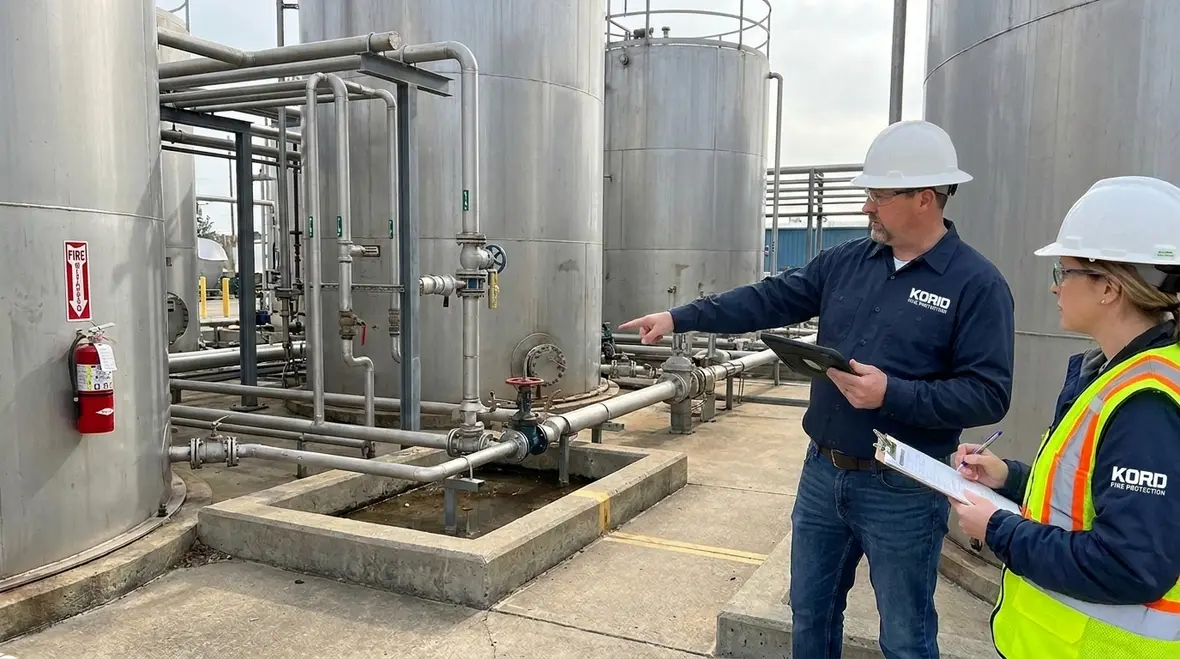
NFPA 30 Section 1.5 Equivalency: Alternative Means in Liquid Storage Design
Quick Answer: NFPA 30 Section 1.5 equivalency allows facilities to use alternative design, protection, or operating approaches when they can demonstrate equivalent or greater fire safety outcomes. This process hinges on documented hazard understanding, performance validation, and inspection ready maintenance controls.
For a broader foundation before diving into alternative means, it helps to review NFPA 30 flammable and combustible liquids guidance, especially when your storage design decisions have to hold up in the real world and not just look tidy on paper.
What does NFPA 30 Section 1.5 equivalency alternative compliance actually mean?
NFPA 30 Section 1.5 equivalency alternative compliance is the mechanism that permits an owner or designer to propose an approach that differs from prescriptive requirements, as long as the proposal achieves equal or better fire protection performance. In practice, authorities having jurisdiction (AHJs) evaluate whether the alternative method controls hazards to the same degree as the standard intent, including fire development, detection, exposure protection, and emergency operability.
Because liquid storage systems often involve changing occupancy requirements, contractor variability, and ongoing deterioration of protective features, equivalency decisions depend heavily on documentation and life cycle maintainability, not only the initial design.
When equivalency is the right tool for liquid storage systems
Facilities typically pursue alternative means when prescriptive solutions create operational risks, impossible site constraints, or unintended new failure modes. Common drivers include the following:
- Site layout constraints: Inadequate space for required setbacks, drainage routing, or separation distances, particularly in retrofit projects.
- Unique tank or containment configurations: Unusual tank sizes, nonstandard piping runs, manifold arrangements, or shared containment boundaries.
- Performance based fire protection needs: Scenarios where design intent focuses on limiting fire growth and spill consequences rather than matching a specific construction detail.
- Operational continuity requirements: Maintaining production during installation or modifications without interrupting critical systems.
Commercial and industrial property owners often underestimate how quickly equivalency plans become real compliance obligations after commissioning. That is why the operational and inspection requirements must be designed into the system, not treated as administrative follow up.
How NFPA 30 equivalency alternative compliance is evaluated
AHJs generally look for a structured equivalency rationale that connects the alternative method to risk control outcomes. A strong submittal typically covers hazard identification, performance objectives, and evidence that the alternative means will function as intended over time.
1) Define the hazard and the design intent
Liquid storage hazards typically include flammable and combustible liquid ignition sources, fire spread through radiant heat, spill and drainage behavior, and vulnerability of adjacent exposures. The evaluation should explain how the prescriptive requirement reduces those hazards and what hazard outcomes the alternative method must achieve.
2) Set performance criteria that match or exceed prescriptive outcomes
Instead of substituting one detail for another, designers should translate the intent into measurable outcomes. For example, the alternative approach should demonstrate the ability to:
- Limit fire growth and heat release rate impacts on exposures.
- Reduce the probability of uncontrolled spill ignition and spread.
- Maintain containment and drainage control to prevent offsite or uncontrolled surface involvement.
- Ensure reliable detection and suppression initiation when required.
3) Provide evidence the alternative method performs reliably
Equivalency submissions are stronger when they include verifiable performance evidence such as manufacturer data, test results, credible engineering analyses, and an explanation of how the proposed system responds under realistic failure conditions. AHJs also consider whether the alternative approach introduces new unknown failure points, particularly around valves, sensors, power supply continuity, drainage routing, and routine operational access.
What operational procedures and maintenance make equivalency succeed
Equivalency often fails during routine operations, not during design. The most common commercial facility challenges include inconsistent inspection schedules, unauthorized modifications, deferred maintenance, and inadequate operator familiarity with how the alternative system behaves under alarm or abnormal conditions.
Common failure points to address in your equivalency plan
- Containment integrity: Cracked liners, compromised coatings, or blocked sumps that defeat spill retention assumptions.
- Drainage and isolation controls: Automatic shutoffs or valves that are not tested under functional conditions, leading to unanticipated spill migration.
- Detection and alarm logic: Sensor placement changes, faulty bypass practices, or firmware changes that degrade detection coverage.
- Suppression and protection reliability: Delayed water or foam delivery due to dry system impairment, obstructed piping, or inadequate hydrostatic testing.
- Human factors: Staff that do not understand what to do during early fire growth, spill response, or system reset after activation.
Maintenance requirements that should be built into the system, not bolted on later
A practical equivalency alternative compliance strategy includes clear roles and documented procedures for commissioning, inspections, testing, and impairment management. It also includes a plan for change control so that modifications do not silently invalidate equivalency assumptions.
Kord Fire Protection supports commercial, industrial, and retail facilities by aligning ongoing testing and inspection processes with the original equivalency intent. This approach reduces the risk of AHJ findings based on maintenance gaps, operational misunderstandings, or undocumented system changes.
When those maintenance controls involve suppression systems, many teams also tie their planning to fire suppression system service and support so the approved protection strategy stays inspectable, testable, and ready when someone inevitably says, “It looked fine last quarter.”
Design and documentation checklist for AHJ-ready submittals
Use this structured checklist to reduce review friction and prevent last minute engineering rework. Each item supports equivalency alternative compliance with clear traceability from hazard intent to real-world operation.
| Documentation Area | What to Include | Why It Matters |
|---|---|---|
| Equivalency basis | Statement of prescriptive requirement intent and the alternative design objective | Connects the submission to NFPA 30 Section 1.5 equivalency evaluation logic |
| Hazard analysis | Ignition sources, spill behavior, drainage considerations, exposure mapping | Shows the hazards the alternative must control |
| Performance evidence | Calculations, test data, manufacturer documentation, or engineering analysis | Demonstrates equal or greater fire safety outcomes |
| System description | Valve and control diagrams, detection and alarm interfaces, suppression or isolation sequences | Enables inspectors to verify the design matches what was approved |
| Commissioning plan | Acceptance testing procedure, functional tests, calibration and verification | Establishes baseline performance and reduces commissioning disputes |
| Inspection and testing schedule | Frequencies, test methods, impairment rules, and record keeping requirements | Prevents equivalency degradation over time |
| Training and operating procedures | Operator response steps, system reset guidance, spill and alarm workflows | Reduces human factors driven failures during incidents |
| Change control | How future modifications will be reviewed for equivalency validity | Maintains regulatory confidence through lifecycle changes |
For additional background on how NFPA 30 governs flammable liquid management and the practical impact on facility controls, review this resource: how NFPA 30 regulates flammable liquids.
Implementation strategy for commercial and industrial facilities
Most teams improve outcomes when they treat equivalency as a full life cycle program. That means engineering involvement does not stop at permit approval, and maintenance teams participate early enough to understand the system sequences and inspection targets.
Kord Fire Protection coordinates technical documentation, testing, and ongoing compliance management in a way that aligns inspections with the approved equivalency basis. This supports consistent readiness across tenant changes, contractor transitions, and seasonal operational variations common to retail and industrial environments.
Frequently Asked Questions
Next step: validate your equivalency plan before it reaches the inspection phase
Engage Kord Fire Protection to review your NFPA 30 Section 1.5 equivalency alternative compliance package for operational feasibility, inspection readiness, and maintenance alignment. This reduces rework during AHJ review and prevents performance drift after commissioning. Contact your team at Kord Fire Protection to schedule a compliance focused technical gap review and develop a practical testing and maintenance plan that matches the approved intent.

Join Our Newsletter!
Get the latest fire safety tips delivered straight to your inbox From our Newsletter.



