
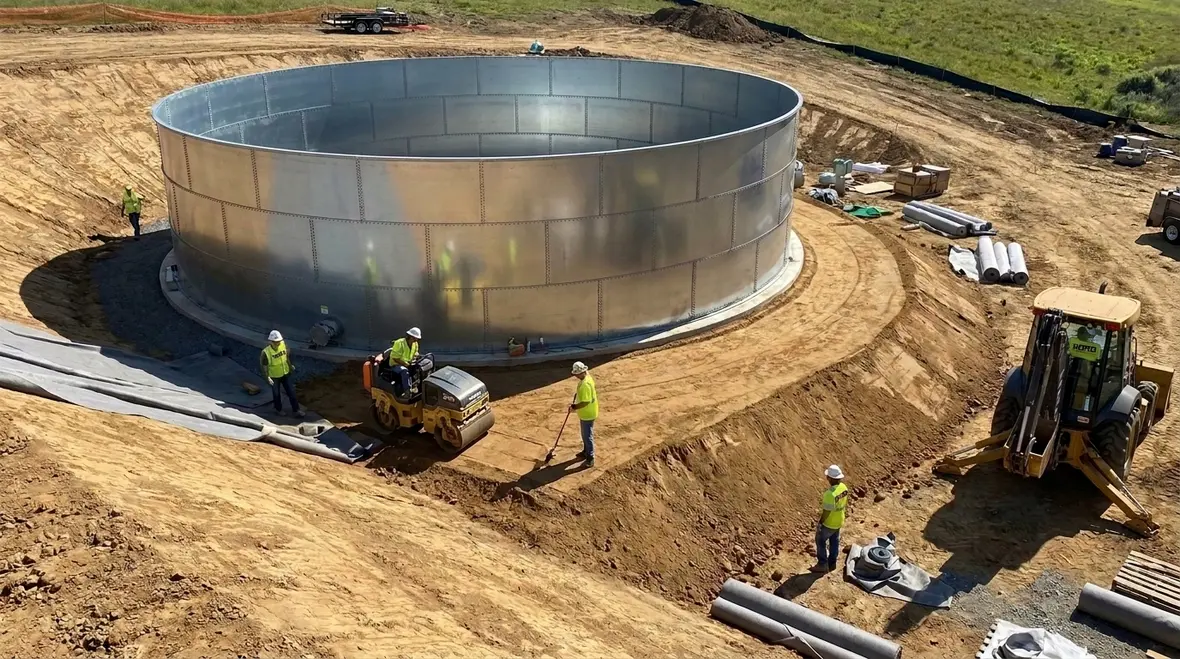
NFPA 22 Section 9.4: Embankment Preparation and Tank Installation Procedure
Quick Answer
NFPA 22 Section 9.4 governs how facilities prepare embankments, place water storage tanks, and protect the system from settlement, contamination, and operational failure. A compliant embankment preparation tank installation procedure NFPA 22 requires documented site grading, proper liners and compaction, correct tank placement, and verification before water service.
If you are reviewing connected system readiness, Kord Fire Protection’s fire protection services fit naturally alongside water supply planning, inspections, maintenance, and deficiency correction.
Why Section 9.4 Matters for Commercial Water Storage Systems
Commercial, industrial, and retail properties often rely on fire protection water storage tanks to sustain fire pump performance, sprinkler demand, standpipe systems, and foam or preaction operations. NFPA 22 Section 9.4 focuses on the physical foundation for that water supply. When embankments are improperly prepared or tanks are installed without the required controls, the result typically appears later as leaks, structural distortion, loss of hydraulic reliability, or costly rework.
From a compliance perspective, the “paperwork is not enough” reality still applies. Inspectors and AHJs expect the facility to demonstrate that the embankment and installation match the engineered intent, including compaction practices, drainage control, anchorage methods, and verification checks prior to commissioning. Service contractors also need access to test records and as built documentation to support ongoing inspection, maintenance, and impairment management.
What the embankment preparation tank installation procedure NFPA 22 Requires (In Practical Terms)
The embankment preparation tank installation procedure NFPA 22 described in Section 9.4 functions as a risk control system. It reduces the likelihood of settlement, differential movement, tank cracking, and waterline contamination by requiring site preparation steps that align with the tank type, foundation requirements, and local environmental conditions.
1) Site evaluation and readiness checks
Confirm soil conditions, bearing capacity, and drainage patterns. Unstable soils and poor drainage often create long term settlement that compromises tank integrity.
Coordinate with civil and geotechnical input when subsurface conditions indicate the need for corrective action. “Looks level” is not an engineering verification.
Control vegetation, organic material, and loose fill. Organic material decomposes and produces voids, which can lead to uneven support.
2) Embankment formation and compaction control
Build embankments in lift thicknesses aligned with compaction requirements. Thick lifts without adequate compaction elevate settlement risk.
Use compaction methods and moisture conditions specified by the project plan. Compaction performed too wet or too dry usually fails to achieve target density.
Protect prepared subgrades from rain and freeze thaw exposure where applicable. Embankments can lose strength after weather events.
3) Tank installation and placement verification
Set the tank on the prepared foundation with correct leveling and support contact. Off level installation can create stress points.
Use approved anchorage and bonding practices appropriate to the tank design. Anchorage reduces movement during seismic or load conditions and helps prevent differential displacement.
Verify clearances, access openings, and interface locations (piping entries, overflows, drains, and venting provisions) before final closure work.
Common Compliance and Construction Failure Points in Field Installations
Section 9.4 procedures typically fail at predictable steps when construction teams treat embankment prep as a generic grading task instead of a controlled foundation system. The following issues frequently surface during commissioning, hydrostatic testing readiness, or early maintenance inspections.
Settlement and uneven support
Even small settlement differences can distort tank geometry and contribute to seam stress, gasket failure, and corrosion paths. This risk increases when compaction targets are not achieved, when unsuitable fill is used, or when embankments are built too fast without proper curing or moisture stabilization.
Improper drainage and water management
Water accumulation around an embankment can increase pore water pressure and reduce soil strength. Poor drainage also increases freeze thaw impacts and can degrade liner performance, if liners or protective barriers form part of the system design.
Contamination risk at the water side
Failing to control contaminants during installation can introduce debris, fines, or construction residue that can foul strainers, impact water quality, or complicate system flushing and commissioning. Contamination also increases corrosion-related service life impacts.
Incorrect interface finishing and pipe penetration sealing
Tank penetrations and interface seal details often represent the highest consequence leak paths. Incomplete sealing, unapproved sealants, or misaligned penetrations can allow migration of water into undesired zones, leading to erosion, undermining, or persistent seepage.
Inspection, Testing Readiness, and Documentation Controls
To maintain NFPA 22 compliance over the life of the system, facilities need inspection and maintenance records that link construction actions to operational performance. During and after installation, teams should focus on evidence that the embankment and tank were installed as designed.
What to document during embankment preparation tank installation procedure NFPA 22
Geotechnical or civil design basis, including bearing capacity or foundation notes where applicable.
Compaction testing results by lift, including moisture conditions and density targets.
Elevation and leveling verification records for tank placement.
Anchorage and grounding or bonding installation records, including workmanship verification and installation checklists.
Tank interface sealing method statements for penetrations and appurtenances.
Commissioning and flushing records tied to water system readiness.
How readiness affects future maintenance
When documentation is complete, maintenance teams can correlate anomalies such as minor seepage, foundation shifts, or corrosion growth to the original installation controls. That accelerates root cause analysis and reduces downtime. It also supports effective impairment handling, which is critical when tanks support fire pumps or life safety operations.
For a broader view of how NFPA 22 regulates fire protection water tanks beyond installation, review: how NFPA 22 regulates fire protection water tanks.
Operational Maintenance After Installation: Keep the Foundation Working
NFPA 22 Section 9.4 focuses on installation and embankment preparation, but long term compliance depends on maintaining system integrity. Facility managers should treat embankment and tank area condition as an operational asset, not just a one time construction milestone.
Ongoing condition checks that prevent failures
Inspect embankment surfaces for erosion, cracking, and signs of undermining after storms or seasonal changes.
Check drainage pathways and flow patterns for blockages or changes. Vegetation control matters even in maintained commercial landscapes.
Monitor access hatches, vents, and overflows for proper function and structural condition.
Verify that piping supports and penetration seal areas remain intact and do not show signs of movement.
Kord Fire Protection support for commercial compliance
Kord Fire Protection helps commercial facilities manage the full lifecycle of NFPA 22 water tank systems, including verification support around installation readiness, inspection support, and maintenance planning. This approach reduces the most common compliance gaps: missing documentation, unclear commissioning history, and maintenance schedules that do not account for foundation or interface risks. The result is a more defensible compliance posture during internal audits and AHJ reviews.
FAQ: embankment preparation tank installation procedure NFPA 22
Next Step: Get a documented compliance plan before problems appear
If your facility is installing, modifying, or maintaining an NFPA 22 water tank system, align your embankment preparation and tank installation documentation with Section 9.4 expectations. Contact Kord Fire Protection to support review of installation records, maintenance planning, and ongoing inspection readiness so your water supply remains dependable when fire protection demand starts.

Join Our Newsletter!
Get the latest fire safety tips delivered straight to your inbox From our Newsletter.



