
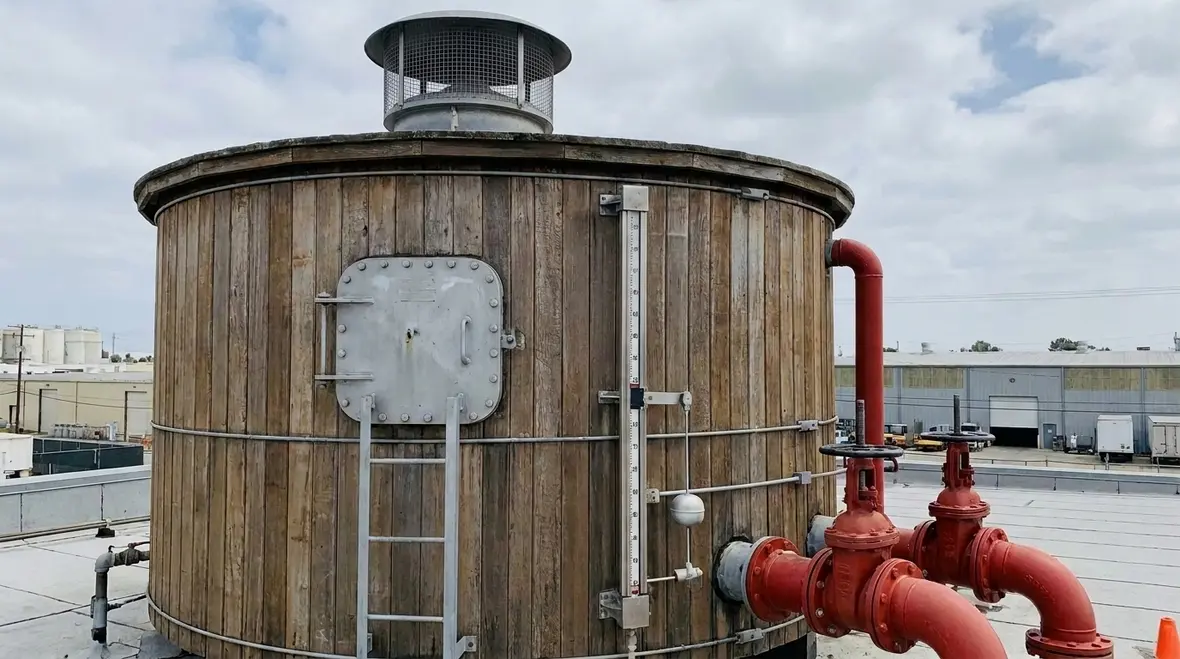
NFPA 22 Section 8.6: Accessories for Wood Water Tanks
Quick Answer
NFPA 22 Section 8.6 establishes requirements for accessories used on wood water tanks to support reliable fire protection performance. Facilities must specify, install, inspect, and maintain accessories that control water level, access, drainage, and system operability to meet inspection and readiness expectations.
If your facility is coordinating tank reliability with broader system performance, Kord Fire Protection also supports fire protection water storage tank inspection programs that fit naturally into compliance planning.
Why Section 8.6 Matters for Wood Water Tank Reliability
NFPA 22 Section 8.6 focuses on accessories that enable a wood water tank to function as intended during fire protection operations. In commercial facilities, the tank is not just a storage vessel. It becomes an integrated component of a fire protection strategy that must deliver dependable water supply under abnormal conditions, with predictable performance during inspections and routine maintenance.
From a compliance standpoint, the wood water tank accessories requirements are often where facilities experience avoidable nonconformities. Common gaps include missing or improperly maintained appurtenances, degraded components that affect water control, and accessories installed without regard to inspection accessibility or manufacturer limitations.
What NFPA 22 Section 8.6 Covers: Accessories as Operational Components
Section 8.6 addresses accessories that support safe operation, correct water availability, and dependable system interfaces. While exact accessory lists can vary based on the tank design, water supply arrangement, and the overall fire protection system layout, the engineering intent remains consistent: the accessories must preserve water integrity, maintain correct operating conditions, and enable inspection, testing, and emergency readiness.
Core accessory performance goals
- Maintain proper water level and readiness for the fire protection demand scenario.
- Enable safe access for inspection and servicing without creating unsafe confined or fall hazard conditions.
- Support drainage and water handling where required, including prevention of contamination or stagnation issues.
- Ensure controlled connections to fire protection equipment so that flow pathways remain functional.
- Preserve the tank envelope so wood components remain protected from moisture imbalance, debris intrusion, and deterioration triggers.
For facilities managing municipal systems, fire pumps, combined water supplies, or gravity-driven tanks, these accessory functions become measurable through inspection results and operating observations.
Common Accessories and the Compliance Issues They Create
Wood tanks carry unique environmental and aging vulnerabilities. Accessories can accelerate or reduce those vulnerabilities depending on installation quality, material compatibility, sealing practices, and maintenance discipline. The following categories commonly drive audit findings and service call patterns.
1) Level control and water supply interfaces
Accessories that manage or indicate water levels must function correctly so the tank remains within required operating parameters. Failure modes include stuck fill devices, obstructed vents affecting water movement, incorrect float adjustments, or instrumentation that cannot be calibrated or verified during routine checks.
Commercial facilities often struggle when level controls are treated as “set and forget” components. NFPA 22 compliance expects the facility to confirm operability during inspections and to correct deficiencies promptly.
2) Access, openings, and inspection pathways
Access accessories should allow qualified personnel to inspect interior and critical areas without bypassing safety procedures. Deficiencies typically include missing covers, degraded gaskets, loose fasteners, inadequate labeling, or access arrangements that prevent thorough inspection of wood surfaces, internal piping interfaces, or entry points.
From a practical perspective, lack of safe access leads to incomplete inspections, which later show up as recurring failure trends during testing.
3) Drainage, venting, and water quality protection
Accessories that support drainage and venting must remain open and functional. Partial blockage can impair performance during fire events or routine testing. Vent-related issues may also create pressure or airflow problems that disrupt expected water movement.
Water quality and stagnation also become operational compliance concerns. If the tank uses features intended to prevent sediment accumulation or prevent contamination, those features require inspection and maintenance, not just initial installation.
4) Connections to fire protection systems
Where the tank connects to fire protection hardware, accessories such as interface valves, strainers, and connection provisions must remain serviceable and correctly positioned. Common nonconformities include corrosion, missing protective caps, improperly seated fittings, and valves that do not move freely during documented testing.
These issues often create time delays during testing because components must be disassembled, replaced, or repaired to achieve acceptable performance.
Facilities can reduce these risks by aligning design, installation, and ongoing service planning. Kord Fire Protection supports this approach through compliance-oriented inspections, functional testing support, and corrective maintenance programs. Learn more about how NFPA 22 regulates fire protection water tanks.
Installation and Maintenance: Where Most Violations Start
NFPA 22 compliance is not only about possessing the right accessories. It also depends on correct installation practices and the maintenance routines that keep those accessories functioning.
Installation requirements that affect ongoing compliance
- Compatibility and sealing to prevent water intrusion into wood areas that should remain protected.
- Mechanical integrity for bolts, fasteners, clamps, and attachment points to prevent loosening due to vibration or thermal cycling.
- Correct orientation and clearance so accessories operate without obstruction and remain accessible.
- Proper labeling and identification to enable efficient inspection and reduce the chance of incorrect operation during testing.
Maintenance routines that keep accessories “inspection ready”
Operational maintenance typically includes verification of correct operation, condition assessment, and documentation. The most defensible compliance programs schedule maintenance based on risk and equipment behavior rather than calendar dates alone. Kord Fire Protection commonly assists facilities by building service intervals around inspection outcomes and known failure points, including corrosion, wood-related deterioration indicators, and valve or float device performance trends.
Facilities that delay corrective action often see compounding effects. For example, a partially obstructed vent or a sluggish level control can lead to increased sediment exposure, more frequent cleaning needs, and higher likelihood of water delivery delays.
Inspection and Testing: What Inspectors Expect to See
During inspections, authorities having jurisdiction and internal life safety teams typically focus on whether accessories support tank operability and can be verified through observation, functional checks, and accessible design.
Evidence that usually satisfies compliance scrutiny
- Documented inspection results that reference accessory condition and operability findings.
- Observed accessory placement and integrity, including covers, access points, and connection hardware.
- Functional readiness verification consistent with the facility’s system design and testing procedures.
- Corrective maintenance records showing deficiencies were addressed and verified.
Operational checks that reveal hidden accessory failures
Functional checks often expose issues that are not obvious during a simple visual review. Examples include water level response delays, valve position changes that do not match expected behavior, and drainage components that do not clear as intended. Because wood tanks can be affected by age and environment, inspection teams typically treat accessory performance as a leading indicator of tank reliability.
How Commercial Facilities Can Manage Wood Tank Accessory Risk
Commercial, industrial, and retail facilities must manage wood tank accessibility, lifecycle aging, and operational readiness under budget and staffing constraints. The most effective programs combine engineering oversight, disciplined maintenance, and inspection traceability.
Practical compliance strategy
- Confirm the accessory basis of design against the actual installed configuration to prevent “nonmatching components” from becoming a recurring gap.
- Implement an inspection route that ensures every accessory that affects water availability or access gets verified on a consistent schedule.
- Track failure trends by accessory type so service planning targets recurring wear mechanisms.
- Prioritize fast corrective actions to prevent secondary impacts on wood condition and system readiness.
Kord Fire Protection helps facilities keep wood water tank accessories compliant through routine inspections, corrective maintenance coordination, and service documentation that aligns with commercial life safety expectations. This reduces inspection-day surprises and helps facilities demonstrate that readiness is maintained continuously, not intermittently.
Frequently Asked Questions
Conclusion and Call to Action
NFPA 22 Section 8.6 drives performance expectations for wood water tank accessories that affect water readiness, inspection access, and system operability. Facilities that treat accessories as “static hardware” often face recurring nonconformities and delayed testing. Kord Fire Protection can help you verify accessory conditions, document compliance, and execute corrective maintenance before deficiencies impact readiness. Schedule a compliance-focused inspection today to align installed accessories with required performance and maintenance practices.

Join Our Newsletter!
Get the latest fire safety tips delivered straight to your inbox From our Newsletter.



