
NFPA 22 Section 4.2: Acceptable Water Sources for Filling Fire Protection Tanks
Quick Answer: NFPA 22 Section 4.2 limits the sources used to fill fire protection tanks to options that remain reliable, controllable, and suitable for fire service. Facilities typically use city water, approved transfer sources, and specifically permitted tank filling arrangements with documented procedures and controls.
NFPA 22 sets the practical rules for how commercial sites maintain dependable fire suppression water supplies. For operators, the phrase acceptable water sources for fire protection tanks means more than “water that flows.” It means a filling method that supports required volume, pressure, continuity, and oversight under both normal and emergency conditions.
For facilities managing broader water-based system reliability, it is also useful to review fire protection services in Southern California so tank filling, testing, troubleshooting, and repairs do not get handled in separate silos.
What NFPA 22 Section 4.2 Is Trying to Prevent
NFPA 22 Section 4.2 focuses on risk reduction. Fire protection tank filling is not a routine plumbing operation. The standard aims to prevent common failure points that lead to insufficient water, delayed tank fill, or inability to verify water levels. The core compliance challenge is operational reliability: the site must be able to fill and maintain the system so the fire protection water supply performs as designed when called upon.
In many commercial and industrial facilities, filling arrangements break down because of:
- Uncontrolled cross connections or backflow pathways that compromise system integrity
- Water sources that can run out, lose pressure, or become intermittent
- Manual filling that is not supported by procedures, training, and documented controls
- Transfer equipment that fails due to incorrect sizing, valve misalignment, or poor maintenance
- Inadequate inspection and verification of tank level and fill system status
Kord Fire Protection supports commercial facilities with compliance planning, maintenance documentation, and field verification so the tank filling scheme matches the real operating conditions on site.
How the “Water Source” Requirement Shows Up in Real Equipment
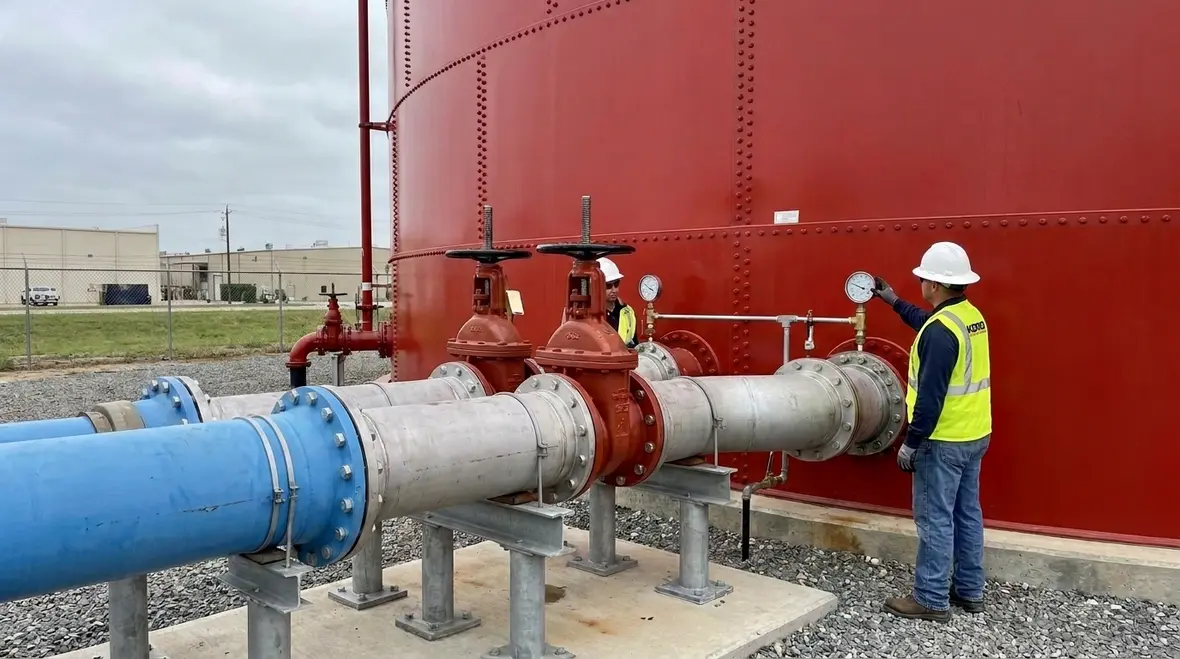
Section 4.2 becomes practical at the interface between the tank and its filling pathway. Inspectors and engineers typically evaluate whether the installed water source and fill method support the tank’s intended performance. That includes:
- Flow reliability: the source must deliver the required fill rate and total volume without unacceptable delay.
- Hydraulic compatibility: the piping, valves, and regulators must provide the intended fill operation.
- Backflow protection: the setup must prevent contamination and remain compliant with applicable plumbing and fire protection requirements.
- Control and supervision: valves and transfer controls must be configured to prevent accidental closure or incorrect lineup.
- Verification: tank level indicators, fill controls, and monitoring must allow staff to confirm readiness.
Facilities that operate multiple shifts often discover that their fill procedure depends on an individual, not a system. NFPA 22 compliance expects the filling process to be repeatable and inspectable, not dependent on memory or ad hoc actions.
Common Acceptable Water Sources for Fire Protection Tanks
While the exact allowances depend on tank type and the full system design, the following categories represent the practical sources most facilities evaluate for compliance. The key theme is that each option must remain reliable, controllable, and appropriate for fire service duty.
1) Potable or Municipal Water Supply (When Approved and Supervised)
Municipal supply often serves as a primary or secondary source when the design and installation include proper isolation, supervision, and backflow protection. For many commercial properties, this option aligns well with existing water infrastructure, but compliance still requires that the fill arrangement prevents incorrect operation and supports verified tank level maintenance.
2) Approved Onsite Water Sources Used for Fire Service Duty
Some facilities rely on onsite supplies designed or approved for fire protection water service. These may include arrangements tied to a facility water system that stays dependable under normal operations and emergency scenarios. The compliance focus remains the same: the water must be available when needed and must not introduce operational uncertainty.
3) Transfer From Another Approved Fire Protection Water System
Where a site has multiple water tanks or fire water arrangements, the filling method may involve transferring water from another approved source. The transfer pathway requires correct valves, supervision, and pump performance verification if pumping is involved.
4) Fire Department Connection Related Filling (Where Permitted by Design)
Some systems incorporate a connection method that supports emergency filling scenarios. Even when a connection exists, the tank filling arrangement must still satisfy Section 4.2 expectations for reliability and control. Inspectors commonly look for evidence of proper configuration, signage, and readiness to execute the intended procedure.
For further context on how NFPA 22 regulates water tank arrangements and how those rules affect facility compliance, review: how NFPA 22 regulates fire protection water tanks.
Compliance Challenges Commercial Facilities Commonly Face
Even when a facility believes its water source qualifies, compliance frequently fails due to installation details and maintenance gaps. The following issues show up during field reviews and service calls.
Valve Lineups, Supervision, and Control Misconfiguration
Incorrectly positioned valves are one of the most common operational failures. Supervisory switches, tamper settings, and control sequences must be correct for the fill method. A “works during a test” result does not guarantee readiness under a real alarm scenario.
Backflow Protection That Is Missing or Out of Compliance
Backflow devices and their testing requirements must align with the water source and piping configuration. If backflow protection is not maintained, it can become inoperable, bypassed, or noncompliant, compromising the entire filling pathway.
Intermittent or Diminished Supply During Peak Conditions
Municipal pressure can vary, and onsite water systems can fluctuate. A tank can fill correctly during off hours but fail to reach required levels during peak demand. NFPA 22 compliance emphasizes the availability of the water source for the fire protection function.
Inadequate Inspection, Testing, and Documentation
Many sites rely on visual tank level checks only. Inspectors typically expect documented verification that the fill system components remain in operating condition. This includes pump tests when applicable, valve checks, functional testing of controls, and review of any automatic refill logic.
Operational Procedures and Maintenance That Sustain Compliance
For commercial, industrial, and retail properties, compliance is sustained through controlled procedures and repeatable maintenance. The objective is to ensure the tank filling system remains dependable between service intervals.
Procedure Requirements That Keep Fill Systems Ready
- Documented fill method: written steps for normal filling, any transfer operations, and response actions.
- Defined responsibilities: clear ownership among maintenance, facilities, and fire safety personnel.
- Control verification: confirmation that valves and controls return to the required configuration after filling.
- Water level verification: tank level indicators and alarms checked as part of routine rounds or scheduled service.
Maintenance Focus Areas for Filling Pathways
- Piping and fittings: inspection for leaks, blockage, corrosion, and improper fittings
- Valves and actuators: confirmation of correct operation and readiness to move to required positions
- Pumps and motors (if used): verification of start reliability, performance, and control sequence
- Backflow devices: functional status and testing records aligned with applicable requirements
- Alarms and supervisory signals: verification that indicators and alarms reflect actual system conditions
Kord Fire Protection provides ongoing compliance support that connects NFPA 22 expectations to the facility’s installed systems, operating environment, and maintenance reality. This reduces inspection findings and improves operational readiness by ensuring the filling pathway functions as designed.
Frequently Asked Questions
Next Steps
Ensure your facility’s filling pathway truly matches NFPA 22 Section 4.2 by validating the water source, control lineup, backflow protection, and verification methods. Kord Fire Protection can support compliance planning, inspection readiness, testing, and ongoing maintenance for commercial fire protection tanks. Contact Kord Fire Protection to review your system configuration and develop a corrective plan that closes gaps before they become inspection issues.

Join Our Newsletter!
Get the latest fire safety tips delivered straight to your inbox From our Newsletter.



