NFPA 1900 Section 10.9 Work Lighting Requirements
Quick Answer: NFPA 1900 Section 10.9 sets clear expectations for work lighting on fire apparatus so crews can see the scene, move safely, and do the job without wasting time. In plain terms, the right lights help reduce risk, improve speed, and keep operations smooth. For teams reviewing broader compliance and readiness needs, Kord Fire Protection’s full fire protection services offer a natural next step in building a dependable support plan.
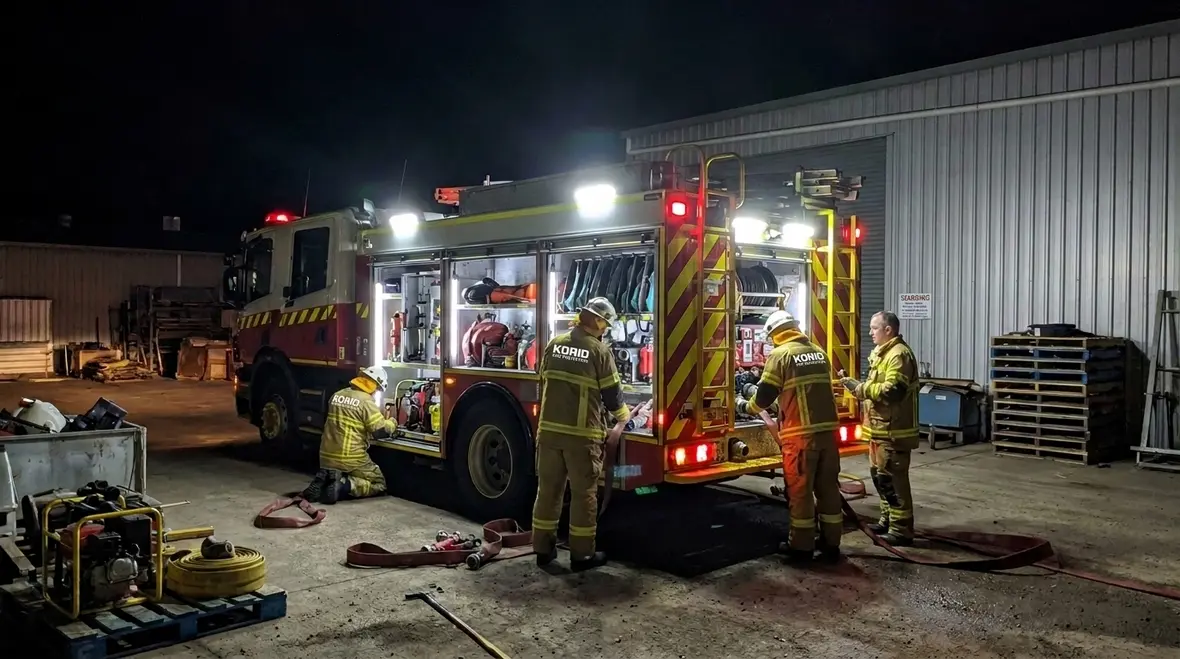
Fire truck work lights NFPA standards matter because scenes do not wait for daylight, and neither do emergencies. NFPA 1900 Section 10.9 focuses on practical lighting needs that help crews work safely around apparatus, equipment, and hazards. In busy industrial, retail, commercial, and facility settings, that standard becomes more than a line in a rulebook. It becomes part of safe response, clear visibility, and better control when every second counts. And yes, bright lighting can also save someone from stepping into a puddle, cable, or surprise piece of gear that seems to appear from nowhere, like a side character in a bad action movie.
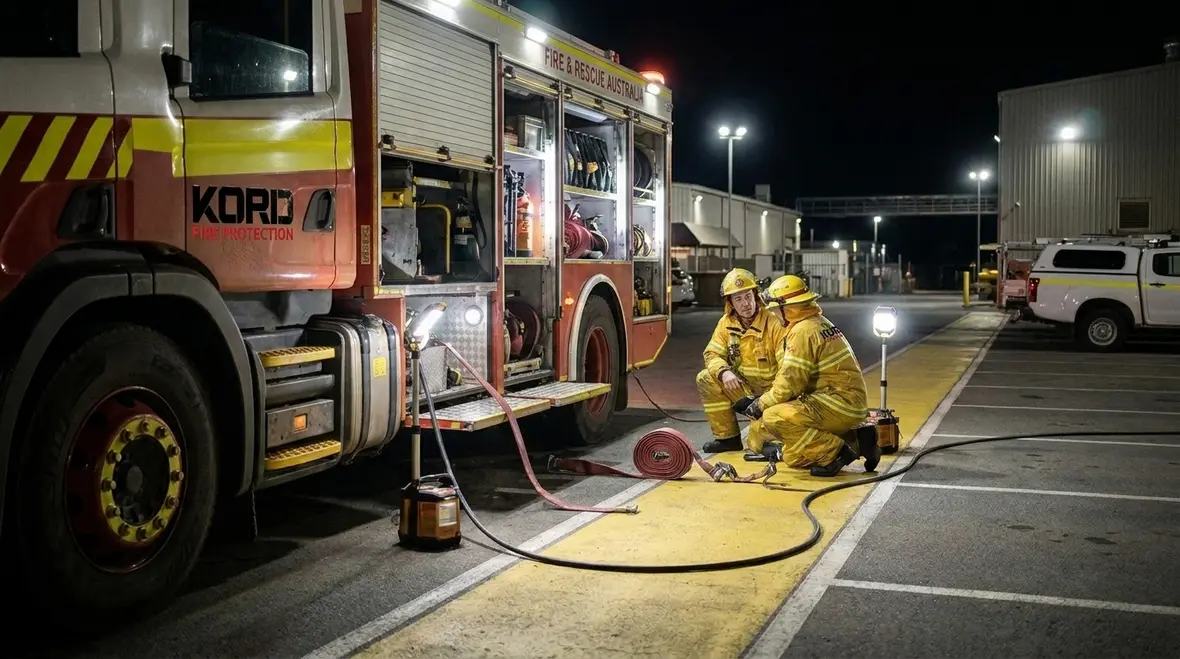
What NFPA 1900 Section 10.9 Means in Daily Operations
Section 10.9 calls for work lighting that supports safe tasks around fire apparatus. The goal is simple. Crews must see what they are doing without adding glare, dark spots, or confusion. Good work lighting helps during setup, hose handling, tool use, inspections, and recovery after the call.
For industrial and commercial sites, this matters because many responses happen in yards, plants, loading areas, warehouses, and large car parks. These places often have poor ambient light, harsh shadows, and moving equipment. So, when fire apparatus arrives, work lights must do real work, not just look impressive parked at the station like a polished superhero vehicle waiting for its close up.
Lighting that supports real field tasks
In daily operations, the value of work lighting shows up in the small moments as much as the big ones. A compartment latch is easier to find. A tool check happens faster. A hose path is easier to follow without second guessing every step. That practical visibility is what turns a lighting requirement into an operational advantage.
This is also why lighting should be thought about as part of the working environment around the apparatus, not just as an accessory mounted onto it. If the light helps crews approach, set up, perform, and recover with less friction, then it is doing the job it was meant to do.
How fire truck work lights NFPA standards improve safety
Fire truck work lights NFPA standards support safer movement around the apparatus and the scene. They help reduce slips, trips, and mistakes. They also make it easier to find valves, tools, and access points without fumbling in the dark.
More importantly, lighting affects communication. When crews can see each other clearly, they move with more confidence. That improves coordination during hose deployment, rescue support, and equipment checks. As a result, the team spends less time guessing and more time acting. In safety work, guessing is not a strategy. It is a bad habit with a uniform.
Safety also improves when lighting reduces hesitation. Crews that can quickly identify steps, grab handles, stabilisation points, and nearby obstacles are less likely to lose momentum. That matters during high pressure situations where delays are measured in seconds, not polite calendar invitations.
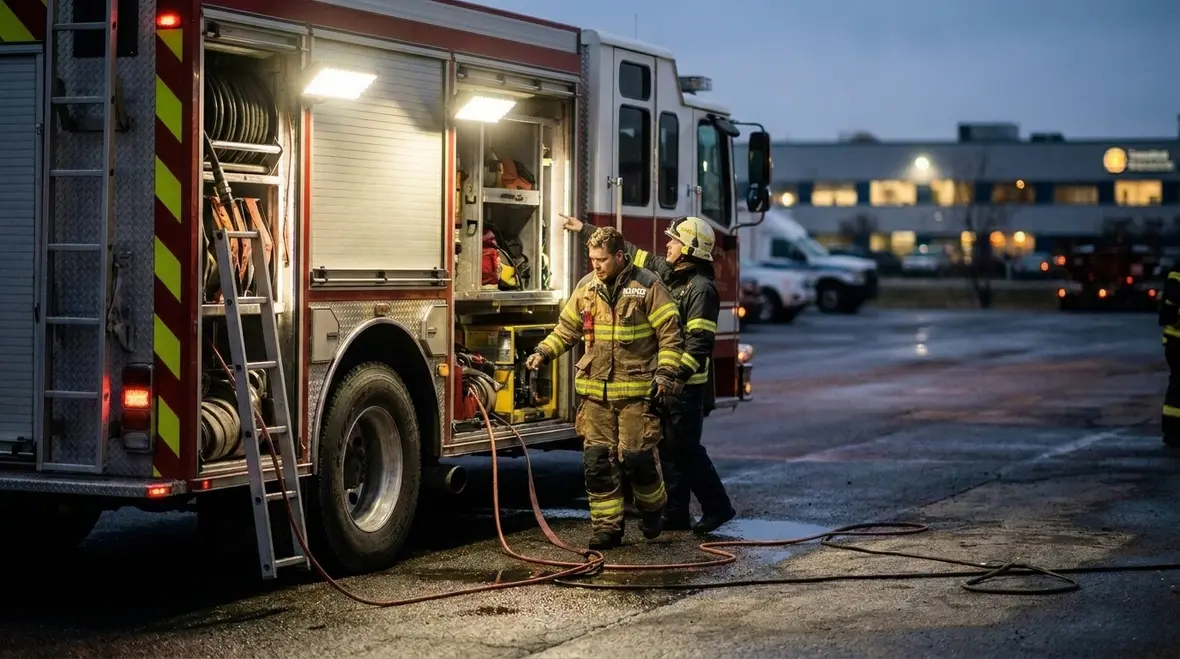
Why visibility changes team behaviour
Good visibility does more than help people see. It changes how they move. Clearer sight lines tend to produce smoother movement, better spacing, and fewer abrupt corrections. That means fewer near misses around doors, compartments, and gear laid out near the truck. When crews are not compensating for bad lighting, they can focus on the incident instead of improvising around it.
What good work lighting should cover on apparatus
NFPA 1900 Section 10.9 looks at practical coverage, not flashy extras. The lighting should help crews work around the truck and its immediate area. It should also support visibility for common tasks that happen in the field.
Column 1
- Scene setup and pack down
- Tool access and equipment checks
- Safe movement around steps, doors, and compartments
- Hose and cable handling
Column 2
- Inspection and maintenance work
- Night operations in yards or streets
- Support during incident command activities
- Reduced glare and better light placement
Each of these tasks needs useful light in the right place. Therefore, the arrangement matters as much as the brightness. A light that shines into a crew member’s eyes may look powerful, but it helps about as much as a torch pointed at the moon.
Coverage should also feel intentional. Lighting near compartments should support access without washing out labels or handles. Lighting near steps and walking paths should guide safe movement. Lighting around hose beds and connection points should make manual tasks easier instead of more awkward. In other words, the best setup is rarely the loudest one.
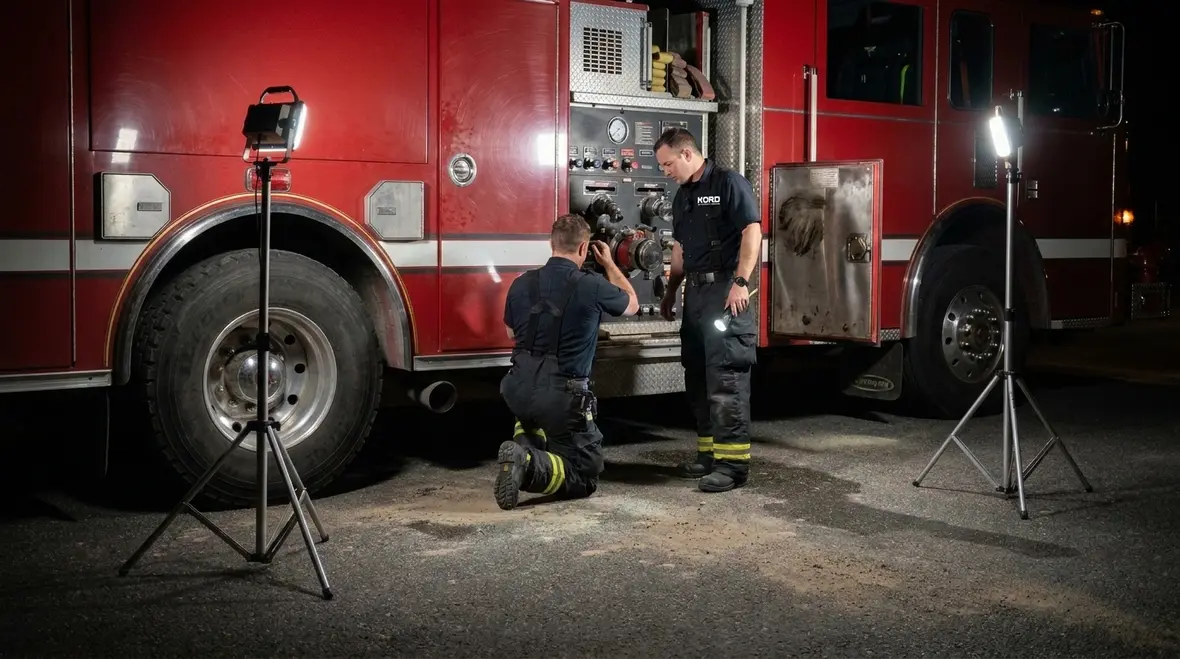
Why this matters for industrial and commercial sites
Industrial and commercial businesses operate in a wide range of environments, from ports and plants to shopping centres, logistics hubs, and high value facilities. These sites often have strict safety systems and large response areas. Therefore, fire apparatus must be ready to work in conditions that can change fast.
Good work lighting supports compliance, but it also supports business continuity. Faster scene control can reduce damage, limit downtime, and help emergency teams perform with less risk. For facilities managers, that means fewer delays and a stronger safety position overall. It also means the response team can focus on the real problem instead of wrestling with poor visibility like a stressed out stage crew before opening night.
A standard that connects to readiness
Lighting requirements may seem narrow at first glance, but they connect directly to larger readiness goals. Sites that depend on emergency access, coordinated response, and fast recovery benefit when apparatus can operate cleanly under poor lighting conditions. That makes this section relevant not only to responders, but also to operations leaders, safety managers, and anyone who enjoys fewer surprises at 2:00 a.m.
How Kord Fire Protection can support this service
Kord Fire Protection can become a vital partner by helping organisations align fire apparatus lighting needs with practical service, inspection, and maintenance support. That kind of partnership matters because standards only help when systems work in the real world.
Kord Fire Protection can assist with assessing work lighting needs, identifying gaps, and supporting equipment that must perform in demanding conditions. In addition, the team can help ensure the lighting solution fits the site, the vehicle, and the way crews actually work. That is the difference between a box ticked and a job done properly.
For industrial and commercial clients, that support can reduce risk during maintenance windows, audits, and emergency readiness checks. It also gives site leaders a trusted contact who understands both fire protection needs and the practical pace of operational work. If you want a related standards reference point, Kord Fire Protection also has a page on NFPA 1900 standard requirements that fits naturally into broader planning and review.
How to check whether lighting is up to standard
Facilities teams should look beyond whether the lights turn on. They should ask whether the lights help crews work safely and efficiently. That means checking light placement, coverage, durability, and performance under real site conditions.
It also helps to review how the lighting behaves during routine drills and inspections. If a crew struggles to see steps, access points, or tools, then the system may need adjustment. Likewise, if glare or dark corners create confusion, the setup may not support the intent of fire truck work lights NFPA standards. In short, the lights should serve the mission, not the other way around.
A useful review process can be refreshingly simple. Observe the apparatus during a realistic drill. Watch where shadows fall. Notice whether labels, pathways, and compartments remain clear when multiple tasks happen at once. If the answer is mostly squinting and muttering, there is probably room to improve.
FAQ
Final word
NFPA 1900 Section 10.9 is not just about lights. It is about safer work, better response, and fewer mistakes when conditions are tough. Strong work lighting helps crews move with confidence, complete tasks faster, and avoid preventable errors around the apparatus. That makes it a practical requirement with real operational value, not a decorative extra bolted on for appearances.
For industrial, retail, and commercial operations, the right support makes a real difference. Kord Fire Protection can help turn standards into practical results, so the right light is in the right place when crews need it most. If the goal is readiness, safer movement, and fewer midnight surprises from cables, puddles, or mystery gear, this is a smart place to start.

Join Our Newsletter!
Get the latest fire safety tips delivered straight to your inbox From our Newsletter.