
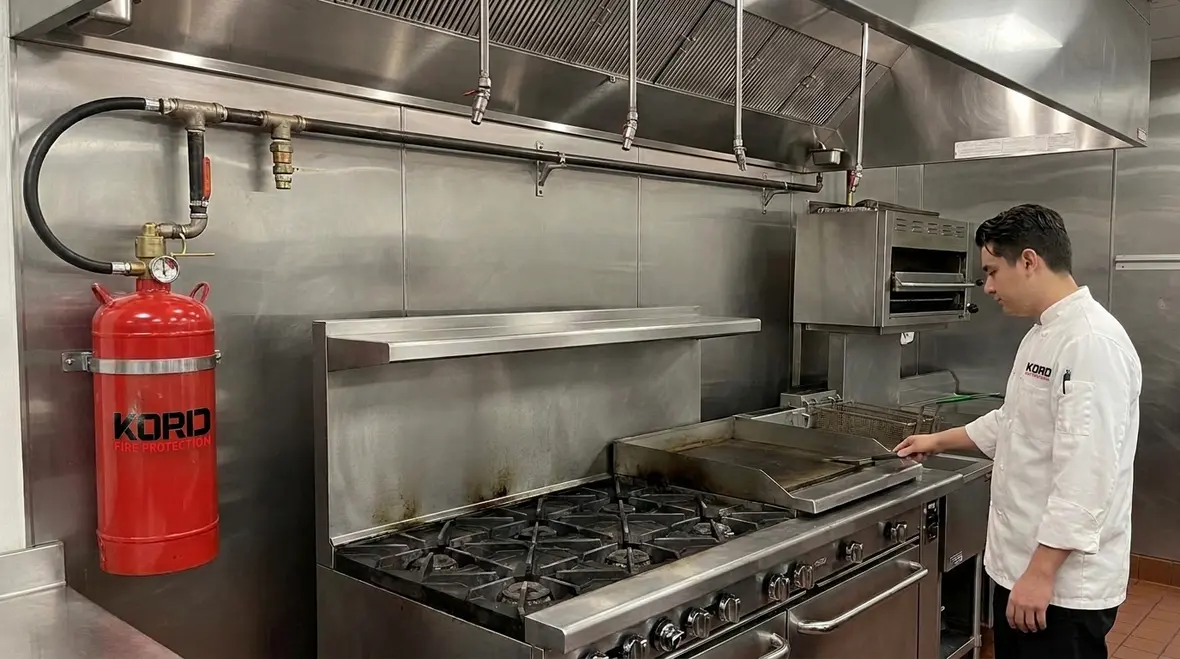
NFPA 17A 8.2 Owner’s Inspection Schedule and Checklist for Wet Chemical Systems
Quick Answer
The NFPA 17A 8.2 owner inspection schedule defines what commercial facility owners must check between formal inspections for wet chemical extinguishing systems. The goal is to confirm readiness, correct obvious impairments, and document maintenance items before they become operational failures.
Owners and facility managers typically search for the NFPA 17A owner inspection wet chemical schedule because compliance gaps often appear in the “between inspections” period. NFPA 17A 8.2 emphasizes practical checks that protect system reliability in real world, high use environments such as kitchens, industrial processing areas, retail cooking displays, and service bays with energized hazards.
Facilities also benefit from understanding how agent formulation and listing support system performance over time. For related technical context, see NFPA 17A 4.6 Wet Chemical Agent Composition and Listing.
What NFPA 17A 8.2 Requires: Owner Inspections in Plain Terms
NFPA 17A 8.2 assigns responsibilities to the owner. The owner is expected to establish an inspection routine that ensures the wet chemical system is maintained in an operable condition. These checks focus on visible readiness indicators, system components that can be affected by daily operations, and conditions that could impair discharge performance.
In commercial facilities, the biggest risk is not total system failure, but partial degradation. Examples include a stuck valve position due to contamination, missing tamper seals after staff access, blocked nozzles from recent construction, or a hung fire alarm or shutdown interface that no longer initiates the intended sequence.
Because wet chemical systems are designed for specific hazards and discharge patterns, “good enough” inspections can become a compliance issue. A documented owner inspection routine provides a defensible record and supports timely corrective actions with qualified technicians.
NFPA 17A Owner Inspection Wet Chemical Schedule: Timing and Trigger Points
The NFPA 17A owner inspection wet chemical schedule is commonly implemented as a recurring checklist cycle. The exact frequency applies to the specific arrangement, occupancy hazards, and system design, but the owner program typically includes periodic system readiness verification and immediate response to observed impairments.
Most facilities implement the routine in two layers:
- Planned owner inspections conducted on the established interval defined in the facility’s compliance program. These inspections verify that system components remain in a “ready” state.
- Immediate impairment response triggered by any condition that could prevent the system from performing as intended, such as missing actuators, damaged piping insulation, obstructed discharge outlets, or loss of control power where required.
Commercial kitchens and industrial areas are high traffic. That means the inspection interval must align with operational change frequency. If construction, equipment replacement, or staff access occurs frequently, the checklist should increase diligence or add targeted spot checks while remaining consistent with the owner program requirements.
NFPA 17A 8.2 Checklist: What Owners Should Verify on Wet Chemical Systems
The owner inspection checklist should be structured so that inspectors can confirm system readiness without guessing. Each item should connect to an operational function: actuation, discharge, hazard specific coverage, and control logic. The list below reflects typical owner inspection focus areas for wet chemical systems installed under NFPA 17A requirements.
1) Agent and Container Readiness
- Confirm the agent container and related labels are present, legible, and not damaged.
- Verify gauges and status indicators, where provided, are within expected ranges.
- Check for signs of corrosion, leakage residue, or physical damage that could impair discharge or integrity.
- Confirm tamper seals and lock conditions are intact where the design uses tamper evidence.
2) Valves, Piping, and Mechanical Linkage
- Check valve positions are consistent with the system’s normal ready state.
- Look for obstructions, foreign material, or construction debris on accessible piping sections.
- Verify piping supports, brackets, and fasteners are not loose or compromised.
- Inspect for visible leakage around fittings and joints.
3) Discharge Nozzles and Coverage Integrity
- Inspect nozzle locations to confirm they are unobstructed and not altered by ventilation, ductwork changes, or stored materials.
- Confirm spray patterns are not blocked by new fixtures, grease filters, or cooking equipment repositioning.
- Verify that nozzle housings are secure and not bent or cracked.
4) Actuation Devices and Manual Initiation
- Verify actuation devices are not damaged and appear in place as designed.
- Check accessible manual pull stations and ensure they have clear access and correct signage.
- Confirm no cover missing conditions exist that could compromise actuation or visibility.
5) Control Panel, Power, and Interface Functions
- Inspect system control equipment for power status, fault indications, and correct labeling.
- Verify emergency shutdown interfaces, where used, remain in the expected operational state.
- Check that any supervisory signals are not repeatedly indicating faults due to wiring damage or component drift.
6) Documentation, Access, and Corrective Action Tracking
- Confirm inspection records exist for prior owner checks and are retained per facility policy.
- Record corrective actions taken and confirm that repaired items return to a compliant ready condition.
- Ensure the access path to system components is not blocked by storage or temporary barriers.
Many compliance failures happen when checklists focus only on “visual presence” rather than readiness. A nozzle can be present but effectively blocked by a new canopy accessory. A container can appear intact but have evidence of residue near fittings. Owner inspections should look for conditions that change performance, not just missing hardware.
Common Commercial Failure Points: Why Owner Checks Usually Find the Issues
Wet chemical systems support fast, targeted suppression for Class K type hazards, and they must discharge the correct agent volume through the correct path. Operational realities create predictable failure points that owner inspections are well positioned to catch early.
Grease, Contamination, and Mechanical Interference
In kitchens and cooking environments, grease aerosol and steam can contaminate nearby components. Over time, contamination can interfere with actuation pathways, valve seating surfaces, and electrical interfaces. Owner inspections should look for residue accumulation, unusual corrosion, and changes in component appearance after maintenance cycles.
Construction and Equipment Relocation
Wet chemical nozzle placement depends on hazard geometry. When facilities change ceiling layouts, modify ventilation, add new cooking equipment, or install new partitions, discharge coverage can become impaired. A structured owner inspection checklist should include a “last change review” prompt: what work happened since the prior owner inspection and did it affect the extinguishing layout.
Tamper Seal Breaks and Unauthorized Access
Tamper seals and supervised indicators provide evidence of system integrity. A broken seal might not mean the system failed, but it often means an individual opened components, changed controls, or removed covers for repairs. Owner inspections should require documentation of why the seal changed and confirmation that the system returned to its ready condition.
Control and Shutdown Interlocks Not Returning to Normal
Commercial systems often integrate with ventilation shut down, fuel shutoff, or alarm initiation. If these interfaces do not return properly after testing or equipment servicing, the wet chemical system may still discharge, but the facility response may be out of sequence. Owner inspections should verify the system indicates a normal state and that interface components are not left in a partial action position.
Operational Procedure: How Facilities Should Run the Owner Inspection Program
A compliant owner inspection program requires more than a form. It requires a repeatable process that connects observations to corrective actions and documentation.
Assign Roles and Define the Inspection Scope
- Designate trained facility personnel to complete owner checks within their scope.
- Define what constitutes an impairment requiring escalation to a licensed contractor.
- Ensure the checklist covers key wet chemical system functions, not only general visual condition.
Use a Consistent Inspection Route
Owners should follow a fixed path through the hazard area so inspections do not skip high risk components such as nozzles, manual initiation, valve assemblies, and the control interface. This also improves consistency across shifts.
Document Every Finding and Escalate Correctly
Each checklist entry should include the result, location, date, and corrective action status. If an item affects discharge capability or control logic, it should trigger professional service. For example, evidence of leakage residue near fittings, repeated control faults, or blocked nozzle paths require prompt contractor involvement.
For deeper system understanding that supports better owner inspection readiness, Kord Fire Protection provides additional technical context on wet chemical extinguishing systems and NFPA 17A aligned design considerations: Enhancing Fire Safety with NFPA 17A Wet Chemical Extinguishing Systems.
How Kord Fire Protection Supports Compliance Between Inspections
Commercial facilities benefit when owner inspections and qualified technician service operate as a single compliance system. Kord Fire Protection helps maintain readiness through expert maintenance, testing support, and documentation designed for real operations. This reduces the risk that small owner observed issues become compliance gaps at the next formal service cycle.
To align your overall fire suppression program with site standards and maintenance planning, Kord Fire Protection also provides broader support for system integration and service management: Fire Suppression Systems.
For related system components such as water supply interfaces and reliability planning considerations that affect suppression readiness, facilities can reference the pump and water supply ecosystem context at Common Fire Pump Problems and Solutions.
Frequently Asked Questions
Conclusion and Call to Action
NFPA 17A 8.2 owner inspections help commercial facilities catch impairments early, but they succeed only when the NFPA 17A owner inspection wet chemical schedule is run consistently, documented thoroughly, and escalated quickly when readiness is compromised. Kord Fire Protection can help your team align owner checklist discipline with contractor level maintenance and testing support. Contact Kord Fire Protection to review your current inspection process and strengthen wet chemical system compliance for your site.

Join Our Newsletter!
Get the latest fire safety tips delivered straight to your inbox From our Newsletter.



