
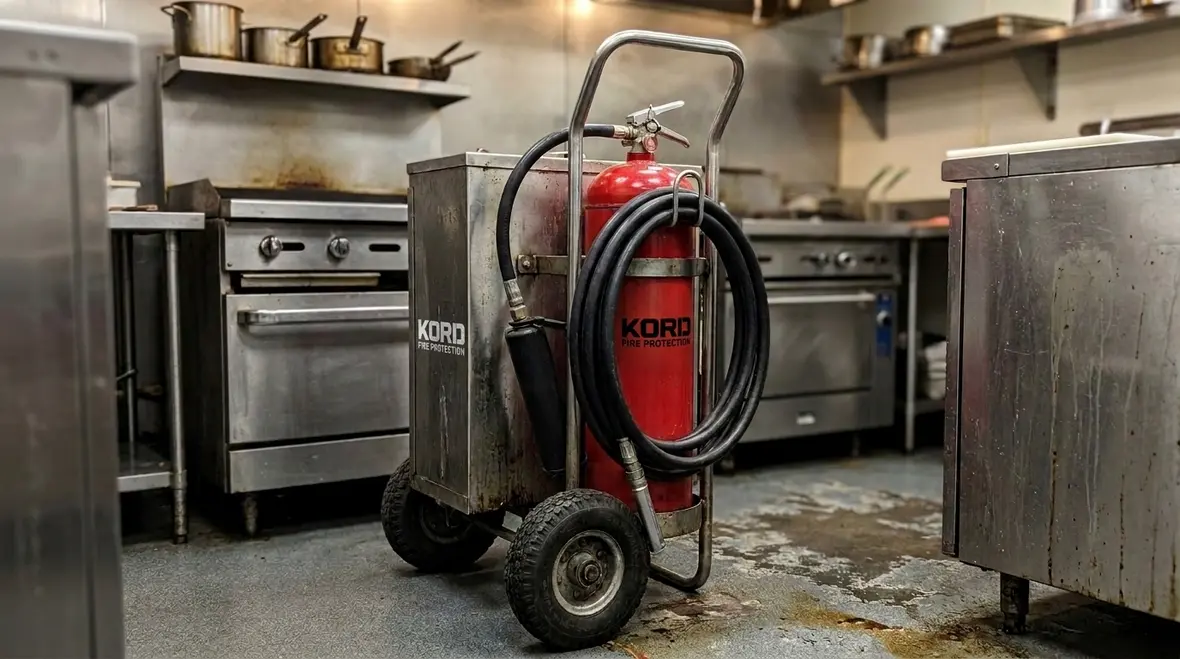
NFPA 17A 6.2 Components for Mobile Wet Chemical Systems
Quick Answer: NFPA 17A Section 6.2 defines the mobile wet chemical system components and how they function together, with special attention to reliability, mounting, and operational readiness. For commercial sites, vibration and transport impacts can degrade performance unless maintenance and inspection follow the standard.
For facilities reviewing broader suppression planning early on, fire suppression systems provide useful context for how inspection, installation, and maintenance support long term readiness.
Why NFPA 17A 6.2 Matters for Mobile Wet Chemical Readiness
NFPA 17A Section 6.2 establishes baseline expectations for the parts that make mobile wet chemical extinguishing systems effective when deployed. In real commercial operations, mobile units encounter scenarios that static design assumptions often underestimate: frequent movement, dock vibration, platform transitions, loading and unloading events, and intermittent service access. These conditions directly influence component alignment, valve operation, hose integrity, and the ability to deliver the correct agent flow rate.
Facilities that operate kitchens, quick service restaurants, light industrial process areas, or retail display kitchens typically face added constraints such as tight service windows, variable staffing, and inconsistent inspection documentation. A compliance program that specifically addresses NFPA 17A mobile wet chemical components vibration helps prevent partial failures that can appear normal during routine visual checks yet fail during actual discharge or functional testing.
For an overview of wet chemical system compliance considerations, see Enhancing Fire Safety with NFPA 17A Wet Chemical Extinguishing Systems.
NFPA 17A 6.2 Component Set: What Must Be Verified as an Integrated System
Mobile wet chemical systems rely on coordinated performance from multiple components. Section 6.2 expects these elements to be present and arranged so the system can operate as designed. In practice, inspectors and maintenance technicians evaluate the unit as a system rather than a collection of parts.
1) Storage and Agent Containers
The agent container, cylinder or vessel type, and internal arrangement control both reliability and discharge performance. Maintenance focuses on signs of degradation caused by motion and vibration such as fastener loosening, corrosion at fittings, and damage to protective coatings. A mobile unit that is repeatedly transported can experience micro loosening at threaded connections. That can affect sealing and flow delivery even if the unit passes a quick visual inspection.
2) Pressurization and Operating Mechanisms
Pressurization devices and actuating mechanisms must respond consistently when called upon. Vibration during storage or transport can compromise linkages, interfere with valve seating, or change the feel of an operating lever, trigger, or actuator. Technicians should confirm full travel of controls and verify that mechanisms return to proper positions without binding.
3) Valves, Check Functions, and Flow Control
Valves and any check or control elements must maintain proper flow direction and prevent unintended discharge. With mobile systems, the primary failure pattern often involves valve seating integrity and internal contamination introduced during servicing. Vibration can also promote gasket creep or seating movement. During inspection, technicians should confirm that labels, identification markings, and control positions remain accurate and readable, since misidentification can lead to incorrect operation.
4) Hose, Nozzle, and Discharge Path Components
Hose assemblies and nozzles are exposed to repeated handling and abrasion. Vibration stresses can create hose strain points near couplings and at brackets. Inspectors typically verify for cuts, swelling, stiffening, and coupling security. Nozzle components should maintain alignment and unobstructed flow. Even minor partial blockages or damaged sprayer heads can produce incorrect spray patterns and reduce knockdown effectiveness.
5) Mounting, Base Structure, and Stability Features
Mobile wet chemical units require stable positioning so the discharge path performs consistently. Components subject to vibration include base fasteners, support brackets, and wheel or cart assemblies that affect how the unit sits. A unit that is slightly off level may not discharge in the intended orientation, especially when hose routing causes increased tension. The compliance expectation is not only that the unit is mobile, but also that it maintains operational stability during deployment.
For additional system context and service planning, refer to Fire Suppression Systems.
How NFPA 17A Mobile Wet Chemical Components Vibration Creates Real Failure Risks
Vibration does not usually cause catastrophic failure immediately. Instead, it drives gradual performance drift through several mechanisms that can defeat normal inspection routines.
Common vibration driven failure points
- Threaded connection loosening: Repeated transport can reduce torque and compromise sealing integrity, especially at frequently disconnected or serviced ports.
- Gasket compression set: Over time, vibration can accelerate compression set, which increases the likelihood of leakage and reduces effective discharge.
- Valve linkage misalignment: Small alignment changes can delay valve opening or create partial openings that impact agent discharge.
- Hose coupling strain: Micro movement at couplings can wear the hose cover and degrade connection reliability.
- Nozzle pattern inconsistency: Spray head shifts due to handling can cause altered spray characteristics and reduced fire control performance.
Why “passes visual inspection” still fails
Mobile units often receive quick visual checks between busy operational periods. Visual readiness does not always reveal internal seating degradation, valve response timing issues, or discharge path obstruction. That is why a compliance program must include documented inspection, functional checks where applicable, and maintenance that addresses vibration related wear patterns.
Inspection, Testing, and Maintenance Procedures Aligned to Commercial Operations
NFPA 17A 6.2 component compliance becomes meaningful when facilities implement repeatable procedures that account for mobile unit movement. Commercial environments need a process that fits into operational realities while still meeting compliance expectations.
Operational readiness checks for mobile units
- Verify mounting and storage condition: Confirm the unit rests securely with no belt or bracket looseness, and ensure wheels or cart supports are not binding.
- Check labeling and access: Ensure operating instructions remain legible and that the unit can be reached without obstructions during an emergency.
- Inspect hose and couplings closely: Look for abrasion, cracks, swelling, and signs of leakage at connection points.
- Confirm control movement: Actuate the operating mechanism through its required travel to ensure it moves freely and returns correctly.
Maintenance practices that address vibration
- Torque verification at critical fittings: Maintenance technicians should verify connection integrity at fittings where vibration concentrates, especially after service events that require disassembly.
- Seal condition review: Replace suspect gaskets or seals based on inspection findings and manufacturer requirements, not only on age.
- Valve and actuator function check: Verify correct valve response and full opening characteristics to prevent partial discharge.
- Hose routing and strain relief: Ensure the hose assembly is stowed to minimize tension at couplings and prevent rubbing against cart edges.
For broader fire system concepts and service planning resources, see FirePumps.
Compliance Challenges in Retail, Industrial, and Food Service Settings
NFPA 17A mobile systems often serve dynamic risk profiles and changing layouts. Compliance success depends on coordination between safety leadership, facility maintenance, and operational managers.
Commercial facility constraints that impact component performance
- Frequent repositioning: Retail and industrial sites may move units to match workflow changes, increasing vibration exposure and handling stress.
- Maintenance scheduling conflicts: Kitchens and production areas operate on short staffing windows, delaying thorough servicing.
- Incomplete service records: If inspections do not document component conditions, vibration related issues can recur without corrective action.
- Training drift: Staff turnover can reduce consistent operation practice, masking operational problems until a real emergency.
Role of Kord Fire Protection in sustained compliance
Kord Fire Protection supports commercial sites through systematic inspection, documented maintenance, and component verification practices that account for motion, handling, and vibration effects. This approach helps facilities maintain readiness and reduces the likelihood of performance shortfalls during discharge events.
Frequently Asked Questions
Conclusion and Call to Action
NFPA 17A 6.2 component compliance only protects performance when maintenance explicitly addresses mobile handling realities, including NFPA 17A mobile wet chemical components vibration. Commercial facilities should schedule inspection and service plans that verify valves, hoses, operating mechanisms, and mounting stability, with documented corrective actions. Contact Kord Fire Protection to assess your mobile wet chemical units, strengthen compliance documentation, and reduce the risk of vibration induced discharge failures.

Join Our Newsletter!
Get the latest fire safety tips delivered straight to your inbox From our Newsletter.



