
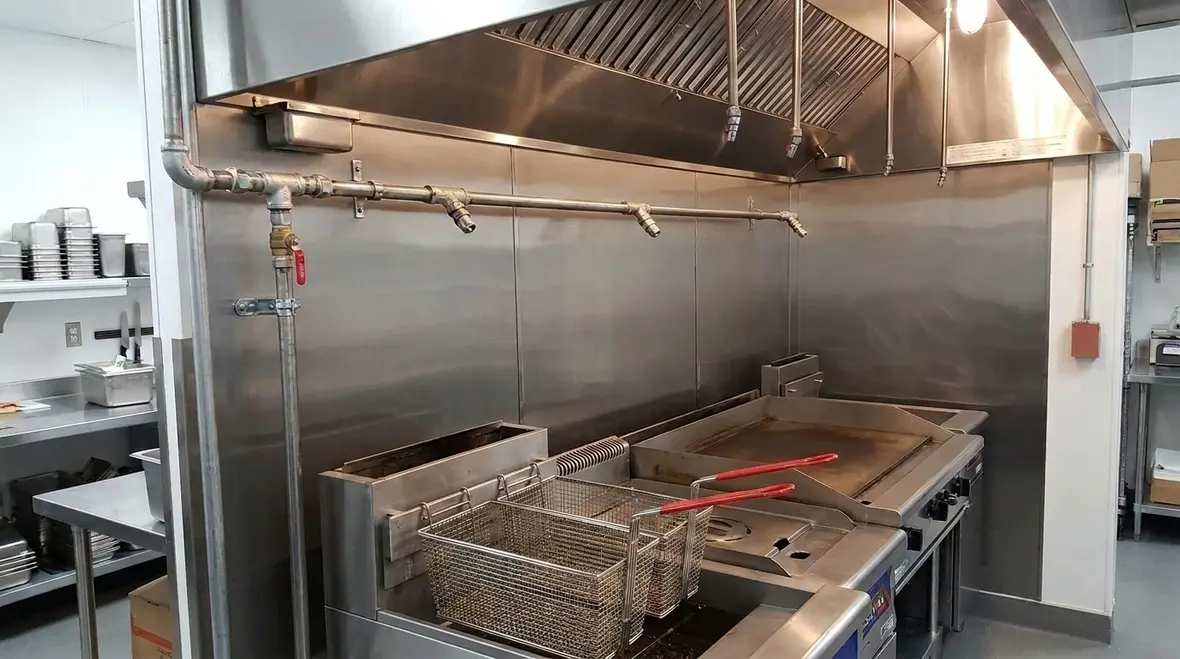
NFPA 17A 5.1 General Rules for Commercial Cooking Protection
Quick Answer
NFPA 17A section 5.1 sets the baseline expectations for installing and maintaining wet chemical fire extinguishing systems used in commercial cooking areas. It emphasizes proper system design, correct hazards coverage, installation integrity, and ongoing readiness through inspections and maintenance.
Why NFPA 17A 5.1 matters for real kitchens
Commercial kitchens create high consequence fire scenarios due to grease vapors, deep-fry operation, and rapid flame spread along hood and duct surfaces. NFPA 17A commercial cooking operations protection is not limited to selecting equipment. Section 5.1 general rules govern how wet chemical systems are arranged, installed, and kept in a condition that performs when exposed to real cooking fire conditions.
For facilities such as restaurants, industrial break rooms, retail food courts, and institutional dining, the compliance risk is operational. A system can look correct during commissioning but fail during actual use if installation details are inconsistent, maintenance is deferred, or inspection documentation is incomplete.
What NFPA 17A 5.1 requires at a practical level
Section 5.1 focuses on overarching rules that apply before detailed design steps. While design criteria can vary by cooking hazard, the general principles remain consistent: the system must be correctly matched to the protected cooking equipment and hood environment, installed to function as intended, and maintained so it stays ready for discharge.
If your site also needs a broader look at fire suppression systems beyond the kitchen canopy, it helps to frame wet chemical protection as part of a larger facility strategy rather than the thing everyone remembers five minutes before inspection.
1) Correct system scope and hazard matching
The protected area and hazards must align with the cooking equipment that produces grease laden vapors and residues. Common compliance challenges include mismatched coverage, overlooked sidewall risks, and changes to cooking line layouts that are not followed by an updated protection review.
- Verify hood type, dimensions, and fire dynamics are accounted for in the protection layout.
- Confirm equipment changes such as added fryers, switched to different cooking oil, or modified flue routing are communicated to the fire protection contractor.
- Ensure ducts and plenums that are expected to be protected are actually within the installed system’s coverage strategy.
2) Installation integrity and service access
Wet chemical systems rely on correct routing, secure mechanical connections, and components installed to manufacturer instructions and code intent. Section 5.1 general rules effectively require that the system can be serviced, inspected, and tested without compromising performance.
- Support and sealing of piping and discharge lines must prevent shifting, vibration damage, or obstruction.
- Access panels and service clearances must allow for inspection of nozzles, valves, detection, and ancillary equipment.
- Components must remain accessible after tenant improvements, shelving changes, and countertop modifications.
How wet chemical systems operate when a cooking fire starts
Wet chemical extinguishing systems discharge an agent designed to suppress grease fires. The performance depends on both the detection and the discharge mechanism. Understanding the operational chain helps facilities evaluate whether inspections are truly verifying readiness, not just collecting paperwork.
Detection, actuation, and discharge performance
In commercial cooking applications, systems typically use detection methods and release mechanisms to initiate discharge. When the system actuates, the piping routes the agent to nozzles positioned for hood and cooking hazard coverage.
- Detection must be installed to respond to the thermal conditions expected in the hood environment.
- Release mechanisms must be capable of operating within the required sequence and conditions.
- Nozzles must distribute agent as designed, with unobstructed discharge paths.
For a broader technical overview of system concepts, refer to Kord Fire Protection’s discussion of wet chemical extinguishing systems: Enhancing Fire Safety with NFPA 17A Wet Chemical Extinguishing Systems.
Inspection, testing, and maintenance: where compliance breaks down
NFPA 17A 5.1 general rules are only effective when the system remains in reliable condition. In commercial operations, the most common failure points are operational drift, deferred maintenance, and poor documentation control after repairs.
Common maintenance failure points
- Corroded or contaminated agent pathways: Internal deposits, component corrosion, or debris in lines can reduce flow and distribution quality.
- Improper nozzle condition: Nozzles can clog or drift from service activity. Hood cleaning practices can also contribute to misalignment if not controlled.
- Valve and actuator issues: Valves that are not exercised or maintained may become sticky or fail to release when required.
- Detection component drift: Changes to mounting positions or environmental obstructions can reduce responsiveness.
- Unauthorized modifications: Post installation changes to ductwork or hood components can create “coverage gaps” that inspections miss if they do not verify physical layout.
Commercial facility reality: inspection records and readiness
Restaurants and multi site chains often face staff turnover, shared maintenance vendors, and inconsistent recordkeeping. A compliant program depends on a documented cycle that verifies agent readiness, component condition, and correct operation of initiating and releasing equipment.
Kord Fire Protection supports commercial cooking operations protection through ongoing service, testing coordination, and compliance documentation management. For additional context on fire suppression system capabilities and service approach, see: Fire Suppression Systems by Kord Fire Protection.
Pump and water supply considerations when applicable
Some installations rely on pumps or water supply infrastructure for system operation and supporting utilities. Even when wet chemical discharge does not behave like a traditional water sprinkler system, supply reliability can still affect overall performance. When planning system readiness, coordinate any pump related systems with recognized technical references. For pump fundamentals and reliability considerations, see: Fire Pumps Resource.
Compliance workflow for commercial cooking operators
Many operators improve compliance outcomes by standardizing their workflow around design verification, operational controls, and service collaboration. The goal is to prevent “install once and forget it” behavior.
Step 1: Verify the kitchen layout against the protection plan
- Confirm hood and cooking equipment match the as built protection scheme.
- Check for aisle obstructions, hood modifications, or duct changes since commissioning.
- Ensure kitchen staff understand what can and cannot be moved near nozzles, piping, or discharge pathways.
Step 2: Implement inspection and cleaning coordination
Cleaning activities can affect nozzle integrity and the physical alignment of detection and discharge components. Establish a maintenance handoff between culinary operations and fire protection service providers. Make sure hood cleaning procedures include controls that protect system components from mechanical disturbance.
Step 3: Maintain service logs and close maintenance loops
After any repair, confirm that the system returns to a verified ready condition. Update service documentation and communicate changes to the protected hazard area. This step prevents “paper compliance” where logs exist but the physical system is out of configuration.
Frequently Asked Questions
Conclusion and call to action
NFPA 17A 5.1 general rules set the foundation for dependable wet chemical performance in grease fire scenarios. The compliance win comes from verified installation integrity, hazard matching, disciplined maintenance, and controlled kitchen operations that protect the system from drift. Kord Fire Protection can help commercial kitchens maintain NFPA alignment through planning, servicing, testing coordination, and documentation support. Contact Kord Fire Protection today to schedule a compliance review and confirm your NFPA 17A commercial cooking operations protection system stays ready.

Join Our Newsletter!
Get the latest fire safety tips delivered straight to your inbox From our Newsletter.



