NFPA 15 Section 9.1 Water Supply for Spray Systems
Quick Answer
NFPA 15 Section 9.1 sets the baseline for spray system water supply. It requires a dependable source with enough pressure, flow, and duration to keep the system effective during a fire event. In plain terms, the system needs real muscle, not paperwork confidence. Facilities that want that reliability often pair strong design intent with experienced fire protection services so the water supply can support the spray system the way the standard expects.
NFPA 15 Water Supply General Requirements for Spray Systems
NFPA 15 water supply general requirements focus on one simple idea: the spray system must work when it is needed, not just when the drawings look neat. Section 9.1 calls for a water supply that can support the full demand of the system, including the right pressure, flow, and water duration. In practical terms, the supply must match the hazard, the spray layout, and the fire protection goal.
That sounds straightforward until you remember how many things can interfere with water delivery. Pipe friction, elevation, supply fluctuations, pump performance, storage capacity, and competing demands can all show up to the party uninvited. So while Section 9.1 reads like a clean requirement, applying it on a live facility is where the real work begins.
For industrial plants, retail sites, warehouses, and commercial facilities, this matters a great deal. A system can only protect equipment, structures, and business continuity if water arrives with the strength and timing the design expects. Otherwise, the best sprinkler or spray layout becomes a very expensive ceiling decoration. And nobody wants that kind of performance review.
Why Section 9.1 Matters More Than It First Appears
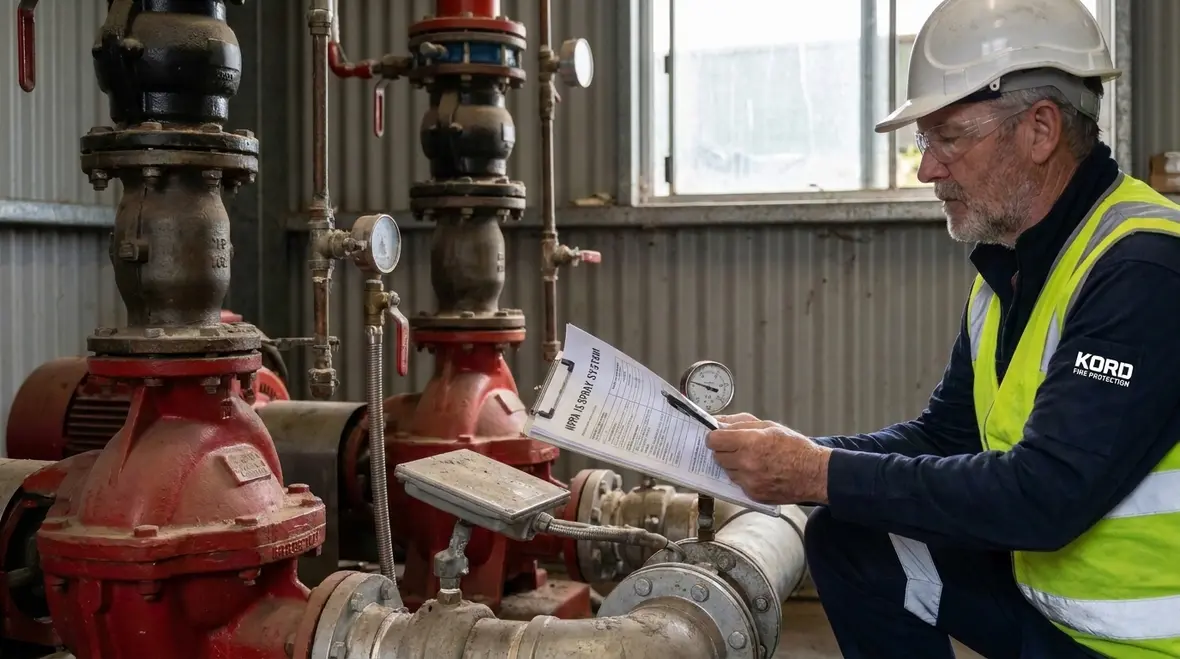
Section 9.1 is not just about having water somewhere on site. It is about having usable water under emergency conditions. That distinction matters. A tank that is too small, a pump that cannot sustain demand, or a town main that drops under load might look acceptable on paper until the system actually needs to perform.
This is also why many facility teams end up reviewing related system performance topics such as fire pump testing requirements. Water supply is not an isolated issue. The supply source, pump arrangement, valves, controls, and distribution piping all have to cooperate like adults in a meeting, which is asking a lot from mechanical equipment.
What Section 9.1 Means in Plain Language
Section 9.1 asks a basic but vital question: can the water supply feed the spray system under real fire conditions? The answer must cover three things. First, the supply must deliver enough flow for all required spray devices. Second, it must hold the pressure needed to shape the spray pattern correctly. Third, it must provide enough water for the full design duration.
That combination helps ensure the spray can cool hot surfaces, control flame spread, and protect exposed assets. Moreover, the supply must stay reliable even when other systems in the facility are running. In busy sites, that can be the difference between a controlled event and a very bad day that nobody wants to explain at Monday’s meeting.
Put another way, Section 9.1 is asking whether the water supply can do the whole job, not just the easy part. Plenty of systems can look impressive during design review. The real test is whether they can still deliver under heat, load, and stress when the hazard is no longer hypothetical.
The Three Big Checks Behind Compliance
Flow: enough water volume must reach every required spray device.
Pressure: the spray needs the force required to create the intended pattern and reach.
Duration: the supply has to last long enough for the system to remain effective through the event.
How to Plan a Reliable Water Source
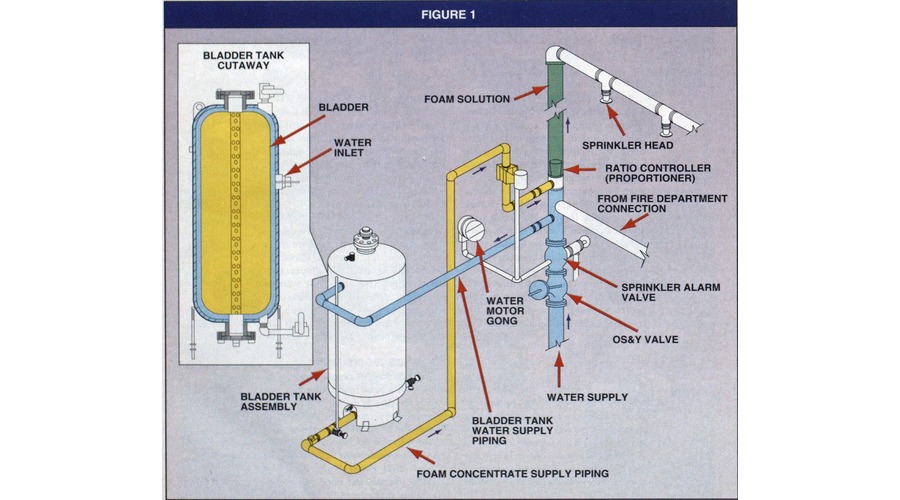
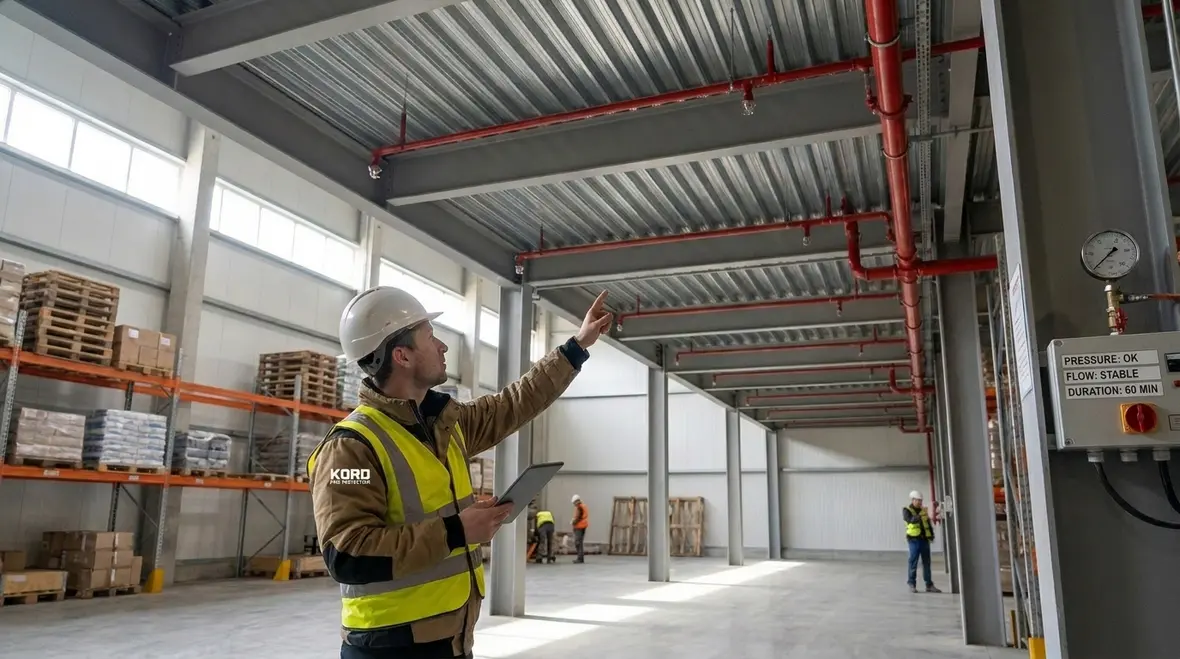
A proper water source plan starts with the building risk profile. Then the design team checks whether the site can use town water, tanks, pumps, or a mix of sources. Many sites need dedicated fire water storage because the public supply may not provide enough flow or pressure. In addition, pump sets often become part of the answer when demand rises above available mains capacity.
The planning stage should also account for future change. A site may expand, add high value stock, or install new process equipment. Therefore, a water supply that barely meets today’s need may fail tomorrow. Good planning looks past the current layout and builds in room for growth, which is far cheaper than a redesign after the fact.
Reliable planning also means asking uncomfortable questions early. What happens if the municipal supply drops? What if one source is offline for maintenance? What if a facility change increases demand by more than anyone expected? These are the sorts of questions that save money and embarrassment later, even if they are not especially fun in the design meeting.
Common Water Supply Approaches
Town or municipal mains where pressure and volume are dependable
Dedicated fire water tanks sized for the design demand and duration
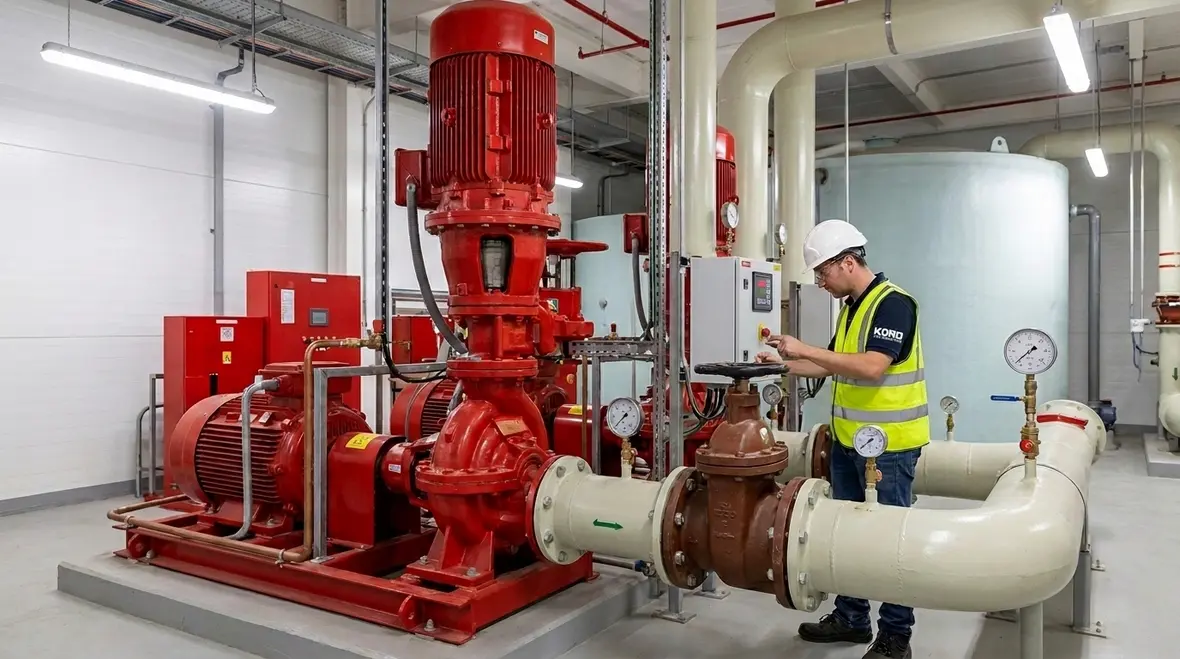
Fire pumps to boost pressure when static supply is not enough
Hybrid arrangements that combine mains, tanks, and pumps for resilience
Why Pressure, Flow, and Duration Must Work Together
These three factors do not act alone. Pressure affects spray shape and reach. Flow affects how much cooling and control the system can deliver. Duration affects how long the system can keep doing its job before the fire brigade, backup systems, or site teams take over.
If one factor falls short, the whole system weakens. For example, strong pressure with poor flow will not protect a broad hazard area. Likewise, enough flow with weak pressure may leave parts of the spray pattern under covered. As a result, NFPA 15 water supply general requirements push designers to test the full picture, not just one number on a spreadsheet.
Section 9.1 focus
Reliable source
Enough pressure
Enough flow
Enough duration
What it means on site
System starts properly
Spray reaches the hazard
Water covers the full risk area
Protection lasts through the event
How Kord Fire Protection Helps Keep the System Ready
Kord Fire Protection can become a vital partner by turning code needs into working protection. The team can help assess water supply needs, review system demands, and support the design and installation process from the ground up. That matters because water supply issues often hide inside details that sound small but behave like plot twists in a thriller.
Kord Fire Protection can also support testing, maintenance, and system checks. In addition, the team can help facilities confirm that pumps, tanks, valves, and pipework all work as one system. For readers who want broader context on fixed water spray protection, Kord Fire’s article on NFPA 15 water spray fixed systems is a useful next step.
This kind of support helps reduce risk, improve compliance, and keep operations moving. It also saves facilities from the classic mistake of treating the water supply like a background detail when it is actually one of the lead actors.
Testing and Maintenance That Keep Compliance Real
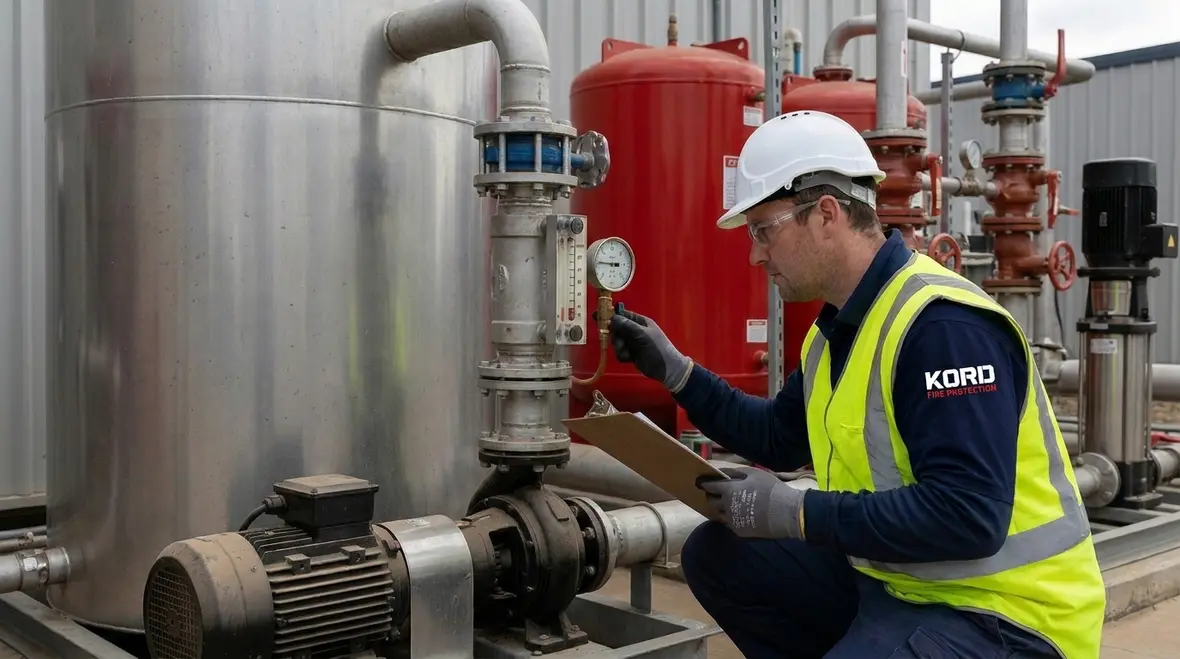
Even the best design fails without upkeep. Water supplies can change over time because of pump wear, blocked strainers, tank issues, valve problems, or changes in the municipal supply. Therefore, regular inspection and testing matter just as much as the original install.
Site teams should verify that the supply still meets the system demand. They should also check pumps, water levels, alarms, and flow performance. Furthermore, routine work helps spot small faults before they turn into costly failures. Compliance is not a one time trophy on the wall. It is more like a gym membership. The value comes from showing up.
Maintenance has another benefit too: it keeps assumptions honest. A system that passed testing last year may not match current site conditions. Changes in occupancy, equipment layout, piping condition, or water source reliability can all shift the performance picture. Periodic review closes that gap before it becomes a problem.
What Teams Should Verify Regularly
Pump operation and response
Available tank volume and refill readiness
Valve position and accessibility
Alarm and supervisory functions
Actual flow and pressure performance against design intent
Who Needs to Pay Close Attention
Facilities with high fire loads, valuable stock, exposed process equipment, or business critical operations should pay special attention to water supply design. That includes warehouses, distribution centres, manufacturing sites, retail complexes, data sensitive facilities, and large commercial properties.
In these settings, spray systems often protect more than property. They protect supply chains, customer service, staff safety, and recovery time. Therefore, a weak water supply can create a much bigger problem than a damaged pipe. It can interrupt the whole business.
The more complex the site, the less room there is for guessing. High value operations need dependable water support because delays, interruptions, and uneven spray performance can multiply losses quickly. That is why Section 9.1 deserves attention well before a commissioning test or annual inspection rolls around.

FAQ
Final Takeaway
NFPA 15 water supply general requirements give facilities a clear path to dependable spray protection, but the details matter. With the right design, testing, and maintenance, a site can stay ready for real risk.
Kord Fire Protection can help turn those requirements into reliable, compliant, working protection. That is the kind of partnership that keeps systems calm when the heat is anything but.

Join Our Newsletter!
Get the latest fire safety tips delivered straight to your inbox From our Newsletter.