
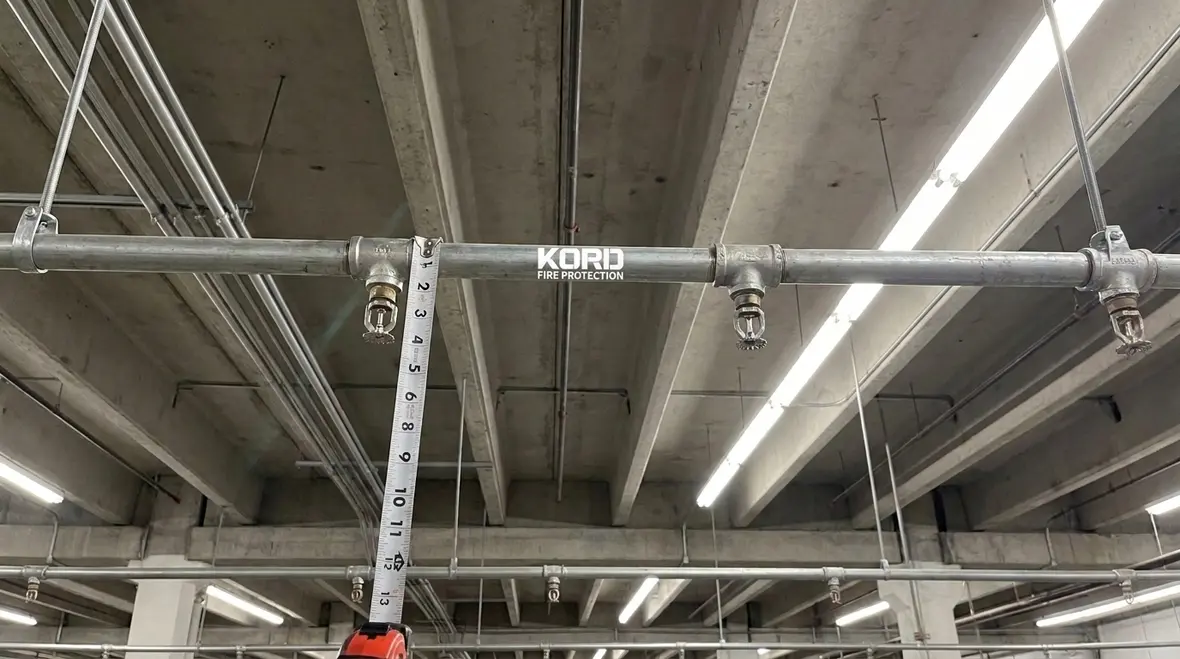
NFPA 15 Section 7.1 Nozzle Spacing: The 10-Foot Maximum and Overlapping Spray Patterns
Quick Answer: NFPA 15 Section 7.1 limits nozzle spacing to a maximum of 10 feet and requires properly overlapping spray patterns. This design controls coverage, maintains target density, and reduces the risk of dry zones. Correct layout supports reliable performance during both automatic activation and manual tripping.
Why NFPA 15 7.1 nozzle spacing matters in real systems
In fixed water spray systems, spacing is not a “layout preference.” It directly affects whether the system delivers the required water distribution at the hazard surface when the piping activates. For commercial and industrial occupancies, NFPA 15 7.1 system design nozzle spacing 10 ft automatic manual tripping becomes the practical foundation for meeting water distribution expectations under changing ceiling height, obstructions, and discharge patterns.
In day to day operations, most compliance failures tie back to one of three issues: nozzles installed beyond the 10 foot maximum spacing, spray patterns that do not overlap as intended, or maintenance conditions that degrade distribution over time. When sprinkler strainers clog, nozzles scale up, or guards get modified, the system can still “work,” but coverage can fall short at the exact points the hazard protection plan depends on.
For facilities that also need coordinated water delivery verification, fire pump testing, churn tests, and flow planning can fit naturally into the broader discussion because pressure stability and dependable flow directly influence spray throw distance and overlap performance.
What Section 7.1 requires: the 10-foot maximum and coverage intent
NFPA 15 Section 7.1 establishes the nozzle spacing limits to support predictable discharge density and acceptable distribution over the protected area. The 10 foot maximum spacing is intended to keep spray reaches and wetting geometry within the parameters needed for effective coverage.
Spacing alone does not guarantee performance. NFPA 15 7.1 also relies on the concept of overlapping spray patterns. Overlap reduces the chance of “missed coverage” created by nozzle stream geometry, installation tolerances, and practical ceiling realities such as beams, ducts, lighting fixtures, and signage.
Common design and installation deviations
- Layout drift during construction: Contractors may shift nozzle positions to avoid ceiling elements without recalculating spacing and overlap.
- Incorrect mounting orientation: A nozzle installed at an unintended angle can produce a different throw distance and overlap profile.
- Changes after turnover: Ceiling repairs, new equipment, or added racks can block spray patterns or reduce effective overlap.
- Assumed equivalency with different nozzles: Substituting nozzle types without verifying matching spray characteristics can break the design basis.
Overlapping spray patterns: how spacing becomes coverage
NFPA 15 water spray systems depend on distribution, not just discharge. Overlapping spray patterns help ensure that any given area receives water from more than one nozzle direction or trajectory. This matters because real hazards rarely exist in perfectly uniform geometries, and real systems do not dispense water as a uniform blanket.
Overlapping coverage also helps compensate for normal operational variability. That variability includes activation conditions, minor differences in nozzle spacing within tolerances, and the way water breaks up along the spray pattern as it travels from nozzle to target.
Field factors that affect overlap performance
- Ceiling height and ceiling configuration: Higher ceilings can increase throw distance requirements, making overlap more sensitive to spacing.
- Obstructions and “spray shadowing”: HVAC housings, cable trays, and structural beams can create local dry zones.
- Water quality and nozzle condition: Scaling and partial blockage narrow or distort discharge patterns.
- Flow control device performance: Pressure and flow stability influence spray trajectory and distribution consistency.
Facilities that operate across multiple tenant spaces often underestimate how ceiling alterations after design can change overlap. Kord Fire Protection supports commercial owners with review of maintenance changes and site conditions to help preserve the original distribution intent referenced by NFPA 15 7.1 system design nozzle spacing 10 ft automatic manual tripping requirements.
Automatic activation and manual tripping: distribution must work both ways
NFPA 15 systems are designed so automatic detection or control logic activates the system, while manual tripping provides an operational fallback. In compliance terms, both activation modes must deliver the design distribution characteristics. That includes nozzle spacing limitations, spray overlap, and coverage uniformity.
From an operational perspective, manual tripping is not only a life safety feature. It becomes a critical test opportunity during commissioning, system verification, and post modification checks. If technicians test manual tripping without confirming that the physical discharge coverage remains consistent, they may miss a distribution problem that only becomes evident during actual flow.
Maintenance conditions that can reduce performance even with correct spacing
- Nozzle residue and corrosion: Mineral buildup changes spray geometry and reduces overlap.
- Strainer blockage: Reduced flow can alter throw distance and pattern wetting.
- Valve and actuator sticking: Partial valve travel can reduce flow stability during actuation.
- Damaged piping or misaligned hangers: Small changes can shift nozzle positions beyond design assumptions.
- Unapproved ceiling access adjustments: Removal of guards or relocation of fixtures can block spray patterns.
For additional guidance on fixed water spray system design and ongoing protection measures, see: NFPA 15 enhancing fire safety with water spray fixed systems.
Inspection, testing, and documentation: proving compliance over time
Even when the as-built installation respected the 10 foot maximum spacing and overlapping spray patterns, compliance requires ongoing verification. Commercial facilities frequently face turnover, renovation cycles, and maintenance staff changes. A strong inspection and maintenance program keeps the installed system aligned with the design basis.
What compliance teams typically validate
- As-installed nozzle spacing: Field checks against the 10 foot maximum, including any adjustments made during ceiling work.
- Nozzle identification and placement: Confirmation that nozzle type, temperature rating if applicable, and orientation match the design.
- Spray pattern integrity: Visual checks for obstruction, physical damage, or altered throw due to changed ceiling conditions.
- Obstruction management: Verification that new racks, signage, and ductwork do not create dry zones.
- Functional verification of trip modes: Testing automatic initiation and manual tripping as required by the facility program.
To support high quality fire pump and water supply understanding that directly affects distribution performance, facility teams can reference resources at firepumps.org. Pressure stability and flow delivery influence spray throw distance and the ability to maintain overlapping coverage.
When spacing and overlap must be re-evaluated after changes
NFPA 15 7.1 system design nozzle spacing 10 ft automatic manual tripping assumes the hazard and environment match the design conditions. Any modification that changes ceiling height, adds obstructions, or alters nozzle positions triggers a reassessment of distribution. This is especially common in retail and light industrial occupancies where ceilings and fixtures change more often than in dedicated warehouse spaces.
Change triggers that require engineering review
- Tenant renovations that add shelving, mezzanines, or storage racks
- HVAC upgrades that add ducts or relocate air handlers
- Ceiling replacement or structural remediation that alters hangers or nozzle mounts
- Substitution of nozzle types, including spray pattern changes
- Alterations to actuation hardware, control panels, or water supply components
Kord Fire Protection works with commercial owners to preserve distribution intent through practical field verification and ongoing maintenance planning. For company details, service locations, and support resources, Kord’s commercial sites include kordelectric.com and kordfire.com.au, alongside the Kord Fire Protection resources at kordfire.com.
Frequently Asked Questions
Conclusion and next step
NFPA 15 7.1 nozzle spacing and overlapping spray patterns work together to deliver effective distribution, not just activation. If your facility has undergone ceiling work, fixture changes, or nozzle substitutions, schedule a field verification focused on the 10 foot maximum and overlap integrity. Contact Kord Fire Protection to support compliance review, testing, and maintenance so both automatic activation and manual tripping perform to design intent.

Join Our Newsletter!
Get the latest fire safety tips delivered straight to your inbox From our Newsletter.



