NFPA 15 Section 10.3 Hydrostatic Pressure Tests for Water Spray
Quick Answer: NFPA 15 Section 10.3 requires hydrostatic pressure tests to confirm that a water spray system can hold pressure without leaks or weak points. These tests help protect industrial, retail, and commercial sites by proving the system is ready before it is put into service.
NFPA 15 hydrostatic test water spray systems play a critical role in fire protection for busy facilities. In the first step, the system gets filled with water and pressurized to prove it can stand up under real conditions. That matters because a water spray system that fails during a fire is about as useful as a screen door on a submarine. For industrial plants, warehouses, retail centres, and commercial buildings, this test is not just paperwork. It is proof of life.
If your team is already reviewing water based protection performance, it also helps to understand how broader fire sprinkler system service fits into inspection, repair, testing, and long term reliability. For facilities that rely on specialized spray protection, Kord Fire Protection also has a useful guide on NFPA 15 water spray fixed systems that adds helpful background to Section 10.3.
What NFPA 15 Section 10.3 Means in Practice
Section 10.3 focuses on hydrostatic pressure testing for water spray systems after installation, repair, or major modification. In plain terms, the piping, fittings, valves, and connected parts must hold pressure for a set period without visible leaks or loss of integrity. As a result, the test gives building owners and facility managers confidence that the system can do its job when heat and flame arrive uninvited.
For high demand sites, this matters even more because many operations run with high value stock, critical equipment, and strict downtime limits. Therefore, the test becomes part safety check, part business protection, and part peace of mind. No one wants a surprise leak after the ceiling tiles are back in place and the project team has already moved on to the next crisis.
Why this section carries so much weight
A water spray system is supposed to respond under stress, not create a new emergency. Hydrostatic testing gives everyone involved a chance to verify the system before an actual incident exposes a weak joint, flawed connection, or poorly seated valve. That is the practical value of Section 10.3. It helps catch trouble early, when the fix is annoying but manageable instead of catastrophic and expensive.
How the Hydrostatic Test Works
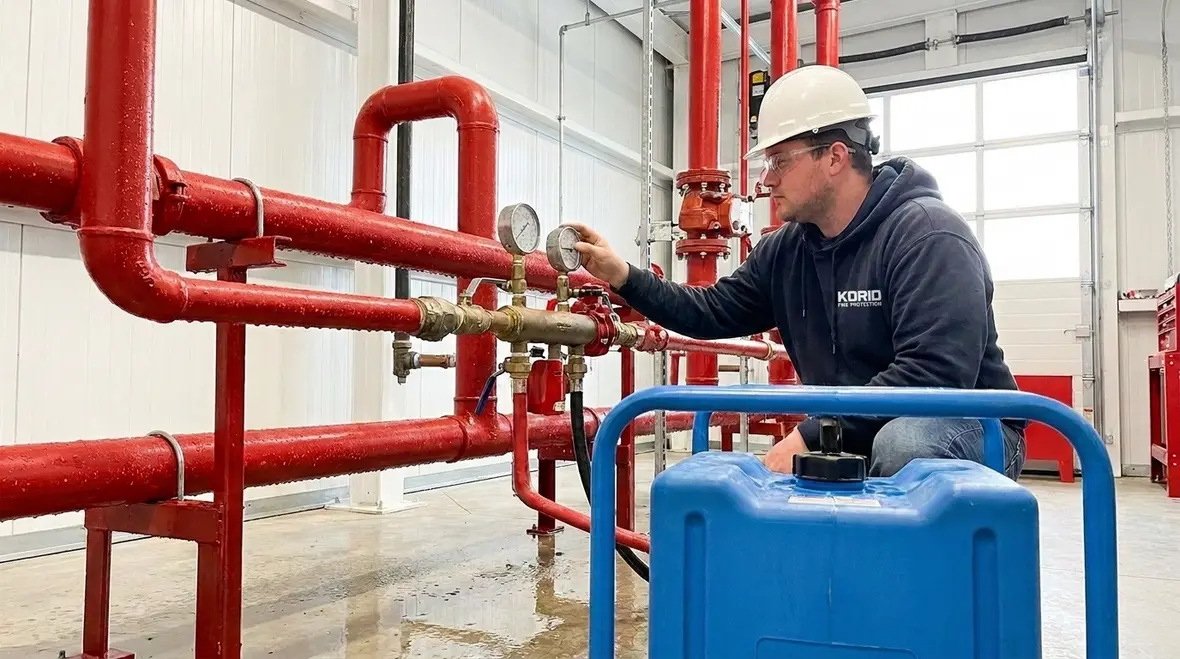
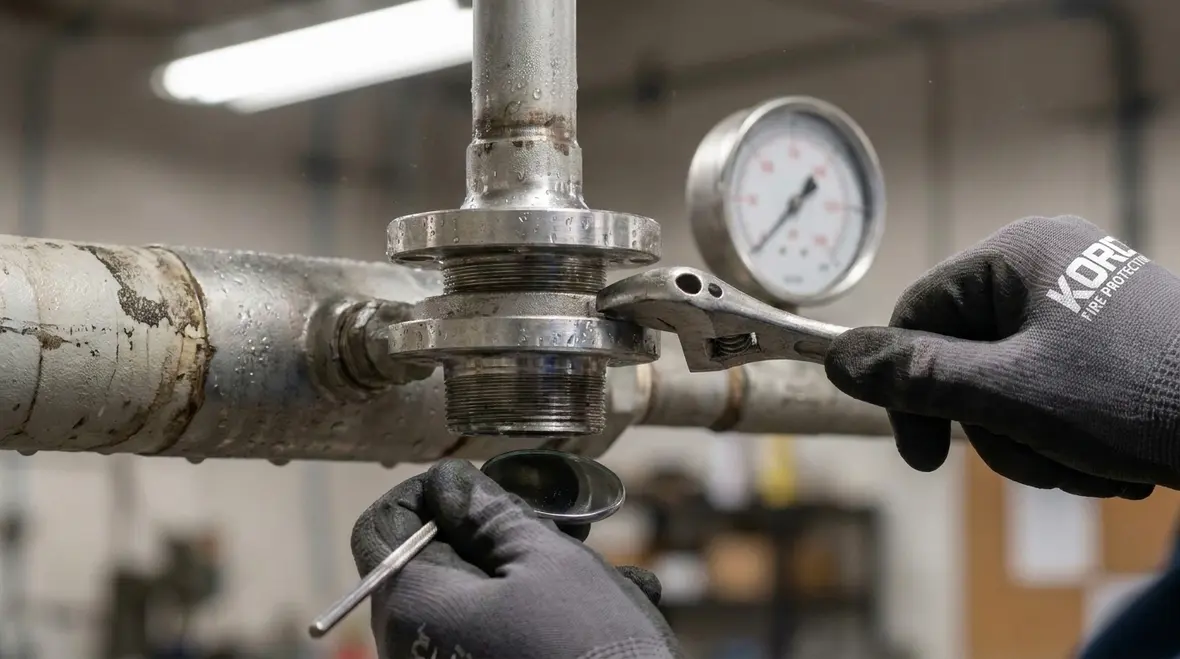
The process starts with proper isolation of the system section under review. Then the system fills with water and the pressure increases to the required test level under controlled conditions. During the hold period, the technician checks for leaks, pressure drops, and signs of stress in the pipework.
After that, the system gets inspected at joints, threaded connections, flanges, valves, and exposed fittings. If the pressure stays stable and no faults appear, the system passes. However, if leaks show up, the team must repair the issue and repeat the test. That may sound simple, but the details matter. A tiny drip today can become a major failure tomorrow, and fire protection systems rarely enjoy second chances.
Hydrostatic test focus points
- Pressure control: Confirms the system can handle the required load
- Leak detection: Finds weak spots before activation
- Component check: Verifies valves, joints, and fittings
- System confidence: Supports safe commissioning and ongoing compliance
What technicians are really looking for
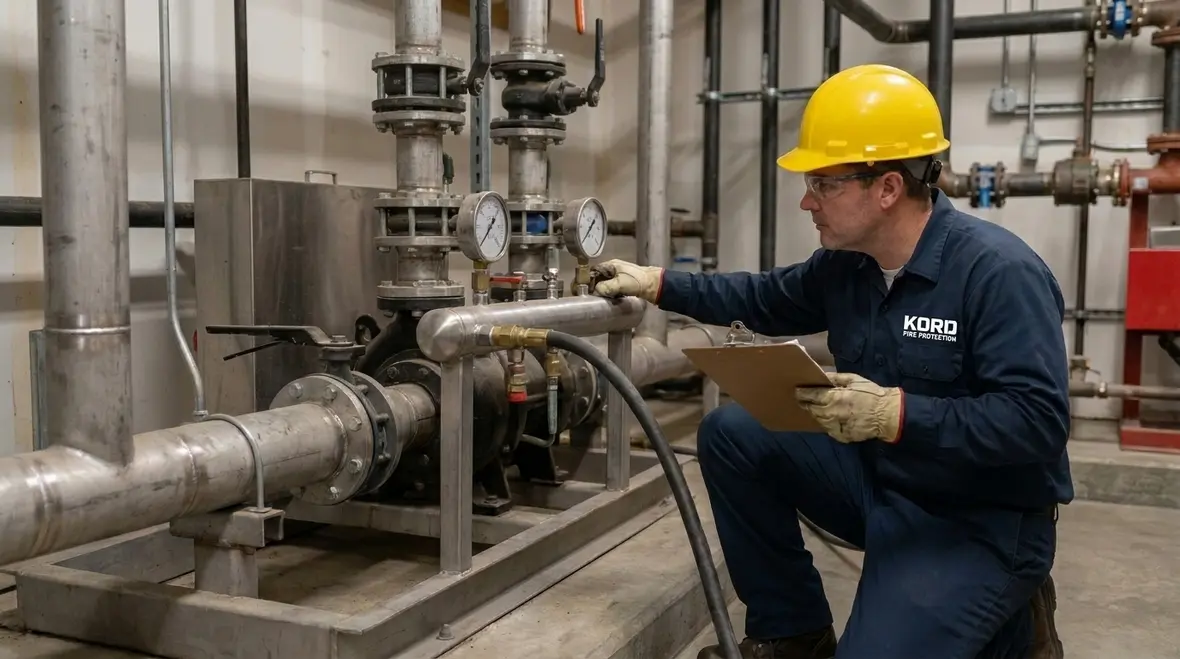
During the hold period, the goal is not simply to stare at a gauge and hope for the best. Technicians are looking for subtle clues that something is off. That could mean a damp fitting, an unstable reading, a connection that starts weeping under load, or a component that appears solid until the pressure reaches the target point. The system has to prove it can stay composed when the pressure is on, literally and figuratively.
Why Facilities Cannot Skip This Step
Industrial and commercial facilities often use complex water spray systems for hazard control, equipment protection, and process safety. Therefore, skipping the hydrostatic test creates risk that can reach far beyond the fire system itself. A failed line can damage stock, shut down operations, and create safety hazards for staff and contractors.
In addition, many sites face audits, insurance checks, and project handover requirements. A well documented hydrostatic test helps support all three. It shows the system was tested properly and that the installation team followed a recognised standard. That kind of evidence carries weight when everyone wants answers fast and nobody wants a bureaucratic mystery worthy of a streaming thriller.
There is also a simple operational truth here. Fire protection failures never seem to happen at a convenient time. They show up during critical production runs, in tenant occupied spaces, or right when leadership expects a clean handover. Hydrostatic testing lowers the odds of that kind of ugly surprise by forcing the system to prove itself before it is trusted.
Where Kord Fire Protection Adds Real Value
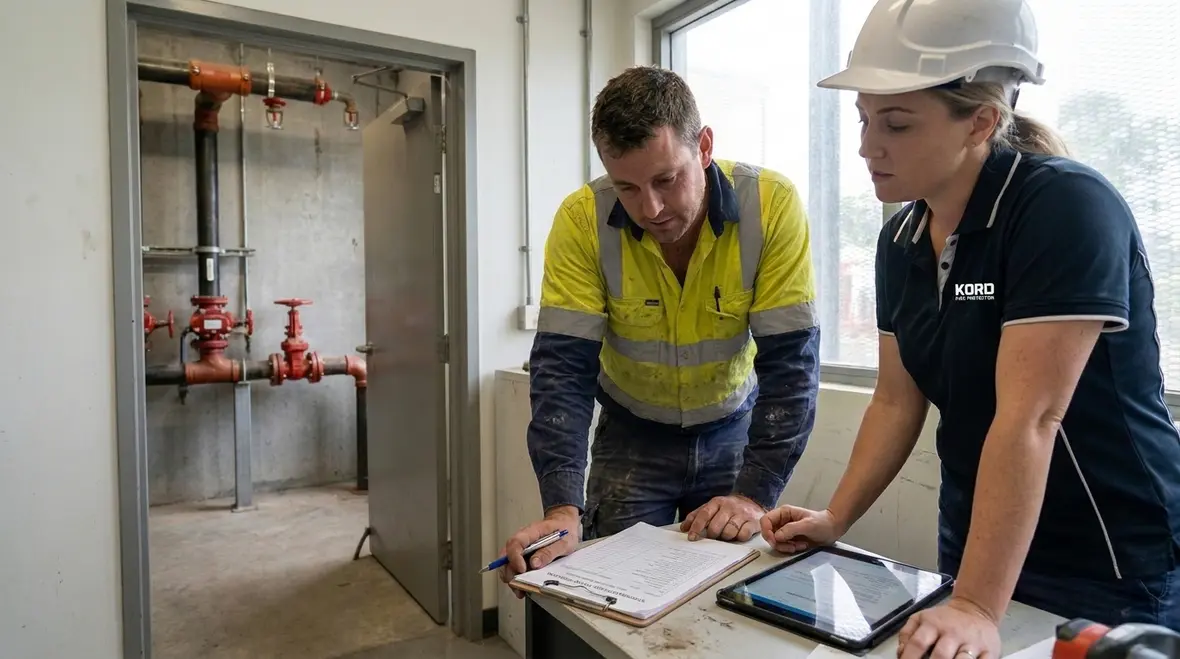
Kord Fire Protection can become a vital partner in this service because hydrostatic testing is not only about pumping water into pipework. It is about planning, accuracy, safe execution, and clear reporting. Kord Fire Protection can help coordinate the test, identify the correct test sections, support remediation if leaks appear, and help prepare the system for retest where needed.
More importantly, Kord Fire Protection understands how to work around active business sites. That means less disruption, better communication, and a smoother path from installation to sign off. For facility teams, that support can save time, reduce risk, and keep projects moving. In short, Kord Fire Protection can help turn a compliance task into a controlled and confident step forward.
That support matters even more on larger properties where one failed fitting can trigger retesting schedules, delay turnover, or complicate coordination with contractors and ownership teams. When the work is organized well, the test becomes a clean milestone. When it is not, it can turn into a surprisingly expensive scavenger hunt for one stubborn weak point.
How to Prepare for NFPA 15 Hydrostatic Testing
Good preparation makes the test cleaner and faster. First, the team should confirm the system design documents, test limits, and required pressure levels. Next, they should isolate equipment that could be damaged by pressure or water exposure. Then, they should inspect visible pipework and fittings before test day so obvious defects do not waste time later.
It also helps to plan access. Large sites often include ceiling voids, plant rooms, loading areas, and hard to reach process zones. Therefore, the test crew should know where to enter, where to observe, and who signs off the result. That kind of planning may not sound glamorous, but neither does mopping up an avoidable leak at 4 p.m. on a Friday.
A simple preparation checklist
- Verify drawings, test boundaries, and pressure targets
- Confirm which valves and components need isolation
- Check visible fittings and pipework before pressurizing
- Plan building access and observation points
- Assign who will witness, document, and sign off the test
What the Test Report Should Show
A solid report should clearly show the section tested, the test pressure, the hold time, the date, the technician, and the final result. It should also note any repairs, retests, or unusual findings. This record helps facility managers, insurers, and compliance teams trace the work later if needed.
Furthermore, strong documentation supports future maintenance. When a new contractor opens the file months later, the report should tell a clear story without detective work. Good records reduce confusion and help keep the system dependable over time.
The best reports are specific, readable, and easy to reference. They do not bury the useful details under vague notes or missing identifiers. If a repair was made, it should say what changed. If a retest occurred, it should show when and why. Clean reporting saves time now and saves headaches later.
When to Call for Professional Support
Facility teams should call for professional support when the system is large, the layout is complex, or the site cannot afford extended downtime. They should also bring in specialists when a prior test failed, when modifications have been made, or when documentation must stand up to audit review.
That is where experienced fire protection partners matter. They bring the tools, the process, and the calm needed to handle pressure testing without drama. And in fire protection, less drama is always a win.
Professional support is especially valuable when multiple trades are involved, when sections need staged testing, or when a site must stay partially operational during the work. In those situations, experience is not just nice to have. It is what keeps a straightforward test from turning into a stop start mess.
FAQ
Final Word
NFPA 15 hydrostatic test water spray systems help prove that critical fire protection equipment can perform when it matters most. For industrial, retail, and commercial sites, the test supports safety, compliance, and business continuity. With the right planning and a skilled partner like Kord Fire Protection, the process becomes smoother, safer, and far more reliable.
If your site needs testing, repairs, or support with system readiness, now is the time to act. A successful hydrostatic test is more than a box to tick. It is one of the clearest ways to confirm your water spray system will not fold under pressure when the stakes are highest.

Join Our Newsletter!
Get the latest fire safety tips delivered straight to your inbox From our Newsletter.